

 Flashlight
 Solar
Extension Cable
Solar
Extension Cable


What Will a 6000 Watt Generator Run? 2026 Whole-Home Guide
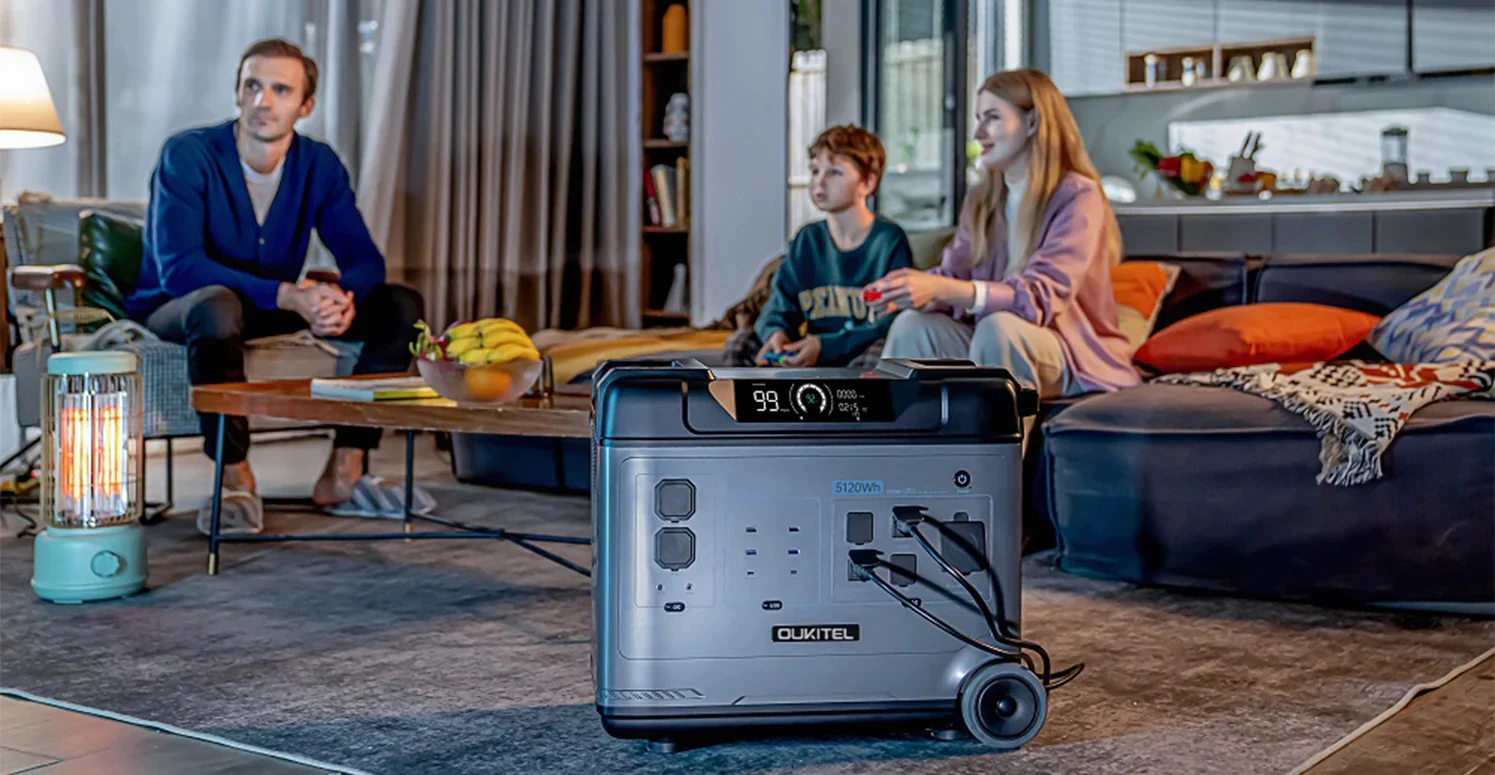
What will a 6000 watt generator run in real-world use? Just about every essential in a typical American home plus a margin for HVAC. Refrigerator, freezer, lights, router, phones, and TV running together with zero strain. Add a window AC unit. Add a microwave plus coffee maker brewing at the same time. The electric water heater works in limited intervals. The 6,000W class also handles bigger surge spikes from central AC startup, electric ranges on one or two burners, and most table saws on a workshop circuit.
Hard limits still exist. Electric clothes dryers eat the whole capacity. Full electric ranges across all four burners trip it. Tankless electric water heaters at 7,000-12,000W push past even this tier. We have sized 6,000W units for whole-home essentials backup, large RV power systems, contractor job sites, and partial off-grid cabin builds. The pattern across customer setups is consistent: buyers searching for "whole-house" generally want essentials-plus-AC, which is exactly what 6,000W class covers comfortably.
True whole-house with dryer, range, and EV charging sits in the 10,000W+ class. Below: appliance tables with surge specs, the 80% rule applied to real homes, and OUKITEL units that match the workload.
What Does "6000 Watts" Actually Mean? Running vs Surge
Three numbers govern any 6,000W class generator. Skip any one and you will either undersize the unit or trip it on the first compressor kick. The spec sheet has all three. The marketing tile usually only shows one.
Running Watts (Continuous Output)
The steady ceiling. 6,000W means the inverter holds 6,000W indefinitely without thermal cutoff. Run a 4,500W cluster of appliances and you have 1,500W of headroom for anything additional. Push past 6,000W continuous and protection circuits cut within seconds to spare the MOSFETs from damage. Continuous output is the spec that tells you what your home actually runs day to day during an outage. Treat it as the budget ceiling, not the ambition.
Surge Watts (Peak Output)
Brief overload margin for motor startup spikes. Quality 6,000W inverters allow 9,000-12,000W surge for half a second or so. Central AC compressors, well pumps, large table saws all need this headroom on startup, then settle back to their steady draw. Cheap inverters skip the surge spec entirely and trip on the first compressor kick. Pure sine wave matters across motors and electronics alike. Modified sine wave handles resistive loads okay but chokes on inductive loads and damages sensitive electronics over time.
Watt-Hours (The Tank Behind the Pipe)
Wattage is the pipe. Watt-hours is the tank that determines runtime. A 6,000W inverter on a 5,000Wh battery runs a 1,000W steady load for roughly four hours. Same inverter on 10,000Wh runs the same load for 8.5 hours. DOE publishes typical appliance ranges that make the sizing math straightforward [1].
In the OUKITEL lineup highlighted in this guide, the 6,000W class ships with 5,120Wh base capacity and stacks expansion batteries up to 19,000Wh or more for multi-day backup. Other brands in this wattage tier configure capacity and expansion differently, so check the spec sheet on whichever model you're comparing. Match the tank to your worst-case outage length, not your average.
|
Spec |
What It Means |
6000W Class Example |
|
Running watts (W) |
Max continuous output |
Full essentials plus small AC |
|
Surge watts (W) |
Motor startup ceiling |
9,000-12,000W half-second |
|
Watt-hours (Wh) |
Battery capacity |
5,000-20,000Wh typical |
|
Inverter type |
Sine wave quality |
Pure sine, mandatory |
What Will a 6000 Watt Generator Run? Real Appliance List
Most residential loads, multiple at the same time. The 6,000W class is the first tier where stacking two heavy appliances stops being a worry. Single-AC homes do fine on this class. Two-AC homes need 8,000W+ class for simultaneous operation.
Filter most buyers miss: read the surge column for every motor-driven appliance. Pure sine wave inverters absorb startup spikes cleanly. Modified sine wave chokes on inductive loads even at full rated wattage. The appliance table below includes both continuous and surge numbers so you can plan honestly against your real loads.
|
Appliance |
Continuous Draw |
Surge |
Runs on 6000W? |
|
Full-size fridge |
100-200W |
600-800W |
Yes, easily |
|
Chest freezer |
80-120W |
500W |
Yes, alongside fridge |
|
Central AC (3-ton) |
3,000-4,500W |
5,000-7,000W |
Yes, with margin |
|
Window AC (12,000 BTU) |
1,200-1,500W |
2,500-3,500W |
Yes, plus fridge |
|
Microwave (1,000W class) |
900-1,200W |
1,500W |
Yes, short bursts |
|
Coffee maker (drip) |
600-900W |
n/a |
Yes, easy |
|
Electric kettle |
1,200-1,800W |
n/a |
Yes, solo run |
|
Toaster oven |
1,200-1,800W |
n/a |
Yes, solo run |
|
Hair dryer (med heat) |
1,000-1,500W |
n/a |
Yes, low/med only |
|
Well pump (1HP) |
1,000-2,000W |
3,000-5,000W |
Yes, with surge headroom |
|
Table saw (10-inch) |
1,800-2,400W |
4,500-6,000W |
Yes, solo run |
|
Sump pump (1/3HP) |
800-1,200W |
1,800-2,500W |
Yes, easily |
|
Garage door opener |
550-900W |
1,200W |
Yes, easily |
|
TV + receiver + console |
200-400W |
n/a |
Yes, easily |
|
Whole-home lights (LED) |
100-300W |
n/a |
Yes, with margin |
|
Router + modem + computer |
50-150W |
n/a |
Yes, all the time |
What Will a 6000 Watt Generator NOT Run?

Alt: what will a 6000 watt generator run - appliances locked out of a 6000W generator
Short list compared to smaller classes. But specific, and worth knowing before the outage starts. CPSC publishes load safety guidance for portable generators that lines up with the loads below [2].
The Hard "No" List
- Electric clothes dryers at full heat (5,500-7,000W continuous)
- Full electric ranges with all four burners on high (8,000-12,000W)
- Tankless electric water heaters under load (7,000-15,000W)
- Two central AC units simultaneously (6,000-10,000W combined)
- Electric vehicle Level 2 charging (7,000-19,000W)
- Industrial welders above 6,000W rated input
- Large arc heaters or kilns
Overload Combinations That Still Trip 6000W Class
- Electric range full plus AC plus fridge: easily exceeds 6,000W
- Electric water heater plus dryer: combined runs 9,000W+
- Two heavy power tools plus shop vac: trips on combined startup spike
- AC startup during fridge compressor cycle: 7,000W+ momentary spike
- Microwave plus toaster plus coffee maker on one outlet during morning rush
Smart load sequencing handles most of the combos above, though enough battery capacity still matters for home backup power that has to cover overnight gaps when the sun's down. A 6000 watt generator class unit gives you both: surge headroom for the heavy starts plus enough stored energy to ride out the cycling loads.
Can a 6000 Watt Generator Run a Whole House?
Depends entirely on what's in your house and what "whole house" means to you. Most US homes can run essentials plus AC on 6,000W as long as the dryer and electric stove stay off during the outage. That covers the vast majority of multi-hour grid-down scenarios people actually face.
LFP chemistry handles heavy duty cycles well in whole-home backup, where loads vary across the day and the battery rarely sits at a steady draw. That cycling-friendly behavior is one reason LFP has become the default chemistry for residential power stations in this tier. Cycling loads age cells noticeably slower than constant high draw, which is exactly the load profile a household creates: fridges cycling, AC cycling, lights only on at night, cooking in 30-60 minute windows.
For a full whole-home including all electric appliances simultaneously, plan on 8,000-10,000W inverter class plus a battery wall, not a portable. The 6,000W class lives in the sweet spot for grid-tied homes that need outage resilience without rewiring for a permanent installation.
|
House Coverage |
6000W Suitability |
Notes |
|
Essentials only (fridge, lights, electronics) |
Yes, with massive margin |
Easy fit, lots of headroom |
|
Essentials plus one small AC |
Yes, comfortably |
Run one heavy load at a time |
|
Essentials plus central AC (3-ton) |
Yes, on the edge |
Soft-start kit recommended |
|
Essentials plus central AC plus microwave bursts |
Yes, sequenced |
Stagger heavy loads across cycles |
|
Essentials plus electric range one burner |
Yes, no other heavy loads |
Tight, single-burner only |
|
Essentials plus dryer running |
No, dryer alone hits 5,500W+ |
Step up to 8,000W class |
|
Essentials plus EV Level 2 charging |
No, EV alone is 7,000-19,000W |
Use Level 1 charger instead |
|
Whole home with all electric on |
No |
Needs 10,000W+ class plus battery wall |
How Long Will a 6000W Generator Run Your House on Battery?

Alt: what will a 6000 watt generator run - runtime math by battery size
Depends entirely on what's stored under the 6,000W inverter and how heavily you load it. The formula: battery Wh multiplied by 0.85 efficiency, divided by load in watts, equals runtime hours. The 0.85 factor accounts for DC-to-AC conversion loss, which is consistent across quality LiFePO4 units under normal draw.
Real households cycle loads naturally across the day. AC cycles. Fridge cycles. Lights only burn evenings. Cooking happens in 30-60 minute windows. That cycling stretches the math significantly. A 10,000Wh battery running typical essentials-plus-AC averages 8-12 hours of mixed-use runtime versus the 7 hours that pure-on math suggests. Real runtime examples on a 6,000W class generator paired with different battery sizes:
|
Load Profile |
5,000Wh Battery |
10,000Wh Battery |
20,000Wh Battery |
|
Essentials only (300W avg) |
~14 hr |
~28 hr |
~57 hr |
|
Essentials plus small AC (1,200W avg) |
~3.5 hr |
~7 hr |
~14 hr |
|
Essentials plus central AC (3,500W avg) |
~1.2 hr |
~2.4 hr |
~4.8 hr |
|
Full home work mix (1,500W avg) |
~2.8 hr |
~5.6 hr |
~11.3 hr |
|
Full 6,000W draw (constant max) |
~42 min |
~1.4 hr |
~2.8 hr |
Add solar input during daylight hours (we recommend 800W+ of panel for this class) and runtime extends indefinitely on most days. Most whole-home essentials customers work with size for the 12-24 hour outage window first, then add panel capacity to extend beyond that.
Which OUKITEL Units Match the 6000W Class?
The 6,000W tier sits in OUKITEL's expansion-battery territory. Three units fit the brief with proper sizing, and the customer use case decides which one wins. We point most whole-home essentials buyers toward the BP5000 PRO MAX as the default, with parallel pairings for buyers who want true 6,000W class output today.
Workhorse Pick: OUKITEL BP5000 PRO MAX
The OUKITEL BP5000 PRO MAX Portable Power Station delivers 5,000W AC continuous output and 5,120Wh base capacity, expandable to 19,456Wh by stacking expansion batteries. Max 1,800W AC fast charging tops it off in under three hours. The unit we point most whole-home essentials buyers toward. Please check current pricing on the product page. With expansion, it covers 6,000W class workloads handily and is rated for true whole-home essentials-plus-AC scenarios up to two days off-grid.

Alt: OUKITEL BP5000 PRO MAX Portable Power Station 5000W | 5120Wh
Extended Runtime: OUKITEL P5000
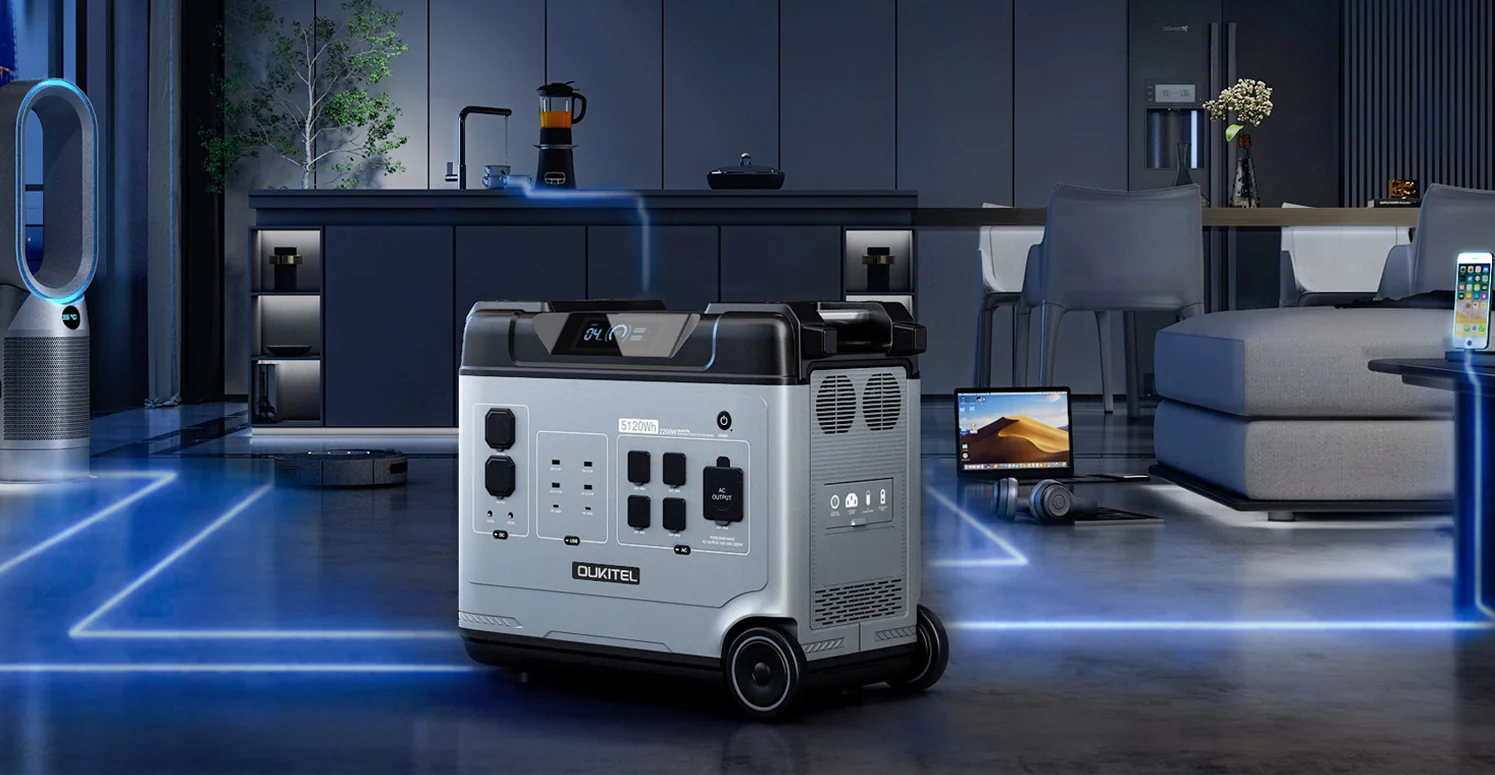
The OUKITEL P5000 Portable Power Station carries 5,120Wh capacity with 2,200W AC continuous output (lower than 6,000W solo, but pairs with the BP5000 PRO MAX for combined output via parallel mode). 1,800W lightning-fast AC input. Sub-10ms EPS switchover, which lets it act as an uninterruptible power supply for sensitive home circuits. Retail $1,329. Best paired with a BP5000 PRO MAX for buyers who want maximum tank size at the 6,000W tier.
Parallel-Ready Pro Tier: OUKITEL BP2000 PRO 3600W
The OUKITEL BP2000 PRO Portable Power Station 3600W runs 3,600W AC continuous output, 2,048Wh base capacity, expandable up to 16,384Wh via B2000 batteries. 2,000W EPS switchover under 10ms response. Retail $999, and the per-watt-hour leader in this segment. Pair two BP2000 PRO units in parallel for genuine 6,000W+ class output with stackable expansion. This is the path we recommend for workshop, RV, or contractor buyers who need modular capacity.
Safety and Sizing Notes
The U.S. Environmental Protection Agency tracks lithium-ion safety and recycling guidance [4]. LFP's safety record in whole-home backup applications has stayed clean across the brands we have tested over years of customer deployments. Our Portable Power Station Calculator sizes any of these against your specific load list before you commit.
|
Spec |
BP5000 PRO MAX |
P5000 |
BP2000 PRO 3600W |
|
Capacity |
5,120 Wh (exp 19kWh) |
5,120 Wh |
2,048 Wh (exp 16kWh) |
|
AC continuous |
5,000 W |
2,200 W |
3,600 W |
|
AC surge |
varies expansion |
4,400 W |
7,200 W |
|
EPS switchover |
sub-10ms |
sub-10ms |
sub-10ms |
|
Best for |
Whole-home essentials |
Extended grid-down |
Pro workshop, RV, parallel |
How Many Solar Panels Do You Need for a 6000W Class System?

Alt: what will a 6000 watt generator run - solar panel sizing for 6000W class
For meaningful daily topup on a 6,000W workload, plan on 800-1,600W of panel array. The 100W and 200W panels you see in product photos serve smaller power station tiers. At the 6,000W class, solar input has to keep pace with whole-home loads, which means real panel capacity, not aspirational sticker numbers.
Field math runs harsher than the spec sticker. A 100W panel under midday sun delivers 60-75W actual output. A 200W panel rides 120-150W during the four-hour peak window. Shade, dust, tilt angle, time of year, and weather all skim output. For a 6,000W class generator running a typical essentials-plus-AC mix at ~1,500W average draw, you'd need roughly 6kWh per day of solar input to net-zero the load.
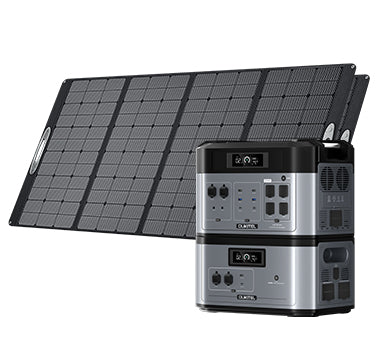
The OUKITEL 400W portable solar panel is the panel we pair most often with 6,000W class setups. Two or three of them in series-parallel matches the 800-1,200W array recommendation for essentials-plus-AC use. Panel array sizing by daily watt-hour budget:
- 200W panel: 800-1,200Wh/day (essentials only, light topup)
- 400W panel: 1,800-2,400Wh/day (fridge + lights + phones)
- 800W panel: 3,500-5,000Wh/day (essentials + occasional AC)
- 1,200W panel: 5,500-7,500Wh/day (essentials + steady AC)
- 1,600W+ panel: 7,500-10,000Wh/day (whole-home essentials + AC)
For storm-prone climates, FEMA's outage preparedness guidance flags portable battery backup as essential when grid restoration may take 24-72 hours [5]. Solar topup matters more during multi-day outages than one-off evening power blips, where battery alone covers the gap.
Sizing Your 6000W Class Setup in 3 Steps
Three-step sizing shortcut we walk new whole-home buyers through:
- Tally your essential loads. Fridge 100W. Freezer 100W. Lights 60W. Router 15W. CPAP 50W. Window AC 1,200W. Total: about 1,525W steady.
- Multiply by hours per day, sum to daily Wh budget. 1,525W times 24 hours, times 0.4 cycling factor = ~14,640Wh per day during outage.
- Pin battery capacity to your worst-case outage length. 24 hours = 15,000Wh battery. 48 hours = 30,000Wh. Most users want a 5,000-10,000Wh base plus expansion.
For whole-home essentials with AC, the OUKITEL BP5000 PRO MAX is our default starting point. For sustained multi-day grid-down with solar topup, pair it with the OUKITEL P5000. Our fridge sizing guide covers fridge-specific calculations if that's your primary outage concern.
FAQs
Can a 6000 watt generator run a house?
Mostly yes, for essentials-plus-AC scenarios. A 6,000W class generator covers fridge plus freezer plus lights plus router plus phones plus TV plus microwave plus one central AC unit running together comfortably. That covers what most US homeowners actually need during a multi-hour grid outage. What it skips: simultaneous electric dryer plus range plus AC, full electric stove with all four burners, and Level 2 EV charging. What a 6,000W generator powers in real US homes:
- Full essentials suite plus central AC (up to 3-ton)
- Kitchen during active cooking (microwave plus coffee plus fridge)
- Workshop running multiple power tools sequentially
- Sump pump plus essentials during basement flooding
- Whole RV including dual rooftop AC units
For genuine whole-home including all electric appliances on at once, step up to the 8,000-10,000W class plus a battery wall.
What is the 20 20 20 rule for generators?
Gas-generator maintenance shorthand. Every 20 hours of runtime: check oil, check filter, check overall condition. Some variants extend the rule to oil change at 20 hours, plus spark plug and fuel filter inspection on a 200-hour cadence. Skip any of those and engine lifespan drops fast, because combustion generators have many moving parts. Modern LiFePO4 solar generators skip nearly all of this maintenance, which is one practical reason homeowners increasingly choose battery over gas:
- No oil, no fuel, no moving parts beyond a small cooling fan
- Cycle battery to 100% then deep discharge every 3 months
- Keep firmware updated via the manufacturer's app
- Store at 50-80% charge for long-term storage
- Wipe cooling vents clean of dust monthly
LFP chemistry handles 3,000+ cycles to 80% capacity without scheduled service intervals.
Can a 6500 watt generator run a whole house?
For essentials-plus-AC homes, yes comfortably. For homes with electric dryers, full electric ranges, or tankless electric water heaters running during the outage, no. The 6,500W class adds about 500W of headroom over 6,000W but doesn't change the fundamental "can't run all electric simultaneously" limit. The difference becomes useful at the margin. What changes between 6,000W and 6,500W class units:
- 6,500W handles 4-ton central AC where 6,000W handles 3-ton with soft-start
- 6,500W absorbs slightly bigger compressor startup surges without tripping
- Both still skip electric dryer plus electric range simultaneously
- Both handle essentials plus single central AC with margin
- Both pair with battery walls for multi-day outage resilience
For genuinely whole-house including dryer and electric range, you need a 10,000W+ class inverter plus battery storage.
What size generator to run refrigerator and freezer?
Both together pull 200-320W continuous typical during compressor cycling. A 1,000-1,500W inverter handles both with comfortable surge margin. The 6,000W class is massive overkill if fridge plus freezer is the only goal, but pairs well when those run alongside lights, AC, and cooking during a multi-day outage. Total daily budget for fridge plus freezer lands in the 1,800-2,400Wh range. Sizing references by appliance combination:
- Fridge only: 1,000Wh battery plus 1,500W inverter
- Fridge plus freezer: 2,000Wh battery plus 1,500W inverter
- Fridge plus freezer plus lights plus phones: 3,000Wh plus 2,000W
- Above plus window AC: 5,000Wh plus 3,000W
- Above plus central AC: 10,000Wh plus 6,000W class
Sequencing heavy loads around the fridge cycle stretches battery duration significantly, and pairs well with overnight low-load periods when nothing else competes.
What should you not plug into a generator?
Certain loads damage either the appliance or the inverter when seriously mismatched. Sensitive electronics on modified sine wave inverters fail fast and silently. Medical equipment, laser printers, high-end audio gear all need pure sine output. CPSC's safety guidance for portable generators covers the most common dangerous-combination scenarios in detail [2]. Loads to keep entirely off any portable generator, even at 6,000W class:
- Anything 240V split-phase wired (electric dryers, ranges, EV chargers)
- Total continuous loads above the generator's rated wattage
- Large resistive loads when battery is below 20% charge state
- Tankless electric water heaters under any conditions
- Multiple kilowatt-class loads simultaneously without sequencing
Standard 120V appliances under rated wattage run fine with pure sine output every time, which is what modern LFP solar generators deliver by default.
What is the 80% rule for generators?
Plan continuous loads at 80% of rated capacity, not 100%. A 6,000W generator shouldn't sustain more than 4,800W continuous without thermal stress. CPSC and most major generator manufacturers publish this guidance as a load safety standard [2]. The rule originally applied to gas generators where overheating shortens engine life, but carries forward to inverter-based units for similar reasons. For LiFePO4 solar generators the 80% rule still applies because:
- Inverter MOSFETs run cooler with 20% headroom (extends lifespan years)
- Surge events from cycling motors absorb cleanly without tripping
- Battery DC-to-AC efficiency peaks at 70-80% load, not at 100%
- Overall system longevity improves with conservative loading
- Reserve capacity covers unexpected startup spikes
Steady 5,000W load? Size 6,000W+ generator. Steady 4,800W? 6,000W is the floor.
Will a 6000W generator power central AC?
Yes, for most residential central AC units up to 3 tons. A typical 3-ton central AC pulls 3,000-4,500W continuous with a 5,000-7,000W startup surge spike that lasts under one second. The 6,000W class handles the surge cleanly if the inverter is rated for 9,000W+ peak, and soft-start kits help margin by smoothing the compressor ramp-up. A 4-ton unit at 4,500-6,000W steady fits 6,500W class better. Central AC sizing references on a 6,000W generator:
- 2-ton (24,000 BTU): yes, easy fit, no soft-start required
- 3-ton (36,000 BTU): yes, with soft-start kit recommended
- 4-ton (48,000 BTU): borderline, soft-start required, essentials only alongside
- 5-ton (60,000 BTU): no, needs 8,000W+ class inverter
A full essentials load can run alongside any of these AC tonnages on the 6,000W tier.
How long will a 6000W generator run on a 10,000Wh battery?
Depends entirely on load profile. At full 6,000W draw, about 1.4 hours total runtime. At typical essentials-plus-AC mix averaging 1,500W draw, 5.6 hours of runtime. At essentials only (~300W average), 28 hours of runtime in mixed-use cycling. In most outage scenarios, households tend to run well below peak load, which is why the lower-average numbers usually reflect real 6000 watt generator runtime more accurately than nameplate maximums. Realistic scenarios on a 10kWh battery with a 6,000W inverter:
- Full 6,000W constant load: ~1.4 hours pure draw
- Essentials plus AC (1,500W average): ~5.6 hours
- Essentials only (300W average): ~28 hours mixed use
- Sequenced heavy loads (600W average): ~14 hours
- With 400W solar panel topping up daily: indefinite in sun
Most whole-home essentials customers size for the 12-24 hour outage window first, then add panel capacity.
Sources
- U.S. Department of Energy (DOE),Estimating Appliance and Home Electronic Energy Use (2026)
- U.S. Consumer Product Safety Commission (CPSC),Generators and Engine-Driven Tools (2026)
- National Laboratory of the Rockies (NLR),Battery Lifetime Analysis and Simulation Tool (BLAST) (2026)
- U.S. Environmental Protection Agency (EPA),Used Lithium-Ion Batteries (2026)
- Federal Emergency Management Agency (FEMA),Power Outages (2026)


Looking for something else?
How Easy Is a Portable Power Station to Use? A Beginner’s Guide
LEARN MORE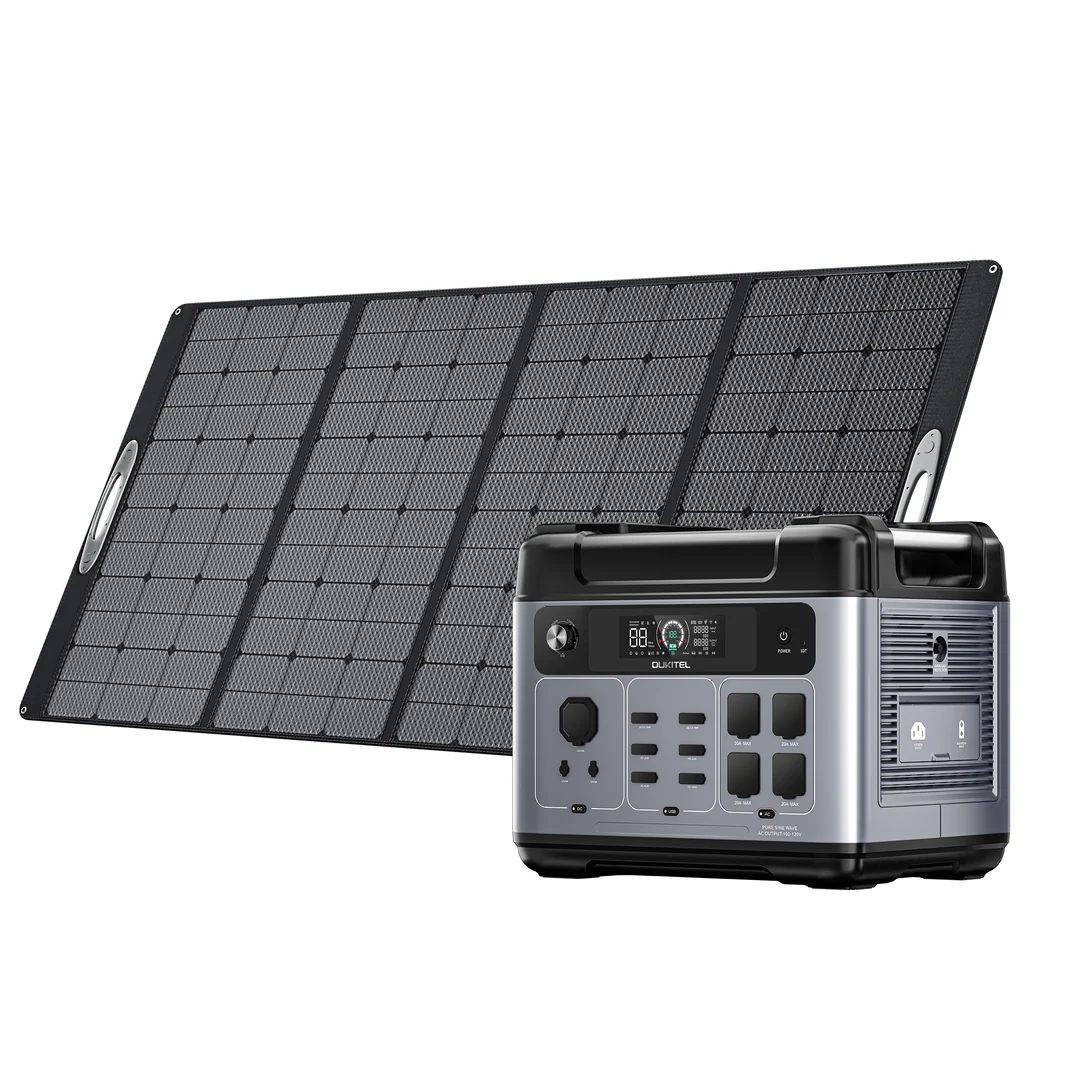
Cold-Weather Power: Best Portable Power Stations for Winter Camping
LEARN MORE
What is a Portable Power Station & How It’s Used
LEARN MORE
5 Must-Have Portable Power Solutions for a Stress-Free Christmas
LEARN MORELooking for something else?
Power Station Calculator: How to Estimate Output & Recharge Time
LEARN MORE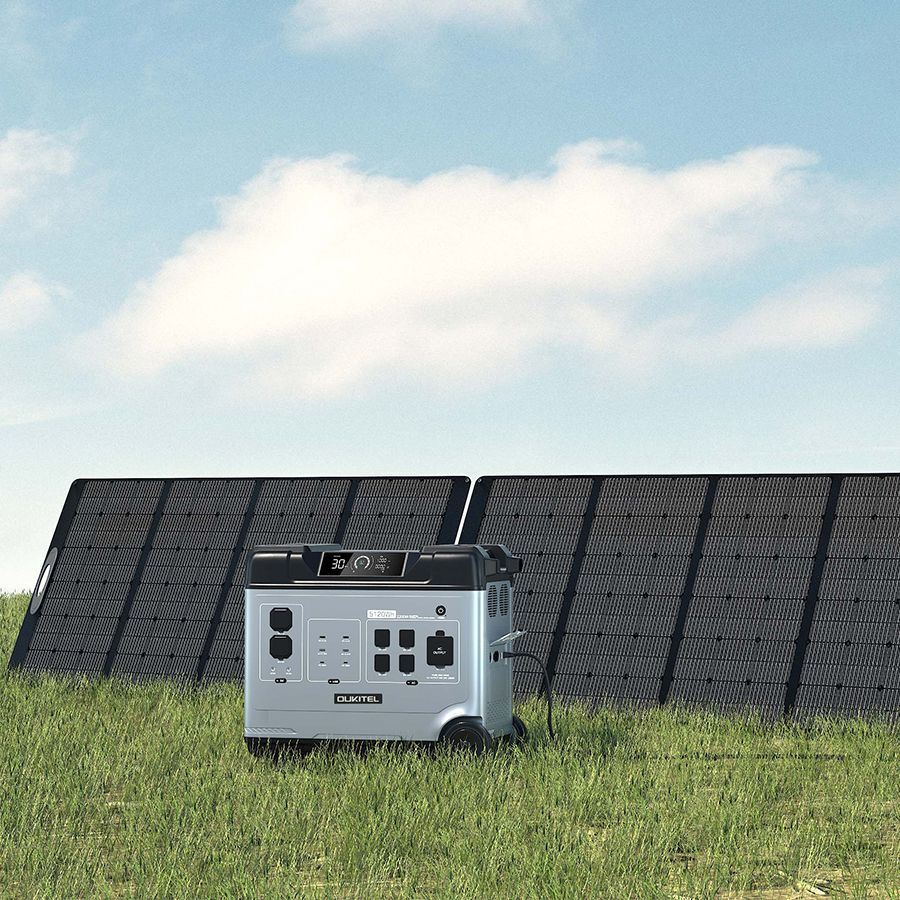
Solar Panel Voltage: Understanding Output and Regulation
LEARN MORE
How Do Solar Panels Work: From Sunlight to Home Energy
LEARN MOREYou may also like

OUKITEL P5000 Portable Power Station 5120Wh/2200W

OUKITEL P2001 Solar Generator
OUKITEL P1000 PLUS Portable Power Station 1800W/1024Wh

OUKITEL BP2000 Portable Power Station 2200W/2048Wh

OUKITEL P5000 Solar Generator for Home with 400W Solar Panel
Further reading
Best Solar Generator for Home Backup: 2026 Buyer's Guide
How Long Do Portable Power Stations Last? 2026 Lifespan and Runtime Guide