








 Flashlight
 Solar
Extension Cable
Solar
Extension Cable


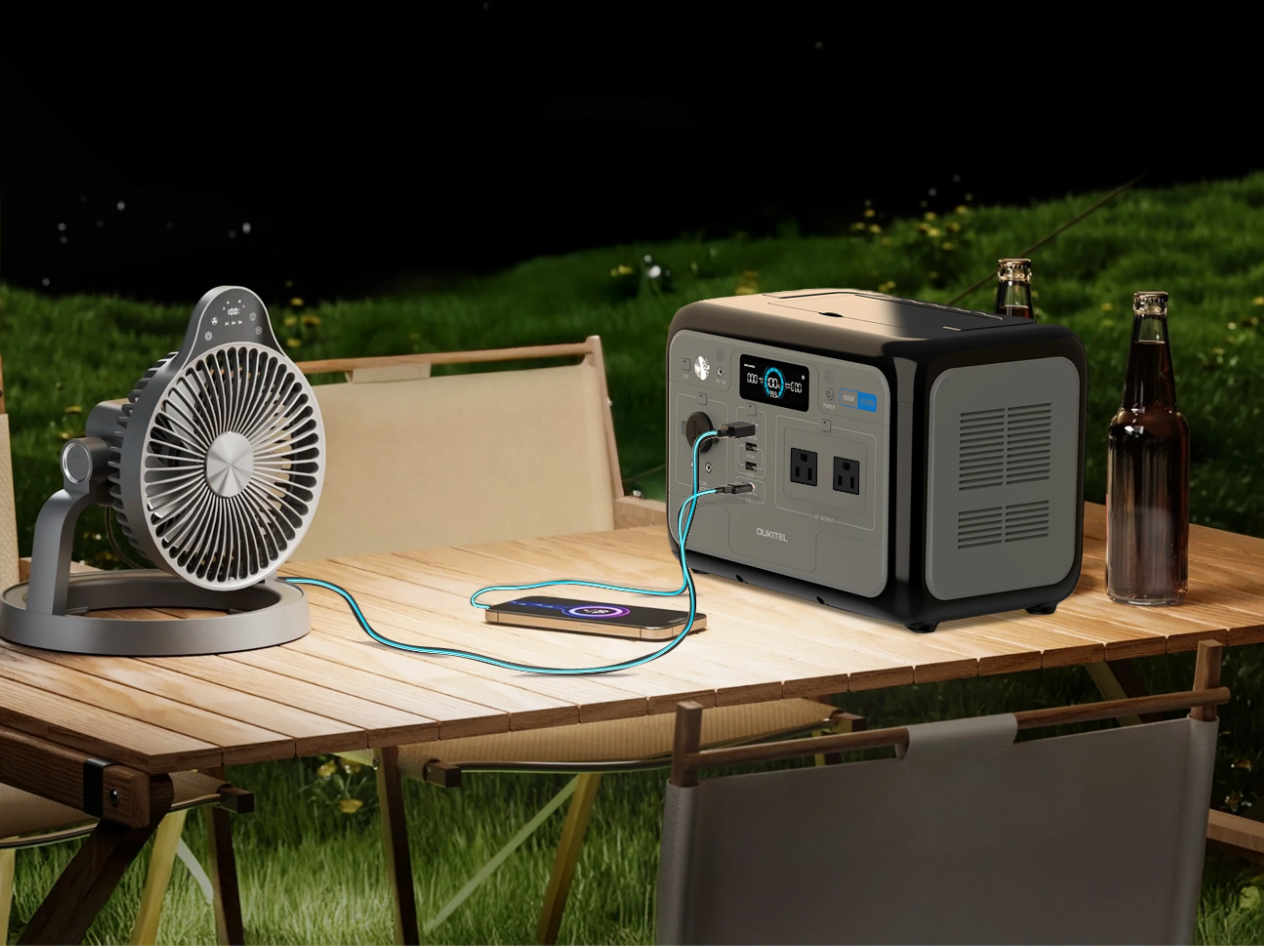
Power Station Calculator: How to Estimate Output & Recharge Time
Knowing how long a portable power station will run your devices—and how quickly it can recharge—is essential before buying or using one. Whether you're preparing for a power outage, going camping, living off-grid, or powering high-load appliances, understanding these numbers helps you choose the right model and avoid running out of power unexpectedly.
This guide will teach you exactly how to calculate:
- Device runtime
- Appliance compatibility
- Battery capacity usage
- Recharge time (AC, solar, car)
- Real-world efficiency adjustments
We'll break everything down with simple formulas, examples, and tables so you can calculate everything instantly—even without an online tool.
Understanding the Basics: Watts, Watt-Hours & Voltage
Before using a power station calculator, you need to understand two key concepts:
1 Watts (W) – Power Consumption
Watts measure how much power a device uses at a specific moment.
Examples:
- Phone charger: 10W
- Laptop: 60W
- Mini fridge: 60–100W
- Microwave: 800–1200W
- Power tools: 1200–1800W
A power station’s output wattage must be equal to or higher than the device’s wattage.
2 Watt-Hours (Wh) – Battery Capacity
This tells you how much total energy the battery can supply.
Example Oukitel power station capacities:
- P800 → 512Wh
- P1000 Plus → 1024Wh
- P2001 Plus → 2048Wh
- P5000 Series → 5120Wh
The higher the Wh number, the longer the runtime.
3 Efficiency (85–90%)
No portable power station gives 100% of its Wh capacity due to inverter loss.
Typical efficiency:
- LiFePO4 stations: 85–90%
Oukitel uses high-efficiency LiFePO4 batteries, so we use 0.85 as the industry-standard multiplier.
Power Station Runtime Calculator Formula

The core formula for estimating runtime is:
Runtime (hours) = (Battery Capacity Wh × 0.85) ÷ Device Wattage (W)
Where:
- Wh = battery size
- 0.85 = efficiency
- W = device power consumption
Runtime Examples for Common Devices
Here are real examples using popular Oukitel models:
1 Example 1: Smartphone Charging (10W)
Using P800 (512Wh):
Runtime = (512 × 0.85) ÷ 10
Runtime = 435 ÷ 10
→ 43.5 hours
This equals 30–40 smartphone recharges.
2 Example 2: Laptop (60W)
Using P1000 Plus (1024Wh):
Runtime = (1024 × 0.85) ÷ 60
Runtime = 870 ÷ 60
→ 14.5 hours
3 Example 3: Mini-Fridge (100W)
Using P2001 Plus (2048Wh):
Runtime = (2048 × 0.85) ÷ 100
Runtime = 1740 ÷ 100
→ 17.4 hours
4 Example 4: Full-Sized Refrigerator (150W running)
Using P5000 (5120Wh):
Runtime = (5120 × 0.85) ÷ 150
Runtime = 4352 ÷ 150
→ 29 hours
5 Example 5: CPAP Machine (40W)
Using P800 (512Wh):
Runtime = (512 × 0.85) ÷ 40
Runtime = 435 ÷ 40
→ 10.8 hours
Enough for a full night of sleep.
6 Example 6: Microwave (1200W)
Using P2001 Plus (2400W output):
Runtime = (2048 × 0.85) ÷ 1200
Runtime = 1740 ÷ 1200
→ 1.45 hours
But since microwaves run in short bursts, this is more than enough.
7 Example Runtime Table
|
Device |
Watts (W) |
P800 (512Wh) |
P1000 Plus (1024Wh) |
P2001 Plus (2048Wh) |
P5000 (5120Wh) |
|
Phone |
10W |
43.5h |
87h |
174h |
435h |
|
Laptop |
60W |
7.2h |
14.5h |
29h |
72h |
|
CPAP |
40W |
10.8h |
21.7h |
43h |
108h |
|
Mini-Fridge |
100W |
4.3h |
8.7h |
17.4h |
43h |
|
Refrigerator |
150W |
2.9h |
5.8h |
11.6h |
29h |
|
Microwave |
1200W |
Not supported |
Short use |
1.45h |
3.6h |
|
Power Tools |
1500W |
Not supported |
Not supported |
Short use |
25h |
How to Check if a Device Is Compatible

To check compatibility, you compare:
Device wattage
Must be ≤ power station output
Surge wattage
Some appliances (fridges, pumps, tools) require 2–3× of starting power.
Example:
- A 150W fridge may surge to 600W
- A 700W drill may surge to 1500W
Stations like Oukitel P2001 Plus (2400W) or P5000 Pro (3600W) can handle heavy start-up loads.
Solar Recharge Time Calculator
Solar charging is never 100% efficient because of:
- Weather
- Angle of panels
- Heat loss
- Inverter conversion
We use an estimated 70–80% efficiency.
Formula:
Recharge Time = Battery Capacity Wh ÷ (Solar Input Watts × 0.75)
1 Example: 200W Solar Panel + P1000 Plus
Recharge Time = 1024 ÷ (200 × 0.75)
= 1024 ÷ 150
→ 6.8 hours
2 Example: 400W Solar Input + P2001 Plus
Recharge Time = 2048 ÷ (400 × 0.75)
= 2048 ÷ 300
→ 6.8 hours
3 Example: 1200W Solar Input + P5000
Recharge Time = 5120 ÷ (1200 × 0.75)
= 5120 ÷ 900
→ 5.6 hours
AC Recharge Time Calculator
AC charging is more predictable than solar.
Formula:
AC Recharge Time = Battery Capacity ÷ AC Input Power
1 Example: P2001 Plus (2048Wh, 1800W AC Input)
Recharge Time = 2048 ÷ 1800
→ 1.13 hours
This matches real-world fast charging performance.
2 Example: P5000 (5120Wh, 1800W Input)
Recharge Time = 5120 ÷ 1800
→ 2.8 hours
Car Charging Time Calculator
Car charging is slower due to low wattage (100–120W typical).
Formula:
Car Recharge Time = Battery Capacity ÷ 120W
Example: P800 (512Wh)
512 ÷ 120
→ 4.3 hours
Example: P2001 Plus (2048Wh)
2048 ÷ 120
→ 17 hours
Combined Charging (Solar + AC)
Some power stations allow hybrid charging:
AC + Solar = Shorter recharge time
Solar + Car = Useful during travel
But total input must stay below the device’s maximum input rating.
Power Station Size Recommendations Based on Calculator Results

|
Use Case |
Recommended Output |
Recommended Battery |
|
Phones, laptops, lights |
300–600W |
300–700Wh |
|
Camping / weekend trips |
600–1200W |
700–1200Wh |
|
CPAP overnight |
600–1800W |
1000–2048Wh |
|
Emergency home backup |
1800–2400W |
2000–3000Wh |
|
Refrigerators + appliances |
2400–3600W |
3000–5000Wh |
|
Off-grid living |
2200–3600W |
5000Wh+ with expansion battery |
Example: Full Home Backup Calculation
Let’s calculate a 24-hour outage requirement:
|
Appliance |
Watts |
Hours/Day |
Wh Used |
|
Refrigerator |
150W |
10h |
1500Wh |
|
WiFi Router |
15W |
24h |
360Wh |
|
Lights |
30W |
5h |
150Wh |
|
Laptop |
60W |
3h |
180Wh |
|
Phone Charging |
10W |
3h |
30Wh |
Total Daily Consumption:
2220Wh
A P2001 Plus (2048Wh) can almost cover a day of essential use.
A P5000 (5120Wh) covers 2–3 days comfortably.
Final Tips When Using a Power Station Calculator
Always include inverter efficiency (0.85)
Always use running watts, not peak watts
Check both output wattage AND battery capacity
For solar, assume 70–80% real efficiency
Oversize your battery by 20–30% for safety margin
Check your appliance’s surge watt requirement
Frequently Asked Questions
What is a power station calculator?
A power station calculator helps estimate how long a portable power station can run your devices and how long it takes to recharge through AC, solar, or car charging.
How do I calculate runtime for my device?
Use:
Runtime = (Battery Wh × 0.85) ÷ Device Watts
This gives an accurate estimate for most modern lithium power stations.
Why do we use 85% efficiency?
Because inverters and electronics convert DC to AC, which reduces total usable energy. Most LiFePO4 stations—like Oukitel—run at 85–90% efficiency.
How do I calculate solar recharge time?
Solar Recharge Time =
Battery Wh ÷ (Solar Watts × 0.75)
This accounts for weather and panel efficiency losses.
Can I run high-power appliances?
Yes, if your power station’s output wattage is higher than the appliance’s running watts and surge watts. Models like P2001 Plus and P5000 Pro support heavy loads.
How do I know which power station size to choose?
Match:
- Device wattage → Output rating
- Daily power usage → Battery capacity
For example:
Camping = 500–1200Wh
Home backup = 2000–5000Wh
Can a portable power station run for 24 hours?
Yes—larger stations (2000Wh–5000Wh) can power essential devices for 24–72 hours, depending on usage.


Looking for something else?

Difference Between Amps and Volts: What You Actually Need to Know
LEARN MORE
50 Amps in Watts: The Honest 2026 Conversion Guide for RV, Home, EV, and Solar
LEARN MORE
Can You Put Solar Panels on a Mobile Home? (Real-World Guide for 2026)
LEARN MORE
Do Portable Solar Panels Qualify for the 30% Credit?
LEARN MORELooking for something else?

Are Solar Generators Any Good? Here's the Real Answer
LEARN MORE
How Long Does a Portable Power Station Last? (Real Numbers)
LEARN MORE
Oukitel Power Exhibits at Solar & Storage Live Philippines 2026: Carry the Sun, Power Your Freedom
LEARN MOREYou may also like

OUKITEL P5000 Pro Portable Power Station 5120Wh | 3600W
OUKITEL P5000 Solar Generator for Home with 400W Solar Panel
OUKITEL P800 Portable Power Station 800W | 512Wh

OUKITEL B2000 Expansion Battery | 2048Wh

OUKITEL BP5000 PRO MAX Portable Power Station 5000W | 5120Wh

OUKITEL C01 Car Jump Starter 1350A | 80Wh | PD60W
Further reading

OUKITEL Power Brings Full-Scenario Energy Storage Solutions to Intersolar Middle East 2026 in Dubai

Portable Power Stations for Power Tools and Job Sites: Surge, Runtime and Safety
