








 Flashlight
 Solar
Extension Cable
Solar
Extension Cable


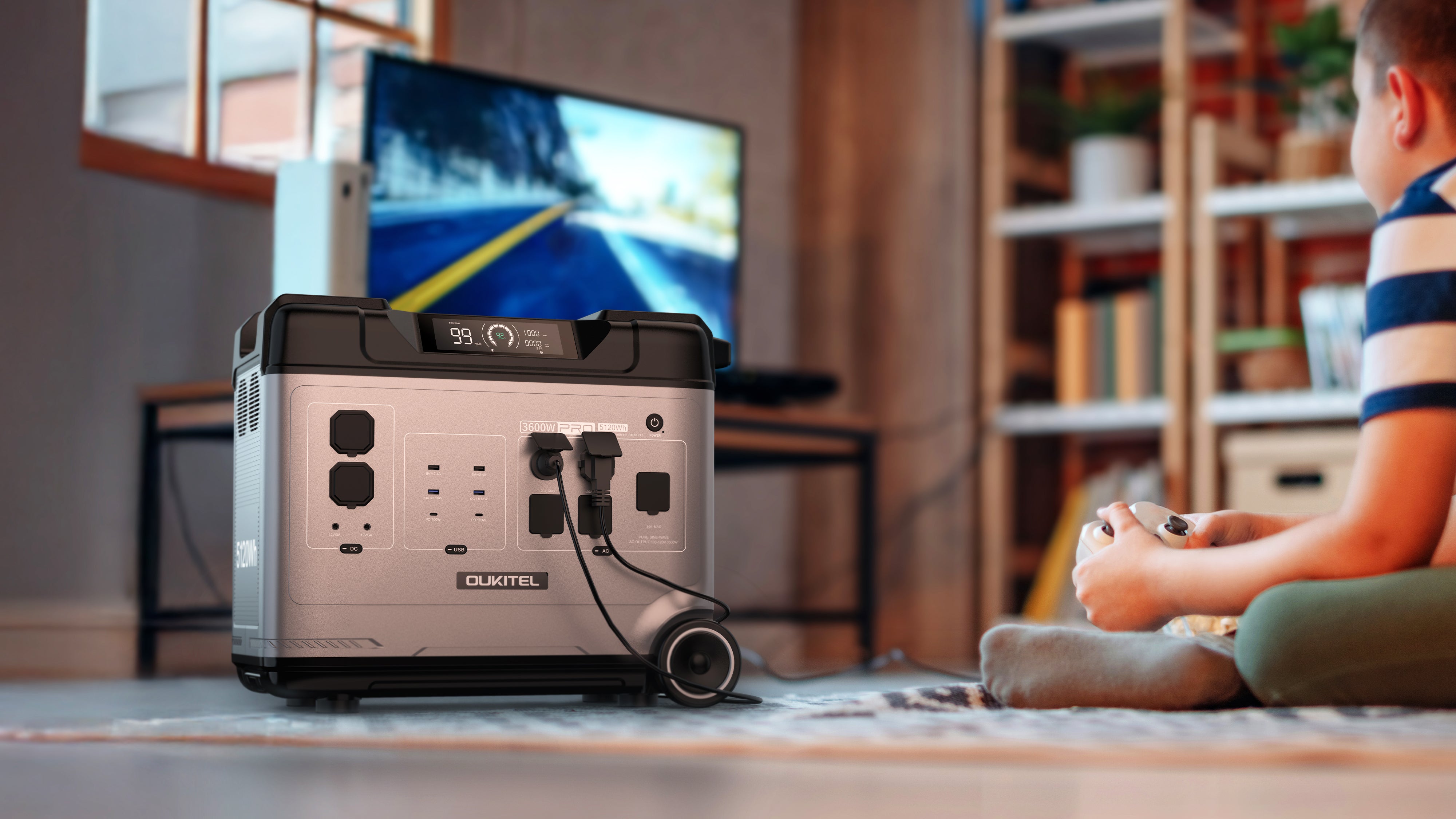
How Many mA in an Amp: Understanding Electrical Conversion
When you look at the tech specs of a smartphone. a drone battery. or a portable power station. you are immediately met with a wall of abbreviations: V. W. Ah. and mA. Among these. The relationship between Milliamps (mA) and Amps (A) is one of the most fundamental concepts in electronics.
Understanding how many mA are in an amp is crucial for anyone looking to manage their home energy, build a DIY solar setup, or simply understand how long their gadgets will last on a single charge. In this guide, we will break down the conversion, explain why these units matter, and show you how to apply this knowledge to real-world power solutions.
The Core Question: How Many mA in an Amp?

The math is simple: There are 1.000 milliamps (mA) in 1 ampere (A).
The "milli" prefix comes from the Latin mille. meaning one thousand.Much like there are 1,000 millimeters in a meter or 1,000 milliliters in a liter. The metric system uses "milli" to denote one-thousandth of the base unit.
Quick Conversion Reference:
- 1 Amp (A) = 1,000 Milliamps (mA)
- 0.5 Amp (A) = 500 Milliamps (mA)
- 2.5 Amps (A) = 2,500 Milliamps (mA)
[Image: A simple infographic showing a large "1A" container pouring into ten smaller "100mA" cups to visualize the 1:1000 ratio.]
Defining the Units: Amps vs. Milliamps
What is an Ampere (Amp)?
The Ampere (A) is the SI base unit of electric current. It measures the rate at which electrons flow through a conductor. If you think of electricity like water flowing through a pipe. The "Amperage" is the volume of water moving past a certain point every second. High-power appliances like air conditioners. space heaters. and Oukitel power stations are typically rated in Amps.
What is a Milliamp (mA)?
A Milliamp (mA) is simply a smaller measurement of that same flow. It is used for devices that require very little power. Your TV remote. LED holiday lights, and the internal sensors of your laptop operate in the milliamp range.
How to Convert Milliamps to Amps (mA to A)
To convert from the smaller unit (mA) to the larger unit (A), you move the decimal point three places to the left.
The Formula:
$$A = mA \div 1.000$$
Example: If a USB charger output is labeled as 2,400 mA. How many Amps is that?
$$2.400 \div 1,000 = \mathbf{2.4 A}$$
Common mA to A Conversion Table
|
Milliamps (mA) |
Amperes (A) |
|
10 mA |
0.01 A |
|
100 mA |
0.1 A |
|
500 mA |
0.5 A |
|
1,000 mA |
1.0 A |
|
5,000 mA |
5.0 A |
|
10,000 mA |
10.0 A |
How to Convert Amps to Milliamps (A to mA)

When you are looking at a large power source and want to know if it can support many small devices, you need to go from Amps to Milliamps. You do this by moving the decimal three places to the right.
The Formula:
$$mA = A \times 1,000$$
Example:
A portable power station provides 15 Amps through its DC port. How many milliamps is that?
$$15 \times 1,000 = \mathbf{15,000 mA}$$
Beyond the Basics: mA vs. mAh
It is easy to confuse mA with mAh. While they look similar. they measure different things:
- mA (Current): The "flow" at this exact moment.
- mAh (Capacity): How much total energy the battery holds.
If a battery is rated at 2,000 mAh, it means it can provide 2,000 mA of current for exactly one hour before it dies. Or, it could provide 200 mA for ten hours.
Understanding this distinction is vital when choosing backup power. If you have an emergency light that draws 500 mA and a power station with 10,000 mAh of capacity, the light will stay on for:
$$10,000 \div 500 = \mathbf{20 \text{ hours}}$$
[Image: A side-by-side comparison of a "Current Meter" showing real-time mA and a "Fuel Gauge" showing total mAh.]
Why Amps Matter for Your Power Station
When browsing Oukitel's collection of power stations, you will see "Maximum Output Amps." This is critical for safety.
If you plug a device that requires 20 Amps into a port rated for only 10 Amps. you will likely trip a circuit breaker or blow a fuse. By knowing the "mA to A" conversion, you can look at the tiny labels on your electronics and add them up to ensure your power station isn't overloaded.
Pro-Tip: The 80% Rule
For long-term use. it is a best practice to never draw more than 80% of a circuit’s rated Amperage. If your portable power station AC outlet is rated for 15A, try to keep your total load around 12A (12,000 mA) for maximum efficiency and battery health.
Converting mA to Other Units
In advanced electronics, you might encounter even smaller or larger units:
- Microamps (μA): $1 \text{ mA} = 1,000 \text{ μA}$ (Used in sleep modes for electronics).
- Kiloamps (kA): $1,000 \text{ A} = 1 \text{ kA}$ (Used in industrial power grids).
Here are 3 additional high-value sections to round out your article on "How Many mA in an Amp" to reach the 1500-word depth and provide more SEO value.
Measuring Current: How to Use a Multimeter
Understanding the theory of milliamps to amps is great, but sometimes you need to see the real-time flow in a circuit. To do this. professionals and hobbyists use a multimeter.
When measuring current, you must break the circuit and place the meter "in series." This means the electricity must flow through the meter.
- For Amps: Most multimeters have a dedicated port (often labeled 10A) for higher current.
- For Milliamps: There is usually a fused port labeled "mA" for precise readings of small electronics.
Warning: Never try to measure "Amps" by sticking probes directly into a wall outlet or across a battery's terminals without a load. This creates a short circuit and can blow the fuse in your meter or cause an electrical arc.
Thermal Management: Why High Amperage Generates Heat
A common question in power management is why high-amp devices require such thick cables. When you convert mA to A. you aren't just changing a unit; you are moving into a territory where resistance becomes a major factor.
As electrons flow through a wire (measured in Amps), they collide with the atoms of the wire material. These collisions generate heat.
- Low Current (mA): Devices drawing 100mA to 500mA can use very thin. flexible wires (like a headphone cord) without getting warm.
- High Current (A): A portable power station delivering 20A to a heater requires thick. heavy-gauge copper wiring.
If the wire is too thin for the Amperage, the resistance increases, the voltage drops, and the wire can eventually melt or start a fire. This is why Oukitel uses high-quality, heavy-duty internal cabling to ensure safety at maximum power output.
Efficiency and Line Loss in Solar Setups
In a solar power system. every milliamp counts. When you are charging a battery from a solar panel. "line loss" occurs—this is energy lost as heat over the length of the cable.
Line loss is directly related to the current (Amps). Because of this, many modern systems prefer to transmit power at higher Voltages and lower Amperages.
- Scenario A: 100 Watts at 12V = 8.3 Amps (Higher loss. thicker wires needed).
- Scenario B: 100 Watts at 24V = 4.1 Amps (Lower loss. thinner wires can be used).
By understanding that 1,000 mA equals 1 Amp, you can calculate exactly how much "juice" is being lost between your solar panels and your power station. For the best efficiency, always keep your cables as short as possible and use the correct gauge for the Amperage you intend to carry.
Final Thoughts
Knowing how many mA are in an amp is the "secret handshake" of the electrical world. It allows you to read labels with confidence, size your solar panels correctly, and ensure that your Oukitel power station is perfectly matched to your lifestyle.
Whether you are charging a high-drain laptop or a low-draw LED lantern, keeping your units straight ensures you never run out of juice when you need it most.
Frequently Asked Questions
Is 500 mA the same as 0.5 Amps?
Yes. Exactly. Since there are 1,000 mA in an amp. $500 \div 1,000 = 0.5$. Most standard USB 2.0 ports on older computers provide exactly 500 mA of current.
Can a 2A charger damage a 500mA device?
Generally, no. The device "pulls
" the current it needs; the charger does not "push" it. As long as the Voltage (typically 5V for USB) matches. The device will only draw its required 500 mA, and the 2A charger will run cool and under-stressed.
How many milliamps does a standard AA battery have?
An AA battery doesn't have a fixed "mA" (current flow), but it has a "mAh" (capacity). A typical alkaline AA battery has about 2,000 to 2,500 mAh.
How do I convert mA to Watts?
To find Watts, you need to know the Voltage. The formula is: Watts = (mA ÷ 1,000) × Volts.For example. 2,000 mA at 5V is: $(2,000 \div 1,000) \times 5 = 10 \text{ Watts}$.
Why do some power stations use "Ah" instead of "mAh"?
"Ah" (Amp-hours) is used for larger batteries to keep the numbers small and readable. It is much easier to say "100 Ah" than "100,000 mAh." They represent the same amount of energy.


Looking for something else?

Difference Between Amps and Volts: What You Actually Need to Know
LEARN MORE
50 Amps in Watts: The Honest 2026 Conversion Guide for RV, Home, EV, and Solar
LEARN MORE
Can You Put Solar Panels on a Mobile Home? (Real-World Guide for 2026)
LEARN MORE
Do Portable Solar Panels Qualify for the 30% Credit?
LEARN MORELooking for something else?

Are Solar Generators Any Good? Here's the Real Answer
LEARN MORE
How Long Does a Portable Power Station Last? (Real Numbers)
LEARN MORE
Oukitel Power Exhibits at Solar & Storage Live Philippines 2026: Carry the Sun, Power Your Freedom
LEARN MOREYou may also like


OUKITEL BP2000 Portable Power Station 2200W | 2048Wh

OUKITEL P5000 Pro Portable Power Station 5120Wh | 3600W

OUKITEL P5000 Solar Generator for Home with 400W Solar Panel

OUKITEL P800 Portable Power Station 800W | 512Wh

OUKITEL B2000 Expansion Battery | 2048Wh
Further reading

OUKITEL Power Brings Full-Scenario Energy Storage Solutions to Intersolar Middle East 2026 in Dubai

Portable Power Stations for Power Tools and Job Sites: Surge, Runtime and Safety
