








 Flashlight
 Solar
Extension Cable
Solar
Extension Cable


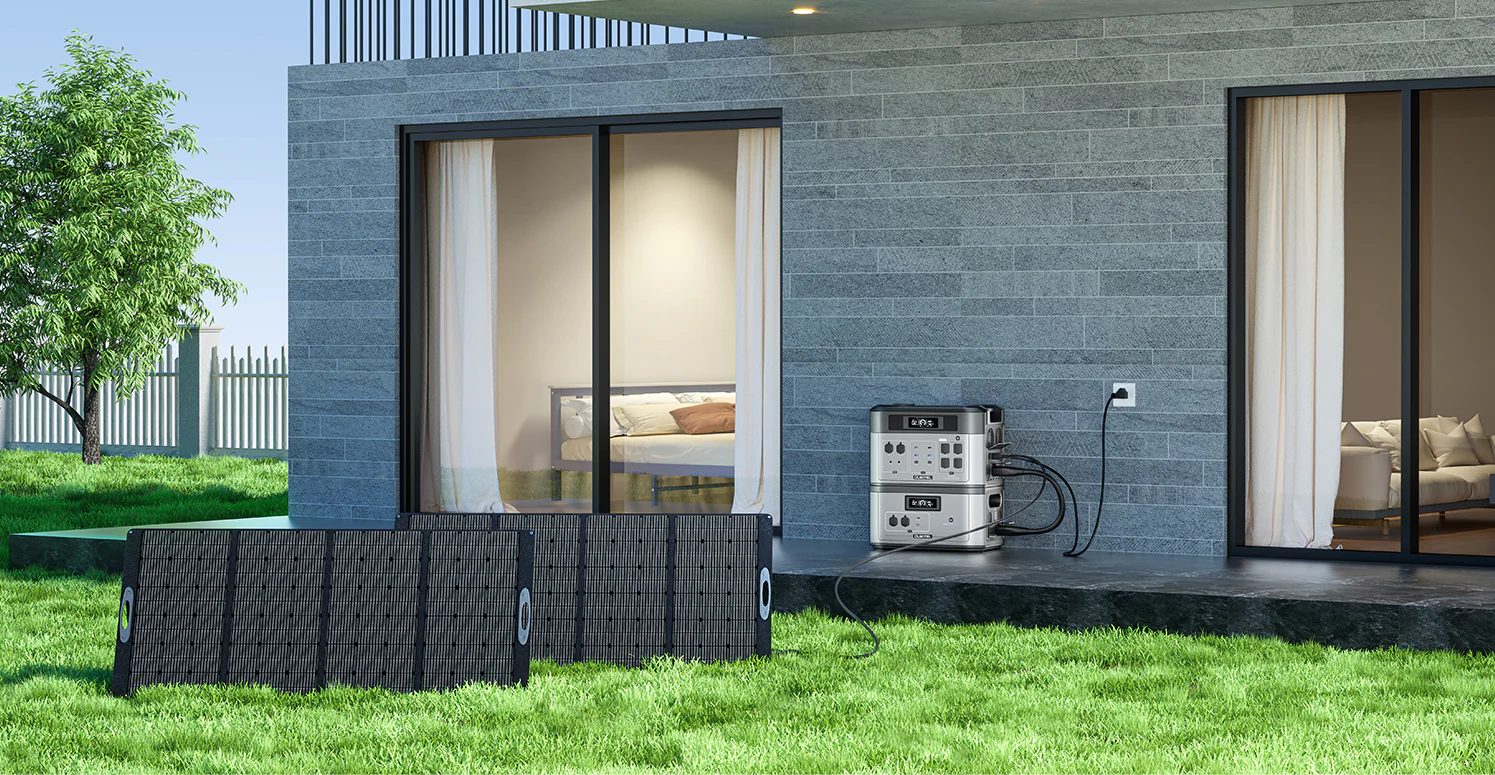
Best Solar Generator for Home Backup: 2026 Buyer's Guide
The best solar generator for home backup is the one matched to your load list, not the biggest number on the shelf. For essentials, a 2,000Wh unit does it. Add a window AC and you want 5,000Wh. That is the short answer.
Here is what most buyers miss. Capacity is only half the spec. The inverter decides what you can actually switch on, and 240V appliances need a unit most portables can't match.
This guide covers real load math, the three tiers that fit most homes, the OUKITEL units that map to each, and the panel pairing that turns one outage's worth of backup into open-ended coverage.
How Do You Pick the Best Solar Generator for Home Backup?
Four steps decide it. Work them in order.
[IMAGE: Alt: how to size the best solar generator for home backup by load and outage length | 16:9 inline]
Step 1: List What Stays On
Write down what truly has to keep running. For most homes the list is short:
- Fridge and freezer, cycling at a 100 to 200W average
- A few LED lights, 50 to 90W
- Router and modem, 15 to 30W
- Phones and a laptop, 30 to 100W
- A CPAP overnight, 30 to 60W
All of it together averages a few hundred watts. Call it 1,500 to 3,000Wh a day. A window AC triples that.
Step 2: Match Capacity to Your Outage Length
Most outages clear in a few hours. A bad storm runs a day or two. A hurricane can take a week. Size for your worst case, then add 30%.
|
Outage Length |
Essentials Battery |
Plus-AC Battery |
|
4 to 12 hours |
1,000 to 1,500Wh |
2,000 to 3,000Wh |
|
24 hours |
1,500 to 2,500Wh |
5,000 to 8,000Wh |
|
48 to 72 hours |
3,000 to 5,000Wh |
10,000 to 15,000Wh |
|
Week-long |
5,000Wh plus solar |
15,000Wh plus solar |
EIA outage data puts most events on the short end. Plan for the long one anyway.
Step 3: Size the Inverter, Not Just the Battery
The inverter has to start your biggest appliance. Motors surge hard the second they kick on. Leave 30% over that surge. A 1,200W microwave wants 1,500W. A window AC, closer to 2,000W. A central AC unit, the 5,000W class.
Step 4: Add Solar to Go Open-Ended
Battery alone gives you a fixed number of hours. Panels reset that clock every sunny day. A 1,500Wh essentials day needs 400 to 600W of panel. A day with the AC running, 1,200 to 1,800W. The Department of Energy's consumer solar resources cover the math.
What's the Best Solar Generator for Home Backup Essentials?
For pure essentials through a one or two day outage, the OUKITEL BP2000 is the sweet spot. It runs 2,200W continuous from 2,048Wh of LiFePO4, with surge room for a fridge or microwave startup. Expand it to 16,384Wh with B2000 packs when you want more.

Alt: OUKITEL BP2000 solar generator for home backup essentials with a 400W solar panel
An essentials day adds up gently:
- Fridge cycling at 100W average: about 720Wh
- Router and modem at 15W: about 360Wh
- Evening LED lights, 50W for 5 hours: 250Wh
- Phone charging, 10W for 3 hours: 30Wh
- CPAP overnight at 50W: about 400Wh
That is roughly 1,760Wh. A 2,048Wh BP2000 clears a full day with margin. In our experience it carries that load through a 36 to 48 hour outage on battery alone. Add a 400W panel and it runs essentials as long as the sun shows up.
What's the Best Solar Generator for Essentials Plus AC?
A window AC rewrites the math. A 12,000 BTU unit pulls 1,200 to 1,500W steady, and starting it next to a running fridge takes real inverter muscle. With lights and router added, your day runs 6,000 to 10,000Wh.
The OUKITEL P5000 Pro fits here. 5,120Wh, 3,600W continuous, so the compressor starts without tripping anything. It takes up to 1,000W of solar.

Alt: OUKITEL P5000 Pro Portable Power Station 5120Wh/3600W
Runtime on that battery:
- Fridge, lights, and AC running 4 hours: about 22 hours total
- Fridge, lights, and AC running 8 hours: about 12 hours total
- Fridge and lights only, AC off: about 28 hours
- With an 800W panel topping up daily: indefinite
LFP shrugs off heavy cycling like this. It runs far more stable than older NMC, with significantly lower thermal runaway risk. That is why every serious backup unit ships it.
What's the Best Solar Generator for Partial-Home Backup?
Partial-home means essentials plus AC plus cooking plus a work setup. Average 1,500 to 2,500W, 8,000 to 15,000Wh a day. This is also where 240V appliances show up, and most portables can't feed 240V at all.
The OUKITEL BP5000 Pro Max handles it. 5,000W continuous from 5,120Wh, expandable to 19,456Wh across seven B2000 packs. The edge is 120V/240V split-phase output, feeding circuits a normal portable can't. EPS switchover stays under 10 milliseconds for medical gear.

Alt: OUKITEL BP2000 Solar Generator powering a window AC and fridge for home backup
|
Spec |
BP2000 |
P5000 Pro |
BP5000 Pro Max |
|
Capacity |
2,048Wh (to 16,384Wh) |
5,120Wh |
5,120Wh (to 19,456Wh) |
|
AC continuous |
2,200W |
3,600W |
5,000W |
|
Voltage |
120V |
120V |
120V/240V split-phase |
|
EPS switchover |
<10ms |
<10ms |
<10ms |
|
Best use |
Essentials backup |
Essentials plus AC |
Partial-home |
|
Price |
Check current pricing |
Check current pricing |
Check current pricing |
Before you commit to any unit, confirm a few things:
- Pure sine wave on every AC outlet
- Switchover under 10ms if you run medical equipment
- Expansion support, in case your needs grow
- A warranty covering cells and inverter electronics separately
- LiFePO4 inside, not older NMC
How Many Solar Panels Should You Pair?
Panels aren't optional for home backup. They turn a one-time battery into open-ended coverage. Match the array to your daily Wh budget:
|
Daily Load Budget |
Panel Array |
|
Essentials, 1,500Wh |
400 to 600W |
|
Essentials plus window AC, 6,000Wh |
1,200W |
|
Partial home, 12,000Wh |
2,000 to 2,500W |
|
Big-house essentials plus AC, 20,000Wh |
3,000W or more |
[IMAGE: Alt: solar panels paired with an OUKITEL power station for home backup recharging | 4:3 inline]
Mounting is its own call. Roof-mount catches the most sun but costs the most. Ground-mount tilts let you chase the sun by season. Folding panels suit renters, though they run 30 to 50% more per watt-hour. Most buyers we work with start folding, then go roof-mount once a year of outages shows their real budget. FEMA lists solar-charged battery backup as recommended outage-prep gear.
Which Brand Makes the Best Solar Generator for Home Backup?
Three things separate a unit worth owning. Chemistry, cycle rating, warranty.
LiFePO4 over NMC, every time. Treat 3,000-plus cycles to 80% capacity as the floor. Look for coverage on the electronics, not just the cells.
OUKITEL hits all three across the lineup, and so do a few other premium brands. We've run OUKITEL units through years of customer deployments, and the longevity and safety record has held. Our portable power station sizing guide settles the capacity math before you spend.
Which Home Backup Unit Should You Buy?
Three questions settle it:
- What stays on during the outage? Essentials, the BP2000. Add a window AC, the P5000 Pro. Add cooking and a bigger AC, the BP5000 Pro Max.
- How long is your worst-case outage? Under 24 hours fits 2,000 to 3,000Wh. 48 to 72 hours wants 5,000Wh-plus. A week needs solar paired in.
- Will you grow into more? If so, start expandable, so you add packs instead of replacing the unit.
For most households doing one to two day essentials backup, the OUKITEL BP2000 is our default. Still torn between solar and gas? Our home backup generators guide lays out the tradeoffs.
FAQs
What is the best solar generator for home backup?
Depends on your loads and your worst outage. For most households running essentials through a one or two day outage, the OUKITEL BP2000 is the pick. Its 2,048Wh covers a fridge, lights, router, and CPAP for a full day with room to spare.
Best fits by situation:
- Essentials only, 24-hour outage: OUKITEL BP2000
- Essentials plus a window AC, 48 hours: OUKITEL P5000 Pro
- Partial home with 240V loads: OUKITEL BP5000 Pro Max
- Apartment renter, single load: OUKITEL P1000 Plus
- RV and home dual use: OUKITEL BP2000 with portable panels
Match the unit to real loads, not headline watts.
What size solar generator do you need to run a house?
Depends what "run a house" means. Essentials like a fridge, lights, and electronics want 2,000 to 3,000Wh and a 2,200W inverter. A small AC bumps you to 5,000 to 8,000Wh.
By how much of the home you cover:
- Essentials suite only: 2,000 to 3,000Wh
- Essentials plus one AC unit: 5,000 to 8,000Wh
- Most rooms minus central HVAC: 8,000 to 15,000Wh
- Whole home including HVAC: 15,000 to 30,000Wh
- Whole home with electric cooking: battery wall
Most folks who say "whole house" really mean essentials. Price that tier first.
Can a solar generator power an entire house?
Partly. Essentials like a fridge, lights, electronics, and a CPAP are easy on any 2,000Wh-plus unit. The whole home with HVAC, a dryer, and a range at once? No portable does that.
What a portable covers, and skips:
- Covers a fridge, freezer, lights, router, phones, TV, laptops, CPAP
- A bigger inverter adds a window AC, microwave bursts, coffee maker
- A split-phase unit reaches 240V circuits and a small central AC during cycling
- It won't run an electric dryer, 240V at 5,500W and up
- It won't run a tankless water heater, 240V at 7,000W and up
For everything at once, install a battery wall.
What are the highest-rated solar generators?
The top-rated units share one foundation. LiFePO4 rated for 3,000-plus cycles, a multi-year electronics warranty, pure sine wave power, and sub-10ms switchover on premium models.
What sets the best apart:
- LiFePO4 chemistry, not older NMC
- A 3,000-plus cycle rating to 80% capacity
- Pure sine wave output on every outlet
- App control with firmware updates
- Capacity you can expand with add-on packs
- Switchover under 10ms for sensitive gear
OUKITEL sits in that group, and its edge is value per watt-hour across the tiers most buyers need.
What are the disadvantages of a solar generator?
A few are real. Upfront cost runs higher than gas. Solar recharge is slow, 8 to 14 hours per kWh on a 200W panel. Cold below freezing trims LFP capacity 10 to 20%. The big tiers get heavy.
What gets called a drawback but isn't:
- Indoor use: no combustion, no carbon monoxide, so it's generally considered safe inside
- Big appliances: fine on the right tier and inverter
- Lifespan: 8 to 25 years depending on cycling
- Reliability: no engine, just a cooling fan
For anyone using one 50-plus hours a year, lower running cost wins over a few seasons.
How long do solar generators last for home backup?
A long time. LiFePO4 is rated for 3,000-plus cycles to 80% capacity, which is decades at storm-prep pace. The cells rarely fail first. The electronics usually retire the unit before the battery does.
Lifespan by how hard you use it:
- Standby UPS only, rarely cycled: 15 to 20 years
- Storm prep plus monthly camping: 15 to 25 years
- Daily off-grid cycling: 8 to 12 years
- Hot, humid, constant exposure: 7 to 10 years
- Cold-winter storage: 12 to 18 years
Gas generators average 8 to 12 years. Solar wins on durability.
How much does a good home backup solar generator cost?
It tracks the tier, and prices move with promotions, so check current pricing. An essentials-class unit around 2,000Wh sits below the AC-capable 5,000Wh class, which sits below the expandable partial-home units. Panels are a separate line.
Budget by tier:
- Essentials, around 2kWh: unit plus a 200 to 400W panel
- Essentials plus AC, around 5kWh: unit plus a 400 to 800W panel
- Partial home, 10 to 15kWh: an expandable unit plus a 1,200W-plus array
- Whole home: a battery wall, installed, in a different class
OUKITEL stays competitive from entry through the expandable partial-home units.
Do you need solar panels, or just the battery?
For short outages, the battery's plenty. A full charge covers a few-hour or overnight outage with no panel. Panels earn their keep when the grid stays down for days, when you can't recharge from the wall.
When panels are worth it:
- Hurricane or wildfire zones with multi-day outages
- Off-grid cabins or RV setups with no shore power
- Any plan needing runtime past 24 to 48 hours
- Regions with steady daytime sun during outage season
Short outages and a steady grid? Skip them for now. Add them when multi-day coverage becomes the goal.
Sources
- Federal Emergency Management Agency (FEMA), Power Outages
- U.S. Department of Energy (DOE), A Consumer's Guide to Buying a House with Solar Panels
- U.S. Energy Information Administration (EIA), Hurricanes in 2024 Led to the Most Hours Without Power in the United States in 10 Years (2025)
- U.S. Environmental Protection Agency (EPA), Used Lithium-Ion Batteries (2026)


Looking for something else?

Difference Between Amps and Volts: What You Actually Need to Know
LEARN MORE
50 Amps in Watts: The Honest 2026 Conversion Guide for RV, Home, EV, and Solar
LEARN MORE
Can You Put Solar Panels on a Mobile Home? (Real-World Guide for 2026)
LEARN MORE
Do Portable Solar Panels Qualify for the 30% Credit?
LEARN MORELooking for something else?

Are Solar Generators Any Good? Here's the Real Answer
LEARN MORE
How Long Does a Portable Power Station Last? (Real Numbers)
LEARN MORE
Oukitel Power Exhibits at Solar & Storage Live Philippines 2026: Carry the Sun, Power Your Freedom
LEARN MOREYou may also like

OUKITEL C01 Car Jump Starter 1350A | 80Wh | PD60W

OUKITEL BP2000 PRO Portable Power Station 3300W

OUKITEL P2001 Plus+400W Solar Generator

OUKITEL P2001 Plus+2*200W Solar Generator

OUKITEL P2001 Plus+200W Solar Generator

OUKITEL BP3000 Portable Power Station 3200W | 2048Wh
Further reading

OUKITEL Power Brings Full-Scenario Energy Storage Solutions to Intersolar Middle East 2026 in Dubai

Portable Power Stations for Power Tools and Job Sites: Surge, Runtime and Safety
