








 Flashlight
 Solar
Extension Cable
Solar
Extension Cable


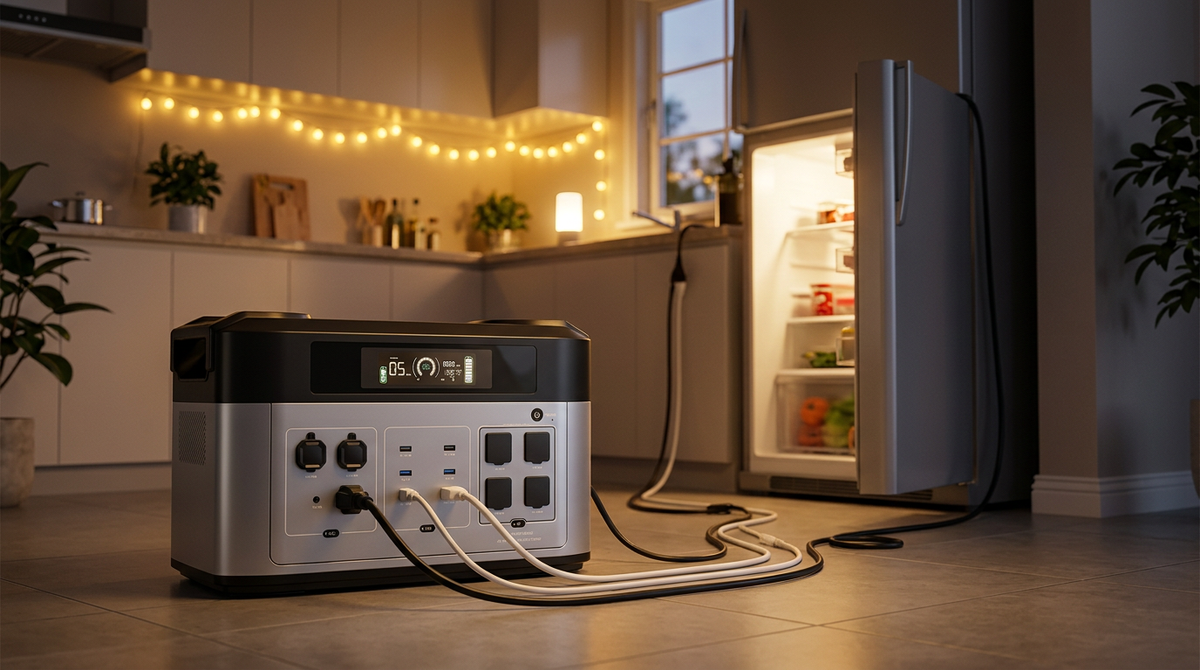
Best 2000W Portable Power Stations in 2026
Choosing the best 2000W portable power station in 2026 requires looking beyond the wattage number. A 2000W rating shows the inverter output, but it does not tell you the battery runtime, surge capability, or charging performance. This class has the output to start and run a lot of household and jobsite equipment, and it still moves by hand or rolls into a truck bed. But the 2000W number is an output figure. It says nothing about runtime.
So the best 2000W portable power station is not the one with the loudest headline. It is the one that starts your hardest appliance, holds it long enough to matter, then recharges before the battery hits empty. Same 2000W label, five times the runtime? That happens more than buyers expect.
This guide starts with common use cases, explains what a 2000W portable power station can actually do, covers the key specifications that affect performance, and ends with sizing steps to help you choose the right setup.
Best 2000W Portable Power Station for Different Use Cases
Start here. A 2000W portable power station does very different jobs, and the right build shifts with the job. So before you open a single spec sheet, name your main use case. The five below cover most buyers.
2000W Portable Power Station for Short Home Power Outages
Blackouts that last a few hours require the basics to be done well. A reliable fridge. Several AC outlets. Fast wall charging. True UPS switchover. A clear display of battery level and remaining runtime earns its keep here too. Moderate capacity often does the job, since you only need essentials to stay alive until the grid comes back.
2000W Portable Power Station for Extended Power Outages
Longer outages ask for more than output. Larger watt-hour capacity. Expandable batteries. Strong solar input. Low standby draw. A unit that refills from solar, a vehicle, or the wall leaves you options when one source is gone. Expandable platforms shine here because your needs can grow in the middle of an emergency.
2000W Portable Power Station for Camping and Outdoor Use
Outdoors, portability beats maximum capacity. Manageable weight. A compact case. Quiet operation. Efficient performance at low loads. USB and 12V outputs handle most camp devices. A 2000W-class unit is usually more than a tent needs, so weight ends up the deciding factor, not watts.
2000W Portable Power Station for RVs and Camper Vans
RV users have a specific checklist. A regulated 12V output. RV-friendly connections. Alternator or DC-to-DC charging, so the battery refills while you drive. Secure handles and storage-friendly dimensions count as much as raw power here. A capable unit is no use if it will not sit safely in your rig.
2000W Portable Power Station for Workshops and Power Tools
For tools and jobsite gear, surge performance leads. Prioritize a strong peak rating, sustained inverter output, good heat management, and a durable case. Motors and compressors pull far more at startup than their running label suggests. If you want to match units to a specific tool list, our guide to calculate runtime and size a 2000W portable power station for toolswalks through the arithmetic.
What a 2000W Portable Power Station Really Means: Continuous Output, Surge Power, and Watt-Hours
Buyers misread this one constantly. The 2000W rating does not tell you how much energy the battery holds. It points to the inverter's maximum continuous output, meaning how much power the unit pushes at one moment. Store versus deliver. Two different numbers.
- Watts (W): Measures how much power a device uses at a specific moment and determines what appliances a power station can run.
- Watt-hours (Wh): Measures stored energy and determines how long the battery can keep devices running.
- Continuous output: Shows the maximum power the inverter can provide steadily.
- Surge output: Shows the temporary extra power available for appliance startup spikes.
Continuous Output Sets What You Can Run
A 2000W continuous inverter supports devices, or combinations of them, drawing up to roughly 2,000 watts at once. Running flat out all day is a bad idea, though.
Leave headroom. It helps reliability, keeps heat down, and soaks up the small spikes appliances throw. A fridge, a laptop, a few lights, and a router share that budget fine. Stack several heating appliances, and you blow past the practical limit in a hurry.
Surge Output Handles Startup
Plenty of appliances pull a short, sharp burst the instant they switch on. Fridges. Pumps. Compressors. Power tools. Surge output is what covers that spike.
A unit can carry enough continuous wattage for a device and still trip if its surge ceiling sits too low. So check both the running watts and the startup watts before you commit. In our experience, the surge spec, not the continuous one, is what quietly rules out a unit for compressor loads.
Watt-Hours Decide How Long Things Run
Watt-hours are not the same as watts. Watts are the pull at any given moment. Watt-hours are the total stored in the battery. Picture two 2000W stations running the same fridge.
One quits in three hours, the other keeps going past twelve. The gap is in capacity, and the 2000W label hides it completely. Runtime follows capacity, efficiency, and whatever you plugged in. Not the output label.
A "2000W" Name Is Not Always Exactly 2000W
The label can mean an approximate output, a product category, or a marketing series rather than a hard spec. Some units in the class run 1,800W continuously. Others run 2,200W or more. So read the details: continuous output, surge rating, battery capacity, charging limits. The name on the box is a starting point. Nothing more. This is why comparing real output, surge capability, and battery capacity is essential when choosing the best 2000W portable power station for your needs.

[IMAGE: Alt: Continuous output, surge wattage, and watt-hours compared on a 2000W portable power station | 4:3]
What Will a 2000W Portable Power Station Run?

A 2000W portable power station handles a wide range of household devices, outdoor gear, and emergency loads. Runtime still comes down to battery size, appliance efficiency, and how many devices share the outlets at once. The table sorts the common cases.
|
Appliance |
Typical running wattage |
Possible startup wattage |
Can a 2000W station run it? |
Runtime notes |
|
Refrigerator |
Moderate |
Higher during compressor startup |
Usually yes |
Cycling compressor changes energy use |
|
Laptop and phone chargers |
Low |
Minimal |
Yes |
Often runs for many hours |
|
Microwave |
High |
Slightly higher |
Usually yes |
Drains the battery quickly |
|
Space heater |
Very high |
Similar to running load |
Usually not practical |
Empties the battery fast |
|
Power tools |
Medium to high |
High startup demand |
Depends on the tool size |
Surge rating is the gate |
Electronics and Low-Power Devices
For everyday electronics, a 2000W unit is overkill on output. It runs a stack of low-demand devices together without strain: phones, laptops, Wi-Fi routers, LED lights, TVs, cameras, fans, CPAP machines. Inverter power is rarely the limit here. Runtime is the thing to watch, since small electronics keep sipping for hours depending on capacity.
[IMAGE: Alt: 2000W portable power station powering a fridge, microwave, laptop, and lights at once | 4:3]
Refrigerators and Freezers
Keeping the fridge cold is one of the most common backup jobs. Most household refrigerators run well under 2000W, but the compressor spikes at startup. And because a fridge cycles on and off through the day, multiplying its running wattage by hours overstates the draw badly.
A useful shortcut is to divide the fridge's plugged-in time by three to estimate hours at full wattage. Temperature settings, room heat, and compressor efficiency all move the number.
Kitchen Appliances
Coffee makers, microwaves, kettles, toasters, rice cookers, portable induction burners. All of them work with a 2000W station. Compatibility is rarely the issue. Energy use is. Anything that makes heat converts electricity into heat, and that is expensive. A kettle boils fine, then takes a real bite out of your runtime. Short bursts, big draws.
Power Tools and Outdoor Equipment
For workshops, sites, and outdoor projects, a 2000W system pairs well with the right gear. Drills, saws, pumps, and compressors throw startup surges that demand extra inverter headroom. Factor in both the tool's running demand and the combined load if chargers or a second device run alongside it.
Devices That Need Extra Caution
Some high-demand appliances deserve a careful look before you plug them in:
- Space heaters
- Portable air conditioners
- Large electric cooktops
- Clothes dryers
- Electric water heaters
- Central HVAC systems
A 2000W station may start a few of these. Runtime can be minutes, though, and some units exceed startup or continuous limits outright. If a window AC or a larger split-phase load is on your list, that is a different tier of machine, not a 2000W one.
A Simple Runtime Formula
Estimate runtime like this: usable battery capacity divided by appliance wattage. A 100W device runs far longer than a 1,000W one on the same battery. Real results wander, though, thanks to inverter losses, protection limits, appliance cycling, and temperature. Treat the math as a planning guide, not a guarantee, and size against your real habits.
How We Judge the Best 2000W Portable Power Station
Finding the best 2000W portable power station means reading past one spec. A fair evaluation asks how a unit performs in real situations and whether it fits the job you bought it for. Five factors carry most of the weight.
Appliance Compatibility and Surge
The first question is simple: can it safely start and hold the appliances you actually need? A strong unit gives enough continuous output for daily loads and enough surge for the motors and compressors that spike on startup. Miss the surge, and the rest of the spec sheet is academic.
Usable Capacity and Efficiency
Capacity numbers can mislead because the full advertised watt-hours rarely reach your outlets. Energy is lost to inverter conversion, heat, and the reserve that the battery holds back to protect its cells. Usable capacity is the honest figure for expected runtime. Across the setups we have reviewed, buyers who plan around usable watt-hours are the ones who avoid nasty surprises at hour six.
Recharge Speed and Flexibility
A good unit offers practical ways to refill: wall, solar, and vehicle. Do not fixate on the advertised recharge time. Ask how fast it recovers using the sources you will actually have during an outage or trip.
Portability and Daily Usability
Power means little if the unit is a chore. Weight, dimensions, handles, wheels, display quality, port placement, and fan noise all shape whether you reach for it. A great spec sheet attached to an awkward box gathers dust.
Long-Term Ownership
Chemistry, cycle life, warranty, safety certifications, replacement parts, support, expansion. All of it decides long-term value. A reliable station should still perform for years, not just across the first few uses.
Key Features to Compare Before Buying
Choosing well means reading past the headline number. A big inverter lets you run heavy appliances, sure. But daily usability comes down to how the unit manages energy, how fast it recovers, and how it fits your routine. Work through these features in order.
Battery Capacity and Usable Watt-Hours
Two units rated at 2000W can post wildly different runtimes based on internal capacity. So rather than assume a big inverter buys longevity, add up your daily consumption in watt-hours. Then split the rated capacity from the usable capacity.
Inverter efficiency losses, often 15 to 20 percent, turn some stored energy into heat instead of output. Standby losses matter too. That trickle spent just keeping the inverter awake can drain a battery overnight while you're only charging a phone. Most makers also hold back a reserve so cells never fully discharge. It protects long-term capacity, but it trims the energy you get out of the box.
LiFePO4 vs NMC Chemistry
Cell chemistry drives lifespan and physical size. Neither type wins outright. Each one trades something away.
|
Feature |
LiFePO4 (lithium iron phosphate) |
NMC (nickel manganese cobalt) |
|
Cycle life |
Superior, often 3,000 to 5,000+ cycles to 80% capacity |
Standard, typically 500 to 800 cycles to 80% capacity |
|
Thermal stability |
Very high; resilient under heavy use |
Standard; needs robust active cooling |
|
Energy density |
Lower; heavier, bulkier build |
Higher, lighter, more compact chassis |
Quick buying guide:
- Choose LiFePO4 for home backup, frequent use, off-grid setups, and situations where longer cycle life matters most.
- Choose NMC when lower weight and a more compact design matter more, such as lightweight camping or mobile setups.
- Compare the full system, not just the chemistry. Battery management, cooling, and safety features also affect real-world performance.
Cycle daily for off-grid living, and LiFePO4 is the clear pick. If shaving weight is everything, NMC packs tighter. One caution: system safety comes from the overall engineering and the battery management system, not chemistry alone.
LiFePO4 does carry significantly lower thermal runaway risk than older NMC packs, which is why nearly every modern home-backup station ships with it. Independent work such as NREL's battery lifetime modeling backs the long cycle-life advantage of iron-phosphate cells.
This is a big reason the LiFePO4-based options we see, including the OUKITEL BP2000 at 2,048Wh, quote cycle counts in the thousands rather than the hundreds.

[IMAGE: Alt: LiFePO4 versus NMC battery chemistry comparison for a 2000W portable power station | 4:3]
Continuous Output, Surge, and Pure Sine Wave
Three electrical benchmarks matter here, and they are not interchangeable:
- Continuous output: the wattage the unit holds indefinitely. Aim for around 2,000W to run kitchen appliances or power tools.
- Surge rating: the brief peak for starting motors, often two to three times an appliance's running power.
- Pure sine wave: a clean waveform matching your wall outlet. Insist on it. Modified sine wave can disturb or damage sensitive electronics, laptops, CPAP machines, and variable-speed motors.
A class example helps calibrate. The BP2000, a standard 2000W-class unit, delivers 2,200W continuous with a 4,000W peak. Want more headroom without jumping to a whole-home box? The
BP2000 Pro keeps the same 2,048Wh battery but raises continuous output to 3,300W, which covers a space-heater-plus-fridge combo the base unit would strain against.
AC Wall Charging Speed
A big battery turns into a liability if it takes all day to refill, especially during rolling blackouts or a tight travel window. So watch the marketing shorthand. Makers love to quote 0 to 80 percent of the time, while the last 20 percent drags on to protect the cells.
Others hide their fastest speeds behind an app-only fast mode. Read past the advertised hours and compare the maximum AC input in watts instead. For reference, the BP2000 accepts up to 1,800W AC and hits 80 percent in about 1.5 hours, or roughly an hour on combined AC plus solar.
Solar Input and Panel Compatibility
Off-grid independence means matching solar input to both the battery and your daily use. A small 100W panel sustains light loads like laptops, but it will crawl to refill a deeply drained 2,048Wh battery. So check the maximum solar wattage, the accepted voltage range, and the current limits.
Most units in this class, the BP2000 included, top out near 1,000W of solar over standard MC4 connectors, which keeps you clear of proprietary adapters. When you plan an array, work out series and parallel strings to stay inside the voltage window. And budget for reality: haze or shading on a single cell can cut yield by 20 percent or more.
Vehicle and Alternator Charging
Refilling a 2000W station through a standard 12V cigarette socket is painfully slow, often 15 to 20 hours, because the output caps at nearly 100W. For van life, RV travel, or heavy driving, look for units that support high-power DC-to-DC or alternator charging. Those tap the vehicle's charging system for 400W to 800W and cut recharge time to a few hours on the move.
AC, USB, and DC Ports
Before buying, inventory the plugs your devices need. Count the AC outlets and check their spacing, since bulky bricks block neighbors. A good layout includes:
- High-wattage USB-C Power Delivery ports at 100W or more, to charge laptops without an AC brick.
- Standard USB-A ports for older devices.
- A regulated 12V DC output, like a car socket, to run 12V gear without waking the main inverter.
A high port count is useless if total output is throttled. Confirm the unit can feed several high-draw ports at the same time.
UPS and Pass-Through Charging
If you want the station as a home backup, separate basic pass-through charging, which powers devices while the unit itself charges, from a true fast-transfer UPS. For reliable backup, check the transfer time. Under 20 milliseconds is the mark, and many quality units, including the BP2000, switch in under 10 milliseconds.
Also verify which outlets support the feature, the maximum UPS load, and whether it stays active across charging modes. Highly sensitive computer gear may still want a dedicated standalone UPS to avoid reboots.
Expandable Battery Capacity
An expandable design lets you add external packs as your needs grow. That is valuable for long outages or a permanent RV build, and it is the single biggest advantage over a fixed-capacity unit.
The BP2000 is an example of an expandable 2000W LiFePO4 portable power station, starting at 2,048Wh and scaling up to 16,384Wh with seven expansion batteries. This type of design lets buyers match capacity to changing needs instead of committing to a fixed battery size from the start. Weigh the trade-offs, though: expansion packs add real cost and weight, often use heavy cables, and demand storage space.
Display, App Control, and Monitoring
On-site, a clear onboard display is your main tool. Prioritize screens that show battery percentage, input and output wattage, estimated runtime at the current load, estimated charge time, and plain error indicators. Apps are handy for remote checks and deeper settings, but treat them as a supplement, not a replacement for a good on-unit display.
Noise, Heat, and Standby Draw
Inverters and fast chargers generate heat, which means cooling fans. Fan noise turns into a problem during overnight CPAP use, an indoor outage, or quiet recording work. Watch self-consumption too: keeping the system on to power one tiny device can burn more energy running its own electronics than it delivers to the load.
Weight, Handles, Wheels, and Storage
In this class, "portable" is relative. Units often weigh 40 to 70 pounds. Be honest about your space and strength. Can one person lift it safely? Will it load into your vehicle? Check handle ergonomics, whether any wheels handle gravel or grass, and whether the dimensions fit where it will live.
Safety Certifications, Warranty, and Support
Look past the core battery specs to protect the purchase. Confirm recognized electrical safety certifications and a solid battery management system with overload, short-circuit, and temperature protection. Review the warranty length and its exclusions, the proximity of repair or return options, the long-term availability of replacement cables, and the maker's support reputation.
How Do I Match a 2000W Power Station to My Use Case?
Choosing gets much easier when you start with your actual needs instead of a spec comparison. The right system depends on what you run, how long you need it, and how you plan to recharge. Six steps get you there.

[IMAGE: Alt: Sizing a 2000W portable power station from a device load list | 4:3]
Step 1: Create a Device Load List for a 2000W Portable Power Station
Write down the devices you consider essential during an outage, trip, or workday. Record each one's running wattage, startup wattage, and expected daily runtime. Separate true necessities from comfort items.
A fridge, chargers, medical equipment, a router, and lights usually outrank a coffee maker in an emergency. This list stops you from buying too small or overpaying for capacity you will never use.
Step 2: Calculate Total Running and Startup Wattage for a 2000W Power Station
A station must handle the combined draw of everything running at once. A 2000W inverter does not mean 2,000 watts per appliance with no regard for the rest. Add the running wattage of your simultaneous loads and leave room for startup surges. That headroom matters most with compressors, pumps, fridges, and tools. Hot weather adds stress too, so a little extra capacity helps.
Step 3: Calculate Daily Watt-Hours for a 2000W Portable Power Station
Estimate daily energy by multiplying each appliance's wattage by its hours of use. A 50W device running for 10 hours uses about 500 watt-hours. Cycling appliances need a different approach; a fridge does not run its compressor nonstop, so a duty-cycle estimate beats multiplying by peak wattage. Remember that capacity ratings do not equal the energy at your outlets, thanks to conversion losses.
Step 4: Choose the Right Runtime and Battery Capacity for a 2000W Power Station
Your required runtime should drive capacity more than inverter size does. Decide whether you need:
- A few hours of outage protection for essentials
- Overnight backup
- Multi-day camping
- Repeated daily worksite use
- Extended emergency preparation
A bigger battery buys longer runtime, but it also adds weight, cost, and charging demand. This is the point where an expandable platform is worth a hard look, since it lets one purchase cover several of these targets over time.
Step 5: Plan How to Recharge a 2000W Portable Power Station
Stored energy solves only half the problem. You also need a way to refill after the first cycle. Possible sources include:
- Wall outlet
- Solar panels
- Vehicle socket
- Alternator charger
- Generator
- Additional battery expansion
For extended outages or off-grid use, a recharge strategy is not optional. A large battery with no practical way to restore energy is just a temporary backup. If you are weighing a battery system against fuel, our guide to how portable power stations compare with fuel generators lays out the trade-offs.
Step 6: Compare Weight, Portability, and Budget Before Buying a 2000W Power Station
Finally, decide how portable it truly needs to be. Some buyers want one high-capacity unit; others do better with smaller systems that are easier to move and position. The cheapest option is rarely the best value. A low price can hide slow charging, weak efficiency, thin warranty support, no expansion, or less usable capacity. Long-term value rides on performance, reliability, and fit.
When the framework lands on more than a 2000W-class unit can carry, that is a signal, not a failure. If your list grows to a window AC or a multi-day whole-home target, a larger tier like the
P5000 Pro (5,120Wh, 3,600W continuous, 5,000 cycles) starts the compressor without tripping. If the framework lands lighter, a compact unit like the P1000 Plus at about 26 pounds is easier to carry between campsites.
Common Mistakes When Buying a 2000W Portable Power Station
Buying without knowing your real requirements is how money gets wasted. A higher wattage rating does not automatically mean better for your situation. These are the errors we see most.
Confusing Watts With Watt-Hours
The classic mix-up. Watts decide which appliances run; watt-hours decide how long they last. A powerful inverter married to a small battery still delivers disappointing runtime. Both numbers matter, for different reasons.
Ignoring Startup Power
Many buyers check only the running wattage and skip the startup demand. Fridges, pumps, compressors, and saws briefly pull far more when they kick on. A device that looks compatible on paper can still overload an inverter with too little surge.
Comparing Advertised Instead of Usable Capacity
Capacity numbers can flatter. The energy at your outlets is trimmed by conversion losses, protection limits, and efficiency. Judge usable capacity, not the sticker watt-hours.
Assuming 2000W Can Power a Whole House
A 2000W station is a valuable backup, but it is not a substitute for a full home electrical system in most cases. It carries selected essentials, fridge, lights, electronics, small appliances, while running several high-demand systems at once will exceed its practical limits. Per FEMA outage guidance, planning around essentials is the sound approach.
Buying Too Little Solar
Solar helps in emergencies and off-grid, but undersized panels make recovery crawl. A small array may need several sunny days to refill a deeply drained battery after heavy use.
Overlooking Weight and Dimensions
A powerful unit is worth little if you cannot move, store, or transport it. Confirm you can lift it safely, load it, get it through doorways, and store it where you plan to.
Ignoring Connectors and Accessories
Before buying, confirm that the accessories you need exist and are compatible: solar cables, vehicle adapters, expansion cables, RV connectors, extension leads. Missing parts can lock you out of charging or connection features exactly when you need them.
Choosing on Price Alone
The lowest sticker rarely wins in the long term. Battery quality, charging speed, efficiency, warranty, support, and replacement parts all shape the ownership experience. A slightly higher upfront cost can buy years of better reliability.
Final Buying Checklist for a 2000W Portable Power Station
Use this checklist to choose the best 2000W portable power station based on output, runtime, charging options, and long-term reliability.
Power and Battery Performance
- Continuous AC output and surge capability
- Pure sine wave inverter
- Battery capacity in watt-hours, plus estimated usable capacity
- Your appliances' startup wattage and your expected runtime
- Battery chemistry and cycle-life rating
Charging, Expansion, and Connectivity
- Maximum AC charging input, maximum solar input, and solar voltage range
- Vehicle or alternator charging options
- Number and type of ports, plus simultaneous output
- UPS transfer time and supported outlets
- Expansion support
Portability, Safety, and Ownership
- Weight, dimensions, wheels, and handle quality
- Noise level and standby draw
- Safety certifications, warranty length, and support availability
- Total cost including panels and accessories
The best system is not the one with the highest specs. It is the one that can safely power your essentials, give you enough runtime, and recharge before the stored energy runs out.
Ready to Choose Your 2000W Setup?
Work the framework, not the headline. Here is the short path:
1. List your essential devices with running and startup wattages, then add the loads that run at the same time.
2. Multiply by hours to get your daily watt-hours, and set a runtime target so capacity, not just output, drives the pick.
3. Match a unit to that math, favor LiFePO4 with a strong surge and true UPS switchover, and confirm the recharge plan and expansion path before you buy.
FAQs
What Is the Most Reliable Portable Power Station Brand?
No brand is automatically the most reliable for everyone. Reliability comes down to the specific model, not the logo. Check the warranty and its exclusions, the safety certifications, the battery chemistry, and the rated cycle life. LiFePO4 units typically run 3,000 to 5,000+ cycles.
Also look at support responsiveness and whether replacement cables and expansion parts are easy to get. A good reputation helps, but the current model's specs and support policy matter more.
What Will a 2000W Power Station Run?
Most everyday devices at once, and many mid-size appliances one at a time. Phones, laptops, lights, a router, a CPAP, a TV, and fans run comfortably together for hours.
A fridge usually runs fine, with headroom for the compressor's startup surge. Heating appliances like a microwave, kettle, coffee maker, or toaster work but drain the battery fast. Central AC, large heaters, dryers, and water heaters are often impractical. Output rarely limits small electronics; runtime does.
What Is the Difference Between Watts and Watt-Hours?
Watts measure power at one instant; watt-hours measure energy over time. Watts tells you what a unit can run right now. Watt-hours tell you how long it will keep running. A 2000W inverter sets the ceiling on how much you can draw at once, while the battery's watt-hours set the clock.
Two units with the same 2000W label can run the same fridge, one for four hours and one for twenty, purely on capacity. To estimate runtime, divide usable watt-hours by the device's wattage.
Is LiFePO4 Better Than NMC for a Power Station?
For most home-backup and off-grid use, yes. LiFePO4 lasts far longer, often 3,000 to 5,000+ cycles against 500 to 800 for NMC, and it runs cooler with significantly lower thermal runaway risk. That is why nearly every modern indoor-rated station ships with it.
NMC's only real edge is lower weight and a more compact size. Either way, safety still depends on the battery management system, not the chemistry alone.
How Long Will a 2000W Portable Power Station Run a Refrigerator?
A typical 2,000Wh unit runs a household fridge for roughly a day. A fridge cycles on and off instead of drawing power nonstop, so estimating it at full wattage the whole time overstates the draw. Dividing plugged-in time by three gets closer.
Actual runtime depends on usable capacity, the compressor's duty cycle, room temperature, how often the door opens, and whether other devices share the battery. Treat any figure as a planning estimate.
Can a 2000W Power Station Run a Whole House?
No. A 2000W station backs up selected essentials, not a full home electrical system at once. It handles standard 120V loads like a fridge, lights, a router, device charging, and a CPAP overnight.
It cannot run split-phase 240V loads like central AC, electric dryers, or well pumps, which need a larger tier entirely. Running several high-demand systems at the same time will exceed their limits, so plan around essentials.
How Fast Can a 2000W Portable Power Station Recharge?
It depends on the source. Wall AC is fastest, often reaching 80 percent in about 1.5 hours at high input, or roughly an hour on combined AC and solar. A standard 12V car socket is slow, often 15 to 20 hours at around 100W.
Alternator or DC-to-DC charging pulls 400 to 800W and refills in a few hours while you drive. Watch the marketing: advertised 0-to-80-percent times skip the slower final 20 percent, so compare the maximum input in watts instead.
Is a 2000W Portable Power Station Enough for Camping?

For most camping, yes, and often it is more capacity than a tent trip needs. Lighting, device charging, a fan, and a small cooler rarely trouble a 2000W-class inverter.
Outdoors, weight usually matters more than watts, so if you carry the unit between sites, a lighter option can serve you better than the largest one. Look for USB-C, USB-A, and a regulated 12V output, plus solar input for multi-day stays. Match the battery to how many nights you go between recharges.
Should I Buy an Expandable 2000W Power Station?
If your needs might grow, yes. An expandable platform lets one purchase scale from essentials backup to multi-day coverage without buying a new unit. It can start at a 2,000Wh base and climb into the tens of thousands of watt-hours as you add packs.
The trade-off is that expansion batteries add cost, weight, and cable clutter, so plan for storage and handling. If your needs are stable, a fixed-capacity unit is simpler and lighter. Confirm the cable type before committing.
Sources
- U.S. Energy Information Administration,How Much Electricity Does an American Home Use? (2024)
- U.S. Energy Information Administration (EIA), Use of Energy in Homes (2023)
- Federal Emergency Management Agency (FEMA), Power Outages
- U.S. Consumer Product Safety Commission (CPSC),Carbon Monoxide Fact Sheet
- National Renewable Energy Laboratory (NREL), Predictive Battery Lifetime Modeling at NREL (2021)


Looking for something else?

Difference Between Amps and Volts: What You Actually Need to Know
LEARN MORE
50 Amps in Watts: The Honest 2026 Conversion Guide for RV, Home, EV, and Solar
LEARN MORE
Can You Put Solar Panels on a Mobile Home? (Real-World Guide for 2026)
LEARN MORE
Do Portable Solar Panels Qualify for the 30% Credit?
LEARN MORELooking for something else?

Are Solar Generators Any Good? Here's the Real Answer
LEARN MORE
How Long Does a Portable Power Station Last? (Real Numbers)
LEARN MORE
Oukitel Power Exhibits at Solar & Storage Live Philippines 2026: Carry the Sun, Power Your Freedom
LEARN MOREYou may also like

OUKITEL P2001 Plus Portable Power Station 2400W | 2048Wh

OUKITEL P2001 Portable Power Station 2000W | 2000Wh

OUKITEL P5000 Portable Power Station 5120Wh | 2200W

OUKITEL P2001 Solar Generator

OUKITEL P1000 PLUS Portable Power Station 1800W | 1024Wh

Further reading

OUKITEL Power Brings Full-Scenario Energy Storage Solutions to Intersolar Middle East 2026 in Dubai

Portable Power Stations for Power Tools and Job Sites: Surge, Runtime and Safety
