

 Flashlight
 Solar
Extension Cable
Solar
Extension Cable


Are Solar Generators Any Good? Here's the Real Answer
Are solar generators any good? It depends. Genuinely. There are use cases where solar clearly beats gas, others where it cannot compete, and a wide middle band where the answer comes down to factors most spec sheets do not surface: how often you lose power, what appliances you actually need to run, whether you can recharge during the outage, how cold your winters get. Get those variables right and a solar generator is a strong purchase. Get them wrong and you are holding a thousand-dollar paperweight three hours into the next outage, watching the battery indicator drop while the lights stay off.
The marketing makes it look stupidly simple. Sleek black unit on the back porch, sun shining, fridge humming, phones charging in a neat little row. What the ad never shows you is day three of a gray Pacific Northwest streak with a half-charged battery and no plan B. A user on r/solar put the actual problem this way last spring: "Central AC is going to be drawing a few thousand watts with inrush when it starts up. Only a whole home level system is going to be able to run that." That's the kind of detail that gets glossed over until the moment it costs you.
What follows gets specific. Which jobs solar handles without breaking a sweat, which ones it just cannot do, real runtime numbers pulled from independent lab testing (not manufacturer brochures), and a five-question self-check at the end so you do not end up with the wrong unit in your garage.
Quick Answer at a Glance
Short version for anyone who skims.
Solar generators CAN power phones, laptops, fridges, fans, lights, and CPAP machines, with two important qualifiers. First, capacity has to match the load: a 500Wh unit will not keep a fridge running for a full day no matter what the ad shows. Second, real runtime depends on factors that do not appear on the spec sheet: how often the fridge compressor cycles, ambient temperature in the room, how often the door opens, what else is plugged in. Where solar cleanly falls apart is the heavy stuff: central AC, electric stoves, dryers, water heaters. Different category of equipment entirely.
Notes on the numbers:
- Real home backup starts around 2,000Wh. Below that you're charging laptops, not running fridges for a full day.
- LiFePO4 cells last 3,000-6,500 cycles. Regular lithium-ion gives up at 500-1,000. Same-looking box, very different lifespan.
- Gas wins on raw wattage and refill speed. Pour in a gallon and you're back to full in under a minute.
- Solar wins everywhere else. No fumes means indoors is fine. No engine means no oil changes, no spark plugs, no fuel sitting in your garage going stale.
Several variables push your specific answer up or down: how often outages hit your area, how many people share the house, whether anyone relies on medical equipment, apartment vs. detached home with garage space, and regional climate. Cold winters change battery behavior. Hot summers strain capacity. Frequent short outages call for different gear than rare multi-day events. The rest of the article works through how those factors change the math.
Should You Buy a Solar Generator? (5-Question Self-Check)
Run these before you put anything in a cart. The most expensive mistake here is not picking the wrong brand. It is buying a fine product for a job it was never built to do.
- Biggest device you would plug in? Phone or laptop, any unit works. Full-size fridge, you want 2,000Wh minimum. Window AC, you need 3,000W output. Central AC, walk away from portable solar entirely. That is whole-home territory.
- How often does the grid drop on you? A handful of hours a year, small or mid-tier covers it. Days at a time, multiple times a year, go 2,000Wh and add solar panels for daytime recharge.
- Do you camp, run a job site, or work off-grid? Yes, solar wins easily. The silent operation alone earns the price difference. No, and outage backup is the only goal? Gas might win on budget.
- Can you stomach the upfront cost? A capable emergency unit is $1,000 to $3,000. The gas equivalent is $400 to $800. Solar earns the gap back through silence, zero fuel, and zero maintenance, but only if you use it enough.
- Where will it actually live? Indoors, apartment, small studio? Solar is the only safe option. Gas generators kill people every storm season. Outdoors with garage storage? Gas works fine and costs less.
Three or more answers leaning solar? Buy one. Two or fewer? Reconsider whether portable is the right tool, or whether a standby generator fits better.

Alt: solar generator vs gas generator comparison decision tree buyer self-check
What a Solar Generator Actually Is
The term “solar generator” is marketing language, not a technical one. What you're actually buying is two products bundled together: a portable power station (a large battery with built-in inverter) and one or more solar panels to recharge it. The power station is the core unit. Solar panels are one charging method among several.
A traditional gas generator creates electricity on demand, continuously, as long as it has fuel. A solar generator stores a fixed amount of electricity and then runs out. That's the fundamental difference and it changes every buying decision downstream.
The Battery Is the Generator, Not the Panels
The panels charge the battery. The battery powers your devices. If the battery is small, it doesn't matter how many panels you attach. You'll still run out of stored power quickly. Battery capacity, measured in watt-hours (Wh), is the number that actually determines how long you can run things.
Quick reference at 100W load:
- 500Wh battery: 4-5 hours of runtime
- 1,000Wh battery: 8-10 hours
- 2,000Wh battery: 16-20 hours
- 5,000Wh battery: 40+ hours
Plan on roughly 80-85% usable capacity in real-world use, but the exact figure varies. Inverter efficiency, load type (high-draw appliances pull less efficiently), ambient temperature, and battery state-of-charge all push the number around. Spec sheets quote the best-case figure and rarely break this down.
Watt-Hours vs Watts (The Two Numbers That Matter)
Watt-hours measure how much energy is stored. Watts measure how fast you can pull energy at any moment. You need both numbers to go your way.
A unit rated 2,000Wh capacity but only 800W output can't start a refrigerator that surges to 1,500W on compressor kick-on, even with plenty of stored energy available. Independent lab testing (CNET) found usable capacity ranges from 83% to 95% of stated specs across leading brands. That means a “2,000Wh” unit might deliver 1,660-1,900Wh of usable power. Always size up to cover that gap.
Where Solar Generators Genuinely Shine
Credit where credit is due. There are three situations where solar genuinely beats gas, not just ties it. These are the use cases where every honest review lands in the same place.
Camping and Off-Grid Use
Silent. Zero fumes. Safe inside a tent, van, or cabin. Solar generators are hard to beat for camping, glamping, tailgating, and remote work from off-grid sites. You charge during the day. Run lights, fans, devices, and a CPAP at night. No fuel to carry. No noise that bothers neighboring campers.
A user on r/TwoXPreppers shared their setup last spring: “I have a variety of Jackery solar generator units. The 240v2 is good for charging phones.” That smaller-tier use case is exactly where portable solar shines. For weekend trips or device-heavy off-grid work, units under 1,000Wh handle the load easily and travel light.
Emergency Home Backup for Essentials
For a typical 24-48 hour outage, a 2,000Wh+ solar generator covers essentials. Under typical conditions. Fridge stays cold. Phones charge. CPAP runs overnight. A few lights stay on. Lab testing gives a useful range:
- BobVila's testing ran a full-size refrigerator for 30+ hours on a 2,074Wh LiFePO4 unit, under controlled lab conditions with limited door openings and no other appliances connected
- A 2,048Wh unit ran the same fridge for 10+ hours in a separate test with a different compressor cycling pattern. Both numbers are accurate. Real-world results land somewhere between depending on your specific fridge, room temperature, and how often you open the door
- A 768Wh unit kept phones, tablets, and laptops powered for a full family weekend
The key word stays the same throughout: essentials. Not luxury. Not everything-as-normal. Essentials.
Silent, Fume-Free Indoor Operation
Gas generators cannot be run indoors or in attached garages. Carbon monoxide kills people every storm season because someone runs a gas unit too close to the house. Solar generators carry no such restriction. You can run one in your living room. Bedroom. Basement. Apartment.
For anyone with a CPAP, oxygen concentrator, or a preference for not opening windows in bad weather to vent fumes, this is a real, practical advantage. Not a nice-to-have, a safety feature. One important caveat that the safety story tends to overshadow: indoor-safe operation does not solve the harder outage problem of recharging the unit during the event. A clean, silent power station that drains to zero at hour 36 with no recharge path is still a dead power station. Indoor safety is settled; charging-during-the-outage is the harder strategic question.
Where Solar Generators Fall Short
This is the part most reviews tiptoe around because it complicates the sales pitch. Three real-world scenarios where solar is the wrong tool, and pretending otherwise costs buyers money.
High-Draw Appliances (AC, Stove, Dryer)
The r/solar quote bears repeating because most buyers genuinely don't know this: “Central AC is going to be drawing a few thousand watts with inrush when it starts up. Only a whole home level system is going to be able to run that.”
That's the ceiling. Wattage by appliance:
- Central AC: 3,000-5,000W startup surge, sustained 2,000-3,500W
- Electric stove (one burner): 1,500-2,000W
- Electric stove (multiple burners + oven): 4,000-5,000W
- Electric clothes dryer: 5,000W sustained
- Electric water heater: 4,500W sustained
- Window AC (large): 1,400-2,000W
Even the largest portable solar generators top out at 3,000-3,600W continuous. At that draw, a 2,000Wh battery is empty in well under an hour. If your goal is “run my house like nothing happened,” portable solar won't do that. You need a whole-home battery system or a large standby gas/propane unit.
The Sunlight Dependency Problem
Solar charging is slow. A mid-sized 2,000Wh unit with 400W of panel input needs 5-8 hours of direct overhead sun for a full recharge under ideal conditions. Cloudy day? Cut input by 30-50%. Cold morning, partial shade from a tree, panel angled wrong? Each cuts more. The 5-8 hour figure is best case, not average. Two cloudy days in a row during an outage leaves you with a half-charged unit and
A user on r/prepping summed up the broader skepticism: “Often, solar providers are recommending gas/diesel generators for backup over other battery backup due to cost and potential reliability issues.” That's not anti-solar bias. It's the honest tradeoff. Solar is weather-dependent. Gas isn't.
You can partially solve this with hybrid charging:
- Charge via AC wall outlet before an outage (3 hours or less on fast-charge units)
- Use a 12V car outlet during extended emergencies
- Combine solar plus AC input on units that support it
Solar-only charging in an extended outage is the weak link most ads gloss over.
Upfront Cost vs Gas Generator
Sticker shock is the third weakness, and it is real. Plan on $1,000 minimum for a 2,000Wh solar unit, and easily $2,000 to $3,000 for one with real surge headroom for compressor startups. A gas generator that produces similar continuous wattage runs $400 to $800 at any hardware store. The price gap is not small.
Solar earns the difference back over years through free sunlight and zero engine maintenance. But "over years" is the operative phrase. If your only goal is keeping something in the garage for the next ice storm, and you do not mind a couple of fuel cans on the shelf, gas wins on day-one math. Solar wins on year-five math.

Alt: solar generator vs gas generator side by side comparison portable backup power
Solar Generator vs Gas Generator (Side-by-Side)
Side by side on the things that actually matter.
|
Factor |
Solar Generator |
Gas Generator |
|
Noise level |
Silent |
65-75 dB (vacuum cleaner) |
|
Fumes |
None |
Carbon monoxide, never indoors |
|
Maintenance |
None (no oil, no spark plugs) |
Oil changes, carb maintenance |
|
Upfront cost (comparable backup) |
$1,000-$3,000 |
$400-$800 |
|
Fuel cost |
$0 (sunlight) |
$3-$5/gallon gasoline |
|
Power output (portable) |
1,000-3,600W continuous |
3,500-10,000W continuous |
|
Recharge or refuel |
3-8 hours (AC or solar) |
2 minutes (add fuel) |
|
Indoor-safe operation |
Yes |
No |
|
Battery/engine lifespan |
3,000-6,500 cycles (LiFePO4) |
1,000-2,000 engine hours |
|
Best at |
Essentials, camping, indoor use |
Whole-home, heavy loads, long outages |
Neither one is wrong. A guy running a CPAP in a tent should buy solar. A roofing crew needing 8,000W on a remote jobsite should buy gas. For setups beyond what portable solar can cover, ourhome backup generators guide walks through standby and inverter options.
How Much Power Do You Actually Need?
Most people get this wrong, and they get it wrong the same way every time. They guess. Then the fridge dies six hours into an outage and they leave a one-star review claiming the unit is defective. It usually is not defective. They just bought one too small for the job. The opposite mistake also happens, where someone with two outages a year buys enough capacity to run a small business. Sizing is where buyers lose the most money in this category.
Tier 1: Under 1,000Wh (Camping, Devices)
This is the camping tier. Or tailgating. Or sitting in your kitchen with phones charging during a three-hour blackout. The units in this range usually run somewhere around $300 to $600, and most weigh less than a packed gym bag. Useful for what they're designed for. Useless once you start asking them to run heating elements or a fridge for any real length of time.
What it runs:
- Phones, tablets, laptops, LED lights
- A small fan or USB rechargeables
- A CPAP machine for one full night
- A small TV for a few hours
- Camera batteries, drones, small power tools
A unit like theOUKITEL P1000 Plus at 1,024Wh sits right at the top of this tier — light enough for camping, capable enough for one full night of CPAP plus phone charging.
Tier 2: 1,000-2,000Wh (Fridge, CPAP, Essentials)
For emergency home backup through a typical 24-48 hour outage, this tier covers most households reasonably well. "Reasonably well" comes with caveats: fridge wattage, ambient room temperature, how often you open the door, whether a router and lights run alongside, whether you have any medical equipment. Budget: $600-$1,500. Weight: 25-45 lbs.
Typical coverage at this tier (varies by load profile and conditions):
- Full-size refrigerator for 8-12 hours
- CPAP all night plus phones charging
- Multiple lights, router, and modem
- A laptop and a small TV for an evening
- A single window AC unit for short stretches
What it won't run: Electric stoves, dryers, water heaters, central AC, electric vehicle charging.
Tier 3: 2,000Wh+ (Multi-Day Backup)
For running a full-size fridge, multiple devices, and keeping essentials alive through 2-3 days of outage, go 2,000Wh or higher. Independent testing showed a 2,074Wh LiFePO4 unit ran a full-size refrigerator for over 30 hours on a single charge. Budget: $1,000-$3,000+. Weight: 45-65 lbs.
What it covers:
- Multi-day fridge backup plus essentials
- CPAP, oxygen concentrator, or other medical equipment
- Whole-house essentials (lights, router, devices, fans)
- Soft-start window AC or small portable AC
- Expandable options that scale with battery packs
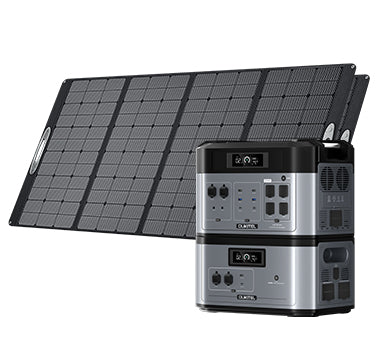
For whole-house multi-day coverage, theOUKITEL P5000 Pro + 400W solar generator at 5,120Wh with 3,600W output handles 2-3 days of fridge plus essentials and recharges via solar without grid access.

Alt Text: OUKITEL P5000 Pro+400W Solar Generator
What to Look For When Buying
Five buying criteria that separate the units worth keeping from the ones that end up resold on Facebook Marketplace a year later. A user on r/OffGrid summed up the brand-research overwhelm well: "After extensive research comparing the major brands and now so many major brands I did arrive at..." (the thread trails off into analysis paralysis). Cut through that by checking these five things, in order.
Battery Chemistry: LiFePO4 vs Li-ion
This is one of the most important quality markers, with real tradeoffs to know. Standard lithium-ion batteries (the same chemistry in phones and laptops) last 500-1,000 charge cycles before noticeable degradation. Lithium Iron Phosphate (LiFePO4 or LFP) lasts 3,000-6,500 cycles for similar use. LFP wins on lifespan, safety, and stability. It loses on weight (roughly 20-30% heavier per Wh), cold-weather charging (cells need heaters below freezing or they damage), and sometimes fast-charge speed. Both chemistries have legitimate use cases. LFP fits portable solar generators particularly well, but "better in every situation" is not the right framing.
What this means in practice:
- Standard Li-ion: 3-5 years of useful life at moderate use
- LiFePO4: 8-12 years at the same use rate
- Cost-per-year math: A $1,200 LiFePO4 unit beats a $600 Li-ion unit on total cost of ownership inside 4 years
- Calendar aging: Li-ion degrades even sitting on a shelf; LiFePO4 holds capacity longer
- Safety: LiFePO4 is significantly more stable than standard Li-ion under stress
Check the product page. If chemistry isn't clearly stated as LiFePO4, assume it isn't. Every OUKITEL unit, plus newer models from EcoFlow, Bluetti, and Anker SOLIX, ships LiFePO4. Older or budget brands often still use standard Li-ion. The tradeoffs to know going in: LFP runs heavier per Wh, charges slower on standard hardware, and needs battery heating to operate below freezing. For portable solar use, those tradeoffs are usually worth taking. For applications where weight and fast charging dominate (phones, drones, racing EVs), Li-ion still wins.
Capacity, Surge Wattage, and Expandability
Three numbers to check before you buy:
- Rated capacity (Wh): How much energy is stored. Match to your runtime needs.
- Continuous output (W): What the unit delivers in a steady state. Match to your largest sustained load.
- Surge output (W): Brief peak during compressor or motor startup. Should be 2-3x continuous rating.
Expandability matters if needs might grow. Some units (BP2000, EcoFlow Delta series, Jackery 2000+) let you connect additional battery packs over time. Others are sealed at original capacity. If your outage profile gets worse or you add medical equipment, pay for expandability upfront.
For an expandable unit that scales from 2,048Wh up to 16,384Wh as needs grow, the battery built for multi-day home backup like the OUKITEL BP2000, covers tiers 2 and 3 of the sizing guide on one platform.

Alt: solar generator buyer decision flowchart use case match
Take Action Now
Three steps that prevent the most expensive mistake in this category.
1. Calculate your real load before shopping. Add up the wattage of every device you'd run during an outage. Multiply by the hours needed. Write that number down. It tells you the minimum Wh capacity to look for. Most buyers guess wrong until they see real numbers on paper.
2. Verify LiFePO4 chemistry before clicking buy. If the product page is vague about battery chemistry, ask the manufacturer directly. This single spec decides whether your unit lasts 3 years or 10. Don't skip it.
3. Match the unit to your real use case. Bottom line: Camping and short device-charging needs? A unit under 1,000Wh covers it. Emergency home backup through 24-48 hour outages with a fridge? Step up to 2,000Wh-class with LiFePO4 chemistry. Multi-day coverage, medical equipment, or expandable capacity? Look at expandable systems from the OUKITEL portable power lineup that scale from 2,048Wh to 16,384Wh as needs grow. Whole-home, central AC, electric stove backup? Skip portable solar entirely. You need a Tesla Powerwall-class home battery or a large gas standby unit.
FAQs
What are the disadvantages of a solar generator?
Three big ones: upfront cost, slow recharge speed, and a hard ceiling on continuous power output. Solar generators run 2x to 5x the price of a comparable gas generator, take 5 to 8 hours of solid sunlight to recharge fully, and just cannot handle high-draw appliances like central AC, electric stoves, or dryers.
That's the honest tradeoff. According to EIA outage data, U.S. customers averaged 5.6 hours of power interruptions in 2022. For short outages, a solar unit covers the gap easily. For multi-day events with cloudy weather, recharge becomes a real problem.
Main disadvantages at a glance:
- High upfront cost: $1,000-$3,000 for a unit comparable to a $400-$800 gas generator
- Recharge dependency: 5-8 hours of direct sun, slower on cloudy days
- Limited continuous output: Top portable units cap at 3,000-3,600W
- Battery degradation over time: Even LiFePO4 loses capacity after 3,000+ cycles
- Cannot run whole-home loads: Central AC, electric stoves, dryers exceed portable capacity
Match the use case before you buy and most of these disadvantages disappear.
Does a solar generator really work?
Yes, they work, and they work pretty much as advertised. Within the limits the spec sheet actually states. Solar panels collect sunlight, the battery stores the electricity, and standard outlets push it back out as AC power. Independent lab testing confirms units deliver 83% to 95% of their stated capacity in real conditions. The complaints about "not working" almost always come back to one root cause: somebody bought a 500Wh unit and expected it to run a fridge for 24 hours.
The “do they work” question usually hides a different question: do they work for what I want to run? That's the real test. A 500Wh unit running a fridge isn't broken when the fridge dies after 4 hours. It's the wrong size.
What working solar generators do well:
- Charge devices (phones, laptops, tablets) reliably for days
- Run a full-size fridge for 8-30 hours depending on capacity
- Power CPAP machines and oxygen concentrators silently overnight
- Recharge via AC wall outlet in 2-3 hours on fast-charge units
- Run indoors safely with no carbon monoxide risk
If you size the unit to your actual load, solar generators are reliable. Undersizing creates the impression they “don't work.”
Can a solar generator run a refrigerator?
Yes, with one important caveat. Most mid-to-large solar generators run a standard refrigerator just fine, but how long depends on capacity and on how often the compressor cycles on. Independent testing showed a 2,074Wh LiFePO4 unit kept a full-size fridge running over 30 hours on a single charge. Other 2,000Wh units in similar tests landed closer to 10 to 15 hours. The variance is real.
The difference comes from compressor cycling patterns. A fridge doesn't draw power constantly. The compressor cycles on and off, averaging about 100-200W of effective draw against 400-800W peak draw. So how long a fridge runs on a battery depends on how often the compressor kicks in, which depends on door openings, ambient temperature, and how full the fridge is.
For reliable 24-hour fridge backup:
- Minimum 2,000Wh capacity with 2,000W+ continuous output
- 3,000W+ surge rating to handle compressor startup
- LiFePO4 chemistry for repeated daily cycling
- Pre-charge the unit fully via AC before outage starts
- Open the fridge as little as possible during outage
A 1,000Wh unit handles short-term fridge backup (3-5 hours). Below that, only mini fridges and travel coolers are realistic.
How long will a 3,000-watt solar generator run a refrigerator?
Quick correction on the question itself. A "3,000-watt" rating tells you how fast the unit can push power out at any one moment, not how much is stored. Total runtime is determined by battery capacity in watt-hours (Wh), not output wattage (W). The two numbers get conflated all the time in product listings, and the confusion costs buyers money.
A solar generator with 3,000Wh of battery capacity running a typical refrigerator (100-400W during compressor cycles) lasts 15-25 hours in real conditions, assuming 85% usable capacity. A unit with 3,000W output but only 2,000Wh battery capacity runs the same fridge for 8-15 hours.
Always check both numbers:
- Battery capacity (Wh): Determines total runtime
- Continuous output (W): Determines what you can plug in
- Surge output (W): Handles motor and compressor startup
- Inverter efficiency: Usually 80-85%, factor into real-world math
- Compressor cycling: Real fridges draw less than rated wattage on average
A high output rating with a small battery is a common marketing mismatch. The 2,000Wh-3,000Wh range is the sweet spot for reliable fridge backup.
Who makes the most reliable solar generator?
The brands that show up in independent testing most often are EcoFlow, Jackery, Anker SOLIX, Bluetti, OUKITEL, and Generac. BobVila named the Generac GB2000 best overall in their last roundup. CNET named the Jackery 2000 Plus best overall in theirs. Both reviewers landed on the same takeaway though: LiFePO4 chemistry matters more than the logo on the front.
Brand matters less than battery chemistry. A LiFePO4 unit from any reputable brand will outlast a Li-ion unit from any reputable brand at the same price point. The differentiator inside the box matters more than the logo on the front.
Reliability checklist regardless of brand:
- LiFePO4 battery chemistry (not standard Li-ion)
- 3-year warranty minimum on the battery
- Surge wattage rated 2-3x continuous wattage
- Expandable battery options if your needs may grow
- Verified independent testing (CNET, Wirecutter, BobVila)
Pay for chemistry and warranty before paying for brand name. The cheapest LiFePO4 unit from a reputable maker beats the most expensive Li-ion unit on long-term value.
What is the biggest problem with solar power?
For portable solar generators specifically, the single biggest weak point is intermittency. The panels only generate when the sun cooperates. Cloudy weather, nighttime, partial shade from a tree, any of those things cut output dramatically. A mid-sized unit running on 400W of solar input takes 5 to 8 hours of clear sun to fully recharge. Two cloudy days in a row during an outage and you are running on whatever is left in the battery.
This is the failure mode that catches buyers off guard during extended outages. The unit dies at sunset, recharges partially through a cloudy day, and dies again the next night. Hybrid charging solves most of this.
Mitigations for intermittency:
- Pre-charge via AC wall outlet before any expected outage
- Use 12V car outlet during extended emergencies
- Combine solar plus AC input on units that support both
- Position panels for optimal sun angle, not flat on the ground
- Buy more panels than you think you need (4x oversize is reasonable for emergency prep)
For routine use (camping, weekend trips, occasional outages), intermittency rarely matters. For serious emergency prep where outages might exceed 48 hours, treat solar as a supplement to wall-charging, not the only recharge method.
Are solar generators worth the high upfront cost?
Depends entirely on how often you would actually use it. For regular campers, off-grid workers, and people in outage-prone regions, the math swings toward solar inside 3 to 5 years. For someone shopping for an emergency-only unit that lives in the garage between events, gas wins on the day-one price comparison and on year-one math.
The hidden cost on gas generators is fuel storage, maintenance, and replacement after 1,000-2,000 engine hours. The hidden value on solar is silent indoor operation, zero fuel costs, and 3,000-6,500 LiFePO4 cycles. Over 10 years, a $1,500 solar unit can cost less per year of use than a $600 gas unit that needs annual maintenance plus fuel.
Cost-per-year math for typical use:
- $600 gas generator, 5-year life with fuel + maintenance: $200-$300/year all-in
- $1,500 LiFePO4 solar, 10-year life with no fuel: $150/year
- $2,500 LiFePO4 home backup, 12-year life: $208/year
- Heavy camper/off-grid use: solar wins by year 3
- Emergency-only use: gas wins on year-one math
If solar fits your actual use pattern, it's worth the upfront cost. If it doesn't, gas is the honest answer.
Can I use a solar generator indoors?
Yes, full stop. Indoor-safe operation is one of the clearest, most important advantages solar holds over gas. Solar units produce no exhaust, no carbon monoxide, no combustible fumes whatsoever. They are safe to run inside a bedroom, a basement, an apartment, anywhere ambient temperature stays in a normal range.
According to FEMA, carbon monoxide poisoning from gas generators kills people every storm season. The CDC has documented hundreds of CO deaths annually from generators run too close to homes. Solar generators eliminate that risk entirely. You can sleep in the same room as one. You can run one in a closet with the door open. You can use one in a high-rise apartment.
Indoor operation specifics:
- No ventilation required for solar units
- Keep airflow unobstructed during fast charging (units run warm)
- Charge via wall outlet indoors with no safety concerns
- Run overnight in a bedroom for CPAP backup
- Safe in basements, attics, garages, anywhere with ambient temperature
For households with medical equipment, this safety advantage alone justifies the upfront cost over gas alternatives. Per FDA food safety guidance, a closed fridge stays safe for only 4 hours without power. Solar lets you maintain fridge power indoors without risking your family's safety.
Sources
- U.S. Energy Information Administration (EIA),Power Interruptions and Their Costs (2024)
- Federal Emergency Management Agency (FEMA),Power Outages
- U.S. Food and Drug Administration (FDA),Food and Water Safety During Power Outages and Floods
- U.S. Department of Energy (DOE),Estimating Appliance and Home Electronic Energy Use (2025)


Looking for something else?

RV Solar Panel Kit with Battery and Inverter: Complete Guide for Every Setup
LEARN MORE
Difference Between Amps and Volts: What You Actually Need to Know
LEARN MORE
50 Amps in Watts: The Honest 2026 Conversion Guide for RV, Home, EV, and Solar
LEARN MORE
Can You Put Solar Panels on a Mobile Home? (Real-World Guide for 2026)
LEARN MORELooking for something else?

Do Portable Solar Panels Qualify for the 30% Credit?
LEARN MORE
Are Solar Generators Any Good? Here's the Real Answer
LEARN MORE
How Long Does a Portable Power Station Last? (Real Numbers)
LEARN MOREYou may also like
OUKITEL BP3000 Portable Power Station 3200W | 2048Wh

OUKITEL P5000 Pro+400W Solar Generator
OUKITEL BP2000+400W Solar Generator

OUKITEL P5000+2*400W Solar Generator

OUKITEL P5000 Pro+2*400W Solar Generator

OUKITEL BP2000+2*400W Solar Generator
Further reading

Portable Power Stations for Power Tools and Job Sites: Surge, Runtime and Safety

Portable Power Station for Starlink: Runtime, Solar and Off-Grid Setup