








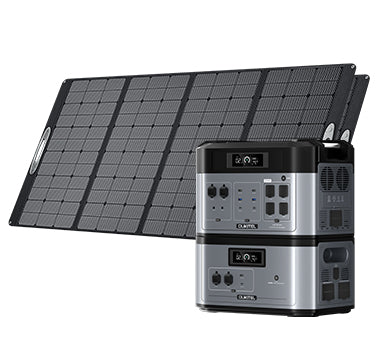


 Flashlight
 Solar
Extension Cable
Solar
Extension Cable


Difference Between Amps and Volts: What You Actually Need to Know
The difference between amps and volts tripped me up for years before it finally clicked. The short version? Voltage is pressure. Amperage is flow. Think of a faucet that's shut off but pressurized. That pressure exists whether the faucet is open or not. That's voltage. Turn it on, and water moves. That's amperage.
Multiply those two numbers, and you get watts. The number on your electric bill, on every appliance label, on every power station spec sheet. Watts = Volts × Amps. One equation that runs basically everything in residential electrical work.
I learned this at 34 after blowing a fuse running a space heater and a microwave on the same circuit. My wife was not impressed. The terminology sounds intimidating. The actual concept? Five minutes and it clicks.
Difference Between Amps and Volts: The Quick Version
Okay, so here's the mental model that finally worked for me.
Voltage is potential. Electrical pressure that exists in the wire regardless of whether anything is drawing power. Your wall outlet is holding 120V right this second. Nothing plugged in. No electrons are moving. Just pressure sitting there waiting for somewhere to go.
The moment you plug something in, you close the circuit. Now electrons have a path. They start moving. That movement is current, measured in amps. How much current flows depends entirely on the device. A tiny phone charger barely sips. A space heater gulps.
Watts = Volts × Amps
A device pulling 10 amps from a 120V outlet is consuming 1,200 watts. Every circuit breaker rating, every extension cord limit, every battery runtime estimate you'll ever calculate comes back to that one equation.
What Is a Volt?
Named after Alessandro Volta, the guy who built the first real battery back in 1800. One volt equals one joule of energy per coulomb of charge. That's the physics definition. What it actually means in your house is this: voltage is the amount of push available to shove electrons through a wire.
Voltage Levels You Already Live With
You deal with different voltages every single day without realizing it. Here's what the range looks like:
- AA battery: 1.5V. Enough for a TV remote. Not much else.
- Car battery: 12V. Seems low until you realize the starter motor pulls 400+ amps from it for a few seconds. That's over 5,000 watts in a burst.
- US wall outlet: 120V. Runs everything from your phone charger to the blender you use twice a year.
- Dryer or oven circuit: 240V. These appliances need so much power that running them at 120V would require dangerously high amperage.
- Solar panel output: 18V to 48V DC. Gets converted and regulated by the charge controller before anything in your house touches it.
The thing that took me a while to internalize: voltage is always there. Plug in a lamp or don't. The outlet holds 120V either way. That's why every electrician I've ever worked with treats every outlet as live until they've checked it personally with a meter. Not "probably off." Confirmed off.
Does Higher Voltage Mean More Power?
Nope. And this misconception comes up in nearly every conversation I have about electrical systems. Someone sees 240V on their dryer outlet and figures it must be "stronger" than a regular 120V plug.
Run the math. A 240V line pulling 5 amps delivers 1,200 watts. A 120V line pulling 10 amps delivers... also 1,200 watts. Identical power output. Just a different combination of pressure and flow to get there.
Where higher voltage actually helps is efficiency over distance. Less current means less heat loss in the wires. That's why cross-country power lines run at hundreds of thousands of volts. But inside your house, across 20 feet of copper wire? Matching the correct voltage to the device matters infinitely more than chasing a bigger number.
What Is an Amp?
An ampere measures current. How many electrons are actually moving through the wire per second? One amp equals one coulomb of charge passing a point every second. NIST redefined the ampere in 2019 by tying it directly to the elementary charge of an electron. That makes it one of the seven base SI units, for whatever that's worth to your daily life.
How Devices Actually Pull Current
Here's the part that confused me the longest. I used to think the outlet "pushed" a certain amount of current into whatever was plugged in. That's backwards. The device determines how much current it draws based on its own internal resistance.
Same 120V outlet. A 60W LED lamp pulls half an amp. A 1,500W space heater pulls 12.5 amps. Nothing about the outlet changed. The device's resistance is the variable.
I spent an afternoon once with a Kill-A-Watt meter, testing everything in my kitchen. The phone charger barely moved the needle. The coffee maker hit 8 amps. Toaster oven pushed 12. All from the same 15-amp circuit.
That's when it clicked about why the breaker tripped every time my wife started the coffee while the toaster was going. 8 plus 12 equals 20. The breaker is rated for 15. Simple addition, but I'd never thought about it until I was standing there holding a meter in one hand and a cold piece of toast in the other.
Amperage Ranges You Should Know
- Phone charger pulls 1 to 2 amps. Your circuit won't even notice it's there.
- Most rooms in a US home sit behind a 15-amp breaker. That's your ceiling for everything plugged into that run of outlets.
- Kitchens and bathrooms get bumped to 20 amps. Code requires it because of all the high-draw stuff that lives in those rooms.
- Window AC is a circuit hog. 10 to 15 amps by itself, which is why the install manual always says "dedicated circuit."
- Microwaves draw 8 to 12 amps. Now you know why running one while the toaster is going trips half the kitchens in America.
- An electric oven on 240V needs 30 to 40 amps and gets its own heavy-gauge wiring. Nothing else shares that breaker.
- The car starter motor is the wild one. 400 to 700 amps. But only for about 3 seconds while it cranks the engine. Massive burst, tiny window.
These numbers start mattering the moment you need to figure out which devices can share a circuit without the breaker cutting everything off.
Amps vs Volts: Side-by-Side
|
Feature |
Volts (Voltage) |
Amps (Current) |
|
Measures |
Electrical pressure |
Electrical flow |
|
Symbol |
V |
A |
|
Named after |
Alessandro Volta |
André-Marie Ampère |
|
Best analogy |
Water pressure in a pipe |
Water flow rate through the pipe |
|
Exists without a load? |
Yes |
No |
|
Measured with |
Voltmeter (parallel) |
Ammeter or clamp meter (series) |
|
Relation to resistance |
Directly proportional |
Inversely proportional |

Alt: amps vs volts side by side comparison showing voltage as pressure and current as flow in electrical circuit
Here's the key takeaway from that table. Voltage is always present. It's sitting in every wire in your house right now. Current only exists when a device closes the circuit and gives electrons somewhere to go. Without both working together, nothing useful happens.
How Amps and Volts Work Together
Ohm's Law
V = I × R
V is voltage. I is current in amps. R is resistance in ohms. Crank up the voltage while the resistance stays the same, and more current flows. Raise the resistance while the voltage stays constant and the current drops. Georgia State University's HyperPhysics page has a visual explanation that's better than anything I could draw on a napkin.
The Power Formula You'll Actually Use
Watts = Volts × Amps
Rearrange it however you need:
- Amps = Watts ÷ Volts — this one tells you what a device draws from a circuit
- Volts = Watts ÷ Amps — less common, but comes up in solar panel math
Here's where it gets practical. A 120V outlet on a 15-amp breaker tops out at 1,800 watts. Hard ceiling. Every device on that circuit shares that budget.
Plug in two things that each draw 10 amps? That's 20 amps on a 15-amp breaker. Trip. Darkness. Cold toast. I speak from experience.
The Water Pipe Thing
I know everyone uses this analogy. I'm using it too because after trying a dozen different explanations over the years, this one sticks with people faster than anything else.
- Voltage = pressure inside the pipe
- Current (amps) = how fast water flows through
- Resistance (ohms) = how narrow the pipe is
- Watts = the work the water does coming out the other end
Lots of pressure through a wide pipe? Strong flow, lots of work getting done. Lots of pressure through a tiny pipe? Restricted flow, heat buildup. Low pressure? Weak trickle regardless of pipe size.
Does the analogy break down at the edges? Sure. AC frequency, impedance, and reactive power, none of that maps to water. But for grasping why your 15-amp circuit can't run a space heater and a hair dryer at the same time? It works perfectly.
Which One Is More Dangerous: Amps or Volts?
Current kills. Voltage is the accomplice that makes it possible.
A tiny amount of current through your heart can stop it. But that current can't flow unless the voltage provides enough pressure to push through your body's resistance. You need both for a dangerous situation. But it's the amps doing the actual damage.
The Numbers That Matter
OSHA's electrical safety data breaks down what different current levels do to the human body:
- 1 milliamp: faint tingle. Most people barely notice.
- 10 milliamps: painful. Muscles clamp down. You might not be able to let go of whatever you're touching.
- 100 milliamps (0.1 amps): potentially lethal. Can stop your heart.
- 200+ milliamps: severe burns. Organ damage.
Now the math that should scare you a little. Dry skin has about 100,000 ohms of resistance. Wet skin drops to around 1,000 ohms. At 120V across wet skin: 120 ÷ 1,000 = 0.12 amps. That's 120 milliamps. Past the lethal threshold.
This is the entire reason GFCI outlets exist in bathrooms and kitchens. The CPSC and NFPA hammer on this point constantly.
But then there's static electricity. A doorknob shock in January can hit 25,000 volts. Sounds terrifying. The current is so minuscule and the duration so brief that all you feel is a sting. High voltage alone isn't lethal. High current alone can't flow without voltage pushing it. The danger is when you get enough of both.
How to Not Get Hurt
- GFCI outlets in every bathroom, kitchen, laundry room, and outdoor plug
- Never touch a circuit you haven't personally verified as dead. Not "I think it's off." Tested with a meter.
- Keep electrical stuff away from water. This sounds obvious until you see how many people charge phones on a bathtub ledge.
- Assume every wire is live until proven otherwise
Real-World Examples
Your House
|
Device |
Voltage |
Current Draw |
Power |
|
Phone charger |
5V |
2A |
10W |
|
Laptop charger |
20V |
3.25A |
65W |
|
LED light bulb |
120V |
0.08A |
10W |
|
Space heater |
120V |
12.5A |
1,500W |
|
Electric oven |
240V |
33A |
8,000W |
|
Car starter motor |
12V |
400A+ |
~5,000W (burst) |

Alt: common household devices voltage and amperage chart from phone charger to electric oven
What jumps out from that table? The oven. 8,000W at 240V draws 33 amps. Sounds like a lot until you do the math on what would happen at 120V instead. Same 8,000W divided by 120V equals 67 amps. Through regular household wiring. That wire melts. That's the entire reason ovens and dryers get their own 240V circuits with thicker gauge wire.
Portable Power Stations
Same math, different power source. Instead of a wall outlet pushing 120V from the grid, a portable station pushes 120V from a battery through an inverter. The amps you get depend entirely on how many watts the station can output.
When I bought myOUKITEL BP2000, the first thing I did was divide the specs. 2,200W maximum output. Divided by 120V. Roughly 18.3 amps available. Then I tested it for real. Plugged in the fridge, turned on three overhead lights, and opened my laptop. The total draw on the display read about 650W. Not even close to the limit. That's when I stopped worrying about whether it could handle my essentials during an outage.
My neighbor had a different situation last summer. Longer outage, bigger house. He borrowed aP5000 Pro from me. That unit maxes out at 3,600W, which works out to 30 amps at 120V. He had his fridge going, a box fan in the bedroom, the TV on for his kids, and rotated the microwave in for meals. Ran it for about 14 hours before the grid came back. Didn't trip a single time.
TheBP2000 Pro lands in between at 3,300W. About 27.5 amps. A friend of mine uses his specifically because he runs a space heater alongside the fridge during winter outages. The extra headroom over the standard BP2000 gives him enough margin that he doesn't have to choose between warmth and cold food.
 Alt: OUKITEL BP2000 Pro portable power station front panel showing AC outlets USB ports and digital display
The fastest way to compare shop any station: find the wattage on the spec sheet, divide by 120. That's your total amp budget. Then add up whatever you'd actually plug in and make sure it fits. Thirty seconds of math before you buy beats finding out the hard way that your system can't carry the load.
What to Check Before Buying a Power Station
Output Voltage and Maximum Wattage
Most LiFePO4 portable power stations deliver 120V AC through a pure sine wave inverter. That matches every standard US appliance. The number that varies between models is the maximum continuous wattage.
Divide that wattage by 120V to get maximum amps:
- 2,200W station = ~18.3 amps max
- 3,300W station = ~27.5 amps max
- 3,600W station = ~30 amps max
Surge wattage is separate and covers the startup spikes from motor-driven appliances. A fridge might draw 1,800W for two seconds on compressor startup while only needing 200W to run. If your station's surge rating doesn't cover that spike, the system trips. I learned this one personally when my first power station tripped trying to start my garage fridge. The continuous rating was fine. The surge wasn't.
Battery Capacity and Runtime
Capacity in watt-hours (Wh) tells you how long the station runs. The math:
Runtime = Wh ÷ device watts (then subtract about 15% for inverter losses)
Real numbers:
- 5,120Wh ÷ 400W fridge load = roughly 11 hours
- 2,048Wh ÷ 500W combined load = about 3.5 hours
- 2,048Wh ÷ 100W single fan = around 18 hours
The BP2000 starts at 2,048Wh and scales to 16,384Wh with expansion batteries. I started with the base unit. After a 19-hour outage that nearly drained it, I added two B2000 expansion packs over the following months. Never had to replace the original. Just stacked more capacity onto it. That flexibility is the main reason I went with it over competitors that lock you into a fixed capacity. For a deeper breakdown of runtime by appliance, our guide to sizing your power station walks through the math step by step.
Solar Input Voltage

Alt text: Oukitel power stations connected with solar panels on a beach and charging food appliances.
Panels produce DC power. Usually 18V to 48V, depending on the panel size and configuration. The station's MPPT charge controller handles conversion internally. Two things to verify before buying panels:
- Panel's open-circuit voltage (Voc) has to fall within the station's input range. OUKITEL stations accept 12-120V.
- Total panel wattage determines how fast you recharge. More watts, faster charge. Simple.
FAQs
Can you have volts without amps?
Yes, every day.An unconnected house outlet has 120 volts of electrical "pressure" but zero current (amps) flowing because there's no complete circuit.It's like a garden hose connected to a spigot with the nozzle shut; pressure is there, but no water is moving.This is why an unplugged outlet or a disconnected car battery is still dangerous: the voltage (potential) is present even when the current (amps) is not.
How many volts are in an amp?
There is no fixed conversion because volts and amps measure different things.They are related by resistance, as defined by Ohm's Law: Volts = Amps × Ohms. For example, 1 amp flowing through 1 ohm of resistance requires 1 volt.That same 1 amp through 120 ohms requires 120 volts.Any online calculator asking to "convert" volts to amps is actually using a third number, like resistance or watts, to solve the equation.
What happens if you plug a 120V device into a 240V outlet?
The device receives twice its rated voltage, causing the current to spike immediately, which overheats and burns the internal components.This often results in smoke or a silently fried circuit board.Warning: Travel adapters change the plug shape, not the voltage.To safely go from 240V to 120V, you need a step-down transformer.Always check the tiny print on your device (e.g., 100-240V input) before plugging it into a foreign outlet.
How do amps affect battery life in a power station?
They are directly and linearly related: more amps pulled means the battery drains faster.For instance, a 1,500W appliance at 120V draws 12.5 amps.Using a 2,048Wh battery, this might give you about 1.3 hours of runtime.Cutting the load (wattage) by half will nearly double the runtime.Managing your load (running only essential items) during an outage can significantly extend how long your battery lasts.
Why do device labels list both volts and amps?
Each number prevents a different mistake.Voltage ensures compatibility (a 120V device needs a 120V source); using the wrong voltage fries the components.Amperage indicates current draw, which determines the required wire size and breaker rating.Electricians match both numbers correctly because getting either wrong can lead to a blown fuse, melted wires, or a fire.
Is measuring current different from measuring voltage?
Yes, they use different procedures and tools, and mixing them up can destroy equipment.
- Voltage is measured with a voltmeter connected in parallel (across two points) to read the pressure difference, even on an open circuit.
- Current (Amps) requires an ammeter connected in series.The circuit must be broken, and the current must physically flow through the meter.Connecting an ammeter in parallel is dangerous and causes a near-short circuit.A clamp meter is the safest option for non-electricians as it measures the magnetic field around the wire without breaking the circuit.
What is the relationship between amps, volts, and watts?
It's one simple equation: Watts = Volts × Amps. Watts is the total power delivered (power), Volts is the electrical push (pressure), and Amps is the amount of flow (current).You can flip the equation to find a missing number: Amps = Watts ÷ Volts.This is vital for checking if a device will overload a circuit.
How many amps does a 1,500W space heater draw at 120V?
1,500 Watts divided by 120 Volts equals 12.5 amps.On a standard 15-amp household circuit, this leaves only 2.5 amps for everything else sharing that line.Running a second 1,500W heater would total 25 amps, instantly tripping the 15-amp breaker.This high draw is why items like space heaters and microwaves should ideally be on their own dedicated circuits.

Alt: Oukitel power station powering a full house in an electric blackout.
Take Action Now
1. Walk over to your breaker panel and read the numbers. If a circuit says 15A, your ceiling on that run is 1,800W total. Write it down. Knowing this one number explains most household electrical mysteries.
2. Add up the wattage of everything plugged into your busiest circuit. The kitchen is usually the worst offender. If you're regularly north of 80% of the breaker rating, redistribute some devices to other circuits or call an electrician about an upgrade.
3. Size your backup power using the same math. Divide any power station's max wattage by 120V to get its amp capacity. Compare that against what you'd actually run during an outage. The OUKITEL home battery backup collection lists specs clearly for every model. And our home backup generators guide breaks down when a battery backup makes more sense than a generator.
Sources
- National Institute of Standards and Technology (NIST), U.S. Department of Commerce,SI Redefinition: Ampere — Redefining the Unit of Electrical Current (2019)
- Occupational Safety and Health Administration (OSHA), U.S. Department of Labor,Electrical Safety Overview — Workplace Hazards and Prevention Standards (2024)
- U.S. Consumer Product Safety Commission (CPSC),Home Electrical Safety — Safety Guides for Appliances and Equipment (2024)
- Department of Physics and Astronomy, Georgia State University, HyperPhysics: Ohm's Law — Electric Circuits Reference (2024)


Looking for something else?
How Long Does It Take to Fix the Power Outage by Situation
LEARN MORE
Is Tornado Watch or Warning Worse? What to Do Fast
LEARN MORE
5000 Watt Solar Generator: Is It Enough for Your Home?
LEARN MORE
Solar Panel Connectors Types: Complete Guide to MC4, XT60 and More
LEARN MORELooking for something else?
Why Does the Power Go Out During a Storm? (And What You Can Do About It)
LEARN MORE
RV Solar Panel Kit with Battery and Inverter: Complete Guide for Every Setup
LEARN MORE
Difference Between Amps and Volts: What You Actually Need to Know
LEARN MOREYou may also like

OUKITEL P5000 Solar Generator for Home with 400W Solar Panel

OUKITEL P800 Portable Power Station 800W | 512Wh

OUKITEL B2000 Expansion Battery | 2048Wh
OUKITEL BP5000 PRO MAX Portable Power Station 5000W | 5120Wh
OUKITEL C01 Car Jump Starter 1350A | 80Wh | PD60W
OUKITEL BP2000 PRO Portable Power Station 3300W
Further reading

Portable Power Station for a Sump Pump: Starting Watts, Runtime and Setup

Portable Power Station for Freezer Backup: Runtime by Size and Temperature
