










 Flashlight
 Solar
Extension Cable
Solar
Extension Cable


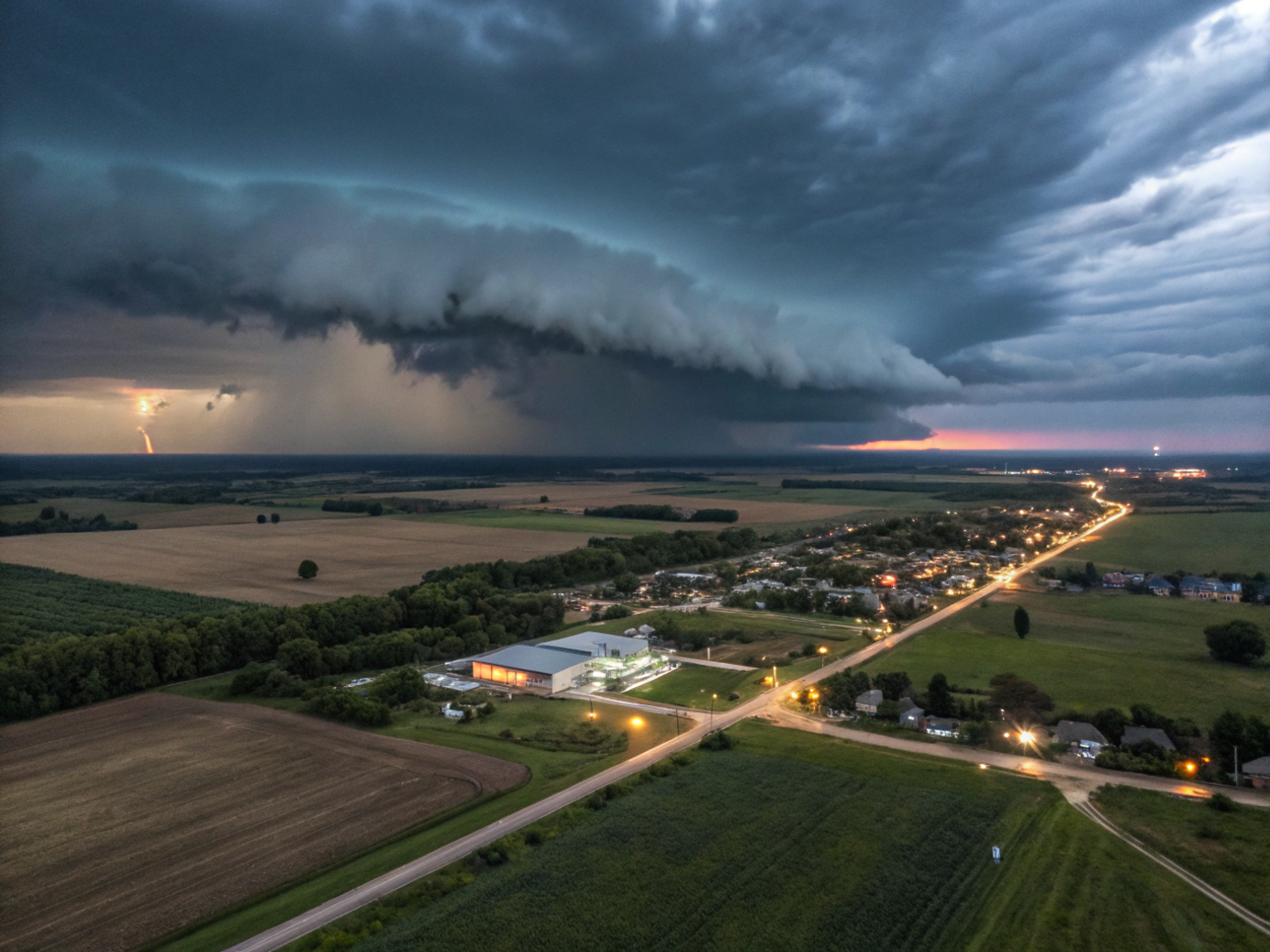
Is Tornado Watch or Warning Worse? What to Do Fast
Is atornado watch or warning worse? A tornado warning is worse, always.
A watch means the atmosphere could produce a tornado. The ingredients are there, warm air clashing with wind shear and instability, but nothing has formed yet. A warning means a tornado has been sighted or picked up on weather radar. It means that the danger is confirmed and very close, and you need to move quickly.
Back in 2020, a family near me heard "watch" and assumed they had time. When the warning dropped 20 minutes later, they froze. Lost precious minutes getting to the shelter because they didn't understand the difference between those two words. That gap in understanding is exactly what this article fixes.
The National Weather Service breaks it down simply:
- Watch = be ready
- Warning = take cover now
Is Tornado Watch or Warning Worse? The Definitive Answer
A warning is worse because it means the threat is confirmed and active. A watch is a heads-up. A warning is an emergency. The difference between them determines whether you're preparing or whether you should already be in shelter with the door closed.
Quick Comparison: Watch vs Warning vs Emergency
|
Alert Type |
What It Means |
What to Do |
Urgency |
|
Tornado Watch |
Conditions could produce a tornado |
Prepare, monitor alerts, gather supplies |
Stay alert |
|
Tornado Warning |
Tornado sighted or on radar |
Take shelter immediately |
Act now |
|
Tornado Emergency |
Violent tornado confirmed, causing damage |
Already be in safest place possible |
Life-threatening |
Tornado Watch vs Warning: The Key Difference
If you're wondering is tornado watch or warning worse, it comes down to this: one is a forecast. The other is a confirmed emergency unfolding in real time.
What Is a Tornado Watch?
A tornado watch means conditions in the watch area could produce tornadoes. You've got warm, humid air near the surface, cooler air riding above it, and wind patterns that could kick off rotation. All the pieces are on the table, but nothing has spun up yet.
The Storm Prediction Center issues watches for large areas, sometimes spanning multiple counties or entire states. They typically last four to eight hours. Your job during a watch: prepare. Not panic. Not ignore. Just get ready so that if a warning follows, you're already ahead of it.
What Is a Tornado Warning?
A tornado warning means one has been sighted or detected on weather radar. The National Weather Service issues warnings for much smaller, targeted zones, usually part of a county. They last about 30 minutes.
If a warning is issued for your location, your preparation window is closed. You should already be in shelter or moving there now. This is not the time to check radar, look out the window, or grab extra supplies. It's the time to be in the safest room in your home with the door closed.
How Each Alert Is Issued
Watches come from the Storm Prediction Center in Norman, Oklahoma. They analyze atmospheric data across entire regions. Warnings come from your local NWS forecast office, issued when a meteorologist spots rotation on radar or a trained spotter on the ground reports a funnel. That difference in origin is why watches cover states and warnings cover neighborhoods.

What a Watch and Warning Actually Feel Like
Reading definitions helps. Understanding what each alert feels like in practice helps more.
During a Watch
Tension that builds slowly. You check your phone. You step outside and scan the horizon. The clouds look a little off but nothing dramatic. Life continues, just with this low hum of awareness running in the background.
Most watches expire without incident. That's the nature of them. But the ones that don't expire quietly are the ones that matter. I've watched storms escalate from "probably nothing" to "take cover" in under half an hour. That's why ignoring a watch is a gamble you really don't want to lose.
During a Warning
Everything stops. Your phone screams. Sirens follow seconds later. Your chest tightens and you move without thinking.
2021, middle of the night. Alert hit my phone, then outdoor sirens kicked in maybe ten seconds later. I grabbed my kid and headed straight for the hallway. No radar check. No window peek. That's what a warning demands. Instant action, zero debate. The people who hesitate during warnings are the ones who run out of time.
How Fast Does a Watch Become a Warning?
Faster than most people expect. I've watched storms go from scattered and disorganized to producing tight rotation in under 30 minutes. The National Weather Service confirms that severe weather systems can intensify rapidly during peak season when the atmosphere is already unstable.
Whenever someone tells me they don't worry during watches because "nothing ever happens," I ask them what they'd do if it escalated while they were still cooking dinner. That scenario plays out every single spring.
According to NWS data, the average tornado warning lead time is only about 15 minutes. Some warnings arrive with even less. That's why the watch phase is the only reliable preparation window you're going to get.
The watch is your only guaranteed prep window, so treat it that way.
2025 Tornado Season: Real-World Examples
The 2025 tornado season put these concepts into sharp focus. NOAA's Storm Prediction Center recorded 1,558 tornadoes across the U.S., making it the fifth-highest annual count on record. A total of 68 people lost their lives, up from 54 the year before.
The March 14-16 Outbreak
The largest tornado outbreak ever recorded in March. 118 confirmed tornadoes across multiple states over three days. Three separate EF4 tornadoes touched down, two of them in Arkansas on March 14 alone. 42 people were killed. In several cases, watches escalated to warnings in under 15 minutes. Entire communities went from "conditions are possible" to "take cover now" before families finished dinner.
The May 16 Kentucky EF4
The deadliest single tornado of 2025 struck the Somerset-London area of Kentucky. An EF4 with catastrophic damage. 19 people killed. The NWS issued a Tornado Emergency for the area, its highest alert level. For the families in that path, the gap between a watch and a warning was measured in minutes, not hours.
The Enderlin EF5 (First Since 2013)
On June 20, a massive tornado tore through Enderlin, North Dakota. Initially rated EF3, forensic analysis of tossed train cars and debarked trees led to an upgrade: EF5, with winds exceeding 210 mph. It was the first EF5 confirmed in the United States since the 2013 Moore, Oklahoma tornado. The path stretched nearly 2 miles wide at its peak.
What 2025 Proved
Three things stood out from the 2025 data. First, watches can escalate to warnings faster than most people expect. Multiple events saw that transition happen in 12 to 18 minutes. Second, Tornado Emergency issuances increased, with several issued during the April outbreak alone. Third, the states hit hardest shifted. Texas led with 162 tornadoes. Illinois followed with 146. Missouri had 120. The traditional "Tornado Alley" boundaries are becoming less reliable as a predictor of where the worst outbreaks will occur.
What to Do During a Tornado Watch
Use this time. Everything you do during a watch makes the warning survivable if one comes.
Watch vs Warning: Side-by-Side Action Plan
|
During a Watch |
During a Warning |
|
|
Alerts |
Monitor weather apps + local news |
Stop monitoring. Take shelter. |
|
Shelter |
Identify your safe room, clear the path |
Go there now. Lowest floor, no windows. |
|
Devices |
Charge phone and power bank |
Phone in pocket. Don't go back for anything. |
|
Supplies |
Gather flashlight, water, meds |
Should already be staged. Go without if not. |
|
Pets |
Bring inside, leashes near safe room |
Take them if possible |
|
Travel |
Avoid unnecessary driving |
Get off the road immediately |
|
Windows |
Close and secure |
Stay away from all windows |
Monitor Alerts (Two Sources Minimum)
Open your weather app the second a watch drops. Turn on local news in the background. One source can glitch or lag. Two gives you redundancy. Keep your phone volume maxed and notifications on until the watch expires. Don't rely on a single app to save your life.
Prepare Your Shelter
Pick your spot early, not when the sirens start. The best option is a basement. No basement? An interior room on the lowest floor with no windows. Bathroom, closet, interior hallway. Clear the path to it before storms arrive. You don't want to be tripping over boxes in the dark while a warning is blaring.
Charge Devices and Gather Essentials
Plug in your phone. Grab your portable power bank. Put a flashlight on the counter and a water bottle next to it. Severe storms knock out power constantly. Your phone is how you receive alerts, and a dead battery during a warning leaves you blind to everything happening around you. Five minutes of prep prevents that.
Bring Pets Inside and Secure Your Yard
Do this early. Chasing a dog across the yard while a warning blares is not where you want to be. Leashes go by the safe room door. Outdoor furniture, trash cans, and anything that can become a projectile goes in the garage. I watched a neighbor's patio umbrella go through a car windshield during a 2019 storm. If it's not bolted down, it's a missile.
Stay Close to Shelter
Don't run errands during a watch. Don't drive to the store. The National Weather Service advises limiting travel when severe weather is possible. Getting caught in a car when a watch escalates to a warning puts you in one of the most dangerous positions possible. A building protects you. A car mostly doesn't.

What to Do During a Tornado Warning
The threat is confirmed. Move.
Go to Your Safe Room
Basement first. No basement? Interior room, lowest floor. Closet, bathroom, hallway. No windows. Get low. Get covered. Don't grab extra stuff. Don't go back for your laptop. The supplies should already be staged from the watch phase. If they're not, go anyway. Your body in a safe room matters more than anything you own.
Protect Your Head
Most tornado injuries come from flying debris, not the wind itself. Cover your head with a mattress, heavy blanket, or bike helmet. Arms wrapped around your head and neck if that's all you've got. I keep a helmet in our safe room year-round. Some people think that's overkill. I've seen enough storm damage to not care what anyone thinks about it.
If You're Outside or Driving
Get to a sturdy building fast. If nothing is nearby, get out of the car. Find a ditch or low-lying area. Lie flat, face down, hands over your neck. Do not shelter under a highway overpass. The shape funnels wind and debris into the opening, making it worse than open ground. The NOAA tornado page documents wind speeds past 200 mph in strong tornadoes. Nobody outruns that.
If You're in a Mobile Home
Leave. Mobile homes offer almost no structural protection during a direct hit, anchored or not. I've seen aftermath photos where anchored mobile homes were destroyed while the brick house next door lost a few shingles. Get to a permanent building or a community storm shelter. Know where that shelter is before storm season starts.
Never Wait to See It
By the time you see a tornado clearly enough to confirm what it is, your window to reach shelter may already be closed. Tornadoes move up to 60 mph. Some form in minutes. Act the moment a warning is issued. Weather radar sees it before your eyes ever could.

What Happens After the Storm Passes
Don't rush outside the moment things go quiet. Downed power lines are often invisible in the dark. Debris fields hide sharp metal and broken glass. Gas leaks happen when lines rupture under structures.
Wait for the official all-clear from the NWS. Check your home for structural damage from the doorway before walking through rooms. If you smell gas, leave immediately and call your utility. Don't enter damaged buildings until they've been inspected.
Why People Confuse Watches and Warnings
Similar Names, Different Risk
Watch and warning sound interchangeable. They're not. One means possible. The other means confirmed. Most people learn the tornado watch vs warning difference during an actual storm, which is the worst time to be figuring out vocabulary.
"Nothing Happened Last Time"
The most dangerous sentence in storm prep. Past watches that didn't produce tornadoes predict nothing about the next one. Every storm system is independent. What happened last April has zero bearing on this April.
Alert Fatigue
After several quiet watches, people stop paying attention. But watches are issued because conditions genuinely support tornado formation. Tuning out after a few calm ones is exactly how the next real event catches someone completely off guard.
Tornado Emergency: The Third Level
Most people don't know this alert exists. A tornado emergency is the NWS's highest level. A confirmed large, violent tornado is on the ground, actively causing catastrophic destruction in a populated area. Not "could cause." Currently causing.
I've seen this alert maybe three times in years of tracking storms. That rarity is the point. If you hear it for your area, survival depends on already being in the safest place available. There is no preparation phase left.
How to Get Tornado Alerts Fast
Alert Methods Compared
|
Method |
Speed |
Indoors |
No Power |
Best For |
|
Wireless Emergency Alerts |
Fastest |
Yes |
While battery lasts |
Immediate warnings |
|
NOAA Weather Radio |
Fast |
Yes |
Yes (battery) |
Overnight storms |
|
Weather Apps |
Fast |
Yes |
While battery lasts |
Tracking progression |
|
Outdoor Sirens |
Moderate |
Poorly |
Yes |
People outside |
Set Up Your Alerts Now
Wireless Emergency Alerts push to your phone automatically. No app, no signup. Go check your settings right now to confirm they're turned on.
A NOAA Weather Radio broadcasts 24/7 on battery power. It works when cell towers go down and when the grid fails. I've kept one near my bed since 2016. It's woken me up during storms my phone missed.
Sirens are designed for people outdoors. If you're sleeping with windows closed and the AC running, you might not hear one two blocks away. Use all three together: phone, radio, sirens. That's the setup that actually keeps you covered.
How to Prepare Before Tornado Season
Build an Emergency Kit
You need enough to function for a day or two without power or store access:
- Water and canned food
- OUKITEL FL1 flashlight, 43 hours low beam, 270 lumens, magnetic hands-free clip
- First aid kit and daily medications
- Portable phone charger with a full battery
- Important documents in a waterproof bag

FEMA recommends three days minimum. Aim for four if you're in a tornado-prone state. Storm damage blocks roads and delays help longer than people expect.
Create a Family Plan and Practice It
Assign roles before the storm. Who grabs the toddler. Who grabs the kit. Where everyone meets. Practice it once. Just once. That single rehearsal turns panic into muscle memory.
If you're explaining the plan for the first time during a warning, it's already too late to execute it smoothly.
Know Your Shelter Location
You should be able to reach your safe spot with your eyes closed. Basement, interior closet, bathroom with no windows on the lowest floor. Check it every March. Clear the path. Make sure the door opens easily. Seconds matter.
If you live in a mobile home or apartment without interior rooms, find your nearest community storm shelter now. Churches, schools, fire stations. Know where it is and how long it takes to get there. If a watch is issued and your home isn't structurally sound, go to that shelter early. Don't wait for the warning.

FAQs
What is worse, a tornado watch or warning?
Warning. Not even a debate. I've had people argue with me about this, saying a watch scared them more because of the uncertainty. But a watch is just atmosphere doing its thing. Could go either way. A warning? That means somebody saw a funnel, or a meteorologist is staring at confirmed rotation on a radar screen right now. Your response to each should look completely different. Watch means get your stuff together. Warning means you better already be in that closet or bathroom with the door shut.
What comes first, a tornado watch or warning?
Watches almost always show up first. Could be hours before anything real develops. I've sat through watches that lasted six hours with blue sky the whole time. Other times, the gap between watch and warning was barely fifteen minutes. There's no formula for how fast things escalate. That unpredictability is the whole reason you can't afford to blow off a watch. It's your head start. Once the warning drops, the head start is gone.
Do tornado sirens go off for a watch or warning?
Only for warnings. A lot of people don't realize that. During a watch, everything stays quiet on the siren front, which tricks some folks into thinking the risk isn't real yet. Here's the other problem with sirens. They're pointed outward, designed for people in parking lots and backyards. I've been asleep during an active warning and could barely hear the siren from two blocks over with the AC humming. Your phone alert and a NOAA weather radio are what actually wake you up. Sirens are a bonus, not a plan.
How much time do you have after a tornado warning?
Could be twenty minutes. Could be five. I've read reports where impact happened less than ten minutes after the warning went out. The whole point of using the watch phase to prepare is so those few minutes are enough. If your safe room is picked, your flashlight is out, and your family knows the drill, five minutes gets everyone where they need to be. If you're hearing the word "warning" for the first time and scrambling to Google what it means, five minutes is nothing.
Can a tornado happen without a warning?
Yeah. Doesn't happen often, but I've read NWS incident reviews where the tornado was already on the ground before the official warning hit phones. Fast-developing storms in highly unstable air can outrun the system. That's honestly one of the strongest arguments for taking every watch seriously. The watch tells you the atmosphere is capable of producing something dangerous. Even if the formal warning comes late, you're already in position.
Should I be worried during a tornado watch?
Worried is the wrong word. Alert is the right one. I don't sit in my basement during every watch. But I do plug in my phone, check that my weather radio has batteries, pull up radar, and mentally confirm where the safe room is. Whole process takes maybe ten minutes. If the watch expires with no warning, I've lost nothing. If it escalates, I'm already two steps ahead of the person who ignored it.
Where is the safest place during a tornado?
Below ground if you can get there. A basement with solid walls and no windows is the best option most residential homes offer. No basement in your house? Get to the smallest interior room on the lowest floor. Bathrooms are popular because the plumbing in the walls adds some rigidity. Closets work too. Stay off exterior walls. And if your home is a mobile home or manufactured housing, get out of it entirely. Those structures don't hold up. Find a permanent building or a community storm shelter ahead of time.
What should I do if I'm driving during a tornado warning?
First choice: get inside a real building. Gas station, grocery store, anything with a solid roof and walls. If there's nothing close, pull over and get out of the car. Find the lowest spot you can, a ditch or depression. Lie face down and cover your neck with your hands. Do not park under an overpass. I know it looks like shelter, but the geometry actually accelerates wind through the gap. And don't try to outrace the storm. I've heard people say they'd just drive fast in the opposite direction. Tornadoes change direction. They don't follow a GPS route.
Are there visible signs before a tornado forms?
Some storms give you clues. A sky that turns green or yellow-gray. Hail that starts suddenly and stops just as fast. A low, rotating cloud base that looks like it's churning. A sound people describe as a freight train, except there's no track nearby. But plenty of tornadoes, especially at night, give you almost nothing visible before they hit. I've read damage reports where people said they never saw a thing. Your eyes are useful during the day, but your alert system is what you depend on at night and during low-visibility storms.
What if my phone has no signal during a storm?
This is why I keep telling people to buy a NOAA weather radio. It runs on radio frequency. Doesn't need a cell tower. Doesn't need WiFi. A battery-powered model keeps working when the grid is down and every tower in your county is offline. I paid about $30 for mine back in 2016 and it's still going. It's woken me up during storms where my phone had zero bars. For the cost of a decent lunch, you get a backup alert system that works when literally everything else fails.
Take Action Now
Don't close this tab and forget everything you just read. Do three things right now:
1. Check your phone. Open Settings, search "emergency alerts," and confirm Wireless Emergency Alerts are turned on.
2. Pick your safe room. Walk to it. Clear the path. Time how long it takes from your bedroom.
3. Share this article with someone in your household who doesn't know the difference between a watch and a warning yet.
Storm season doesn't wait for you to feel ready. Get ready now.
Sources
The current sources say 2024 and lack hyperlinks. Since we added 2025 tornado data, we need an NOAA source for that. Updated list:
- National Weather Service —Understand Tornado Alerts: Watch vs Warning (2024)
- National Weather Service —Tornado Safety (2024)
- National Weather Service —What to Do During a Tornado (2024)
- National Weather Service —Storm Anxiety: Tornado Warning Lead Times (2024)
- NOAA —Tornadoes: Education Resources (2024)
- NOAA Storm Prediction Center —2025 U.S. Tornado Statistics (2026)
- FEMA —Emergency Alerts (2024)
- FEMA —Build a Kit (2024)


Looking for something else?
Power Tool Battery Standardization: Benefits and Guidelines
LEARN MORE
What Size Portable Power Station Do I Need: Complete Guide
LEARN MORE
Watts to BTU/hr: How to Convert and Apply the Formula
LEARN MORE
OUKITEL Energy Storage Shines at the 139th Canton Fair, Global Customers Experience Product Strength On-Site
LEARN MORELooking for something else?

How Does a Solar Generator Work? A Comprehensive Guide to Clean, Renewable Power
LEARN MORE
How Long Does It Take to Fix the Power Outage by Situation
LEARN MORE
Is Tornado Watch or Warning Worse? What to Do Fast
LEARN MOREYou may also like
OUKITEL P5000 Pro Portable Power Station 5120Wh/3600W

OUKITEL P800 Portable Power Station 800W | 512Wh

OUKITEL B2000 Expansion Battery | 2048Wh

OUKITEL C01 Car Jump Starter 1350A | 80Wh | PD60W

OUKITEL BP5000 PRO MAX Portable Power Station 5000W | 5120Wh

OUKITEL BP2000 PRO Portable Power Station 3300W
Further reading

How to Choose the Best Expandable Portable Power Station in 2026

How to Choose the Best 5000Wh Portable Power Station in 2026
