








 Flashlight
 Solar
Extension Cable
Solar
Extension Cable


How to Choose the Best Expandable Portable Power Station in 2026
The best expandable portable power stations in 2026 are the ones that run your loads today and accept enough approved battery capacity to cover your worst realistic outage later. Continuous output and stored watt-hours are the starting pair, but compatibility, recharge input, voltage, ports, and full-system weight can still disqualify a platform.
Expansion moves only the second number. Adding batteries raises runtime, and in most systems it leaves inverter output, surge headroom, and solar input exactly where they were. A 16kWh bank can still refuse to start a well pump.
What follows is a specification framework rather than a ranked list: load math, usable capacity, expansion rules, recharge planning, and the point where extra modules stop earning their price.
What Makes a Portable Power Station Expandable?
An expandable portable power station accepts designated external battery packs that raise stored energy above what the base unit holds on its own. The label covers a wide range of hardware. Some systems take one matched pack. Others stack seven.
Base Unit and Expansion Modules
The base unit carries the inverter, charge controller, display, and output ports. An expansion module is mostly cells plus a management board, joined by a proprietary or manufacturer-approved cable. Similar voltage on a spec sheet proves nothing about compatibility.
Confirm all of this in writing before buying into any platform:
- Maximum supported modules, and total capacity at that maximum
- Whether module generations can be mixed on one base unit
- Cable type and length, and whether spares ship in the box
- Do all packs charge and discharge as one managed bank, or in sequence
- Placement rules: spacing, ventilation clearance, indoor or outdoor
Capacity Expansion Is Not Output Expansion
Watt-hours measure stored energy. Watts measure what the system delivers at any one instant. Modules add the first and rarely touch the second. Adding a battery usually leaves all of this unchanged:
- Continuous AC output, fixed by the inverter inside the base unit
- Surge ceiling, and how long the unit can actually hold that surge
- Solar input limits and the MPPT voltage window
- Outlet count, plus the shared wattage cap on each outlet bank
The gap between stored energy and deliverable power causes most of the complaints our team sees on modular purchases.
How Do You Size an Expandable Portable Power Station for Your Loads?
Start from an appliance list, not a capacity figure. The system has to start and run your equipment first. Stored energy matters only after that test is passed.
Write down the running wattage of everything that might be on at the same time, then add it up. Motors complicate the total. A fridge that runs at 120W can pull several times that for a second when the compressor starts, and the inverter has to survive that moment. For anything that cycles, a plug-in meter is the only honest option.
Sort Loads Into Three Tiers
Tiering makes it obvious what to shed when an outage runs long.
|
Load tier |
Typical equipment |
Running watts each |
Startup behaviour |
|
Essential |
Fridge or freezer, router, LED lighting, phone charging, CPAP |
15 to 200 |
Compressor and pump motors draw several times running watts briefly |
|
Useful |
Laptop, television, fans, electric blanket, small kitchen gear |
30 to 150 |
Mostly electronic or resistive, negligible startup |
|
High demand |
Space heater, kettle, microwave, window AC, dryer, large tools |
900 to 1,800 |
Heaters run flat out continuously; AC and tools add startup surge |
Resistive heat deserves its own warning. A 1,500W space heater draws 1,500W for as long as it runs and will empty a 4kWh bank in under three hours. Expansion does not fix that. It is a load problem.

[IMAGE: Alt: load list and wattage math used to size the best expandable portable power station for home essentials | 16:9 inline]
Size against the sum of what realistically overlaps, not the largest single appliance, and leave headroom rather than sitting at the rated ceiling. Medical and business-critical equipment is a separate conversation. Confirm suitability with both manufacturers first.
How Much Usable Capacity Do You Need for Your Backup Period?
Rated capacity is not what reaches your outlets. Inverter conversion, control electronics, cooling, and standby draw take a share, and temperature or protection limits take more. Planning at about 85 percent of rated capacity works as a starting assumption for LiFePO4 systems.
Estimated runtime = (rated capacity x 0.85) divided by average load.
A 2,048Wh unit at a 200W average delivers roughly 1,740Wh and runs about 8.7 hours. Average load, not peak. Most sizing errors start with that substitution.
Multiply by the Days You Want Covered
The table uses a higher-draw essentials example: a cycling fridge averaging 100W, plus lighting, a router, and device charging, totaling roughly 3.4kWh per day. Many efficient refrigerators average less, so readers should replace this assumption with a 24-hour measurement from their own appliance.
|
Backup goal |
Essentials energy used |
Rated capacity at 85% usable |
Modules at 2,048Wh each |
|
12 hours |
1.7 kWh |
About 2.0 kWh |
Base unit alone |
|
1 day |
3.4 kWh |
About 4.0 kWh |
Base plus 1 |
|
2 days |
6.8 kWh |
About 8.0 kWh |
Base plus 3 |
|
3 days |
10.2 kWh |
About 12.0 kWh |
Base plus 5 |
Reliable recharging shifts every row down, sometimes by half. Outage length is the other variable, and it has been moving. According to theU.S. Energy Information Administration, electricity customers averaged about 11 hours of interruptions in 2024, close to double the annual average of the preceding decade, with hurricanes responsible for most of it. In storm regions, plan in days.
Does Adding an Expansion Battery Increase Output?
Usually not. Extra packs extend runtime while the inverter rating stays exactly where it started. Compare continuous AC output against your simultaneous total and treat the peak figure on the box as secondary.
Be careful with boost or voltage reduction modes, which cut voltage to keep a large load from tripping the unit and can reduce motor performance or fail to start the appliance at all.
Peak watts also mean little without a time attached. Compressors and pumps need real current for a fraction of a second, longer when starting under load, and product pages routinely publish the peak while omitting the milliseconds. Ask for both, with test conditions.
Some designs do raise capability. Pairing two base units, or adding dedicated hardware, can lift continuous output or unlock 240V operation. That behaviour is model-specific, so verify it against the exact unit rather than the product family.
What Should You Check in the Expansion System Itself?
Confirm the Exact Module, Not the Brand
Same brand does not mean interchangeable. Check the module part number, supported hardware generations, connector type, and any firmware requirement before committing.
Product lines refresh, and expansion batteries refresh with them. Manufacturers should state compatibility plainly. The current BP3000 product page says the unit is compatible with the latest B2000L module and is not currently compatible with the previous-generation B2000. Each B2000L adds 2,048Wh. Because the separate B2000 page currently lists BP3000 compatibility, treat this as a product-page conflict that must be resolved before publication.
Ask How the Bank Balances Itself
A managed system detects each pack, coordinates charging order, balances state of charge across modules that start at different levels, and keeps running if one is disconnected. Documentation should describe that behaviour. A branded battery management name is marketing, not evidence.
Map Every Stage, and Weigh the Commitment
Price four configurations: base unit alone, base plus one, your realistic daily setup, and the published maximum. In our experience, most households settle at base plus one or two and stay there, which makes the headline ceiling the least useful number on the page.
Proprietary packs are also a multi-year commitment, so check whether cables and modules for a three-year-old base unit can still be bought today.
Can You Recharge the Full Bank Before You Need It Again?
Published charge times describe the base unit. Attach four modules, and the same input has five times the energy to replace. Buyers skip this step more than any other.

[IMAGE: Alt: expandable portable power station recharging from AC input and a 400W solar panel during a multi-day outage | 16:9 inline]
Run the Recharge Math at Final Capacity
|
Configuration |
Rated capacity |
Refill from AC at 1,800W |
Refill at a sustained 800W solar |
|
Base unit |
2,048 Wh |
About 1.3 to 1.5 hours |
About 3 hours |
|
Base plus 1 |
4,096 Wh |
About 2.5 to 3 hours |
About 6 hours |
|
Base plus 3 |
8,192 Wh |
About 5 to 6 hours |
About 11 hours |
|
Base plus 5 |
12,288 Wh |
About 7 to 8 hours |
About 16 hours |
Those figures are capacity divided by input, with allowance for taper and conversion loss. Solar is the softer column, because a 1,000W array rarely holds 800W for long. Check also whether expansion packs accept their own AC or solar input, and whether those inputs stay active while connected.
Size Solar Against Daily Use
Confirm the voltage window, maximum current, total wattage, connector type, and MPPT limits before ordering panels.
Exceeding a voltage limit can damage hardware, while exceeding a current or wattage limit usually just wastes the extra panel. Real production depends on sun hours, shade, tilt, temperature, and cable loss, so treat the array rating as a ceiling you seldom reach.
One test settles the whole plan. Daily energy recovered should equal or exceed daily energy used. A system that consumes 3kWh and recovers 2kWh loses 1kWh every day, whatever the bank size. Capacity buys time before that deficit shows. It does not remove it.
How Do OUKITEL Expandable Systems Map to This Framework?
Our modular line follows the same rule: the expansion battery moves watt-hours, and the base unit sets the output ceiling. BP2000 and BP2000 Pro use B2000 modules; BP3000 currently uses B2000L; BP5000 Pro Max uses B2000. Each platform supports up to seven compatible 2,048Wh modules according to its current product page.
|
Base unit |
Base capacity |
Continuous AC |
Maximum expanded |
Where it fits |
|
BP2000 |
2,048 Wh |
2,200 W |
16,384 Wh |
Essentials backup, 12 to 48 hours, renters |
|
BP2000 Pro |
2,048 Wh |
3,300 W |
16,384 Wh |
Same footprint, higher draw combinations |
|
BP3000 |
2,048 Wh |
3,200 W |
16,384 Wh |
Newer platform, 4,000+ cycle cells |
|
BP5000 Pro Max |
5,120 Wh |
5,000 W |
19,456 Wh |
120V and 240V loads, multi-day backup |
A few specifics worth reading against your own load list. TheBP2000 pairs 2,200W continuous with AC input up to 1,800W, reaches 80 percent in about 1.5 hours, switches over in under 10ms, and uses LiFePO4 cells rated for 3,500 or more cycles.
TheBP2000 Pro keeps that 2,048Wh base and lifts continuous output to 3,300W. TheBP3000 sits close at 3,200W with a 6,400W surge, moves to cells rated for 4,000 or more cycles, and reaches 80 percent from AC in roughly one hour and five minutes.
TheBP5000 Pro Max is the outlier: 5,120Wh base, 5,000W continuous, 10,000W surge, 120V and 240V split-phase output, cells rated 5,000 or more cycles, and a ceiling of 19,456Wh.
Split phase matters because 240V equipment is the one category most portable systems cannot serve at any capacity. Each B2000 expansion battery adds 2,048Wh and can provide standalone USB and 12V DC output, but it does not replace the base unit's AC inverter. BP3000 currently uses the B2000L module rather than the earlier B2000. Check live compatibility and pricing before ordering.

[IMAGE: Alt: OUKITEL BP2000 expandable portable power station connected to a B2000 expansion battery for home backup | 4:3 inline]
What Does the System Cost and Weigh at Full Expansion?
Base unit price is the smallest line in a modular budget. Total everything before comparing platforms:
- Base station, plus every expansion module in the plan
- Solar panels, mounting hardware and extension cable
- Vehicle or alternator charging hardware, if you travel
- Transfer switch or critical load panel, plus licensed installation
- Storage extras: covers, a cart, spare interconnect cables
Then divide that total by the usable capacity you need, not the rated number. A low base price that needs three expensive proprietary modules to reach 8kWh can cost more per usable kilowatt-hour than a larger unit reaching it with one.
Weight distributes across modules. Footprint does not. A B2000 module is currently listed at about 41 pounds (18.6kg). Using published component weights, a BP2000 with seven B2000 modules is roughly 153.8kg, while a BP5000 Pro Max with seven B2000 modules is roughly 185.2kg before cables or installation hardware. Full-system weight, floor loading, ventilation clearance, and cable routing must be planned before purchase.
Measure the corner before ordering the stack. That step gets skipped in apartments and RVs, and then the stack lives in a hallway.

[IMAGE: Alt: expandable portable power station stack showing storage footprint and ventilation clearance in a utility room | 4:3 inline]
Which Expandable Configuration Fits Your Scenario?
Same framework, different weighting.
- Short home outages: essentials runtime, fast AC recharge, quiet operation. Appliances plug straight in, so transfer equipment is optional.
- Extended home backup rewards a high expansion ceiling, multi-source recharging, transfer switch compatibility, and 240V output where needed.
- RV and van travel: weight per module, secure mounting, regulated 12V DC, high current RV outlets, alternator charging, compressor fridge runtime.
- For camping and mobile work, single module portability beats the ceiling. Weather protection, a quiet charging mode, 100W USB-C, surge for tools.
- Full-time off-grid inverts this. Daily energy balance beats capacity, and charging input must cover consumption through cloudy stretches.
Unsure which tier your loads land in? Our guide towhat size portable power station you need runs the same arithmetic on a longer appliance list.
Common Mistakes When Buying an Expandable Power Station
Each of these gets more expensive as the bank grows.
- Treating rated watt-hours as usable energy at the AC outlets
- Assuming expansion modules raise inverter output
- Running wattage recorded, startup surge ignored
- Runtime estimated from peak draw instead of average draw
- Storage added without matching AC, solar or vehicle charge input
- Same brand assumed to mean same compatibility
- Base unit prices compared instead of complete system cost
- Certification confirmed on one component rather than the purchased configuration
- EPS or UPS wording read as a guarantee of uninterrupted transfer
Read the current manual for the base unit, every module and any integration hardware, and get written confirmation where a limit is unclear.FEMA outage guidance is a useful cross-check on planning length.
Build Your Expandable System in Three Steps
- Total your simultaneous running watts and your worst startup load, then choose the base unit whose continuous rating clears both with headroom.
- Convert your essentials list into daily watt-hours, divide by 0.85, and buy only the modules that cover your realistic backup window. Start at base plus one when the numbers are close.
- Confirm your AC and solar input can refill the full bank inside the gap between outages, then order panels to match. Ourhome backup guide covers the solar pairing.
Pricing changes with promotions, so check current pricing on the product page before committing.

[IMAGE: Alt: expandable portable power station buying checklist comparing continuous output, usable capacity and recharge time | 16:9 inline]
FAQs
What is the best expandable portable power station?
The best expandable portable power station is the one whose base inverter clears your simultaneous load before you add a single module. Capacity is the easier half of the decision. In our experience, the units that disappoint are short on inverter output, not on a 16kWh expansion ceiling.
Does adding an extra battery increase a power station's output?
Usually no. An extra battery adds watt-hours, which extends runtime, while continuous output stays fixed by the inverter in the base unit. Surge ceiling and solar input limits normally stay fixed too. If a 1,800W station will not start your well pump today, seven modules will not change that.
How much expandable battery capacity do I need for home backup?
Total the daily watt-hours of your essential appliances, divide by 0.85 for conversion losses, then multiply by the days you want covered. A cycling fridge, lighting, a router, and device charging run near 3.4kWh per day, putting a three-day target around 12kWh of rated capacity.
Can an expandable portable power station run a refrigerator?
Yes, provided the inverter handles both the running wattage and the compressor startup draw. Most household fridges run between 100W and 200W, which sits comfortably inside a 2,000W inverter. A 2,048Wh station at 85 percent usable carries a fridge averaging 100W through most of a day.
Can solar panels recharge an expanded portable power station?
Yes, as long as the array stays inside the station's voltage, current, and wattage limits. Expansion rarely raises solar input, so a bank four times larger recharges from the same maximum and takes roughly four times as long. A 1,000W array feeding 12kWh is a multi-day job.
Are expandable portable power stations safe to use indoors?
Battery power stations produce no combustion exhaust during normal operation, the main indoor advantage over fuel generators. TheU.S. Consumer Product Safety Commission links more than 100 deaths each year to carbon monoxide from portable generators. Manufacturer rules on ventilation and temperature still apply, andend of life packs belong at battery recycling.
How long do LiFePO4 portable power station batteries last?
Cycle ratings are the usual measure, and current LiFePO4 units are commonly rated between 3,500 and 5,000 cycles to a stated percentage of original capacity. A rating without conditions is incomplete, so look for the depth of discharge and the retained capacity behind that number.
What are the disadvantages of an expandable portable power station?
Cost, weight, recharge time and platform lock-in. Reaching large capacity through proprietary modules usually costs more per kilowatt-hour than buying one larger unit, and a 12kWh bank takes roughly seven hours to refill at 1,800W AC input against about 1.5 hours for the base unit alone.
Sources
- U.S. Energy Information Administration (EIA),Hurricanes in 2024 Led to the Most Hours Without Power in the United States in 10 Years (2025)
- U.S. Energy Information Administration (EIA),Use of Energy in Homes
- Federal Emergency Management Agency (FEMA),Power Outages
- U.S. Consumer Product Safety Commission (CPSC),Carbon Monoxide Information Center
- U.S. Environmental Protection Agency (EPA),Used Lithium-Ion Batteries


Looking for something else?

How to Choose the Best 5000Wh Portable Power Station in 2026
LEARN MORE
How to Choose the Best Expandable Portable Power Station in 2026
LEARN MORE
Best Indoor Generators for Power Outages: Battery Options, Safety and Limits
LEARN MORE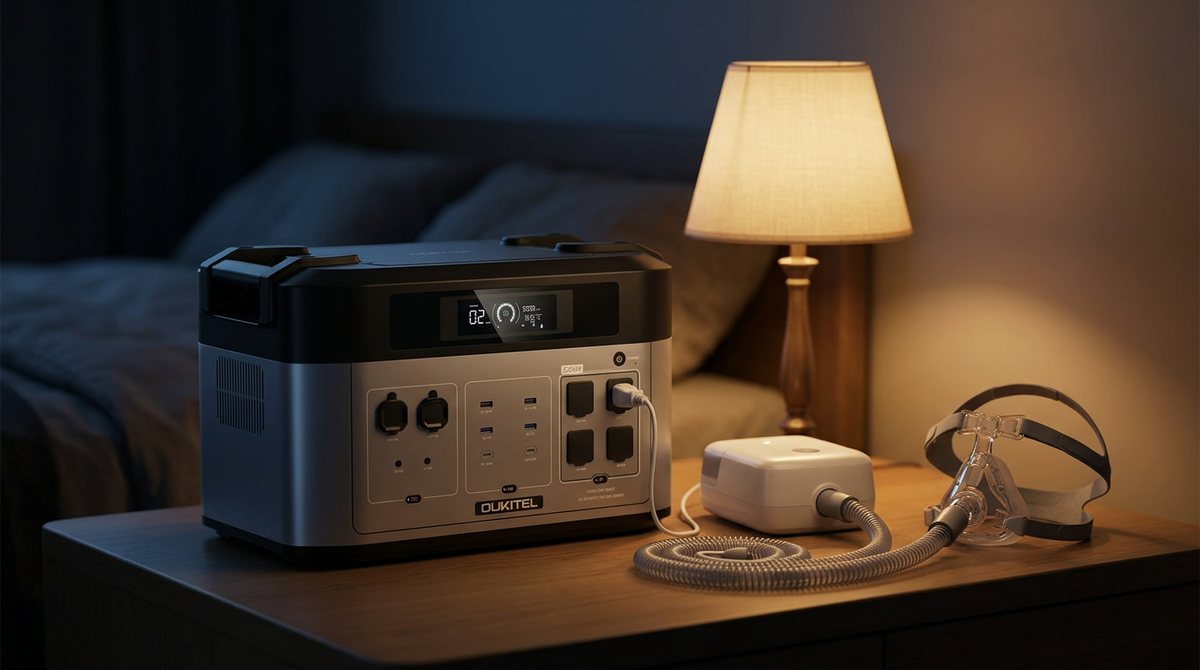
Portable Power Station for CPAP: How to Size Runtime, Humidifier Load and Battery Backup
LEARN MORELooking for something else?

Best Solar Generator for RV in 2026: How to Size and Choose One
LEARN MORE
Portable Power Station for Freezer Backup: Runtime by Size and Temperature
LEARN MORE
Portable Power Station for a Sump Pump: Starting Watts, Runtime and Setup
LEARN MOREYou may also like

OUKITEL P2001 Plus+2*200W Solar Generator
OUKITEL P2001 Plus+200W Solar Generator
OUKITEL P5000 Pro+400W Solar Generator

OUKITEL BP2000+400W Solar Generator

OUKITEL P5000+2*400W Solar Generator
OUKITEL P5000 Pro+2*400W Solar Generator
Further reading

OUKITEL Power Showcases Full-Scenario Energy Storage Solutions at the 140th Canton Fair

Hurricane, Wildfire and Winter Outage Power Checklist
