








 Flashlight
 Solar
Extension Cable
Solar
Extension Cable


Hurricane, Wildfire and Winter Outage Power Checklist
Hurricane, Wildfire and Winter Outage Power Checklist
We'd build an emergency power station checklist for hurricane, wildfire and winter outages around your house first and the battery second. Start with the fridge, CPAP, router and phones, and figure out how many hours each one needs. Then there's the question of how you'll recharge on day two. A charged, tested station beats a bigger one sitting at 20%.
Outages are getting longer, too. The U.S. Energy Information Administration counted about 11 hours without power per customer in 2024, almost twice the usual, and Hurricanes Beryl, Helene and Milton were behind most of it. A hurricane, a wildfire shutoff and an ice storm each go wrong in their own way. That is why we split the list by storm below.
Quick answer
Charge before the storm. Plug in medical devices first and leave the fridge closed for the first 4 hours. A 1,000Wh station gets a fridge through one night. Three days of the basics is closer to 6,000Wh. That usually takes a big station and a couple of solar panels.
What Belongs on an Emergency Power Station Checklist?
One labeled bin is plenty. Somebody else in the house may be the one looking for it in the dark.
|
Item
|
Why it matters
|
Check each season
|
|
Power station, fully charged
|
Stored energy for critical loads
|
Test with a real load
|
|
Cables and rated cords
|
A missing cable strands the battery
|
Match each to its port
|
|
Power banks and headlamps
|
Light and phones without the inverter
|
Charge, add batteries
|
|
Weather radio
|
Alerts when cell data drops
|
Battery or crank works
|
|
Water and no cook food
|
A gallon a person each day, at least 3 days
|
Rotate before it expires
|
|
Medications, cash, paper contacts
|
Card readers may be down
|
Refill and update
|
How Much Backup Power Do You Need for 72 Hours?
For each device you can't go without, it's watts times hours. Only about 85% of a station's rated watt hours reach the outlet. The inverter loses the rest turning battery DC into household AC.
|
Device
|
Typical draw
|
Hours/day
|
Daily energy
|
|
Refrigerator, cycling on and off
|
About 60W on average
|
24
|
1,200 to 1,700Wh
|
|
CPAP, humidifier off
|
30 to 60W
|
8
|
240 to 480Wh
|
|
WiFi router
|
10 to 20W
|
24
|
240 to 480Wh
|
|
Phones and three LED lights
|
Mixed
|
5
|
About 210Wh
|
Measure your own devices with a plug in energy meter for 24 hours. A CPAP humidifier can double the draw on cold nights, as our CPAP runtime guide explains.
Add a fridge, the router, phones and a few lights and you're near 2,000Wh a day. Three days is 6,000Wh. The 5,120Wh P5000 Pro gives about 4,350Wh of that before solar has to help.
Which OUKITEL Power Station Fits Your Outage Plan?
We use LiFePO4 cells in all three. There's no engine and no exhaust, which is why people keep them in a bedroom, and if the grid cuts out they take over in under 10ms.
|
Model
|
Capacity
|
AC output / surge
|
Best role
|
Example runtime
|
|
P800
|
512Wh
|
800W / 1,600W
|
Go bag, CPAP, phones
|
40W CPAP: about 10.9 h
|
|
P1000 Plus
|
1,024Wh
|
1,800W / 3,600W
|
Fridge and essentials
|
60W fridge: about 14.5 h
|
|
P5000 Pro
|
5,120Wh
|
3,600W / 7,200W
|
Multi day home backup
|
2,000Wh/day: about 2.2 days
|
Runtime estimate: rated Wh × 0.85 ÷ load in watts.
OUKITEL P800 for Evacuation and Medical Backup

The OUKITEL P800 weighs 13.23 lb and stores 512Wh, light enough to grab with a go bag. It recharges from the wall in about an hour.
OUKITEL P1000 Plus for the Fridge and Essentials
The OUKITEL P1000 Plus is the one we would park next to the fridge. It holds 1,024Wh, and 3,600W of surge lets most compressors kick on. If the grid comes back for an hour between storm bands, it refills in about 0.85 hours on a 1,200W wall charge.
OUKITEL P5000 Pro for Multi Day Outages

The OUKITEL P5000 Pro stores 5,120Wh with 3,600W output, enough for a fridge, CPAP and router together. Its 1,000W solar input can return roughly 3,000Wh on a clear day, carrying an outage past day two. More sizes sit in the Home Battery Backup collection.
Hurricane Outage Checklist
Hurricanes usually mean the longest wait. Three to seven days is a fair guess, because flooded roads and downed trees hold up the repair crews.
The day before landfall is when everything gets charged, stations and power banks both, while the grid's still steady. Fine indoors isn't the same as waterproof, so the station goes on a table or upstairs. The panels can stay in the closet until the wind's gone. Frozen water bottles help too. They fill empty freezer space so it holds cold longer, and later you can drink them.
Wildfire and Power Shutoff Checklist

In fire country the utility may switch power off on purpose when winds pick up, sometimes with less than a day's warning. What matters then is how fast you can leave. Ready.gov's advice is a go bag or a stocked car trunk, plus backup chargers.
The bag and a small station should sit by the door you'd actually use. Not buried in the garage. The 12V car cable belongs in the car. Count an air purifier as an all day load. Leave panels packed while smoke is active.
Winter Storm Outage Checklist
In a freeze, people need heat and batteries have a harder time. The OUKITEL units here are rated for 32°F to 104°F, so the station stays in a heated room, not out in the garage.
Heat People, Not Rooms

A 100W heated blanket left on for five hours uses about 500Wh. Put that same 500Wh into a 1,500W space heater and it's gone in 20 minutes. Layers and sleeping bags do most of the work for free.
Before the storm, find the main water shutoff in case a pipe bursts. Don't count on the porch as a fridge; one sunny afternoon can push food over 40°F. Chest freezer on the list? See our freezer backup guide.
Generator safety
Fuel generators, grills and camp stoves only run outside. CPSC wants generators at least 20 feet from the house, exhaust pointing away. Not in the garage, even with the door up. Put battery backed CO alarms on every floor. Never backfeed a panel without a transfer switch.
What to Do in the First 30 Minutes of an Outage
-
First look around for smoke, a downed line out front or water near the outlets. If you see any, stay back.
-
If the neighbors have lights, it's probably your breaker panel. If their houses are dark too, report it to the utility.
-
Medical gear goes on the battery first. The CDC says to sort out that backup before an emergency, not during one.
-
Write down when the power went out. CDC food guidance gives a closed fridge about 4 hours and a full freezer about 48.
-
Unplug the TV and computers. Ready.gov warns power can come back with surges. Leave one lamp on so you know when it does.
In our experience, the usual failure is not a small battery. It is a station left at 30% since last winter, or a solar cable stuck in a camping bin. A top up and a 10 minute load test every three months catches both.
Build Your Outage Power Plan This Week
-
List every must run device and measure its daily watt hours.
-
Match the total to a station at OUKITEL Power, adding solar if outages run past a day.
-
Run the fridge off it for one afternoon before storm season, then recharge it and pack the cables.
FAQs
How to Prepare for 72 Hours Without Power?
Three days' worth of everything: water, food, light, news and power. The usual figure for water is a gallon per person per day. For three people that's 9 gallons. Food you can eat cold saves the battery.
Power takes a little math. You add up a day's use for the critical stuff and multiply by three. With a fridge, router, phones and a few lights we usually see about 6,000Wh. That's more than most single stations hold, so most homes add solar or turn things off overnight.
Your 72 hour list:
-
Water: a gallon per person, per day
-
Food: three days, no cooking needed
-
Light: LED lanterns and headlamps
-
Power: daily Wh × 3, minus any recharge
-
Test: one full day on emergency loads only
What to Look for When Buying a Portable Power Station?
Output first, capacity second. That's the order on any emergency power station checklist we'd write. Output is what the station can run, and capacity is how long.
Fridges and sump pumps pull a lot more power for a second or two as the motor starts. If the station's surge is too low, it just shuts off. Check that number before anything else. Then look at how you'll refill it, because in a long outage the recharging matters more than the first full charge.
Specs worth checking:
-
Pure sine wave AC output
-
Surge rating above your largest motor load
-
LiFePO4 cells with 3,000+ cycles
-
Solar and car charging inputs
-
A weight you can actually move
What Are the Top Five Items You Should Have if You Lose Power?
Pretty much every list agrees on water, food, light, a radio and backup power. That covers most short outages.
What you add on top depends on who is in the house. Someone on a CPAP needs a charged station by the bed. A baby means ready to feed formula, since it doesn't need the fridge. Don't forget the dog's food and water for those three days. Grandparents may need spare hearing aid batteries.
The core five:
-
Water and no cook food
-
LED flashlights and headlamps
-
Weather radio with batteries or a crank
-
Charged power station and power banks
-
Medications and a written list
Can I Open My Fridge During a Power Outage?
Yes, but be quick about it. Each time the door opens, cold air spills out and the safe window gets shorter.
The CDC gives a closed fridge about 4 hours. For a full freezer it's about 48, or 24 if it's half full. Past the four hour mark, the perishables go in a cooler with ice, or the fridge goes on a power station. Either way, keep the door shut.
Ways to protect the window:
-
Tape the outage start time to the door
-
Take out everything you need in one trip
-
Keep an appliance thermometer inside
-
Discard perishables that sat above 40°F
-
Never taste food to test it
What Can I Use to Cook Food if the Power Goes Out?
Food that needs no cooking. Canned meals, nut butter, crackers and shelf stable milk don't touch the battery.
A big station will run a microwave or an induction plate. It just isn't cheap on battery: 15 minutes on a 1,000W microwave is about 250Wh. That is roughly four hours of fridge runtime gone. Grills and camp stoves also work fine, but outside only and well away from open windows.
Options from best to worst:
-
No cook food first
-
Microwave or kettle in short bursts
-
Grill or camp stove outside, away from windows
-
Never cook with fuel in a garage or tent
How Long Will Food Last in the Refrigerator Without Power in Winter?
About 4 hours with the door shut, the same CDC number as any other time of year. A cold house slows the warming a bit. It doesn't change the rule.
Food can go outside only if it stays under 40°F day and night, in the shade, where animals can't reach it. Sun on a cooler for one afternoon can push it past that without anyone noticing. A thermometer checked morning and evening settles it.
Safe windows at a glance:
-
Closed fridge: about 4 hours
-
Full freezer: about 48 hours
-
Half full freezer: about 24 hours
-
Outdoor storage: thermometer and shade required
What Not to Do During a Power Outage?
Running a generator, grill or camp stove inside is the dangerous one, and yes, the garage counts. You can't smell carbon monoxide, and it builds up fast.
Some mistakes just waste the battery. A 1,500W space heater on a 1,000Wh station is empty in about 35 minutes. Opening the freezer to check on things costs hours of safe time too. Save the battery for medical devices and the fridge.
Avoid these:
-
Touching downed lines or wet equipment
-
Backfeeding a panel without a transfer switch
-
Chaining power strips together
-
Opening the freezer to check food
-
Spending the first hours on comfort loads


Looking for something else?

How to Choose the Best 5000Wh Portable Power Station in 2026
LEARN MORE
How to Choose the Best Expandable Portable Power Station in 2026
LEARN MORE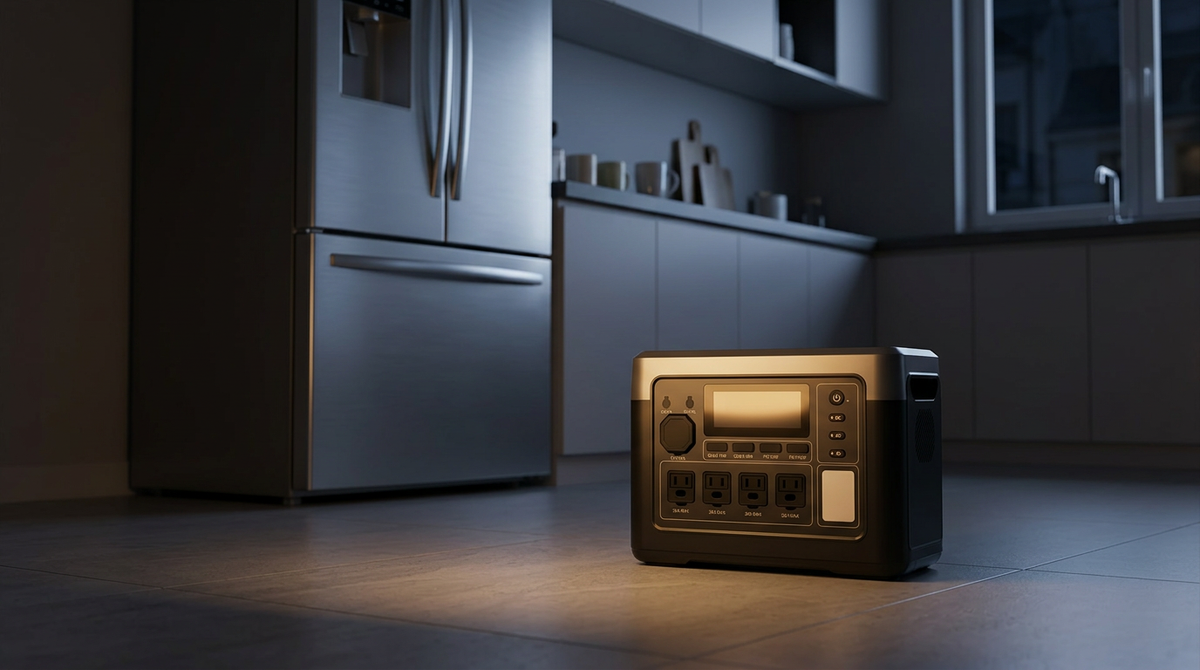
Best Indoor Generators for Power Outages: Battery Options, Safety and Limits
LEARN MORE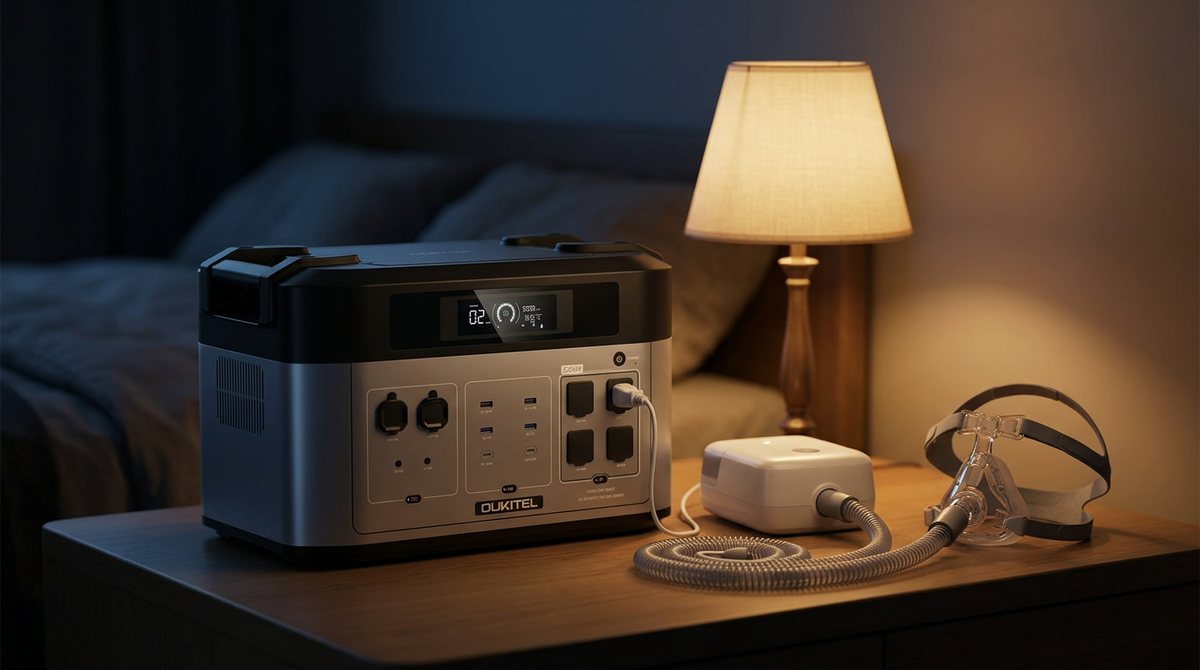
Portable Power Station for CPAP: How to Size Runtime, Humidifier Load and Battery Backup
LEARN MORELooking for something else?

Best Solar Generator for RV in 2026: How to Size and Choose One
LEARN MORE
Portable Power Station for Freezer Backup: Runtime by Size and Temperature
LEARN MORE
Portable Power Station for a Sump Pump: Starting Watts, Runtime and Setup
LEARN MOREYou may also like

OUKITEL BP5000 PRO MAX Portable Power Station 5000W | 5120Wh
$1,999.00
$2,999.00

OUKITEL BP2000 PRO Portable Power Station 3300W
$879.00
$1,599.00

OUKITEL C01 Car Jump Starter 1350A | 80Wh | PD60W
$169.00
$299.00

OUKITEL BP3000 Portable Power Station 3200W | 2048Wh
$959.00
$1,599.00

OUKITEL P2001 Plus+400W Solar Generator
$1,248.00
$1,598.00

OUKITEL P2001 Plus+2*200W Solar Generator
$749.00
$999.00
Further reading

OUKITEL Power Showcases Full-Scenario Energy Storage Solutions at the 140th Canton Fair
October 15–19, 2026 — Guangzhou, China. The 140th China Import and Export Fair (Canton Fair) is underway at the China Import and Export Fair Complex in Guangzhou. OUKITEL is showcasing its latest ...
Hurricane, Wildfire and Winter Outage Power Checklist
Hurricane, Wildfire and Winter Outage Power Checklist
We'd build an emergency power station checklist for hurricane, wildfire and winter outages around your house first and the battery second. Sta...

Portable Power Stations for Power Tools and Job Sites: Surge, Runtime and Safety
A portable power station for power tools has to get three numbers right before it earns a spot on the truck: continuous AC output, surge output for the motor start, and battery capacity. Get one w...