








 Flashlight
 Solar
Extension Cable
Solar
Extension Cable


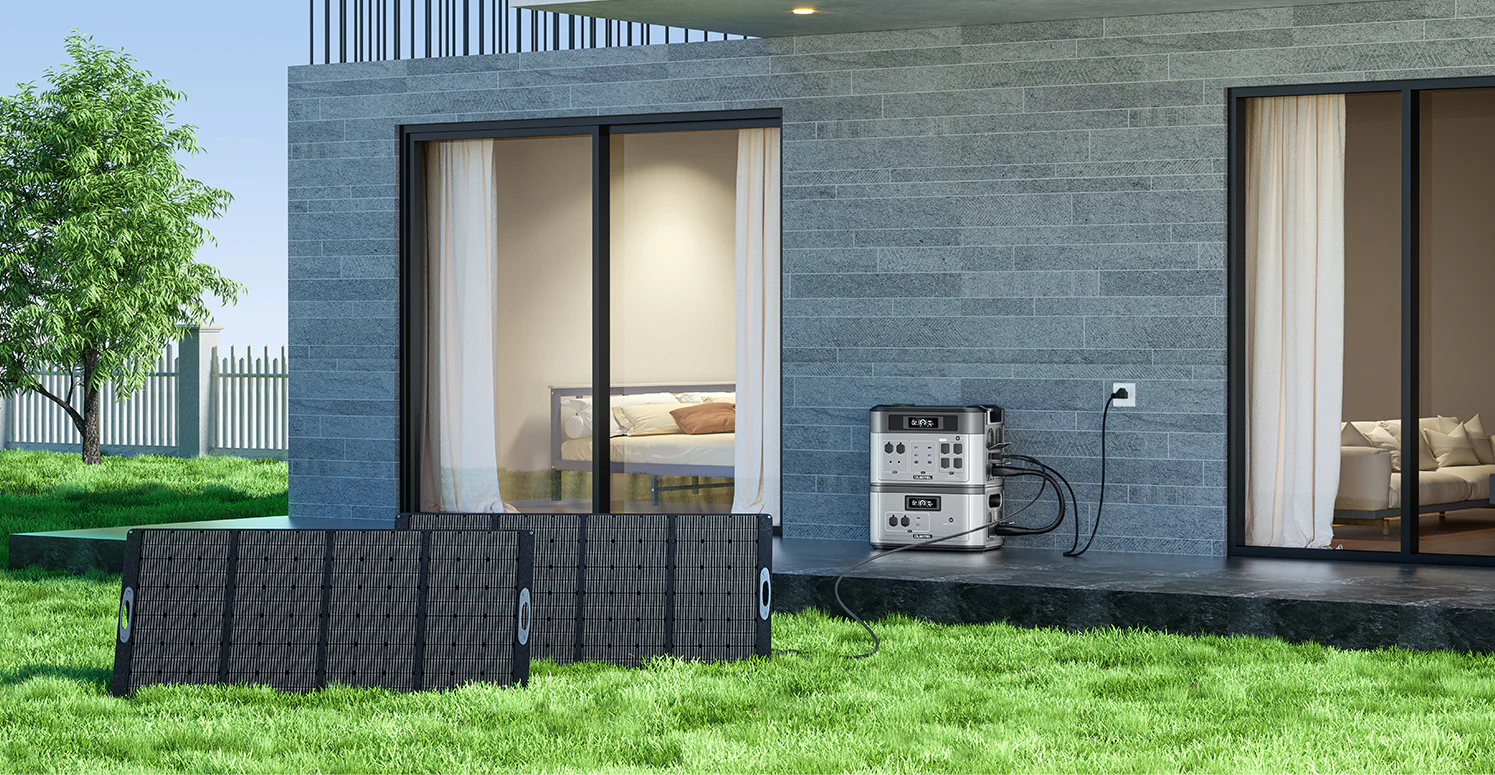
How Does a Solar Generator Work? A Comprehensive Guide to Clean, Renewable Power
Power goes out during a hurricane. You're three hundred miles into a road trip with no hookup. A rolling blackout hits at midnight. These aren't hypotheticals for millions of American households — Florida and Texas alone account for a disproportionate share of the 28 million residential power outages reported annually in the U.S.
A solar generator is the answer a growing number of people reach for. Not because it's fashionable, but because the technology — particularly LiFePO4 battery chemistry and MPPT charge control — crossed a quality threshold in the last few years that earlier generations of this equipment never reached.
What follows is a technical breakdown of how these systems work, where they genuinely excel, and where a gas generator still wins.

Key Takeaways
|
At a glance
|

What Is a Solar Generator?
Strip away the marketing language and a solar generator is two things bolted together: a portable power station — a battery with an integrated inverter and charge controller — and one or more photovoltaic panels that recharge it. The word "generator" is a legacy label. There's no generation of electricity from combustion, no moving parts, no exhaust.
The power station handles energy storage and conversion. It holds the battery, manages charging via the built-in controller, converts stored DC to AC through the inverter, and distributes power through AC outlets, USB ports, and DC connections. The panels handle energy harvesting. That's the complete system.
What makes it useful is portability and versatility. A properly sized unit runs a refrigerator through a 16-hour overnight outage, powers a CPAP machine indefinitely when paired with a solar panel, or supplies a job site without grid access. The same unit fits in a car trunk. A gas generator does none of those things simultaneously.
How Does a Solar Generator Work? A Step-by-Step Breakdown
Five stages move energy from sunlight to usable electricity. They run continuously and automatically — the user's only job is positioning the panels.

Stage 1 — Photovoltaic Conversion
Solar panels are arrays of photovoltaic cells made from silicon, a semiconductor. When photons from sunlight strike the silicon, they transfer energy to electrons, allowing them to break free and flow as electrical current. The U.S. Department of Energy describes the mechanism precisely: the freed electrons respond to an electric field built into the cell junction, which forces them in one direction — producing direct current (DC).
A single cell produces 1–2 watts. That's why commercial panels string 60 to 120 cells together. A portable 400W panel, fully deployed, generates approximately 2 kWh on a six-hour day of direct sun — enough to run a 150W refrigerator compressor for over 13 hours. The DOE notes that cells are often less than the thickness of four human hairs, protected by laminated glass and polymer encapsulation. Portable panels use ETFE lamination — lighter and more flexible than glass, with comparable durability.
Stage 2 — Charge Control
Raw panel output is not stable. Cloud cover, shading, morning and evening low-angle sun, and temperature all shift voltage and current continuously. A panel producing 48V open-circuit may deliver 32V under load on a partly cloudy afternoon. Feed that variable current directly into a lithium battery and cell degradation accelerates rapidly.
The charge controller — integrated into every modern portable power station — solves this. MPPT controllers (maximum power point tracking) sample the panel's output curve hundreds of times per second and adjust the input impedance to hold the panel at its maximum power transfer point. The practical gain over older PWM controllers: 20–30% more usable energy from the same panel, with the largest improvement under suboptimal conditions. On a winter morning or a partly overcast day, that margin matters.
Stage 3 — Battery Storage
LiFePO4 (lithium iron phosphate) is the dominant chemistry in purpose-built solar generators sold today. Its electrochemical stability under abuse — overcharge, deep discharge, physical damage — is the key differentiator. Unlike NMC (nickel-manganese-cobalt) lithium-ion cells, LiFePO4 doesn't exothermically decompose under stress. No thermal runaway, no fire propagation. The tradeoff is modest: energy density is roughly 15–20% lower than NMC, meaning a LiFePO4 pack weighs slightly more for equivalent capacity.
Rated cycle life is 3,000–6,000 full charge-discharge cycles before the battery drops to 80% of original capacity. At one cycle per day, that's 8–16 years of daily use. Lead-acid batteries, by comparison, typically deliver 200–500 cycles. The upfront cost difference disappears entirely when modeled over the product's operational life.
Stage 4 — DC-to-AC Inversion
Batteries store and release direct current. North American grid power — and the appliances designed for it — runs on 120V 60Hz alternating current. The inverter performs this conversion on demand, the moment a device is plugged in.
Pure sine wave inverters produce AC output that is electrically identical to grid power: smooth, symmetrical waveform, stable frequency. Modified sine wave inverters produce a stepped approximation that's adequate for resistive loads (heating elements, incandescent bulbs) but causes audible buzz in motors, can damage variable-speed drives, and may interfere with medical equipment including CPAPs. Every solar generator intended for serious use — home backup, medical devices, sensitive electronics — must use pure sine wave. This is a non-negotiable specification.
Stage 5 — Load Distribution
AC output goes to standard outlets. DC output goes to USB-A, USB-C (with Power Delivery protocols up to 100W on quality units), and 12V car-style ports. Devices pulling DC directly — phones, laptops via USB-C — bypass the inverter entirely, which improves efficiency by 5–10% for those loads. The total draw across all ports simultaneously cannot exceed the unit's continuous watt rating without triggering thermal protection.
|
Real-world scenario A 400W panel recharges a 2,000Wh battery over six hours of good sun. That evening: a 150W portable refrigerator runs 13+ hours, four phones charge via USB-C, LED lights run until midnight. Remaining capacity: ~30%. Fuel cost: zero. |
Core Components of a Solar Generator
Every solar generator — from a $400 entry-level unit to a $3,500 home-backup system — shares the same five-component architecture. The differences between price points are almost entirely about component quality and scale, not fundamental design.

1. Solar Panels (Photovoltaics)
Portable solar panels use monocrystalline silicon cells, which deliver higher efficiency per unit area than polycrystalline alternatives — typically 22–25% vs. 15–18%. The efficiency gap matters for portability: a more efficient panel achieves a given watt rating in a smaller, lighter package. The OUKITEL 400W Portable Solar Panel achieves 24.8% conversion efficiency, an ETFE-laminated surface with IP68 weather resistance, and folds to 640×990×60mm — small enough to fit across a rear car seat. Open, it spans 2,362×990mm for maximum capture area.
2. MPPT Charge Controller
The charge controller specification gets overlooked by most buyers. It shouldn't. The difference between a quality MPPT controller and a basic PWM controller is 20–30% more usable energy from the same panel — over an eight-year product life, that's a meaningful gap in delivered value. It's integrated into the power station; you don't purchase it separately. But confirming that a unit uses MPPT rather than PWM is worth a moment before committing to a purchase.

3. LiFePO4 Battery
Chemistry is the single specification that most determines long-term value. LiFePO4 is the correct choice. Budget models occasionally still ship with NMC cells to hit a lower price point; older systems may use lead-acid. NMC's thermal runaway risk — low but present — is an acceptable tradeoff for consumer electronics. It's harder to justify for a device designed to run indoors during emergencies. Lead-acid's 200–500 cycle lifespan makes it uneconomical regardless of the upfront savings.
4. Pure Sine Wave Inverter
Continuous wattage is the operational limit — what the inverter sustains indefinitely. Surge wattage is what it handles for the half-second a motor needs to start, typically 1.5–2× the running draw. A refrigerator compressor drawing 150W running may require 600–900W at startup. A generator rated 1,500W continuous with 3,000W surge handles that cleanly. One rated 1,500W continuous with 1,800W surge may not. Read both numbers.
5. Output Port Configuration
Port diversity determines real-world utility. Per the U.S. Energy Information Administration, the electrons leaving those ports originated as sunlight striking silicon — a photovoltaic conversion chain that's become impressively efficient. What matters at the output end: at minimum, multiple 120V AC outlets, USB-A at 12W+, USB-C with PD at 60–100W, and 12V DC. Units with wireless charging pads eliminate another adapter from the kit.
Solar Generator Battery Types Compared
Three battery chemistries appear in the market. The choice between them has larger consequences than any other specification decision — it affects safety, longevity, and the actual cost per kilowatt-hour delivered over the product's service life.
Lead-Acid: High Replacement Cost in Disguise
200–500 full cycles is the realistic lifespan of a quality deep-cycle lead-acid battery. At daily use, that's under two years before capacity degradation becomes noticeable. The upfront price is low. Replace it three times over the life of one LiFePO4 unit and the total expenditure is substantially higher. Liquid-electrolyte variants present an additional risk: they off-gas hydrogen during charging and can leak acid if tipped. AGM and gel variants improve on this but don't close the cycle-life gap.
Lithium-Ion NMC: The Previous Generation
NMC (nickel-manganese-cobalt) dominated portable power applications from roughly 2015 to 2022. Cycle life of 2,000–3,000 charges, energy density higher than LiFePO4, lighter for equivalent capacity. The documented weakness — thermal runaway under mechanical damage or overcharge conditions — is rare with quality hardware but not theoretical. Several high-profile consumer electronics fires trace to NMC cells under stress. For a device operating in a living space during an emergency, the margin for error matters.
LiFePO4: The Current Standard
The phosphate molecular bond is significantly more stable than the oxide bonds in NMC or cobalt-based chemistries. Under overcharge or physical damage, LiFePO4 doesn't exothermically decompose — it doesn't catch fire. Cycle ratings of 3,000–6,000 full cycles translate to 8–16 years of daily use. The energy density is 15–20% lower than NMC, so LiFePO4 packs are proportionally heavier. That is the complete list of compromises.
|
Specification |
Lead-Acid |
NMC Lithium-Ion |
LiFePO4 ✓ |
|
Rated cycles |
200–500 |
2,000–3,000 |
3,000–6,000+ |
|
Thermal safety |
Off-gases H₂ |
Thermal runaway risk |
Chemically stable |
|
Weight |
Heaviest |
Lightest |
Moderate (15–20% heavier than NMC) |
|
Indoor use |
Ventilation required |
Acceptable with care |
Unrestricted |
|
Upfront cost |
Lowest |
Medium–high |
High — declining annually |
|
10-yr total cost |
Highest (3–5× replacements) |
Medium |
Lowest per kWh delivered |
Solar Generator vs. Gas-Powered Generators
Both answer the same question — where does power come from when the grid can't supply it? — by entirely different technical means. Understanding the tradeoffs honestly makes the choice straightforward.
|
Factor |
Solar Generator |
Gas Generator |
|
Energy source |
Solar irradiance — zero marginal cost |
Gasoline or propane — ongoing expenditure |
|
Operating noise |
Silent — zero dB output |
60–90 dB — comparable to a lawnmower |
|
Exhaust |
None |
CO₂, CO, NOₓ, particulates |
|
Indoor operation |
Unrestricted |
Prohibited — fatal CO accumulation risk |
|
Maintenance |
Panel cleaning as needed |
Oil, air filter, spark plugs, carburetor service |
|
Startup |
Instantaneous — no warmup |
Manual or electric start, warm-up period |
|
Recharge / refuel |
6–8 hrs solar (or AC wall charge) |
2–5 min with fuel can |
|
Service life |
10–15 years (LiFePO4 cells) |
5–10 years with regular maintenance |
Carbon Monoxide: The Non-Negotiable Safety Issue
The U.S. Consumer Product Safety Commission estimates approximately 85 residential deaths per year attributable to carbon monoxide poisoning from portable gas generators — 81% occurring at fixed residential structures, most during power outage events when generators were operated in attached garages, basements, or too close to open windows.
|
85 deaths/year CPSC estimate: annual U.S. residential deaths from CO poisoning by portable gas generators. 81% at fixed-structure homes. A solar generator produces zero emissions across its full operating envelope. |
The CDC characterizes carbon monoxide as colorless, odorless, and capable of incapacitating before a victim is aware of exposure. A solar generator has no combustion and produces no CO at any point in its operation — not during charging, not under load, not at any power level. This isn't an incremental safety improvement. It's the elimination of a documented lethal hazard.
Where Gas Generators Retain the Advantage
Sustained high-output loads — above 5,000 watts, continuously, for multiple days — remain the clear domain of gas generators. A dual-fuel unit running on propane can deliver 7–10 kW for as long as the tanks hold. No portable solar setup at comparable cost matches that output profile.
If your scenario is a week-long post-hurricane outage running central air conditioning, a well pump, and power tools simultaneously, a high-capacity gas generator is the correct tool. For every other residential and outdoor use case, the solar generator's combination of silent operation, zero emissions, and indoor safety makes it the more capable option.

Key Benefits of Choosing a Solar Generator
Silent Operation
Zero mechanical components means zero operational noise. Running one during a hospital power backup, beside a sleeping patient, at a noise-sensitive campsite — none of these present any acoustic issue. Gas generators operating in the 60–90 dB range trigger hearing safety guidelines at sustained exposure.
Indoor Operational Safety
No combustion by-products of any kind. A solar generator can operate in a closed bedroom, a basement, inside an RV, or in a child's room without any ventilation consideration. The CPSC data cited above documents the cost of attempting this with combustion generators.
Minimal Maintenance Burden
LiFePO4 battery cells require no periodic maintenance. No electrolyte to check, no terminals to clean, no capacity-restoring charge cycles. The panels benefit from occasional cleaning when soiling is visible — dust and bird droppings reduce output measurably — but have no service intervals otherwise.
Zero Marginal Fuel Cost
After the capital expenditure, every kilowatt-hour delivered carries no fuel cost. For operators using these systems daily to shift solar generation into peak-rate consumption windows, the economics are straightforward to model and consistent in practice.
Modular Capacity Expansion
Most mid-range and premium units accept external battery modules. A 2 kWh system can become a 4 kWh system without replacing the core unit — a significant distinction from fixed-capacity alternatives. Buy the power station that matches current needs. Expand when requirements change.
Understanding Watts vs. Watt-Hours
Specification confusion between watts and watt-hours accounts for most solar generator sizing errors. They measure different things.
Watts (W) is instantaneous power — the rate of energy delivery at a given moment. The continuous watt rating on a power station tells you the maximum simultaneous load it can sustain. Add the running wattages of everything you plan to operate at once: refrigerator (150–200W) + laptop (45–65W) + Wi-Fi router (10–15W) + LED lighting (30–60W) = approximately 265–340W. A 1,500W unit handles that load at roughly 20% of rated capacity, with ample surge headroom for the refrigerator compressor.
Watt-hours (Wh) is stored energy — the integral of power over time. Divide battery capacity by average load to estimate runtime. A 2,000Wh battery sustaining a 250W load runs for approximately 8 hours. The same battery at a 100W load runs approximately 20 hours. The relationship is linear; there's no efficiency premium at lighter loads.
|
Sizing reference by use case
|
How Much Does a Solar Generator Cost?
Market pricing falls into four distinct brackets, each corresponding to a different capacity and use-case profile. Panels are rarely included and should be budgeted separately.
|
Tier |
Price Range |
Capacity / Output |
Primary Application |
|
Entry-Level |
$200–$500 |
Up to 500Wh / 300–500W |
Recreational — phones, laptops, lighting |
|
Mid-Range |
$500–$1,500 |
1,000–2,000Wh / 1,000–2,000W |
Residential backup — refrigerator, CPAP, devices |
|
Premium |
$1,500–$3,500 |
2,000–5,000Wh / 2,000–3,600W |
Extended backup, full-time RV, off-grid primary |
|
Home System |
$3,500+ |
5,000Wh+ — expandable to 25kWh |
Multi-day whole-home backup |
A quality 200W portable panel runs $250–$400; a 400W panel $450–$800. Complete solar generator kits — power station with panels included — start at approximately $800 at the entry level and reach $5,000+ for premium home-backup configurations.

Key Considerations When Buying a Solar Generator
Load Analysis Before Capacity Selection
Identify the specific devices that will run simultaneously under the relevant scenario. Obtain their actual running wattages — either from the nameplate, the manual, or a power meter. Sum them. That figure drives both the continuous watt rating you need (with surge margin) and the watt-hour capacity required for the target runtime. Skipping this step and selecting a round-number capacity accounts for most post-purchase dissatisfaction.
Surge Capacity Is Not Optional
Inductive loads — refrigerator compressors, well pumps, air conditioners, power tools — draw 3–6× their rated wattage for 50–200 milliseconds at startup. A solar generator with a 1,500W continuous rating and a 3,000W surge handles a 500W running refrigerator with standard margin. One rated 1,500W continuous and 1,800W surge may fail to start the same refrigerator despite appearing to have adequate capacity. Specify surge wattage.

Solar Input Bandwidth Determines Recovery Time
400W of solar input recharges a 2,000Wh battery in approximately 5–6 hours of direct sun. 100W of input requires 20+ hours for the same battery. For any use case involving daily recharge — camping, RV travel, off-grid power — the solar input specification is as important as battery capacity. Industry-standard MC4 connectors allow incremental panel additions to any compatible solar generator system without replacing the power station.
Specify LiFePO4
The chemistry specification should appear explicitly in any product under consideration. "Lithium battery" without further qualification may indicate NMC cells. LiFePO4 or LFP should be stated clearly. The service life and safety characteristics of the two chemistries are not equivalent, and the price premium for LiFePO4 is recovered in avoided replacements within a few years of regular use.
Evaluate Expansion Architecture
A power station that accepts external battery modules can be scaled as requirements evolve. The alternative — replacing a 2 kWh unit with a 4 kWh unit — costs significantly more than purchasing a 2 kWh expansion battery. For buyers whose use case may grow, expandability is a primary specification to confirm before purchase.
FAQs
What are the disadvantages of a solar generator?
Three substantive limitations exist. First, capital cost: the upfront price of a quality solar generator is higher than a comparable gas unit. Second, recharge time: restoring full capacity requires several hours of solar exposure or an AC wall charge, versus a few minutes of refueling. Third, sustained high-power output: loads exceeding 5,000W for extended periods are outside what portable solar-battery systems can economically deliver. These constraints don't affect most residential backup and outdoor use cases, but they're real considerations for industrial or high-power applications.
How long will a 2000-watt solar generator run a refrigerator?
Refrigerators cycle their compressors rather than running continuously. A modern 18-cubic-foot refrigerator draws approximately 150–200W while the compressor runs but averages 30–80W across a 24-hour period. A 2,000Wh battery sustaining that average load runs for 25–65 hours. With a 200W+ solar panel recharging during daylight, a properly sized system can run a refrigerator indefinitely through a power outage.
Can solar generators power a house?
Selectively, yes. A 2,000–3,000Wh unit covers the loads most relevant during an outage — refrigerator, lighting, Wi-Fi, device charging, CPAP — through an overnight or multi-hour event. Ready.gov identifies these as the critical residential loads in emergency scenarios. Supplying a complete household — central air conditioning, electric resistance heating, electric range, water heater — simultaneously and for multiple days requires either a high-capacity expandable system (10+ kWh) or a fixed solar-plus-storage installation integrated with the main electrical panel.
How many hours will a solar generator run?
Divide battery capacity in watt-hours by average load in watts. 2,000Wh ÷ 100W = 20 hours. 2,000Wh ÷ 400W = 5 hours. The relationship is linear across all load levels. There is no efficiency degradation at partial load — lighter use always runs proportionally longer.
Can you leave a solar generator plugged in all the time?
Yes. The battery management system in any quality unit terminates charging at 100% state of charge and prevents overcharge regardless of how long the input source remains connected. One practical consideration for long-term storage: LiFePO4 cells stored at 50–80% charge exhibit slightly better long-term capacity retention than cells held at 100%. For units in active use, this is immaterial.
How big of a solar generator do I need to power my house?
For essential loads during a short outage — refrigerator, lighting, internet, device charging, CPAP: 2,000Wh is a practical working minimum. For multi-day coverage of those same loads: 3,000–5,000Wh with expansion modules available. For meaningful coverage of major appliances across a multi-day event: 10,000Wh+, typically paired with a transfer switch for integration with the home's electrical panel.
Can you use a solar generator every day?
LiFePO4 cells are rated for exactly this. 3,000–6,000 full cycles at rated capacity before dropping to 80%. At one cycle per day, that's 8–16 years of continuous daily use. Operators cycling these units daily for utility rate arbitrage — storing midday solar generation and drawing from battery during evening peak-rate periods — are well within the design envelope of the technology.
How long will a 20lb propane tank run a 2500-watt generator?
A 20lb propane tank contains approximately 4.6 gallons of propane. A 2,500W generator at 50% load burns roughly 0.5 gallons per hour — yielding approximately 9 hours of runtime. At full rated load, consumption rises to approximately 0.75 gallons per hour, reducing runtime to roughly 6 hours. The practical implication: for outages extending beyond a single tank, refueling logistics become a significant factor, while a solar generator's daily solar recharge imposes no such constraint.
Final Thoughts: Is a Solar Generator Right for You?
The technology has matured. LiFePO4 chemistry eliminated the fire risk that made earlier lithium systems a questionable choice for indoor residential use. MPPT charge control made partial-sun performance viable. Modular capacity expansion removed the need to precisely forecast power requirements at time of purchase.
What remains is a straightforward decision framework. If the primary use case is residential backup power for essential loads during outages of hours to a few days, portable off-grid power for camping and RV travel, or daily solar generation shifting — solar is clearly the better tool. Silent, indoor-safe, zero-fuel, serviceable by the owner, and with a service life measured in decades rather than years.
Gas retains one legitimate advantage: sustained output above 5 kW for multiple days. For that specific scenario, the refueling model is simply more practical than the solar recharge model at current technology costs.
For specific technical compatibility data — solar input voltage ranges, expansion battery compatibility, port specifications — OUKITEL Power provides detailed specifications for each product in its lineup.
Sources
1. U.S. Department of Energy. How Does Solar Work? energy.gov/eere/solar/how-does-solar-work
2. U.S. Department of Energy, SETO. Solar Photovoltaic Cell Basics. energy.gov/eere/solar/solar-photovoltaic-cell-basics
3. U.S. Energy Information Administration. Photovoltaics and Electricity. eia.gov/energyexplained/solar/photovoltaics-and-electricity.php
4. U.S. Consumer Product Safety Commission (2022). CPSC Releases New Report on Carbon Monoxide Fatalities. cpsc.gov — CO Fatalities 2022
5. Centers for Disease Control and Prevention. Carbon Monoxide Poisoning Basics. cdc.gov/carbon-monoxide/about/index.html
6. Federal Emergency Management Agency. Power Outages. ready.gov/power-outages


Looking for something else?

Portable Power Station for Freezer Backup: Runtime by Size and Temperature
LEARN MORE
Portable Power Station for a Sump Pump: Starting Watts, Runtime and Setup
LEARN MORE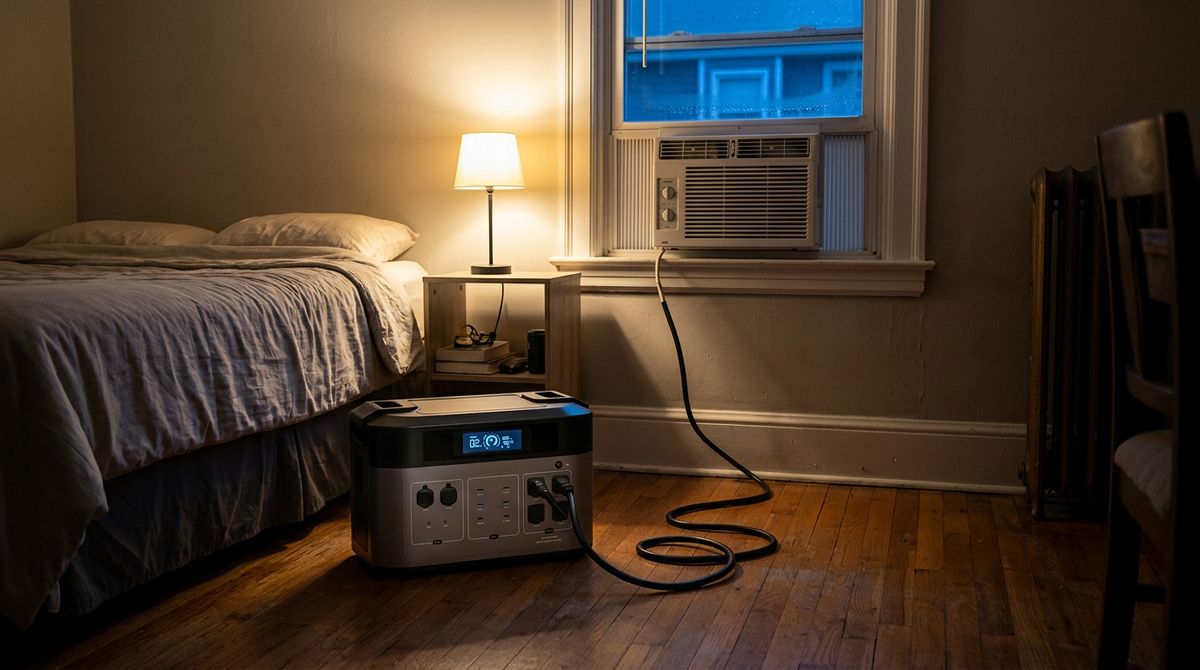
Can a Solar Generator Run a Window Air Conditioner? Size and Runtime Guide
LEARN MORE
Hurricane, Wildfire and Winter Outage Power Checklist
LEARN MORELooking for something else?
OUKITEL Showcases Energy Storage Solutions at Intersolar South America 2026, Accelerating Expansion into Latin America
LEARN MORE
Portable Power Station for Starlink: Runtime, Solar and Off-Grid Setup
LEARN MORE
Portable Power Stations for Power Tools and Job Sites: Surge, Runtime and Safety
LEARN MOREYou may also like
OUKITEL P2001 Solar Generator
OUKITEL P1000 PLUS Portable Power Station 1800W | 1024Wh


OUKITEL BP2000 Portable Power Station 2200W | 2048Wh

OUKITEL P5000 Pro Portable Power Station 5120Wh | 3600W

OUKITEL P5000 Solar Generator for Home with 400W Solar Panel
Further reading

OUKITEL P2001 Plus vs BLUETTI AC200L: Which 2kWh Station Is Better for You?

OUKITEL P2001 Plus vs EcoFlow DELTA 2 Max: 2048Wh Power Station Comparison
