










 Flashlight
 Solar
Extension Cable
Solar
Extension Cable


How Long Does It Take to Fix the Power Outage by Situation

I get this question a lot. Like, weekly. Someone's sitting in the dark, fridge ticking, phone at 30%, and they want a number. How long does it take to fix a power outage? Give me a straight answer.
So here's the straight answer. It depends on what broke.
A tripped breaker? Fixed before you finish your coffee. A storm that ripped through your county and snapped 60 poles? You might be waiting three days. I've been working around outage scenarios since about 2015, and the pattern never changes. Small problem, fast fix. Big damage, long wait. Simple as that.
Back in 2021, a windstorm tore through my neighborhood. My block got power back in six hours. The street behind me? Almost two full days. Same storm. Same utility company. Totally different outcomes. The U.S. Energy Information Administration tracks power outage duration nationally. Their data confirms what I've seen firsthand. The range is enormous.
Here's a rough guide I give everyone:
- Minor fault: minutes to 1 hour
- Equipment failure: 1 to 6 hours
- Moderate storm damage: 6 to 24 hours
- Major storm: 1 to 3 days
- Hurricane or wildfire: 4 days to 2 weeks
Now, let me break down why.
Power Outage Duration by Situation (What to Expect)
See, the cause matters more than anything. I've tracked hundreds of outage events. And every single time, the power outage repair time comes down to one thing. How much physical damage actually happened.
Minor Issues (Minutes to 1 Hour)
These are the easy ones. A temporary fault. A breaker trip. A quick voltage hiccup the system catches and fixes on its own. I've seen outages clear before customers even finished dialing to report them.
Automated grid systems handle these. They reroute power. Reset circuits. No crew needed. According to the U.S. Department of Energy, smart grid technology has cut minor fault resolution time dramatically. Most people don't even notice these outages happened.
Local Equipment Failures (1 to 6 Hours)
Now it gets real. A blown transformer. A cracked insulator. A distribution line pulled down by a falling branch. These need a crew on-site with the right tools.
I followed a case in 2019. Single transformer failed on a quiet residential street. Four hours from report to lights-on. And that was fast. The crew already had a replacement transformer on the truck. Usually? You're looking at five to six hours for this kind of job. Crews locate the failure, de-energize the section, replace parts, test everything. Can't skip steps.
Moderate Damage (6 to 24 Hours)
This is where people start getting frustrated. Multiple failures in one area. Downed lines here, broken pole there, blown fuse two blocks over. Each one needs individual attention.
I've watched crews work 14-hour shifts on these jobs. They aren't slow. They just can't fix five problems at once when each fix requires safety clearance before the next section can even be tested. The grid connects in sequence. You can't bring the end of the line back until everything upstream works.
Storm-Related Outages (1 to 3 Days)
Storms are a whole different game. I've reviewed post-storm reports where the damage list hit 200+ locations before sunrise. Wind, ice, lightning. All hitting at once, across an entire region.
Here's what people don't realize. Utilities fix the biggest impact first. One transmission line repair might restore 5,000 homes. Your street? That's 40 homes. They do the big ones first. Not because they don't care about you. Because the math says so. FEMA advises planning for 1 to 3 days of outage after any significant storm event. Trust me, that's not overcautious.
Major Disasters (4 Days to 2 Weeks)
Hurricanes. Wildfires. Floods. These don't damage the grid. They destroy it. Poles snapped at the base. Substations underwater. Miles of line on the ground in areas crews can't even access for the first 24 hours.
I've seen outages run past a full week after events like these. At that point, utilities aren't repairing. They're rebuilding. New poles. New line. New substation equipment flown in from other states. Waiting that out without a backup power plan? Bad idea doesn't begin to cover it.

What Affects How Fast Power Is Restored?
"Why does my neighbor have power and I don't?" Heard that one about a thousand times. And the answer is never what people want to hear. So let me walk through what actually affects power outage repair time.
Weather Conditions
This is the big one. Crews can't climb poles in 50 mph winds. They can't splice cable in active lightning. I've seen fully equipped teams sit in their trucks for three hours. Just waiting. Conditions too dangerous to start work.
Every hour of bad weather adds directly to your outage clock. The National Weather Service makes this clear. Crew safety comes before speed. Always.
Type and Extent of Damage
A blown fuse? Ten minutes. A snapped pole tangled in downed cable? Six hours, minimum.
I tracked a case where one vehicle hit one pole. Knocked out 400 homes. Replacing that single pole took close to six hours. And the crew had everything they needed already on the truck. Imagine what happens when 20 poles go down in one storm. Yeah. That's why it takes so long.
Urban vs. Rural Location
City areas come back faster. Not because utilities play favorites. Because one fix in a dense neighborhood restores more homes per crew-hour than one fix 30 miles down a rural road.
I've personally reviewed outage reports where urban sections restored in two hours. Rural areas on the same circuit? Twelve. Location-based power outage duration differences are real, and they're significant.
Utility Priority System
Hospitals first. Water treatment second. Emergency services third. Then major transmission lines, because fixing those unlocks the biggest customer blocks. Your individual street? That comes last.
Your home isn't forgotten. It's downstream. The Department of Energy documents this priority hierarchy. It's standard operating procedure for every major utility in the country.
Access and Safety
Flooded roads. Downed trees blocking the only route in. A live wire across a sidewalk that has to be secured before anyone touches anything nearby. I've seen all of it. And every one of those situations adds time before the actual repair even starts.
Rushing safety checks isn't an option. Period.

The 5-Step Utility Restoration Process
The utility restoration process is a required five-step sequence.For safety and thoroughness, each step must be fully completed before the next can begin.
Step 1: Detect the Outage
Smart meters and grid sensors automatically detect the loss of power, often within seconds.Utility dispatch knows the location before customers call to report the issue.
Step 2: Deploy Crews
Teams are dispatched with equipment matched to the damage report.During storms, dispatch must coordinate many teams at once.
Step 3: Diagnose the Failure
Crews must find the exact failure point.Obvious issues are quick, but diagnosis for a buried cable fault or internal transformer failure can take hours alone.
Step 4: Repair or Replace Equipment
The physical fix time varies: a fuse swap may take ten minutes, while replacing a pole typically takes four to six hours.Waiting for parts from other locations can add a full day to the repair timeline.
Step 5: Test and Re-energize
Power is not restored until the section is tested.Crews test every repaired segment before sending voltage back through it, ensuring safety and thoroughness.These final checks can add up to two hours to the job.

Why Some Power Outages Take Longer Than Others
People get frustrated when the estimated restoration time keeps getting pushed back. Totally fair. Here's why that happens more often than anyone wants to admit.
Multiple damage points at once. One issue is manageable. Twenty failures spread across a county? Crews queue up, travel between locations, and complete each one before moving on. I've seen storms create 300+ damage points overnight. That math doesn't resolve fast no matter how many trucks you send.
Equipment delays. Sometimes crews finish the repair work and then wait for parts. In 2018, I tracked an outage where a specific transformer model wasn't available locally. The crew was ready. The equipment wasn't. That outage ran days longer than it should have. Supply chain problems aren't just a retail thing.
Underground vs. overhead repairs. Overhead damage is visible. You drive up, see the line, fix it. Underground cable faults? You need specialized equipment just to find the break before anyone can dig. That detection process alone adds hours. The Department of Energy tracks these differences across repair categories. Underground repairs consistently take longer, even in areas that are otherwise easy to access.
Large-scale grid failures. When regional transmission goes down, utilities call for mutual aid from neighboring states. More people helps, but rebuilding infrastructure doesn't speed up proportionally. Coordination, staging, safety protocols. All of it takes time regardless of how many hands are available.
What to Do During a Power Outage
The people who handle outages best already have a plan. The rest are scrambling in real time. I've seen both. Here's what actually matters.
Keep Food Safe
Close the fridge. Leave it closed. Seriously. The FDA says a fridge stays safe for about 4 hours if unopened. Full freezer? Up to 48 hours. Half-full, maybe 24.
|
Tip: Put a thermometer in your freezer now. Not during the outage. Now. If it reads above 40°F when power comes back, check everything before eating it. |
Use Backup Power the Right Way
Never run a fuel generator inside your home. I don't care if the garage door is open. I don't care if you have a window cracked. The CPSC reports roughly 85 carbon monoxide deaths per year from portable generators. 81% at home. That's not a risk you manage. It's one you eliminate.
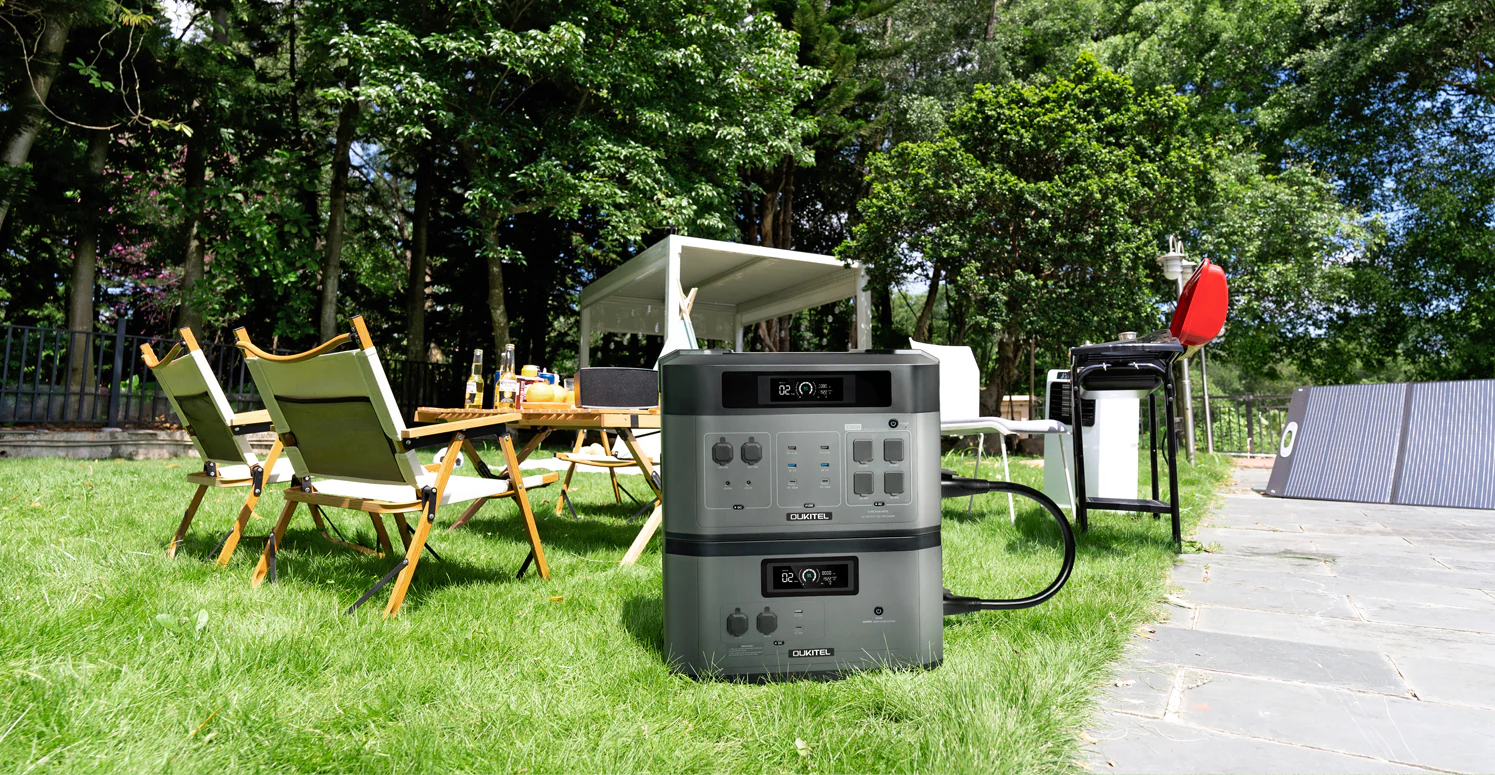
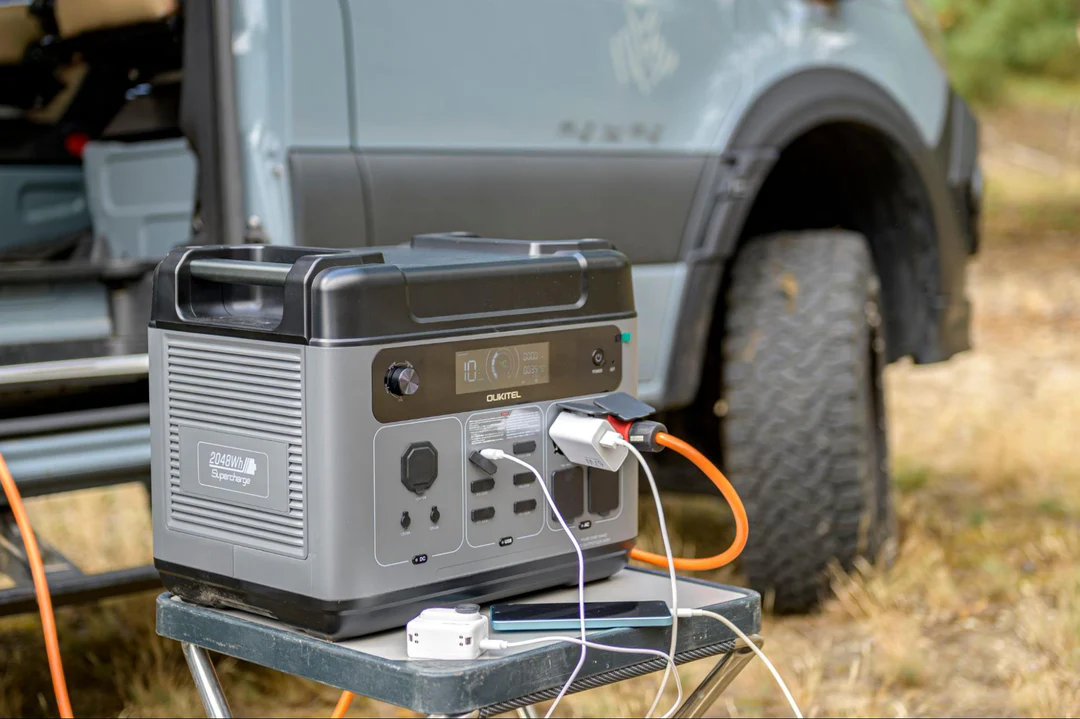
Portable solar power stations solve that problem completely. Zero exhaust. Zero fumes. Run one in your bedroom if you want. They handle phones, laptops, lights, and a small fridge without any of the hazards fuel generators carry.

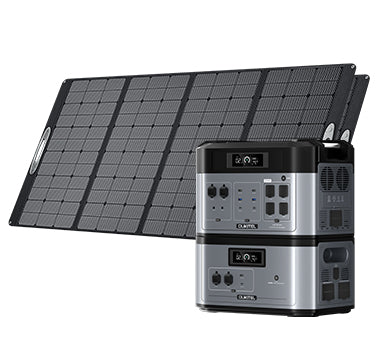
The setup I've been recommending lately is the OUKITEL BP2000 paired with a 400W solar panel. 2,048Wh of LiFePO4 capacity. 2,200W output. EPS kicks in under 10 milliseconds when the grid drops, so your fridge doesn't even notice the outage happened. And if you need more capacity down the line, you can expand up to 16kWh by adding B2000 batteries. Starts at $1,499.
|
Tip: Size your backup power to what you actually need. Fridge, lights, phone charging. That covers 90% of household outages. |

Track Updates
Your utility's app or outage map is faster and more accurate than any news channel or social media thread. Real-time updates. Estimated restoration by neighborhood. Automatic notifications.
|
Tip: Download the app before storm season. Two minutes of setup now saves you from searching on a dying phone later. |
How to Prepare for Future Power Outages
I didn't take power outage preparation seriously until 2019. A 3-day outage after a late-season storm changed that. Every shortcut I'd taken caught up with me by hour 18. Won't happen again.
Emergency Kit
Keep it simple. 72 hours of basics:
- Flashlights and spare batteries
- Bottled water and food that doesn't need cooking
- Portable phone charger or power bank
- First aid supplies and any prescriptions you take daily
FEMA's emergency kit guide says 72 hours minimum. I'd add a day's margin if you're in a storm-prone area. Having this packed and accessible before an outage removes almost all of the stress when one hits.

Pick the Right Backup Power
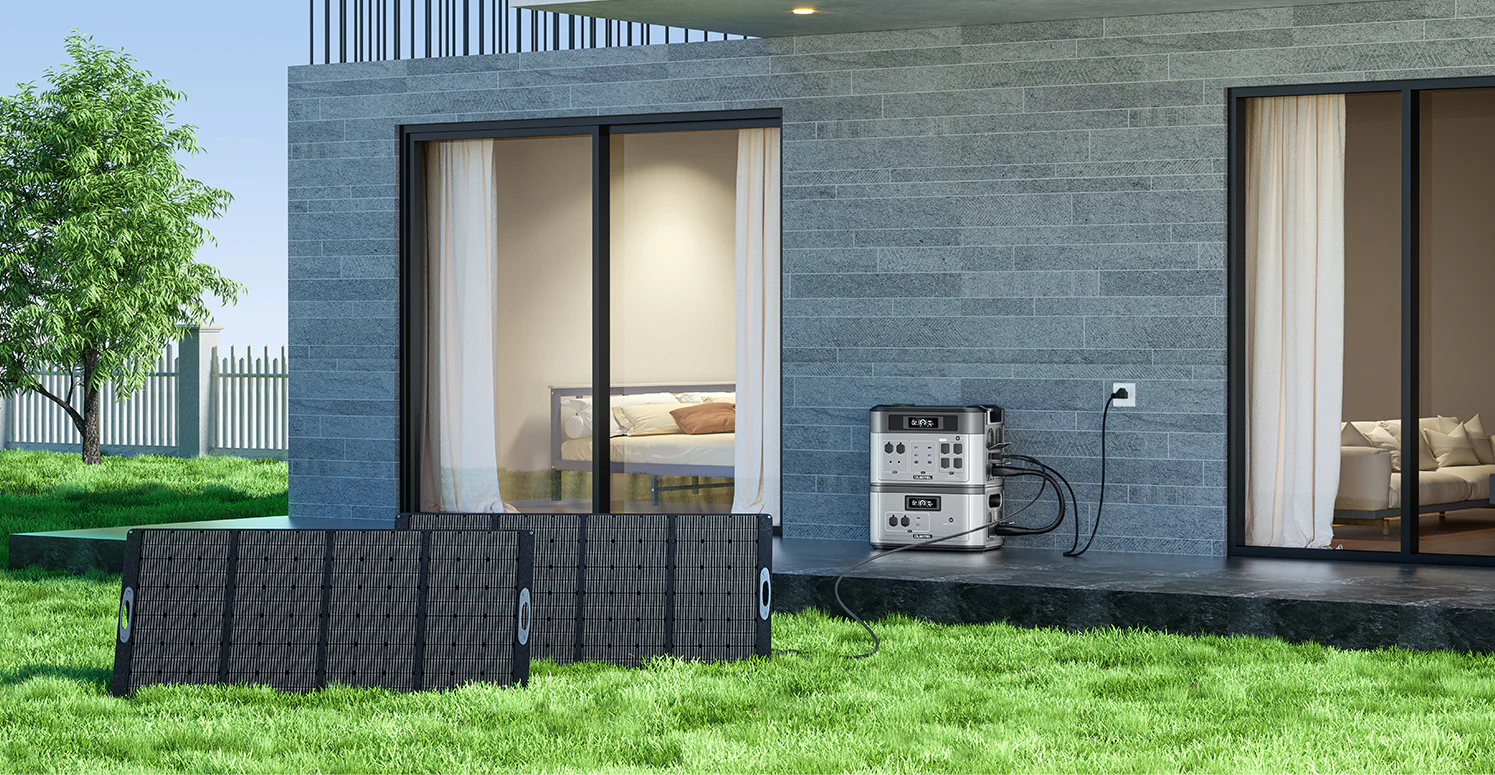
Fuel generators work. They're also loud, they need outdoor placement, and you need to store fuel. For most households, a solar generator kit paired with solar panels is more practical. Quieter. Safer indoors. No fuel runs. Recharges itself every day the sun comes up.
Identify what you actually need running during an outage first. Fridge. Lights. Phone. That's most people's real list. Build from there.

Make an Energy Plan
This takes ten minutes and saves hundreds of dollars in wrong purchases. List your essential devices. Write down each one's wattage. Fridge: 150 to 200W. Lamp: 10 to 15W. Phone charger: 20W. Add it up. Then buy backup power that actually covers that number.
I've seen people buy a 500Wh station when they needed 2,000. Seen others buy 5,000Wh when 1,500 would've been perfect. A quick load calculation eliminates both mistakes.
|
Tip: Start by listing the devices you actually use during an outage. Most people overestimate what they need. Fridge, lights, and phone charging handles 90% of real-life scenarios. |
Frequently Asked Questions
How long do most power outages last?
Anywhere from a few minutes to several hours for most events. Minor faults clear quickly, sometimes before you even notice. Storm damage runs 12 to 48 hours depending on severity. I've been tracking outage timelines since 2016, and the EIA's reliability data consistently shows that cause and geography are the two biggest factors. My advice? Always prepare for 24 hours minimum. Even when the utility estimate says two hours.
How long does it take to restore power after a storm?
Usually 12 hours to 3 days. After a 2021 windstorm in my area, some blocks were back by morning. Others waited two full days. Storms damage multiple components at once, and the National Weather Service notes that active weather also delays crew deployment. So the clock doesn't even start until conditions are safe enough to work. Charge everything before a storm and keep your backup power ready. Not after the forecast, before it.
Why do power outages take so long to fix?
Because the utility restoration process is sequential, not all-at-once. Locate, secure, repair, test, re-energize. Each step has safety requirements you can't skip. Crews also prioritize high-voltage infrastructure and critical facilities first, which means smaller neighborhoods wait even if they reported the outage early. The DOE documents this as standard protocol nationwide. Use your utility's outage map to track where your area falls in the queue.
Can power be restored in minutes?
Sometimes, yeah. Automated systems catch minor faults and reroute power without sending anyone out. I've seen outages clear in under five minutes this way. But once something physically breaks, a pole, a transformer, a cable, fast restoration isn't possible. If power comes back quickly after a storm, still check sensitive electronics before plugging them in. Voltage irregularities during restoration are common.
How do I check outage status in my area?
Your utility's outage map or app. That's it. Skip the hotline. Skip social media. The map shows real-time crew progress and estimated restoration by area. Most systems pull from smart meters that update continuously. Save the app to your phone now, not when the lights go out.
Does location affect power restoration time?
A lot. Urban areas restore faster because each repair serves more homes. Rural areas need longer travel time, harder terrain, and fewer crews available locally. I've personally seen a two-hour urban restoration versus a twelve-hour wait in a rural area on the same circuit. The EIA data backs this up. If you're rural, plan for longer outages as your baseline.
What causes long power outages?
Serious structural damage. Hurricanes, wildfires, floods, fallen trees on equipment, vehicle-pole collisions. These don't just knock the grid offline, they require rebuilding it. Replacement parts that aren't locally stocked add even more delay. Keep 72 hours of emergency supplies on hand during peak storm and fire seasons.
How can I prepare for long outages?
Build an emergency kit that covers 72 hours of food, water, and lighting. Then solve the energy problem. A solar generator kit that pairs a power station with panels gives you daily recharging from sunlight, no fuel, no fumes, and it runs indoors. I went through a 3-day outage in 2019 and having backup power turned a potentially miserable experience into something manageable. FEMA recommends treating outage preparation as a household priority, not an afterthought. Test your setup before storm season. Not during.
Sources
1. U.S. Energy Information Administration — Electricity Reliability
2. U.S. Department of Energy — Grid Modernization and Smart Grid
3. National Weather Service — Power Outage Safety
4. Federal Emergency Management Agency — Power Outages
5. Federal Emergency Management Agency — Emergency Kit
6. U.S. Food and Drug Administration — Food Safety During Power Outages
7. U.S. Consumer Product Safety Commission — Generator Safety


Looking for something else?
Power Tool Battery Standardization: Benefits and Guidelines
LEARN MORE
What Size Portable Power Station Do I Need: Complete Guide
LEARN MORE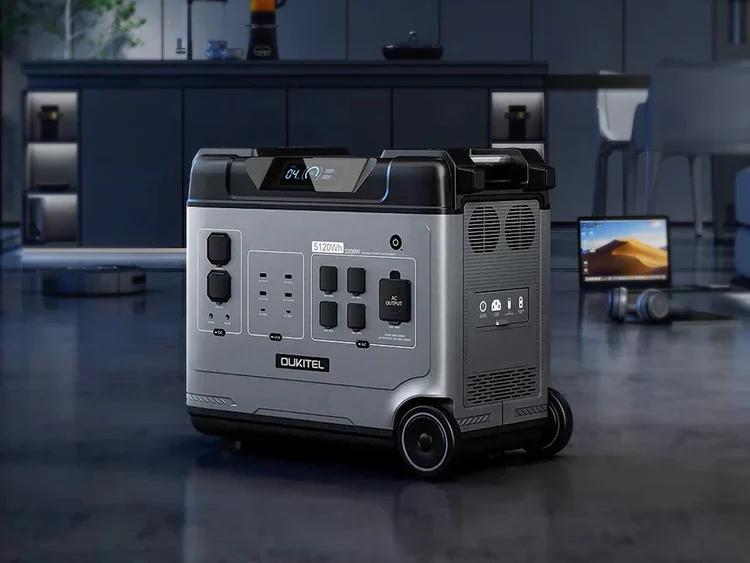
Watts to BTU/hr: How to Convert and Apply the Formula
LEARN MORE
OUKITEL Energy Storage Shines at the 139th Canton Fair, Global Customers Experience Product Strength On-Site
LEARN MORELooking for something else?
How Does a Solar Generator Work? A Comprehensive Guide to Clean, Renewable Power
LEARN MORE
How Long Does It Take to Fix the Power Outage by Situation
LEARN MORE
Is Tornado Watch or Warning Worse? What to Do Fast
LEARN MOREYou may also like

OUKITEL P5000 Pro+400W Solar Generator

OUKITEL BP2000+400W Solar Generator

OUKITEL P5000+2*400W Solar Generator

OUKITEL P5000 Pro+2*400W Solar Generator

OUKITEL BP2000+2*400W Solar Generator

OUKITEL BP2000+2*B2000 Home Backup
Further reading

How to Choose the Best Expandable Portable Power Station in 2026

How to Choose the Best 5000Wh Portable Power Station in 2026
