








 Flashlight
 Solar
Extension Cable
Solar
Extension Cable


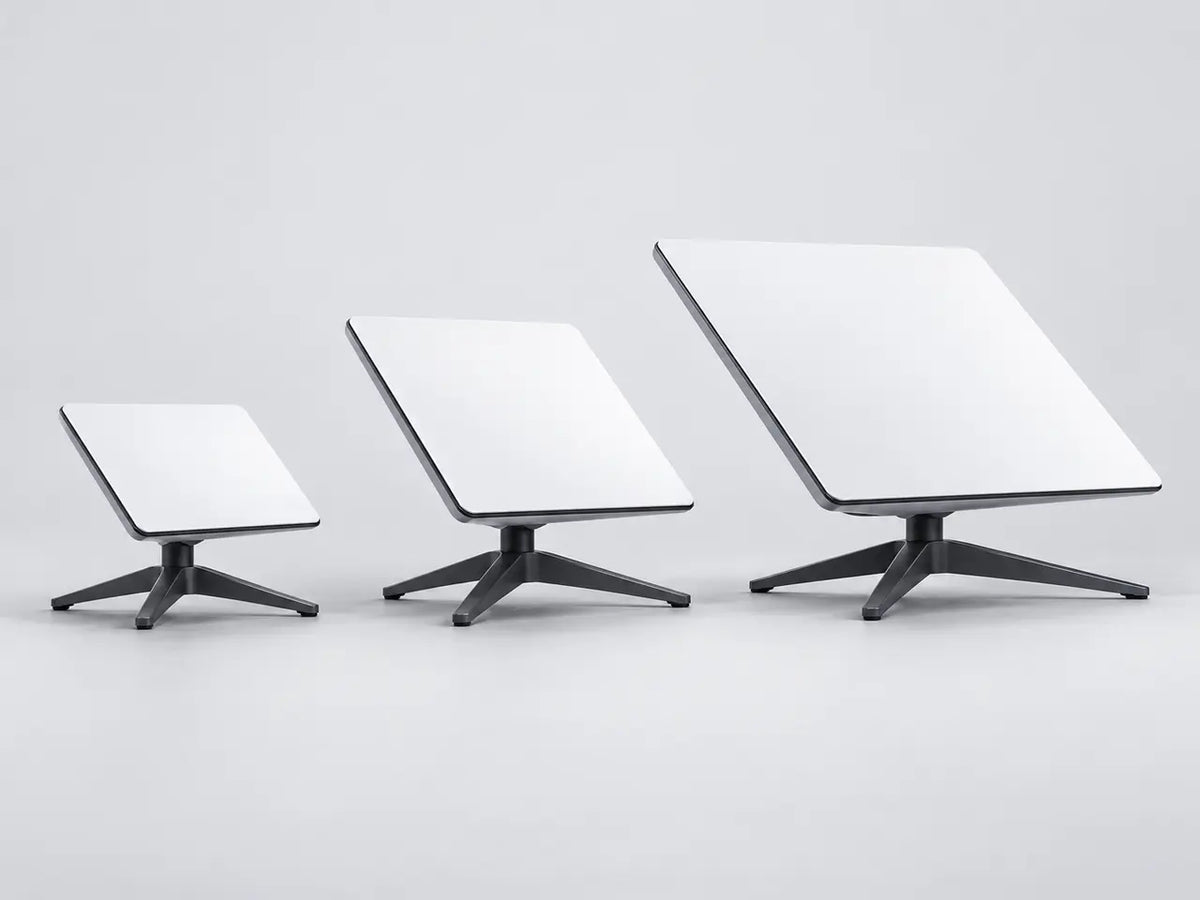
Portable Power Station for Starlink: Runtime, Solar and Off-Grid Setup
If you are shopping for a portable power station for Starlink, look at watt-hours first. The big inverter number on the box says very little about how long the dish will stay online.
Starlink's own figures put the Mini at 20 to 40W, which means a 500Wh battery lasts a normal workday with room left. Standard kits are hungrier. Starlink puts them at 50 to 100W, so plan on roughly 1,000Wh for those same eight hours.
After that it comes down to the cable and the recharge.
|
Quick answer
|
What Size Portable Power Station Do You Need for Starlink?
Your kit matters more than anything else on this page. Starlink publishes two numbers for each one, an average and an idle draw, and both already cover the router and power supply.
|
Starlink kit
|
Average draw
|
Idle draw
|
Energy over 8 hours
|
Suggested battery
|
|
Mini
|
20 to 40W
|
15W
|
160 to 320Wh
|
500Wh
|
|
Standard Actuated
|
50 to 75W
|
20W
|
400 to 600Wh
|
1,000Wh
|
|
Standard 4 / 4 X
|
75 to 100W
|
20W
|
600 to 800Wh
|
1,000 to 1,500Wh
|
|
Performance (Gen 1 and Gen 2)
|
110 to 150W
|
45W
|
880 to 1,200Wh
|
2,000Wh
|
These are AC input averages from Starlink's power requirements page. Startup spikes run higher for a few seconds, but any station with roughly 300W of continuous output absorbs them.
How Long Will a Portable Power Station Run Starlink?
The formula is short: battery Wh x 0.85, divided by the kit's average watts. That 0.85 covers what the inverter and the Starlink power brick lose as heat on an AC setup. Run the dish on DC or USB-C and you usually get a bit more than the table shows.
|
Battery (estimated hours)
|
Mini, 30W
|
Standard Actuated, 60W
|
Standard 4, 90W
|
Performance, 130W
|
|
512Wh
|
14 h
|
7 h
|
5 h
|
3 h
|
|
1,024Wh
|
29 h
|
14 h
|
10 h
|
7 h
|
|
2,048Wh
|
58 h
|
29 h
|
19 h
|
13 h
|
Add Your Laptop Before You Size the Battery
The dish is rarely alone on the battery. Take a workday at a campsite outside Moab. Mini on a tripod, laptop on the picnic table, phone charging.
-
240Wh goes to the Mini (30W for 8 hours)
-
The laptop adds more than the dish does, 320Wh at 40W
-
Add a phone and you are near 600Wh, or 700Wh after losses
A 1,024Wh station handles that day with charge left for the evening. A 512Wh unit gets you to about 3 p.m. if you start at nine.
|
Warning: Winter trips need extra margin. Snow melt heats the dish, so leave it off in the Starlink app unless snow is actually falling, and keep the station above 32°F (0°C), because many LiFePO4 units stop charging below that.
|
Should You Power Starlink Over AC, DC or USB-C?

Every kit works on AC. It is also the least efficient route, because the station turns battery DC into AC and the Starlink power supply turns it back into DC. Two conversions, two losses.
-
AC works with any kit and the stock power supply, at a cost of roughly 15%.
-
Only the Mini runs on USB-C, and Starlink asks for a 100W (20V/5A) PD source. At 65W or less it won't start.
-
Its barrel jack also accepts 12 to 48VDC at 60W, which suits a car port or DC output. Standard kits need a rated DC conversion kit.
|
Tip: The OUKITEL P800 includes a 100W USB-C port, the same rating the Mini asks for. Pair it with a 5A cable. When a Mini refuses to boot over USB-C, we check the cable first; plenty of USB-C cables are 3A parts, good for 60W and no more.
|
Which OUKITEL Power Station Fits Your Starlink Setup?

All three run on LiFePO4 cells and switch to battery in under 10ms when wall power cuts out, so the dish does not reboot during a home outage. Bigger systems are in the full portable power station lineup.
|
Model
|
Capacity
|
AC output
|
Solar input
|
Weight
|
Best Starlink match
|
|
512Wh
|
800W
|
200W
|
13.2 lb
|
Mini, weekend trips
|
|
|
1,024Wh
|
1,800W
|
500W
|
26.5 lb
|
Mini for 24 h, Standard for a workday
|
|
|
2,048Wh
|
2,400W
|
500W
|
48.5 lb
|
Standard overnight, Performance kits
|
For a Mini and a single day of work, the P800 is the light option at 13.2 lb. Remote workers usually end up with the P1000 Plus; in our experience it covers dish plus laptop without anyone watching the percentage. The P2001 Plus is the one for an RV or home backup. It and the P1000 Plus can also add B2000 expansion batteries.
How Many Solar Panels Do You Need for Starlink?

Think in daily totals. A Mini left running all day at 30W goes through about 720Wh; a Standard Actuated kit at 60W, about 1,440Wh.
A 200W panel with five good sun hours makes 1,000Wh in theory. We usually see closer to 700Wh once heat and panel angle take their share. Fine for a Mini. A Standard kit needs 400 to 600W.
Our OUKITEL 200W solar panel is sized for the P800, and two of them (400W) still fit under the P1000 Plus input limit. After sunset the battery carries the dish alone until mid-morning.
How to Set Up Starlink Power for Camping, RVs and Home Outages

|
Use case
|
Starlink kit
|
Battery
|
Charging
|
|
Weekend camping
|
Mini
|
500Wh
|
100 to 200W portable panel
|
|
Van life
|
Mini
|
1,000Wh
|
Alternator plus 200W solar
|
|
RV travel
|
Standard
|
1,000 to 2,000Wh
|
400W roof solar plus shore power
|
|
Home outage
|
Any
|
1,000 to 2,000Wh
|
Wall charging, solar for long outages
|
Van builders can use our van life sizing guide, and RV owners can size a roof array with the RV solar generator guide. Check the campsite on the FCC National Broadband Map before you go.
Flying is different. FAA PackSafe rules cap spare lithium batteries at 100Wh in carry-on bags, allow two up to 160Wh with airline approval, and ban anything bigger. At home, FEMA's power outage guidance tells households to plan backup power for the devices they depend on. For a lot of remote workers, that list now includes the dish.
Your Starlink Power Plan in Three Steps
-
Measure your kit. Run it from the station for an afternoon and write down the average watts the display shows.
-
Take that number times your hours online. Add the laptop and phone. Divide the total by 0.85.
-
Buy the next battery size up, then solar that matches the same daily total. OUKITEL Power sorts its stations and panels by capacity.
FAQs
What type of portable power bank is compatible with Starlink?
One that matches your kit's input. A Mini owner needs either a USB-C PD port rated at 100W or a 12 to 48V DC output good for 60W. Standard kits generally need an AC outlet.
Most phone power banks stop at 20 to 65W on USB-C, which is not enough for the Mini.
Before buying, check:
-
100W (20V/5A) USB-C PD for a Mini
-
Pure sine wave AC for Standard and Performance kits
-
300Wh or more for anything past a few hours
-
LiFePO4 cells if you cycle it daily
What size power bank do I need to run a Starlink Mini?
About 500Wh for a workday. That runs a Starlink Mini for roughly 14 hours at a 30W average, and 1,000Wh stretches it to a full 24. A 99Wh travel pack works too, but only for two to three hours.
Runtime at 30W:
-
99Wh pack: 2.8 hours
-
512Wh station: 14 hours
-
1,024Wh gives you 29 hours
If a laptop shares the battery, go one size up.
Will a Jackery run a Starlink?
Yes. Any power station runs Starlink, Jackery and OUKITEL included, as long as it has enough watt-hours and the right port for your kit.
We often see buyers compare brands when the better comparison is runtime per pound, solar input and cycle life. Our OUKITEL vs Jackery comparison puts those side by side.
Compare these instead:
-
Watt-hours, for runtime
-
A 100W USB-C port if you run a Mini
-
Cycle rating; LiFePO4 models list 3,500 to 4,000
Can Starlink work with a power bank?
Yes, if it meets the kit's input requirement. A Mini runs from 100W USB-C PD, and Starlink states it will not work at 65W or lower. Standard and Performance kits draw too much for USB power banks.
Compatibility at a glance:
-
Mini plus 100W USB-C bank: works
-
A 65W laptop bank will not start a Mini
-
Standard kit on a USB bank: not supported by Starlink
-
Every kit runs from a power station's AC outlet
How many watts does a portable Starlink use?
Between 20 and 40W for the Mini, and around 15W when it sits idle. Starlink lists the Standard Actuated kit at 50 to 75W and Standard 4 at 75 to 100W. Performance kits reach 110 to 150W.
Router and power supply are already inside those figures. You will see the high end on cold days or with snow melt running.
Across a full day:
-
Mini at 30W uses about 720Wh
-
2,160Wh for a Standard 4 kit at 90W
Should I buy a 10000mAh or 20,000mAh power bank?
Neither, for Starlink. In watt-hours they hold roughly 37Wh and 74Wh.
The conversion is simple once you know mAh is quoted at the 3.7V of the cells: mAh x 3.7, then divide by 1,000. Most banks in this range also lack the 100W USB-C output the Mini needs.
With a Mini drawing 30W:
-
10,000mAh (37Wh): 1 hour
-
On a 20,000mAh bank (74Wh), about 2 hours
So no, 20,000mAh is not overkill for Starlink. It is on the small side.
What is the best portable power station for Starlink?
The smallest one that covers your daily watt-hours after losses. That makes the best portable power station for Starlink a 500 to 1,000Wh unit for most Mini owners, and 1,000 to 2,000Wh for a Standard kit.
Where to start:
-
Mini on day trips: OUKITEL P800 (512Wh)
-
P1000 Plus (1,024Wh) for a Mini around the clock or a Standard workday
-
Standard overnight, or a Performance kit: P2001 Plus (2,048Wh)


Looking for something else?

How to Choose the Best 5000Wh Portable Power Station in 2026
LEARN MORE
How to Choose the Best Expandable Portable Power Station in 2026
LEARN MORE
Best Indoor Generators for Power Outages: Battery Options, Safety and Limits
LEARN MORE
Portable Power Station for CPAP: How to Size Runtime, Humidifier Load and Battery Backup
LEARN MORELooking for something else?

Best Solar Generator for RV in 2026: How to Size and Choose One
LEARN MORE
Portable Power Station for Freezer Backup: Runtime by Size and Temperature
LEARN MORE
Portable Power Station for a Sump Pump: Starting Watts, Runtime and Setup
LEARN MOREYou may also like

OUKITEL P5000 Pro+400W Solar Generator
$1,998.00
$2,798.00

OUKITEL BP2000+400W Solar Generator
$1,269.00
$1,799.00

OUKITEL P5000+2*400W Solar Generator
$2,098.00
$3,599.00

OUKITEL P5000 Pro+2*400W Solar Generator
$2,398.00
$3,398.00

OUKITEL BP2000+2*400W Solar Generator
$1,869.00
$2,399.00

OUKITEL BP2000+2*B2000 Home Backup
$2,099.00
$2,799.00
Further reading

OUKITEL Power Showcases Full-Scenario Energy Storage Solutions at the 140th Canton Fair
October 15–19, 2026 — Guangzhou, China. The 140th China Import and Export Fair (Canton Fair) is underway at the China Import and Export Fair Complex in Guangzhou. OUKITEL is showcasing its latest ...

Hurricane, Wildfire and Winter Outage Power Checklist
Hurricane, Wildfire and Winter Outage Power Checklist
We'd build an emergency power station checklist for hurricane, wildfire and winter outages around your house first and the battery second. Sta...

Portable Power Stations for Power Tools and Job Sites: Surge, Runtime and Safety
A portable power station for power tools has to get three numbers right before it earns a spot on the truck: continuous AC output, surge output for the motor start, and battery capacity. Get one w...