










 Oukitel Flashlight
 Oukitel Solar
Extension Cable
Oukitel Solar
Extension Cable


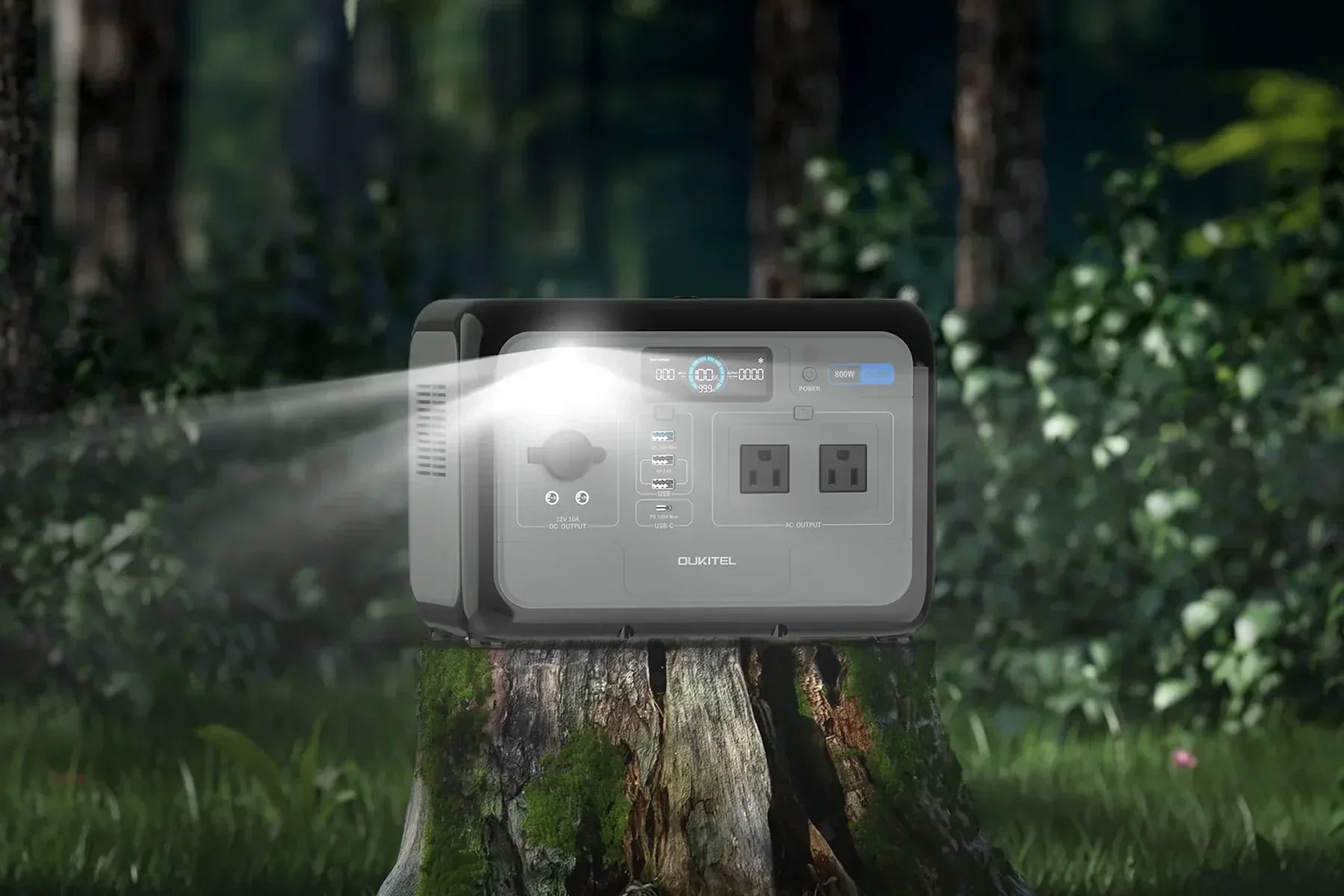
Portable power station for CPAP
If you rely on sleep therapy, a portable power station for CPAP can turn camping, road trips, and outage nights from stressful to simple. This guide focuses on cpap backup that’s quiet, safe, and sized correctly for overnight use. You’ll get plain‑English buying criteria, a quick sizing formula, and runtime tables for common battery sizes—without drowning in brand names.
What a CPAP actually draws (and why settings matter)
Manufacturers publish power usage under different settings. One widely referenced test sheet for a mainstream device shows approximate energy use per hour:
-
Device only (humidifier off): ~7 Wh/h (≈7 W)
-
Device + humidifier: ~22 Wh/h
-
Device + humidifier + heated tube: ~34 Wh/h
Those numbers come from bench tests with fixed pressures and conditions, and they neatly illustrate why turning off the humidifier or heated tube dramatically extends runtime.
Some user guides list “typical” and “peak” consumption (e.g., typical ~53 W, peak ~104 W) because power spikes with higher pressure and heater use. In the real world, humidifier/tube heat is the biggest variable you control.
AC vs. DC: the single biggest runtime decision

Most CPAPs are DC devices that come with an AC power brick. If you plug that brick into a power station’s AC outlet, the battery converts DC→AC, then your CPAP brick converts AC→DC—two conversions, more loss. Use a manufacturer‑approved DC‑to‑DC converter where available (often 12/24 V in, 24 V out). This avoids the inverter, trims losses, and adds extra protections.
-
Independent testing of portable power stations commonly finds AC inverter efficiencies ~86–91% at moderate loads; at very light loads, controller self‑consumption can make it worse. Using DC can recapture much of that loss.
Bottom line: If you can run your therapy on DC, you’ll typically get more runtime from the same battery. (Always use official or manufacturer‑approved cables/adapters for your exact model.)
How big a battery do you really need?
Use this quick rule of thumb:
Estimated runtime (hours) ≈ (Battery capacity in Wh × usable efficiency) ÷ CPAP watts
-
For AC use, a conservative 0.85 efficiency factor (85%) is reasonable.
Typical nighttime energy (8 hours):
-
Humidifier off: 7 W × 8 h ≈ 56 Wh
-
Humidifier on: 22 W × 8 h ≈ 176 Wh
Runtime tables (realistic planning numbers)
The tables below estimate runtime for three common battery sizes when used as a portable power station for CPAP. They show AC path (~85% eff.) vs DC path (~95% eff.), using the device‑maker test figures above. Your results vary with pressure, leaks, altitude, and ambient temperature.
A) Humidifier OFF (≈7 W)
|
Battery (Wh)
|
AC path: hours
|
DC path: hours
|
Approx nights (AC)
|
Approx nights (DC)
|
|
500
|
60.7
|
67.9
|
7.6
|
8.5
|
|
1,024
|
124.3
|
139.0
|
15.5
|
17.4
|
|
2,048
|
248.7
|
277.9
|
31.1
|
34.7
|
B) Humidifier ON (≈22 W)
|
Battery (Wh)
|
AC path: hours
|
DC path: hours
|
Approx nights (AC)
|
Approx nights (DC)
|
|
500
|
19.3
|
21.6
|
2.4
|
2.7
|
|
1,024
|
39.6
|
44.2
|
4.9
|
5.5
|
|
2,048
|
79.1
|
88.4
|
9.9
|
11.1
|
C) Humidifier + Heated Tube (≈34 W)
|
Battery (Wh)
|
AC path: hours
|
DC path: hours
|
Approx nights (AC)
|
Approx nights (DC)
|
|
500
|
12.5
|
14.0
|
1.6
|
1.7
|
|
1,024
|
25.6
|
28.6
|
3.2
|
3.6
|
|
2,048
|
51.2
|
57.2
|
6.4
|
7.2
|
Assumptions and sources: power draw from device‑maker test sheet; efficiency from independent testing/industry ranges; approximate nights assume 8 hours per night.
What to look for in a quiet, safe CPAP backup

When the goal is overnight comfort and reliability, prioritize these features:
-
Low‑transfer UPS/EPS (≤10 ms) If you plan to keep your CPAP plugged in during storms or rolling brownouts, a fast EPS/UPS can keep therapy from dropping when grid power blips. Many current models advertise <10 ms switchover, which is fast enough for a lot of electronics. (If power does drop, some CPAPs auto‑resume when power returns.)
-
LiFePO₄ battery chemistry Great cycle life and stable behavior make LiFePO₄ a strong match for cpap backup where you may cycle frequently (camping season, weekly storm prep).
-
DC output compatibility Confirm there’s a regulated 12/24 V DC output and that your exact device has a manufacturer‑approved DC converter. Better runtime, fewer conversion losses.
-
Clear display & app Live wattage, remaining time, and charge control help you plan overnight runtime precisely.
Field reality check (lessons from campers)
Campers often report the same pattern: humidifier off + DC adapter = many nights from a small pack. In one real‑world trip report, a compact power station used with no humidifier and a 12 V adapter still had ~52% battery left after three nights. Takeaways: keep heat features off, avoid the AC inverter when possible, and you’ll stretch a small battery much further.
Travel with CPAP batteries: rules in a nutshell
-
Carry‑on only for spare lithium‑ion batteries.
-
≤100 Wh: allowed in carry‑on.
-
101–160 Wh: up to two spares with airline approval.
-
>160 Wh: generally forbidden in passenger cabins. Check your airline’s page before you fly; policies evolve.
For the device itself, TSA classifies CPAPs as essential medical equipment; pack it so agents can easily inspect it, and keep the humidifier dry/empty.
Home outage plan: using a power station as CPAP UPS

If you live where the grid flickers, treat your station as a silent UPS by keeping it plugged into the wall with your CPAP connected to the station. Look for EPS/UPS ≤10 ms switchover—fast handoffs are less likely to interrupt therapy. Even if a brief interruption occurs, some devices auto‑restart when power returns (check your model’s manual).
CPAP runtime shortcuts (maximize hours per charge)
-
Turn off humidifier and heated tube. This is the single biggest boost (from ~34 Wh/h down to ~7 Wh/h in one test sheet). Use a side cover when available.
-
Seal leaks & keep filters clean. Leaks drive up blower work (and power).
-
Keep the battery comfortable. Extreme cold reduces performance; don’t block vents.
-
Know your numbers. Watch the live runtime estimate on the screen/app and adjust humidity or tubing heat accordingly.
Quick chooser: match capacity to your use
-
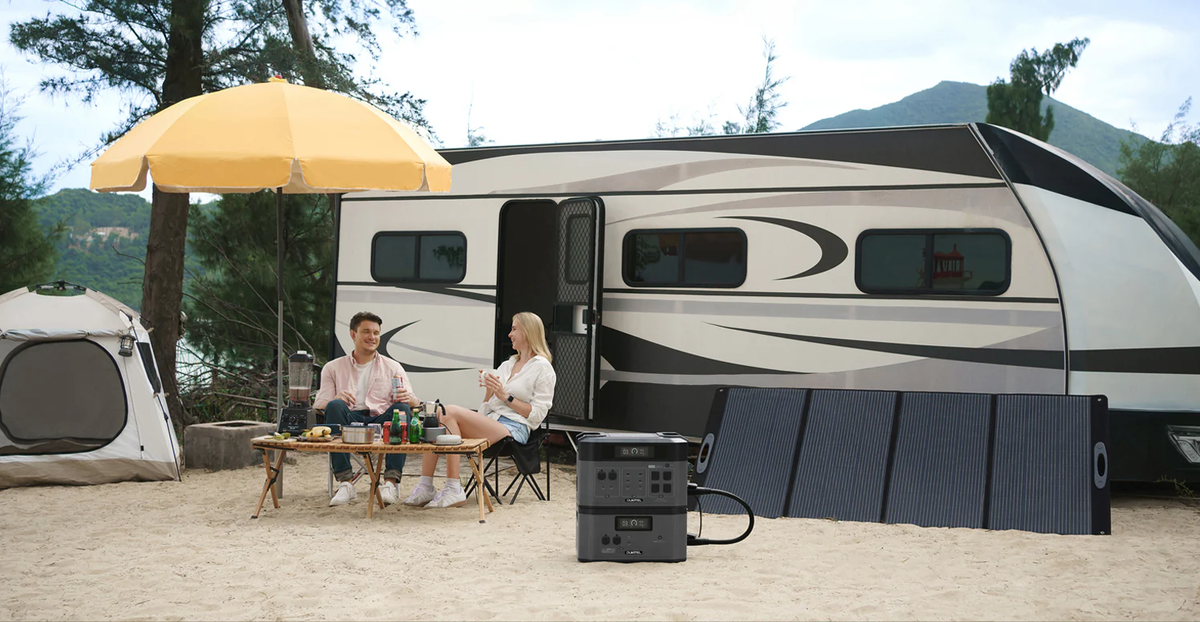
Weekend car camping (humidifier OFF): A ~500 Wh station can easily cover 2–3+ overnights on DC and still have room for phones/cameras.
-
Frequent trips or humidifier ON sometimes: Step up to ~1,000 Wh. This covers multiple nights even with moderate humidity use, and it’s still carry‑friendly.
-
Home + travel, humidifier ON often: ~2,000 Wh gives ample cpap backup for extended outages and doubles as a household power hub (router, lights, phone charging). Add a foldable solar panel if you’re off‑grid for days.
When comparing models, use “quiet” specs (<30 dB at low loads) and EPS/UPS listings as tie‑breakers, then double‑check there’s a manufacturer‑approved DC converter for your machine.
Safety notes (brief but important)
-
Pure sine wave AC is a must if you ever use the inverter for medical gear.
-
Medical disclaimer: This article is general information about powering equipment—not medical advice. Consult your sleep clinician about therapy settings and travel adjustments.
Frequently Asked Questions
How many watt‑hours do I need for one night? About 56 Wh with humidifier off; ~176 Wh with humidifier on; ~272 Wh with humidifier + heated tube (8‑hour night). Add headroom (and inverter losses if using AC).
Will my CPAP restart after a brief outage? Many devices auto‑resume when power comes back; check your user guide to confirm the behavior for your model.
What if I hear fan noise? Pick a station marketed as quiet (<30 dB at light load) and place it a bit away from the bed to minimize any remaining sound. Some current product pages publish that <30 dB claim—use it as your benchmark.
Can I use a solar panel to recharge on trips? Yes. Match the panel to your station’s PV input range. On sunny days, a 200–400 W panel can put back a meaningful chunk of energy between nights.
Is LiFePO₄ better for cpap backup? For frequent cycling, LiFePO₄ is attractive for long cycle life and stable behavior—great for daily or weekly use.
The takeaway
To build a portable power station for CPAP that’s dependable and quiet:
-
Size to your settings: aim for ~56–272 Wh per night depending on heat features.
-
Prefer DC with an approved converter for maximum runtime.
When you’re ready, compare capacities and current deals in the curated portable power station collection—then pick the unit that fits your nights, not someone else’s. (And yes, we spelled overnigh on purpose once for people who search it that way.)


Looking for something else?
Best Portable Power Station for Tailgating: Silent, Safe Power for Grills, TVs & Speakers
LEARN MORE
Best Black Friday Portable Power Station Deals 2025: Top 5 Picks by Capacity
LEARN MORE
Emergency Ready: Use a Portable Power Station to Charge Your EV on Road Trips
LEARN MORE
Lithium vs. LiFePO4: Which Portable Power Station Is Better for RV Trips?
LEARN MORELooking for something else?
Best Buy Portable Power Station Guide: Models, Return Policy, and Protection Plans
LEARN MORE
LiFePO4 Portable Power Station: Why It’s Safer and Lasts Longer
LEARN MORE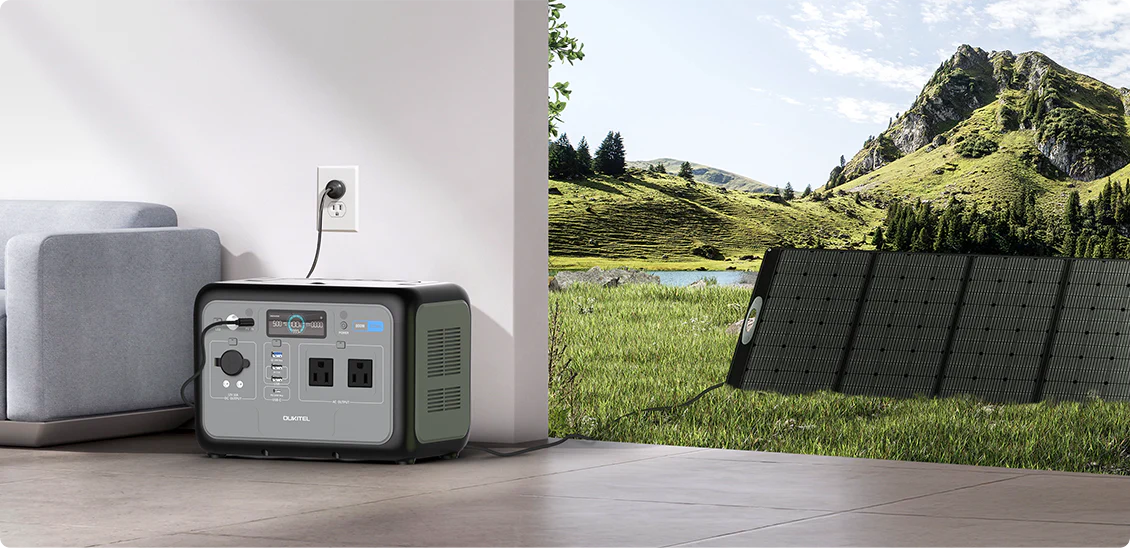
Best Portable Power Stations of 2025: Real-World Tests for Power, Portability & Safety
LEARN MOREYou may also like
OUKITEL BP2000+400W Solar Generator
$1,299.00
$1,799.00

OUKITEL P5000+2*400W Solar Generator
$1,999.00
$3,599.00

OUKITEL P5000 Pro+2*400W Solar Generator
$2,399.00
$3,399.00
OUKITEL BP3000 Portable Power Station 3200W | 2048Wh
$859.00
$1,599.00

OUKITEL BP2000+2*400W Solar Generator
$1,799.00
$2,399.00
OUKITEL BP2000+2*B2000 Home Backup
$2,099.00
$2,799.00
Further reading

LFP vs Lithium-Ion: Which Battery Chemistry Wins in 2026?
LFP vs lithium-ion is the wrong question to ask. Here's why: LFP IS lithium-ion. Subset, not separate. Same family. The actual comparison running in your head, whether you know it or not, is LFP vs...
What Is an Anderson Port? How It Works, What It Connects, and When You Need One
An Anderson port is a high-current DC connector that creates a secure, reversible electrical connection between batteries, solar panels, power stations, and 12V accessories without any male or fema...

Solar Panels for Charging a Car Battery: An Honest Guide
Alright, so you're thinking about hooking up solar panels to charge a car battery. Cool. The answer here actually depends a lot on what you're driving.
Got a classic Mustang sitting under a tarp ti...