








 Flashlight
 Solar
Extension Cable
Solar
Extension Cable


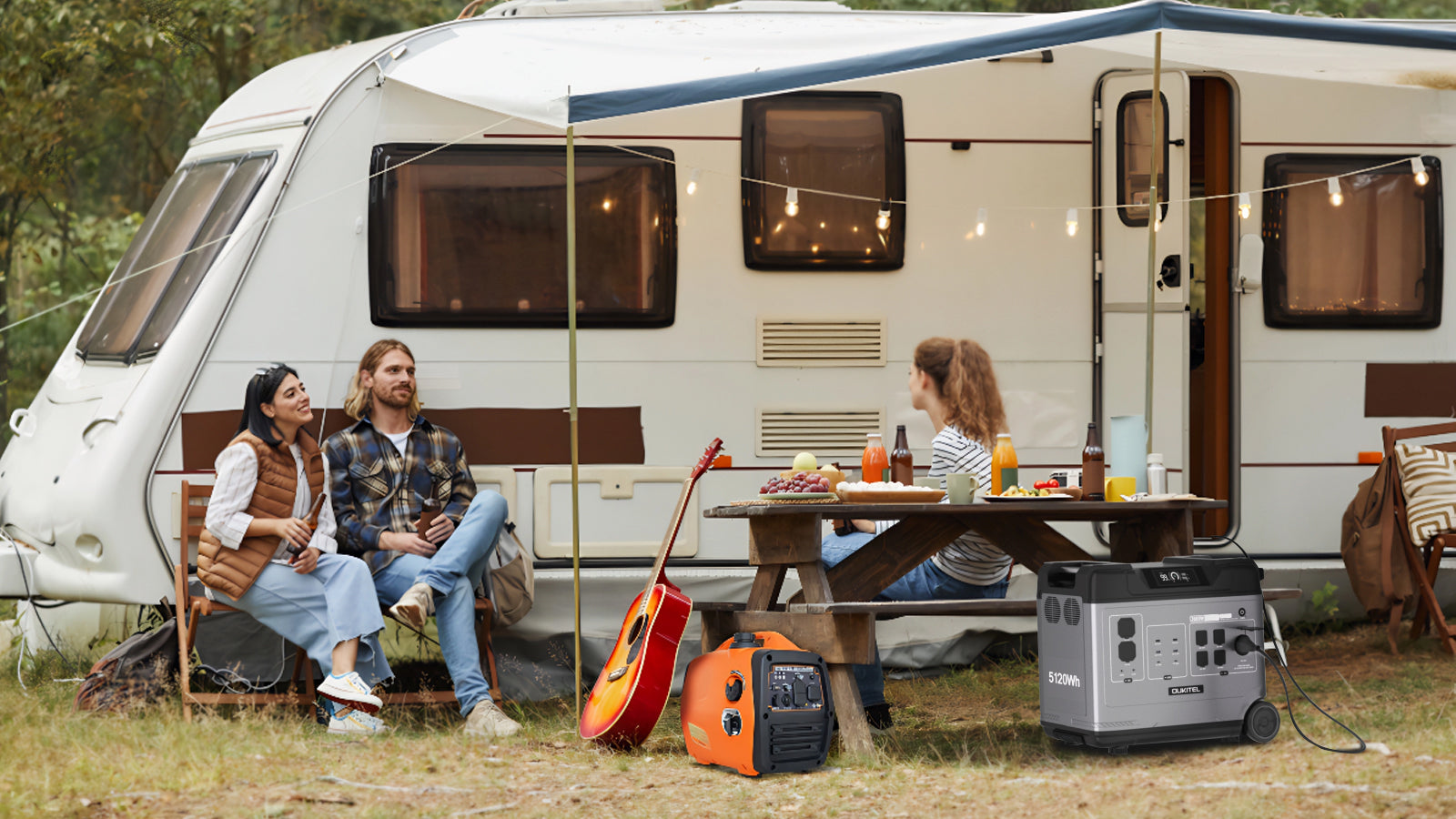
Lithium vs. LiFePO4: Which Portable Power Station Is Better for RV Trips?
The freedom of the open road is what RV travel is all about—but to keep that freedom running, you need reliable power. Whether you’re cooking breakfast, charging e-bikes, or running the air conditioner at night, the best portable power station for RV trips is what keeps the lights on when you’re miles away from hookups.
But with so many power stations on the market, one question keeps coming up:
Should you choose Lithium-ion or LiFePO₄ (Lithium Iron Phosphate)?
The answer could mean the difference between years of worry-free adventures and costly mid-trip replacements.
Understanding the Two Battery Types
Traditional Lithium-ion (NMC or NCA)
Lithium-ion batteries—used in laptops and early power banks—offer high energy density (lots of power in a small package). They’re light, fast-charging, and relatively inexpensive to manufacture.
However, they can be sensitive to heat, degrade faster, and are more prone to thermal instability under heavy loads—an issue when running high-power appliances inside RVs.
Pros:
- High energy-to-weight ratio
- Compact and affordable
- Fast charging speed
Cons:
- 500–1,000 cycle life
- Higher heat generation
- Shorter long-term stability
LiFePO₄ (Lithium Iron Phosphate)
The newer LiFePO₄ chemistry is becoming the go-to for high-quality portable power stations for RVs. It provides lower energy density but far superior safety, stability, and lifespan—lasting over 3,500 to 5,000 charge cycles with minimal capacity loss.
It’s the same chemistry used in electric buses, solar farms, and modern home-energy systems.
Pros:
- 10-year lifespan (5× longer than standard lithium)
- 100% safe – no risk of thermal runaway
- Operates in extreme temperatures (-10 to 50 °C)
- Eco-friendly and non-toxic
Cons:
- Slightly heavier for the same capacity
- Higher initial cost (but cheaper over time)
How Battery Chemistry Affects RV Power Performance
For RV travelers, your power station isn’t just a gadget—it’s your generator, charger, and lifeline. Here’s how chemistry affects your real-world performance.
|
Feature |
Lithium-ion |
LiFePO₄ |
|
Cycle Life |
800–1,000 cycles |
3,500–5,000 cycles |
|
Safety |
Moderate, heat-sensitive |
Very safe, thermally stable |
|
Weight |
Lighter |
Slightly heavier |
|
Operating Temp |
0 – 40 °C |
–10 – 50 °C |
|
Cost Per Cycle |
Higher long-term |
Lower (longer lifespan) |
|
Best Use Case |
Light camping or backup |
Full-time RV & off-grid living |
So while lithium-ion may win on price and portability, LiFePO₄ dominates on longevity and reliability—two things every RV owner values most.
Why LiFePO₄ Is the Future of RV Power
Longer Trips with Less Worry
When you’re off-grid for days, a battery that can recharge thousands of times without fading is crucial. LiFePO₄ stations last up to 10 years, making them a true investment for frequent travelers.
Enhanced Safety for Small Spaces
RVs are enclosed environments. A LiFePO₄ battery’s stable structure resists overheating, meaning no fire risk or gas emissions—a must for overnight use.
Better Value Over Time
Although you’ll pay slightly more upfront, the cost per cycle of LiFePO₄ is much lower. Over its lifespan, it’s the best budget portable power station for RV owners who want performance and savings combined.
Eco-Friendly and Maintenance-Free
LiFePO₄ batteries use non-toxic materials and don’t rely on cobalt or nickel mining. They can be fully recycled and don’t require calibration or fluid maintenance.
How to Choose the Best Portable Power Station for Your RV
The right unit depends on what you need to power. Here’s a quick guide.
|
Appliance |
Typical Wattage |
Recommended Battery Size |
|
LED lights |
30 W |
500 Wh – 1000 Wh |
|
Laptop + phones |
80 W |
500 Wh |
|
Mini fridge |
100 – 150 W |
1000 – 2000 Wh |
|
Coffee maker |
800 – 1000 W |
2000 Wh + |
|
Air conditioner |
1000 – 1500 W |
3000 – 5000 Wh |
|
RV microwave / induction cooker |
1200 – 1800 W |
4000 Wh + |
A good rule: multiply your total wattage by the hours you’ll run it to find the minimum Wh capacity you need. For most campers, 2000 Wh–5000 Wh is ideal.
Real-World Examples of High-Performance Stations
5 kWh Class – Long-Haul Power for Full-Timers

Large-capacity systems around 5000 Wh / 2200 W can power nearly everything in an RV simultaneously: refrigerator, induction cooktop, and electronics.
Many include dual-charging options (AC + solar), fast 1800 W input, and pure sine wave output, making them top-tier for energy-hungry travelers.
Why it fits RV use:
- 5 kWh LiFePO₄ battery = 5 days of light use
- 1000 W solar input for off-grid charging
- Wheels & handle for portability
- EPS mode (< 10 ms) for instant power switching
2 kWh Compact Class – Flexible for Weekenders

Mid-range units (~2000 Wh / 2400 W) balance weight and capacity. They can run a small fridge, lights, and fans all night and recharge to 80% in about one hour.
Perfect for occasional trips or minimalist RVs who want dependable power without bulk.
Why it fits RV use:
- Adjustable charging speed (400 – 1800 W)
- Compact 22 kg design
- LiFePO₄ chemistry for long life
- Operates quietly (< 50 dB)
Lithium vs. LiFePO₄ in RV Conditions
|
Situation |
Winner |
Reason |
|
Summer heat (> 35 °C) |
LiFePO₄ |
Heat resistance & thermal stability |
|
Winter cold (< 0 °C) |
LiFePO₄ |
Maintains capacity better in cold |
|
Daily charging cycles |
LiFePO₄ |
5× longer lifespan |
|
Weight-sensitive RV owners |
Lithium-ion |
Slightly lighter build |
|
Off-grid solar integration |
LiFePO₄ |
Compatible with high solar input |
|
Best budget choice over 10 years |
LiFePO₄ |
Lower cost per cycle |
Verdict: for long-term RV life, LiFePO₄ wins in every practical category.
The Solar Edge: Powering Your RV Indefinitely
Modern LiFePO₄ stations often support 400 – 1000 W solar input, turning your RV into a self-sufficient micro-grid.
Benefits of solar integration:
- Unlimited renewable power
- No fuel costs or emissions
- Quiet operation (ideal for campgrounds)
- Works even during grid outages
A portable power station with an MPPT controller (≈ 99% conversion efficiency) ensures you get every bit of energy from the sun.
Design & Practicality for RV Travelers
When evaluating high-quality portable power station companies, look for these features:
- Pure sine wave inverter – safe for sensitive appliances
- Multiple ports – AC, USB-C, DC outputs for every device
- Smart app monitoring – track usage and remaining time
- Noise below 50 dB – quiet enough for sleeping
- Durable casing – dust- and splash-proof
- Integrated wheels and handle – easy to move around camp
Why RVers Are Switching from Generators to Battery Stations
The shift from gasoline generators to lithium batteries mirrors the EV revolution. Today’s RVers prefer portable stations because they offer:
- Silent operation ( < 50 dB )
- Instant startup—no fuel or maintenance
- USB & solar compatibility
- Cleaner campground air and lower carbon footprint
With fewer moving parts and 10-year lifespans, battery stations are a smarter, cleaner investment for RV owners.
Maintenance Tips for Longer Battery Life
- Store at 50–70% charge when not used for weeks.
- Avoid deep discharges below 10%.
- Keep within a safe temperature range (0–40 °C).
- Clean ports and vents regularly with dry cloth.
- Charge every 3–4 months during off-season.
A well-maintained LiFePO₄ station will outlive most RV appliances.
Budget vs. Premium: Which Should You Buy?
-
Best budget portable power station for RV:
Around 2 kWh capacity—ideal for lights, phones, small fridge. -
Mid-range choice:
3 – 4 kWh unit that powers appliances and tools. -
High-end RV power hub:
5 kWh LiFePO₄ station capable of running air conditioners and kitchens.
Budget matters, but so does longevity. In 10 years, a LiFePO₄ system often costs less per use than a cheaper lithium-ion unit that needs early replacement.
Final Verdict: LiFePO₄ Takes the Crown
When choosing between Lithium-ion and LiFePO₄, the verdict for RVers is clear:
|
Category |
Winner |
|
Safety |
LiFePO₄ |
|
Lifespan |
LiFePO₄ |
|
Heat resistance |
LiFePO₄ |
|
Weight |
Lithium-ion |
|
Cost per cycle |
LiFePO₄ |
|
Solar integration |
LiFePO₄ |
For anyone planning extended RV journeys or off-grid living, a LiFePO₄-powered station is simply the best portable power station for RV trips in 2025—balancing safety, efficiency, and value for years to come.
Frequently Asked Questions
Why choose LiFePO₄ instead of lithium-ion batteries?
Because it’s safer, lasts five times longer, and handles temperature extremes better—ideal for outdoor travel.
What size portable power station do I need for my RV?
At least 2000–5000 Wh, depending on how many appliances you run daily.
Can I charge a LiFePO₄ power station with solar panels?
Yes. Many support 400–1000 W solar input and feature built-in MPPT controllers for efficient charging.
Are LiFePO₄ power stations heavier?
Slightly, but they remain portable thanks to lightweight alloys, wheels, and handles.
How long do LiFePO₄ batteries last in RV conditions?
Typically 10 years or 3,500–5,000 cycles, even with regular use.
Conclusion
When it comes to RV travel, choosing the right portable power station is crucial for safety, convenience, and long-term cost-effectiveness. Lithium-ion units may offer lighter weight and lower upfront cost, but their limited lifespan (800–1,000 cycles) and sensitivity to heat make them less ideal for frequent RV use. In contrast, LiFePO₄ (Lithium Iron Phosphate) batteries provide 3,500–5,000 cycles, operate safely in temperatures from –10 °C to 50 °C, and maintain stable capacity over a decade of use.
For RV owners powering everything from LED lights and laptops to fridges, coffee makers, and air conditioners, LiFePO₄ stations deliver superior longevity, thermal stability, and compatibility with high solar input, making them the best portable power station for RV trips. Over the lifetime of the battery, their lower cost per cycle and maintenance-free operation outweigh the slightly higher initial investment.


Looking for something else?

Difference Between Amps and Volts: What You Actually Need to Know
LEARN MORE
50 Amps in Watts: The Honest 2026 Conversion Guide for RV, Home, EV, and Solar
LEARN MORE
Can You Put Solar Panels on a Mobile Home? (Real-World Guide for 2026)
LEARN MORE
Do Portable Solar Panels Qualify for the 30% Credit?
LEARN MORELooking for something else?

Are Solar Generators Any Good? Here's the Real Answer
LEARN MORE
How Long Does a Portable Power Station Last? (Real Numbers)
LEARN MORE
Oukitel Power Exhibits at Solar & Storage Live Philippines 2026: Carry the Sun, Power Your Freedom
LEARN MOREYou may also like

OUKITEL P5000 Solar Generator for Home with 400W Solar Panel

OUKITEL P800 Portable Power Station 800W | 512Wh

OUKITEL B2000 Expansion Battery | 2048Wh

OUKITEL BP5000 PRO MAX Portable Power Station 5000W | 5120Wh

OUKITEL C01 Car Jump Starter 1350A | 80Wh | PD60W

OUKITEL BP2000 PRO Portable Power Station 3300W
Further reading

OUKITEL Power Brings Full-Scenario Energy Storage Solutions to Intersolar Middle East 2026 in Dubai

Portable Power Stations for Power Tools and Job Sites: Surge, Runtime and Safety
