








 Flashlight
 Solar
Extension Cable
Solar
Extension Cable


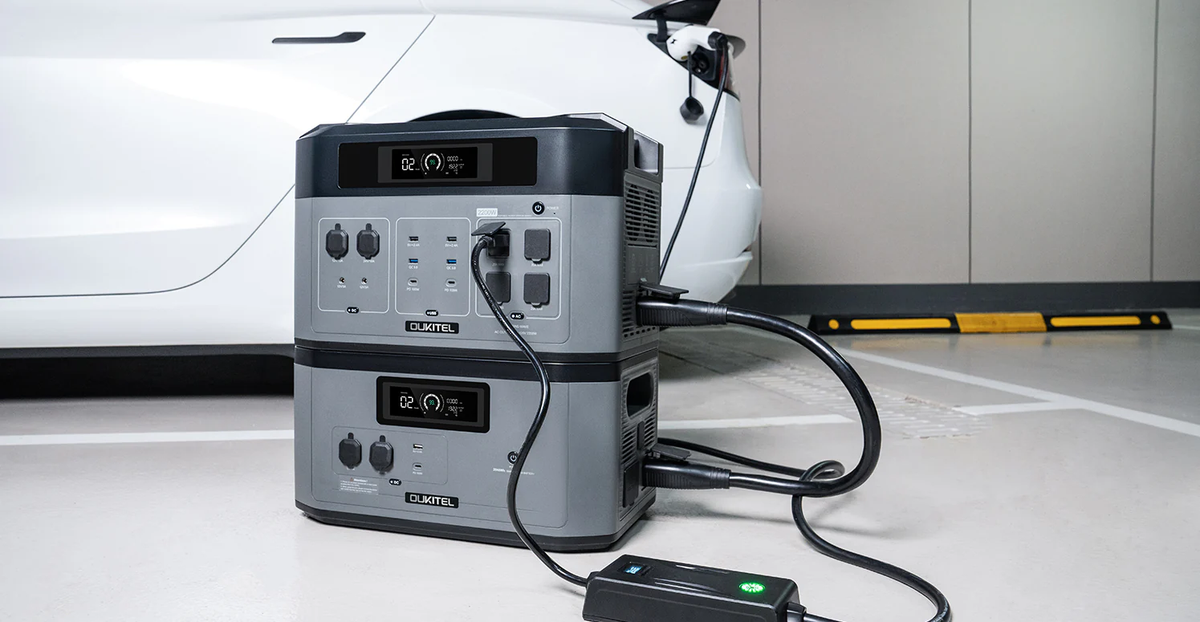
Solar Panels for Charging a Car Battery: An Honest Guide
Alright, so you're thinking about hooking up solar panels to charge a car battery. Cool. The answer here actually depends a lot on what you're driving.
Got a classic Mustang sitting under a tarp till spring? A 25-dollar trickle panel from O'Reilly does the whole job. Daily-driving a Model 3 and tired of public Superchargers? Now you're talking about a rooftop install, and the bill clears 20 grand before incentives.
Same Google search, very different solutions.
Most guides online lump these together, which is why they end up being kinda useless for both groups. We're splitting them. Below, here's what you'll actually get out of this:
- Panel sizes that match your specific job (maintenance, recovery, or full off-grid use)
- Charge-time math that actually holds up in the real world
- The one safety detail most DIYers skip (it's a 15-dollar fix)
- A no-fluff look at whether solar can really cover an EV's daily appetite
Two Different Questions, Two Different Answers
Type this search into Google, and you're probably in one of two boats.
The first group? Folks who own something that mostly sits. Maybe it's a '67 Camaro under a cover, maybe an old Triumph in the corner of the garage, maybe a fishing boat that comes out twice a summer. The 12V battery quietly bleeds out over the off-season, and every spring brings the same jumpstart routine. A small panel and a couple of clips put an end to it.
The second group is EV drivers. Can solar really replace your wall plug? Technically? Yeah. Practically? The numbers get rough unless you've got real money going onto the roof. A folding panel on the driveway isn't gonna keep up with a Tesla's daily appetite, not even close.
Both jobs get covered below, but they need different tools and different math. If you're in the first camp, the next three sections are your roadmap. EV folks, feel free to skip the 12V stuff. None of it applies to you.
How Do You Charge a 12V Car Battery with Solar?
A regular 12V lead-acid car battery (the kind under most hoods) sits anywhere from 40 to 75 amp-hours, give or take. That's about 480 to 900 watt-hours of stored juice once you do the conversion. The panel grabs sunlight, flips it into DC current, and feeds it back into the battery.
That's pretty much it, conceptually. What trips people up is the practical side: how big a panel are you running, and is there a charge controller sitting between it and the battery?

Alt: 12V car battery connected to portable solar panel with PWM charge controller
Trickle Charging vs Full Recharging: Which Job Are You Actually Doing?
These two situations look the same from outside but they really aren't.
Trickle charging is your fix for a battery that's basically healthy but slowly losing ground. Any parked car bleeds off 1 to 3 percent of its charge weekly just from self-discharge. Throw in some parasitic drain (the alarm sipping current, the clock memory, the ECU staying alive) and after four months of garage time you've got a flat battery.
A 5W to 10W panel keeps up with that drain forever, with zero risk of overdoing it.
Full recharging is a whole different animal. You've got a dead or near-dead battery, and you're trying to pull it back to 100 percent. That takes serious wattage (100W minimum, usually more), plus a charge controller in the loop. Try this with a 10W maintainer, and you'll genuinely be waiting two weeks.
Do You Need a Charge Controller? Yes, and Here Is Why
A charge controller is the small box that sits between the panel and the battery. Its whole job is knowing when to stop. Once the battery's full, it stops sending current. That's it.
Without one? The panel just keeps pumping current into a full battery, and lead-acid chemistry doesn't tolerate that. The electrolyte literally starts boiling off, the lead plates corrode faster, and you can kiss goodbye to a third of the battery's useful life.
We've seen this exact failure pattern dozens of times. Skip the 15-dollar controller, replace a 90-dollar battery a year later. The savings don't pencil out.
Here's a quick guide for when you actually need one:
- Under 5W: Usually fine without. Most tiny maintainers ship with a built-in blocking diode, which handles the regulation passively.
- 10W to 50W: Grab a basic PWM controller. They're 10 to 20 bucks, easy to wire, and they prevent the slow-death overcharge scenario.
- 50W to 200W: PWM still does the job, but MPPT pulls another 10 to 30 percent of energy out of the same panel. Worth the upgrade once you're at this size.
- Series-wired panels: MPPT only. PWM controllers genuinely can't handle the higher input voltages.
- Lithium batteries: Double-check the controller's chemistry profile. Default settings almost always assume lead-acid, and that can fry a lithium battery's BMS over time.
Oh, and the wiring order matters more than people realize. Hook the controller up to the battery first, then connect the panel afterward. Reverse that and the controller can spark or even fail outright when live solar current hits it cold.
How to Connect a Solar Panel to a Car Battery, Step by Step
The hookup itself? Not complicated. Four moves and you're charging:
1. Controller to battery first. Clamp or bolt the controller's battery leads onto the car battery posts. Red to positive, black to negative, same as you'd do with jumper cables. For weekend setups, alligator clips are fine. For permanent installs, ring terminals are better.
2. Then panel to controller. Take the cables coming off your panel and run them into the controller's solar input side. As soon as both ends are connected, you should see the controller display power up. It'll show you battery voltage, somewhere around 12.5 to 13.0V if the battery is partially charged.
3. Now put the panel where the sun is. The controller takes over from here, charging automatically. It shuts off on its own once the battery reaches 14.4V for standard flooded lead-acid (14.6V if you've got an AGM). You don't need to monitor anything.
4. A shortcut for small panels. If you're running something in the 5W to 20W range, you can actually skip the dedicated controller and plug straight into the cigarette lighter socket. Over 20W though, that socket caps out near 10 amps and you start losing efficiency. Anything 100W or higher really needs to go straight to the battery terminals.
What Size Solar Panel Do You Need to Charge a Car Battery?
Sizing is where most projects fall apart. Go too small, and you'll be waiting weeks for a recharge that never quite finishes. Go too big without a controller in place, and the battery cooks itself.
There are basically three tiers that cover almost every situation you'll run into. Here's the breakdown:
|
Panel Size |
Daily Output (5 sun hrs) |
Job It Does |
Controller? |
Typical Use Case |
|
5W to 10W |
25 to 50 Wh |
Maintenance only |
Optional under 5W |
Stored car, motorcycle, RV |
|
25W to 50W |
100 to 200 Wh |
Slow recovery over days |
Required (PWM) |
Seasonal vehicle, mild drain |
|
100W to 200W |
425 to 850 Wh |
Same-day full recharge |
Required (PWM or MPPT) |
Active off-grid, boondocking |
|
400W and above |
1,700 Wh and up |
Power station + multi-use |
Required (MPPT) |
RV, off-grid living, emergency |
5W to 10W Panels: Maintenance and Trickle Charging
A 5W panel in good sun gives you maybe 0.3 to 0.4 amps. Tiny, yeah. But that's pretty much exactly what offsets the slow leak from a parked vehicle.
These go for 15 to 40 bucks, plug into your cigarette lighter, and the install is just laying the panel on the dash. Done. Won't do anything for a dead battery though. That's not the job description.
25W to 50W Panels: Slow Recharge for Stored Vehicles
Step up to 25W and you're looking at 1.5 amps or so in bright sun, which is around 100 to 125 watt-hours daily assuming you get those 5 peak sun hours.
A 50Ah battery that's gone fully flat takes 15 to 20 sunny days to come back at that pace. Move to 50W and you roughly halve the wait. This is the size range that works for seasonal boats, bikes, anything with a drain heavier than maintenance can handle, but where same-day recovery isn't on the table anyway.
100W and Above: Full Recharge in a Single Day
Now we're cooking. A 100W panel pulls 5 to 6 amps in direct sun, putting out around 425 to 500Wh on a decent day. That'll take a flat 50Ah car battery and have it back to full in 6 to 8 hours.
A 100Ah battery (think big diesel pickup, or an RV's house battery) needs roughly twice as much. Call it 2.4 sunny days, per Redodo's published charge-time data.
But honestly? Once you're at this tier, we'd push back on wiring the panel direct to the battery. Better move: route the panel into a portable power station instead. You get an MPPT controller, a display, AC outlets, and 12V DC outputs all baked in. Same panel can top up your car battery and run your fridge, lights, and tools off the buffered energy.
How Long Does It Take a Solar Panel to Charge a Car Battery?
Here's the formula that gets you the answer:
|
(Battery Wh ÷ Panel Watts) ÷ 0.85 = Hours of direct sun needed |
The 0.85 factor accounts for the system losses you can't avoid. Drop your numbers in and you'll know whether you're looking at hours or weeks.
|
Battery |
10W Panel |
50W Panel |
100W Panel |
400W Panel |
|
12V 50Ah (600Wh) |
70 hrs (14 days) |
14 hrs (3 days) |
7 hrs (1.5 days) |
2 hrs (half day) |
|
12V 75Ah (900Wh) |
106 hrs (21 days) |
21 hrs (4 days) |
10 hrs (2 days) |
3 hrs (under 1 day) |
|
12V 100Ah (1,200Wh) |
141 hrs (28 days) |
28 hrs (6 days) |
14 hrs (2.5 days) |
4 hrs (1 day) |
Those estimates lean on 5 peak sun hours daily and 85 percent system efficiency. Reality? Cold knocks lead-acid chemistry down a peg under 50°F, and one cloudy afternoon can slash panel output in half (sometimes worse).
A few things people tend to overlook when running the math:
- Peak sun hours swing hard by region. If you're in Phoenix or Tucson, expect 5 to 6 hours easily. If you're up in Seattle or Portland, more like 3 to 4 even on a good day. A 100W panel in Arizona genuinely does more work than the same panel in Oregon.
- The cigarette lighter socket is a bottleneck. Routing through theircaps gives you near 10 amps regardless of what panel you've got hooked up. Anything above 50W, goes directly to the battery terminals through the controller.
- Battery condition affects intake. Old, sulfated batteries don't absorb power at the same rate as fresh ones. Add a 20 to 30 percent buffer if the battery has some miles on it.
For what it's worth, the U.S. Department of Energy's appliance energy guide walks through the same equation but going the other way: watts × hours equals watt-hours. Flip the formula for charging and you can ballpark almost anything. The math stays put; what shifts is the variables you plug in.

Alt: Solar panel charge time comparison chart for 12V car batteries by wattage
Can You Charge an Electric Car with Solar Panels?
Yes. But realistically, only one setup makes daily sense. And whether it works for you mostly comes down to one question: do you own your roof?

Alt: Home rooftop solar array with Level 2 EV charger and electric vehicle in driveway
Home Solar System Plus Level 2 Charger: The Setup That Works
A grid-tied rooftop system feeding a 240V Level 2 EVSE is the actual solution here.
According to AAA and EnergySage's numbers, charging a typical EV via solar means adding 7 to 12 panels on top of whatever your house already pulls. Total system size: somewhere around 11kW. Here's the rough financial breakdown:
- Sticker price: About 29,000 dollars before the federal solar tax credit.
- After 30% federal credit: Closer to 20,000 dollars.
- Installed cost average: Around 2.56 dollars per watt these days.
- Payback period: Roughly seven years.
- Lifetime savings: Anywhere from 30 grand to north of 100, depending on local utility rates.
The DOE's Alternative Fuels Data Center is pretty firm on Level 2 (240V) being the standard for home charging, and on it needing a licensed electrician working off a dedicated circuit. Some of the newer solar-smart EVSE units even match their draw to whatever the panels are putting out in real time. So electrons go straight from your roof to the car, no grid round-trip.
Portable Panels for EV Charging: The Honest Math
OK, this is the part where we have to be straight with you. Portable panels aren't really charging an EV in any practical sense.
A 400W folding panel might give you 1.7 kWh on a really good 5-hour sun day. An empty 40 kWh EV battery would need 23 to 24 days at that rate to fill. Yeah. That's a no.
There's a thread on r/ev charging where somebody actually ran the full numbers. Even a multi-panel portable array maxes out around 2.5 to 3 kWh per day. Meanwhile a parked EV in standby mode burns through 3.6 kWh in 12 hours of literally just sitting there. So the car is losing more power than the panels can replace. Portable solar works as a supplement, or an emergency reserve. Not the main course.
|
Setup |
Daily kWh |
Daily Miles Added |
Cost |
Real-World Use |
|
11kW rooftop + Level 2 |
40 to 55 |
120 to 200 |
$20K after credit |
Primary daily charging |
|
400W portable + EVSE |
1.5 to 2 |
5 to 7 |
$300 to $500 |
Emergency top-up only |
|
1,600W portable array |
6 to 8 |
20 to 28 |
$1,500 and up |
Slow off-grid trickle |
If you want a deeper dive into the portable-station-meets-EV question, our companion piece on portable power stations and EV charging breaks down what each model can actually do, and how this kind of setup fits into off-grid or overlanding scenarios.
What to Buy: OUKITEL Solar Panels for Car Battery Charging
For the small stuff (5W to 20W trickle-maintenance territory), OUKITEL honestly isn't the brand we'd send you to. That price bracket is already packed with perfectly adequate maintainers from any auto parts store. They all work pretty much the same way: blocking diode, cigarette lighter plug, lay on the dashboard.
If your only goal is keeping a stored vehicle's battery alive through winter, the 10W maintainer rack at Walmart is genuinely fine.
Where our gear starts to matter is at 100W and up. That's the size where solar shifts from babysitting to actual work. Pair a real panel with one of our power stations and you get three concrete wins versus the panel-direct-to-battery approach:
- The built-in MPPT. Our stations have MPPT controllers internally, which typically pull 10 to 30 percent more energy from the same panel compared to a discrete PWM unit.
- A buffer in the middle. The station's LiFePO4 bank stores everything the panel makes, so you can charge the car battery whenever. Middle of the night, indoor garage, whenever works.
- Multi-output flexibility. You get 12V DC, AC outlets, USB-A, USB-C, all in the same box. The setup that maintains your car battery also runs your fridge, charges phones, and keeps a CPAP going during a blackout.
The 400W Portable Solar Panel we sell runs monocrystalline cells at 24.8 percent efficiency, wrapped in an IP68-grade ETFE coating that handles rain and dust just fine.
Pair it with the BP2000 and now you've got a real mobile rig:
- Capacity: 2,048Wh LiFePO4 (5,000 cycles to 80%)
- Output: 2,200W continuous
- Solar input: MPPT up to 1,000W
- Car battery charging: A 50Ah car battery tops off fully in under two hours of solid sun
- Expandable: Stack B2000 packs all the way up to 16,384Wh for full-time RV or off-grid living
For lighter use, the P1000 Plus is your move. It's 1,024Wh and 1,800W of output, and it pairs cleanly with a 100W or 200W panel for weekend camping or basic blackout coverage. Both stations come with a 12V DC output and the cables to plug straight into a car battery, so no extra adapter shopping involved.
The full lineup is over at our solar panels collection for the various panel-and-station bundles. The panels also play nicely with most non-OUKITEL stations as long as the voltage range and MC4 connectors line up.

Alt Tex: OUKITEL 400W Portable Solar Panel
How to Start Charging Your Car Battery with Solar
If you're new to this and just need a starting point, here's the sequence that gets most folks set up right on the first try:
1. Figure out which job you're actually doing. Just keeping a stored vehicle alive between uses? You need a small trickle panel and a cigarette lighter cable, total spend under 50 bucks. Actually need to recharge a low or dead battery? Now you're starting at 100W minimum, paired with a charge controller or a power station.
2. Match the panel to your battery's capacity. Use the charge-time table earlier and work backwards from your battery. Standard 50Ah on a 100W panel: 6 to 8 sunny hours. Got a 100Ah deep-cycle? Twelve hours of sun, or scale up the panel.
3. Don't skip the controller or station. For any panel 10W and up, that 20-dollar PWM controller in between is non-optional. And once you're at 100W or above, just pair with an OUKITEL portable power station and get the MPPT, the buffered storage, and AC output all in one box.
The math here is brutally simple. Skip the controller and you save 15 to 20 dollars today, then drop 80 to 100 on a new battery in a couple of years. So just don't skip it.
FAQs
What size solar panel do I need to charge a car battery?
For trickle maintenance on a stored vehicle, 5W to 10W is what you want. For actually recharging a depleted battery in any reasonable timeframe, 100W is the realistic starting point, and you'll need a charge controller with it.
The real trick is matching panel to the job, not to the battery itself. Maintenance just has to outrun the 1 to 3 percent weekly self-discharge. Full recharging needs roughly 1W of panel for every 6 to 8 watt-hours of battery capacity, assuming about 5 peak sun hours per day.
A quick lookup by what you're driving:
- Stored car, bike, or RV that just sits: 5W to 10W maintainer, no controller needed.
- Seasonal vehicle with mild battery drain: 25W to 50W panel paired with a PWM controller.
- Dead 50Ah battery, want it back same day: 100W panel with a controller.
- 100Ah deep-cycle or dual-battery setup: 200W panel with an MPPT controller.
- Off-grid life with multiple loads: 400W panel feeding a portable power station.
- Bigger panels won't hurt the battery, as long as the controller's doing its job. They just finish quicker.
How long would it take a solar panel to charge a car battery?
Take battery watt-hours, divide by panel wattage, then divide that by 0.85 for system losses. For a 50Ah 12V battery (about 600Wh), a 100W panel finishes in 6 to 8 hours of strong sun.
Real-world results swing hard based on where you live and what season it is. Arizona and Nevada deliver 5 to 6 peak sun hours daily. Washington and Oregon are stuck around 3 to 4. Overcast cuts your output in half. Winter slows lead-acid chemistry on top of that.
Rough timelines for a flat 50Ah battery:
- 10W panel: 14 to 21 sunny days. Basically forever.
- 25W panel: 5 to 7 sunny days.
- 50W panel: 2 to 4 sunny days.
- 100W panel: 6 to 8 hours of solid sun.
- 200W panel: 3 to 4 hours of solid sun.
If you're routing through the cigarette lighter socket, also note that the socket caps current around 10 amps no matter the panel size. For panels above 50W, run direct to the battery terminals through your controller to actually hit the rated speed.
How long would it take a 100W solar panel to charge a 12V battery?
A 100W panel handles a 50Ah 12V battery in roughly 6 to 8 hours of direct sun. A 100Ah battery takes about 12 hours, which works out to roughly 2.4 sunny days at the 5-hour-per-day average.
Per Redodo's published numbers, fully topping off a 100Ah lead-acid battery with a 100W panel needs about 12 hours of optimal sun. We've seen this hold up in the field, provided the panel is angled toward the sun and not getting shaded by anything overhead.
By battery size with a 100W panel:
- 35Ah motorcycle or small-car battery: 4 to 5 hours.
- 50Ah standard car battery: 6 to 8 hours.
- 75Ah SUV or truck battery: 10 to 11 hours.
- 100Ah deep-cycle: 12 to 14 hours.
- 200Ah marine deep-cycle: 24 to 28 hours, call it 2.5 to 3 sunny days.
Add another 20 to 30 percent in winter. Lead-acid chemistry just slows down once temperatures drop below 50°F.
Can I use solar panels to charge my car (EV)?
Yes, but only a proper home solar setup is realistic for daily EV charging. A grid-tied 11kW rooftop system feeding a 240V Level 2 charger runs about 20,000 dollars after the 30 percent federal tax credit, with payback hitting around seven years.
Per AAA and EnergySage's analysis, you'll need 7 to 12 panels on top of your normal household solar load to actually cover the EV. Portable panels can't replace home charging in any meaningful way. A 400W folding panel adds maybe 5 to 7 miles of range on a sunny day, which is fine for emergencies but not much else.
Quick EV solar overview:
- Home solar + Level 2: 120 to 200 daily miles, fully sustainable.
- Home solar + Level 1: 30 to 50 daily miles, slower but no Level 2 upgrade needed.
- 400W portable panel: 5 to 7 miles a day. Emergency use only.
- 1,600W portable array: 20 to 28 daily miles, off-grid trickle.
- Solar-smart EVSE: Matches charging rate to live solar output, no grid draw needed.
If you're renting an apartment without rooftop access, the honest answer is solar EV charging probably isn't going to work for you. The numbers just don't get there.
Can you overcharge a car battery with a solar panel?
Yeah, you absolutely can. Without a charge controller in the loop, the panel keeps dumping current into a full battery, which pushes voltage past safe ceilings (14.4V for lead-acid, 14.6V for AGM). At that point the battery gases off electrolyte, chemistry breaks down, and capacity is permanently lost.
We've watched this failure pattern repeat enough times that we can spot it the second someone describes the symptoms. Person wires a 10W or 25W panel directly to a stored battery, no controller, and six months later they're at the parts counter buying a replacement. That 15-dollar PWM controller is genuinely the best dollar in the entire project.
Telltale signs of overcharge damage:
- Capacity drops fast: Battery dies quicker after each use.
- Visible swelling: Case bulges or warps from pressure buildup.
- Electrolyte loss: Flooded batteries need topping up with distilled water.
- Sulfation: Crystal buildup on the lead plates, irreversible.
- Permanent voltage sag: Even fully charged, the battery droops under load.
For really tiny panels under 5W, current is just too small to do real damage. That's why direct-plug maintainers in that range work fine without a controller. Anything bigger though, you really do need one.
Do I need a charge controller for a solar panel on a car battery?
For 5W and under, it's optional. The built-in diode does enough. From 10W up, a controller becomes required to keep the battery from getting cooked.
A basic PWM controller runs 10 to 20 dollars and is your minimum floor for safe operation. MPPT controllers cost more (40 to 100), but they pull 10 to 30 percent more energy out of the same panel. That gap matters more as the panel gets bigger. From what we've seen helping folks diagnose dead batteries, skipping this is far and away the most common (and most expensive) mistake people make.
Controller picks by panel size:
- Under 5W: Built-in diode is enough. No external needed.
- 5W to 50W: PWM controller, 10 to 20 dollars, all you need.
- 50W to 200W: PWM works fine, MPPT is the upgrade pick.
- 200W and up: MPPT only, sized to match your array's peak watts.
- Multiple panels wired in series: MPPT required, no exceptions.
Honestly, once you're north of 100W, we'd skip the discrete controller altogether and just run everything through a portable power station with MPPT baked in.
Can I connect a solar panel directly to a car battery without a controller?
For panels under 5W, yes, briefly. For anything 10W or up, no. Direct connection without a controller eventually overcharges and wrecks the battery.
The r/SolarDIY crowd is pretty unanimous about this. Direct hookups can work short-term for emergencies, but leave them running for weeks and you're slow-killing the battery. A 15-dollar PWM controller makes the risk basically zero, and there isn't really a good reason to skip it.
When direct is OK versus when it isn't:
- Brief emergency: A few hours of small-panel input into a dead battery is fine.
- Purpose-built maintainers: 1.5W to 5W panels with integrated protection diodes are safe by design.
- Trickle chargers: Kits labeled as no-controller-required are fine to use that way.
- Above 10W left connected over 24 hours: Damage territory. Add a controller.
- Heat exposure: A panel sitting on a full battery during summer will gas the cells out.
That 15 dollars you didn't spend on a controller will cost you 80 dollars when the battery has to be replaced.
What is the best wattage solar panel for keeping a car battery charged?
For long-term maintenance on a stored car, bike, or boat, 10W is the sweet spot most of the time. It puts out enough current to outrun self-discharge without ever risking overcharge.
A 10W panel hits 0.5 to 0.7 amps in bright sun, which is just right for offsetting parasitic drain on a typical car battery. Drop down to 5W for smaller motorcycle or lawn-tractor batteries. Step up to 15W to 20W if you've got an older vehicle running multiple alarm systems or higher standby loads.
Sizing guide by vehicle and battery size:
- Motorcycle, ATV, lawn tractor (12 to 30Ah): 5W panel is enough.
- Standard car, SUV, light truck (40 to 75Ah): 10W panel is the standard pick.
- Diesel truck, full-size SUV (75 to 100Ah): 15W panel for some headroom.
- Marine deep-cycle, RV house battery (100Ah and up): 20W to 25W panel.
- Multiple batteries wired in parallel: 25W to 50W panel.
If your vehicle sits more than two months at a stretch, lean toward the bigger panel in your range. Self-discharge ramps up in cold weather, and a 5W panel can't quite keep pace with a big 100Ah battery in winter.
Sources
- U.S. Department of Energy (DOE), Solar Energy Technologies Office (2026)
- U.S. Department of Energy (DOE), Estimating Appliance and Home Electronic Energy Use (2026)
- 3. U.S. Department of Energy Alternative Fuels Data Center (DOE AFDC), Charging Electric Vehicles at Home (2025)
- 4. U.S. Consumer Product Safety Commission (CPSC), Home Electrical Safety (2025)
- 5. American Automobile Association and EnergySage (AAA), Charging Your EV With Solar Panels (2025)
- 6. Redodo, How Long for a 100W Solar Panel to Charge a 12V Battery (2025)


Looking for something else?

Difference Between Amps and Volts: What You Actually Need to Know
LEARN MORE
50 Amps in Watts: The Honest 2026 Conversion Guide for RV, Home, EV, and Solar
LEARN MORE
Can You Put Solar Panels on a Mobile Home? (Real-World Guide for 2026)
LEARN MORE
Do Portable Solar Panels Qualify for the 30% Credit?
LEARN MORELooking for something else?

Are Solar Generators Any Good? Here's the Real Answer
LEARN MORE
How Long Does a Portable Power Station Last? (Real Numbers)
LEARN MORE
Oukitel Power Exhibits at Solar & Storage Live Philippines 2026: Carry the Sun, Power Your Freedom
LEARN MOREYou may also like

OUKITEL C01 Car Jump Starter 1350A | 80Wh | PD60W

OUKITEL BP2000 PRO Portable Power Station 3300W

OUKITEL P2001 Plus+400W Solar Generator

OUKITEL P2001 Plus+2*200W Solar Generator

OUKITEL P2001 Plus+200W Solar Generator

OUKITEL BP3000 Portable Power Station 3200W | 2048Wh
Further reading

OUKITEL Power Brings Full-Scenario Energy Storage Solutions to Intersolar Middle East 2026 in Dubai

Portable Power Stations for Power Tools and Job Sites: Surge, Runtime and Safety
