








 Flashlight
 Solar
Extension Cable
Solar
Extension Cable


OUKITEL BP2000 Pro vs Jackery Explorer 2000 Plus: Expandable Home Backup Compared
BP2000 Pro vs Jackery Explorer 2000 Plus. On the spec sheet, these two look close at first. Each holds roughly 2kWh on LiFePO4 cells and runs at 120V.
The gaps are elsewhere. Output, for one. The OUKITEL BP2000 Pro is rated for 3,300W continuous and switches to battery in under 10ms, and a single unit expands to 16,384Wh. Jackery rates the Explorer 2000 Plus at 3,000W, with 6,000W surge and up to 1,400W of solar input. Going past 16kWh with Jackery means buying a second station.
We read both spec sheets and the independent test data on the Jackery. Our notes follow, section by section.
|
Short version
|
BP2000 Pro vs Jackery Explorer 2000 Plus at a Glance
Numbers come from each brand's US listing, checked in September 2026. OUKITEL figures are from the OUKITEL BP2000 Pro product page.
|
Specification
|
OUKITEL BP2000 Pro
|
Jackery Explorer 2000 Plus
|
|
Base capacity
|
2,048Wh
|
2,042.8Wh
|
|
Battery chemistry
|
LiFePO4
|
LiFePO4
|
|
Continuous AC output
|
3,300W (US version)
|
3,000W
|
|
Surge rating
|
Not published
|
6,000W
|
|
Max capacity, one station
|
16,384Wh (7 x B2000)
|
About 12,257Wh (5 packs)
|
|
Max capacity, full system
|
16,384Wh
|
About 24,514Wh (2 stations, 10 packs)
|
|
Max solar input
|
1,000W
|
1,400W (two inputs)
|
|
AC charging
|
0 to 80% in about 55 min
|
0 to 100% in about 2 hr
|
|
EPS switchover
|
Under 10ms
|
20ms
|
|
Rated cycles
|
3,500+
|
4,000 to 70% capacity
|
|
Weight (base unit)
|
About 48 lb (retailer listing)
|
61.5 lb, with wheels
|
|
App control
|
WiFi and Bluetooth
|
WiFi and Bluetooth
|
|
240V output
|
No, 120V only
|
Yes, with two stations paired
|
|
Warranty
|
1 year + 2 extra years (current terms)
|
3 + 2 years
|
What actually separates them
-
Output. 300W more on the BP2000 Pro. Sometimes that is enough to keep the coffee maker on while the fridge and microwave run.
-
Expansion. Seven B2000 batteries fit on one BP2000 Pro. Jackery allows five packs per station (about 12.3kWh), then you need a second 2000 Plus.
-
Switchover. Under 10ms for OUKITEL. Jackery lists 20ms and says itself that the 2000 Plus is not a zero interruption UPS.
Which One Expands Further for Home Backup?
For outages longer than a day, this section matters most. Both brands sell add on batteries of roughly 2kWh. Usable energy per module works out to about 1,740Wh.
One station: OUKITEL goes further
A B2000 expansion battery holds 2,048Wh. With seven attached, a BP2000 Pro system reaches 16,384Wh.
There is a side benefit. Each B2000 can run by itself: 100W USB-C, USB-A, a 12V car outlet and its own 200W solar input. Unplug one, take it to the bedroom, charge phones there.
Jackery's version is the Battery Pack 2000 Plus, 2,042.8Wh each. Five per Explorer 2000 Plus. About 12.3kWh in total.
When Jackery's 24kWh ceiling applies
That 24kWh figure needs two Explorer 2000 Plus stations with five packs each. Paired, they also give you 240V. Useful for a big system. You are paying for a second main unit, though, so price the complete setup and not just the base.
|
Target capacity
|
OUKITEL setup
|
Jackery setup
|
|
About 4kWh
|
BP2000 Pro + 1 B2000 (4,096Wh)
|
2000 Plus + 1 pack (4,085.6Wh)
|
|
About 8kWh
|
BP2000 Pro + 3 B2000 (8,192Wh)
|
2000 Plus + 3 packs (8,171.2Wh)
|
|
About 12kWh
|
BP2000 Pro + 5 B2000 (12,288Wh)
|
2000 Plus + 5 packs (12,256.8Wh), one station limit
|
|
About 16kWh
|
BP2000 Pro + 7 B2000 (16,384Wh), system limit
|
Two 2000 Plus stations + 6 packs (16,342.4Wh)
|
|
About 24kWh
|
Not supported
|
Two stations + 10 packs (24,513.6Wh)
|
In our work with homeowners, most essentials kits settle between 4kWh and 8kWh. Fridge, internet, lights and phone charging draw around 2.3kWh a day, so that gives roughly 1.5 to 3 days of backup.
One limit to know: a single BP2000 Pro cannot run 240V equipment like a well pump.
How Much Can Each One Run at the Same Time?

Two different questions. Capacity is how long. Output is how much at once, and here OUKITEL lists 3,300W for the US market against 3,000W from Jackery.
Continuous output: 3,300W vs 3,000W
300W sounds minor. In a kitchen it often decides whether two appliances run together or one waits for the other. For a router, a couple of laptops and lights, neither unit gets anywhere near its limit.
Surge and motor loads
Motors are the tricky part. At startup they can pull two to three times their running watts for a moment, and fridges, sump pumps and many power tools all do it. Jackery publishes 6,000W surge. OUKITEL has no published surge number for the BP2000 Pro, so check motor loads against the manual first.
A quick load check
Total the watts of whatever could be on at the same moment. Stay under the rating. Some examples:
-
Fridge 150W, router 20W, LED lights 60W, TV 100W: about 330W. No problem on either.
-
Microwave on too (1,000W): around 1,150W.
-
Throw in a 1,500W space heater and you hit 2,650W, near the Jackery ceiling.
-
Two 1,500W appliances together need 3,000W. The BP2000 Pro still has margin; the Jackery does not.
How Long Will a 2kWh Power Station Run Your Home Essentials?
Runtime math is simple. Usable watt hours divided by the load.
We take 85% of rated capacity as usable, since the inverter loses some energy turning DC into AC. Independent testing backs that up: one test of the Explorer 2000 Plus measured 1,678Wh of AC output, about 82% of rated.
|
Load
|
Typical draw
|
Base unit (about 1,740Wh usable)
|
With 1 expansion (about 3,480Wh usable)
|
|
WiFi router and modem
|
20W
|
About 87 hr
|
About 174 hr
|
|
CPAP, no humidifier
|
40W
|
About 43 hr
|
About 87 hr
|
|
Laptop
|
60W
|
About 29 hr
|
About 58 hr
|
|
Full size refrigerator
|
About 1.5kWh per day
|
About 28 hr
|
About 56 hr
|
|
Microwave
|
1,000W
|
About 1.7 hr
|
About 3.5 hr
|
|
Space heater
|
1,500W
|
About 1.2 hr
|
About 2.3 hr
|
The base units differ by under 6Wh, so read the table for either one. Our guide to battery backup for a power outage goes through sizing room by room.
Worth remembering: an average US home uses about 10,500kWh a year, close to 29kWh a day, per the U.S. Energy Information Administration. A 2kWh station runs essentials. Not the whole house.
Which Handles a Power Outage Better?

Switchover speed
Both can sit between the wall socket and your devices and take over when the grid fails.
The difference is timing. BP2000 Pro: under 10ms. Explorer 2000 Plus: 20ms, and Jackery states it is not a zero millisecond UPS. Some desktop PCs and NAS boxes reboot on a gap that long, so the faster switch is the safer bet for them.
Keeping the fridge cold
Without power, a closed fridge keeps food safe for about 4 hours and a full freezer about 48, per FoodSafety.gov. On a 2kWh station, the fridge alone runs roughly a day. Door habits and freezer packing help too; we cover both in how long a refrigerator lasts in a power outage.
Indoor use compared with a gas generator
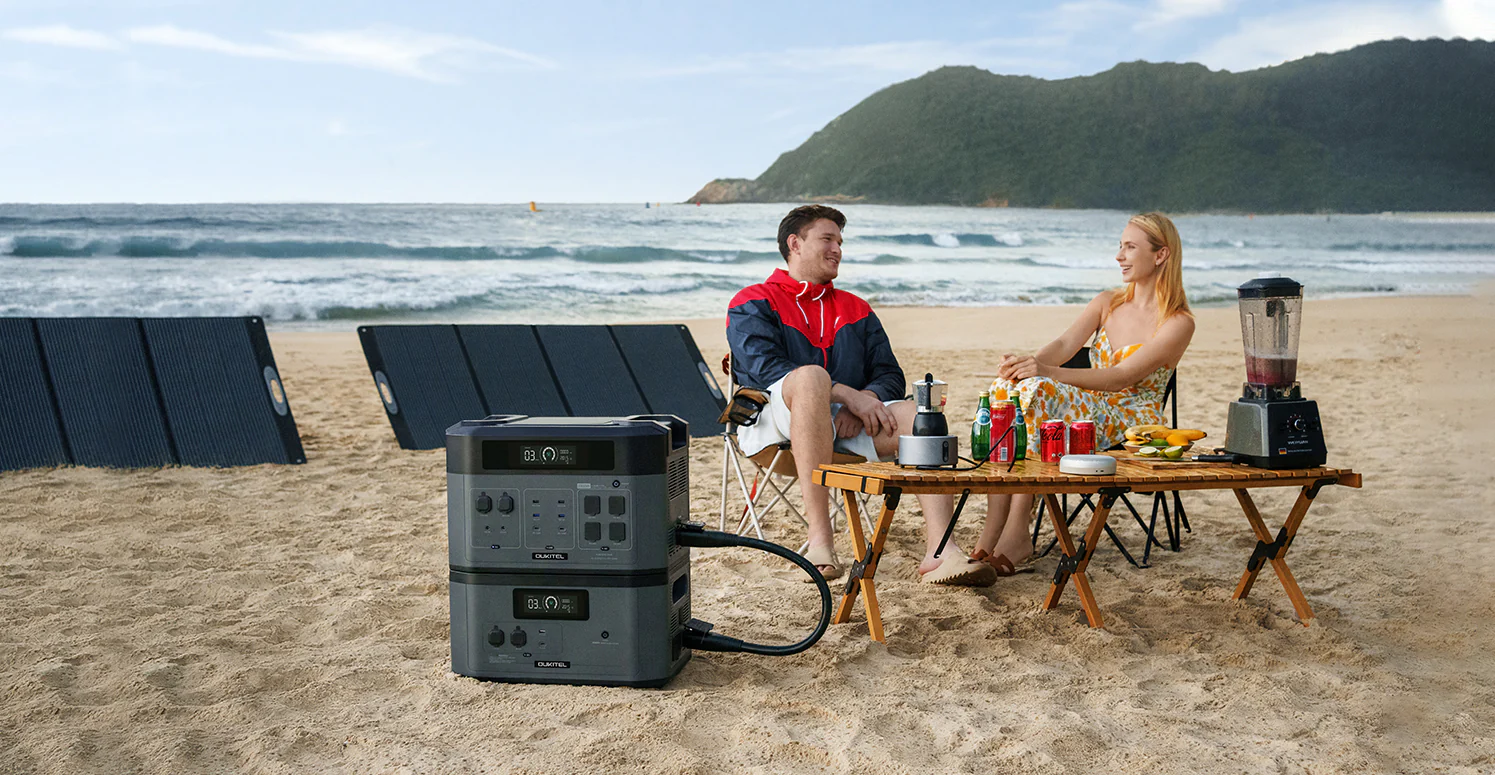
No exhaust. So either station can run indoors, which a gas generator never should.
The U.S. Consumer Product Safety Commission ties portable generators to more than 100 carbon monoxide deaths a year and says not to run one in a home or garage. For bigger setups, see our home battery backup systems.
|
Wiring warning
Do not connect either station to home wiring without a transfer switch installed by a licensed electrician. Backfeeding a panel can energize utility lines and put line workers at risk.
|
Charging Speed: Wall, Solar, and Car

Rolling outages are where charging speed shows. Power returns for an hour, then drops again. Solar input counts too, since it decides whether you refill what you used yesterday.
|
Method
|
OUKITEL BP2000 Pro
|
Jackery Explorer 2000 Plus
|
|
AC wall
|
0 to 80% in about 55 min
|
Full in about 2 hr (95 min measured in one test)
|
|
Max solar
|
1,000W
|
1,400W across two inputs
|
|
AC + solar together
|
1,000W solar + 1,500W AC, 80% in about 1 hr
|
Not the main listed mode
|
|
Car (12V)
|
Supported
|
About 25 hr for a full charge
|
|
Listed charging methods
|
6: AC, solar, AC + solar, car, generator, adapter
|
AC, solar, car
|
AC wall charging
On AC, OUKITEL lists 0 to 80% in about 55 minutes. Jackery says about 2 hours to full; one independent test got 95 minutes. With the grid back for only an hour, the BP2000 Pro recovers more before the next cut.
Solar charging
Solar is where Jackery leads: 1,400W against 1,000W.
On a clear day with 4 to 5 peak sun hours, expect about 3 to 4kWh from 1,000W of panels after losses, or 4.5 to 5.5kWh from 1,400W. Sunlight, tilt and orientation all shift the result, as the U.S. Department of Energy explains.
Car charging
Slow. Jackery quotes around 25 hours to full from a car, and the B2000 takes 12V at 8A or 24V at 10A. Keep it as a last option.
Battery Life, Warranty, and Long Term Value
Both run LiFePO4. It is much more stable than the NMC cells used in many older units and is generally considered safe indoors.
The cycle numbers need a little care, though:
-
OUKITEL: 3,500+ cycles, with the B2000 rated to keep 80% of original capacity.
-
Jackery states 4,000 cycles to at least 70%.
-
Different endpoints. So 4,000 is not automatically the better figure.
-
At one cycle a week, a backup unit would take decades to reach either; age and storage wear it first.
Warranty: Jackery lists 3 years plus 2. The OUKITEL product page shows 1 year plus 2 extra years under current terms. Worth reading before you order.
Prices change with every sale on both sites. Compare full systems at your target size, panels and batteries included.
At end of life, a lithium battery should not go in the trash. The U.S. Environmental Protection Agency points owners to certified recyclers or household hazardous waste sites.
Size, Weight, and Moving the System Around
61.5 lb for the Explorer 2000 Plus, at 18.6 x 14.1 x 14.7 in. Wheels and a telescoping handle make it easier to move on smooth floors, though one independent reviewer found them less useful on dirt and slopes.
Retail listings give the BP2000 Pro about 48 lb, roughly 13 lb less. A B2000 weighs 41 lb (18.7 x 11.65 x 9.51 in), and a Jackery Battery Pack 2000 Plus about 41.9 lb.
Add batteries and portability goes away fast. An 8kWh OUKITEL setup is about 171 lb; the Jackery equivalent, about 187 lb.
Pick a permanent spot in the garage or utility room and leave space for cables.
BP2000 Pro vs Jackery 2000 Plus: Which Should You Buy?
|
If you need
|
Better fit
|
Why
|
|
Two or more large appliances at once
|
BP2000 Pro
|
3,300W continuous vs 3,000W
|
|
Backup for a PC, NAS, or router
|
BP2000 Pro
|
Under 10ms switchover vs 20ms
|
|
Up to 16kWh from one station
|
BP2000 Pro
|
7 expansion batteries vs 5
|
|
Fast refill between outages
|
BP2000 Pro
|
0 to 80% in about 55 min
|
|
More than 16kWh, or 240V output
|
Explorer 2000 Plus
|
Two stations reach about 24kWh and 240V
|
|
Heavy solar recharging
|
Explorer 2000 Plus
|
1,400W solar vs 1,000W
|
|
Hard motor starts
|
Explorer 2000 Plus
|
Published 6,000W surge
|
Home outages
The BP2000 Pro suits most essentials plans. More output, a quicker switch, and 16kWh of growth without a second station.
RV and van travel
Weight and solar are what count on the road. OUKITEL starts lighter. Jackery takes 400W more from a roof array.
Cabins and off grid use
Off grid, it comes down to daily refill. The 1,400W Jackery solar limit helps there, and on the OUKITEL side each B2000 has its own 200W solar input when used standalone.
Job sites and tools
Hard starting tools favor a published surge rating. Saws and compressors that run long at high draw get more from the extra 300W on the BP2000 Pro.
Final Verdict: BP2000 Pro vs Jackery Explorer 2000 Plus
Our take: for home backup up to 16kWh, the OUKITEL BP2000 Pro has the better spec sheet. Higher continuous output, a switchover under 10ms, faster charging to 80%, more expansion per station.
The Jackery Explorer 2000 Plus earns its place above 16kWh, for 240V from a paired system, or when solar does most of the charging. Its wheels are handy if the unit moves often.
Start with your load list. Price the full system after that.
How to Build Your Backup Setup in 3 Steps

-
List what has to stay on. For each device, note running watts and hours used per day. Multiply the two for daily watt hours.
-
Work out capacity. Divide the daily total by about 1,740Wh (usable energy in one 2kWh module). That tells you how many modules your outage needs.
-
Price the full system. Start with the OUKITEL BP2000 Pro and add B2000 expansion batteries until you reach your target.
-
FAQs
Is the BP2000 Pro better than the Jackery Explorer 2000 Plus?
Yes, for most single station home backup plans. The BP2000 Pro has more output, switches faster, and expands further per station.
Where each one leads:
-
BP2000 Pro: output (3,300W), EPS (under 10ms), one station capacity (16,384Wh)
-
Jackery wins on solar (1,400W), surge (6,000W) and two station size (about 24kWh)
Is there a better brand than Jackery?
Not for every buyer. OUKITEL, EcoFlow, BLUETTI and Anker SOLIX all sell 2kWh class stations, so the model matters more than the brand.
Compare:
-
Continuous and surge output
-
How many batteries one station accepts
-
Check solar input and warranty too
What are the key differences between the Jackery Explorer 2000 Pro and 2000 Plus?
Chemistry, output and expansion. The 2000 Plus uses LiFePO4, takes battery packs and outputs 3,000W; the older 2000 Pro used lithium ion, had fixed capacity and put out 2,200W.
Side by side:
-
1,000 cycles to 80% (Pro) vs 4,000 to 70% (Plus)
-
Capacity: 2,160Wh fixed, or 2,042.8Wh expandable
-
Weighs 43 lb vs 61.5 lb
Is Jackery 2000 Plus worth it?
For big systems, yes. It makes sense above 16kWh, for 240V from paired units, or with 1,400W of solar. Smaller plans get more per dollar elsewhere.
Trade offs:
-
Good: 3,000W output, 6,000W surge, 4,000 cycles
-
Heavy at 61.5 lb, and the switchover takes 20ms
Which brand is better, BLUETTI or Jackery?
Neither, across the board. Both brands have strong and weak models, so compare two specific units at the same capacity and price.
Check:
-
Output against your largest combined load
-
Batteries per station
-
Solar input, plus warranty length
Is Jackery a Chinese brand?
Partly. Jackery runs its US business from California, and its parent company is in Shenzhen, China. OUKITEL, EcoFlow and BLUETTI also build in China.
What matters more:
-
Warranty: Jackery 3 + 2 years, OUKITEL 1 + 2 extra years
-
Check return shipping for a 50 to 60 lb unit
What is the best 2000 watt solar generator?
Depends on your priority. Output and single station expansion favor the BP2000 Pro; solar input favors the Explorer 2000 Plus.
Quick comparison:
-
BP2000 Pro: 2,048Wh, 3,300W, 1,000W solar, 16,384Wh max
-
Explorer 2000 Plus: 2,042.8Wh, 3,000W, 1,400W solar, about 24kWh with two units
What are people saying about the Jackery solar powered generator?
Mostly good things about charging speed, output and expansion. Complaints center on weight, price, and a display that is hard to read in sun.
From one independent test:
-
Measured AC output 1,678Wh (about 82% of rated)
-
Recharged on AC in roughly 95 minutes
-
62.3 lb on the reviewer's scale


Looking for something else?
What Will a 6000 Watt Generator Run? 2026 Whole-Home Guide
LEARN MORE
What Can 1,000 Watts Power? 2026 Guide to Real Appliances & RuntimeWhat Can 1,000 Watts Power? A 2026 Guide to Real Appliances and Runtime
LEARN MORE
Best Portable Power Station for Camping: A No-Nonsense 2026 Buyer's Guide
LEARN MORE
1500 Watt Generator: What Can It Power? 2026 Real-Appliance Guide
LEARN MORELooking for something else?
How Long Do Portable Power Stations Last? 2026 Lifespan and Runtime Guide
LEARN MORE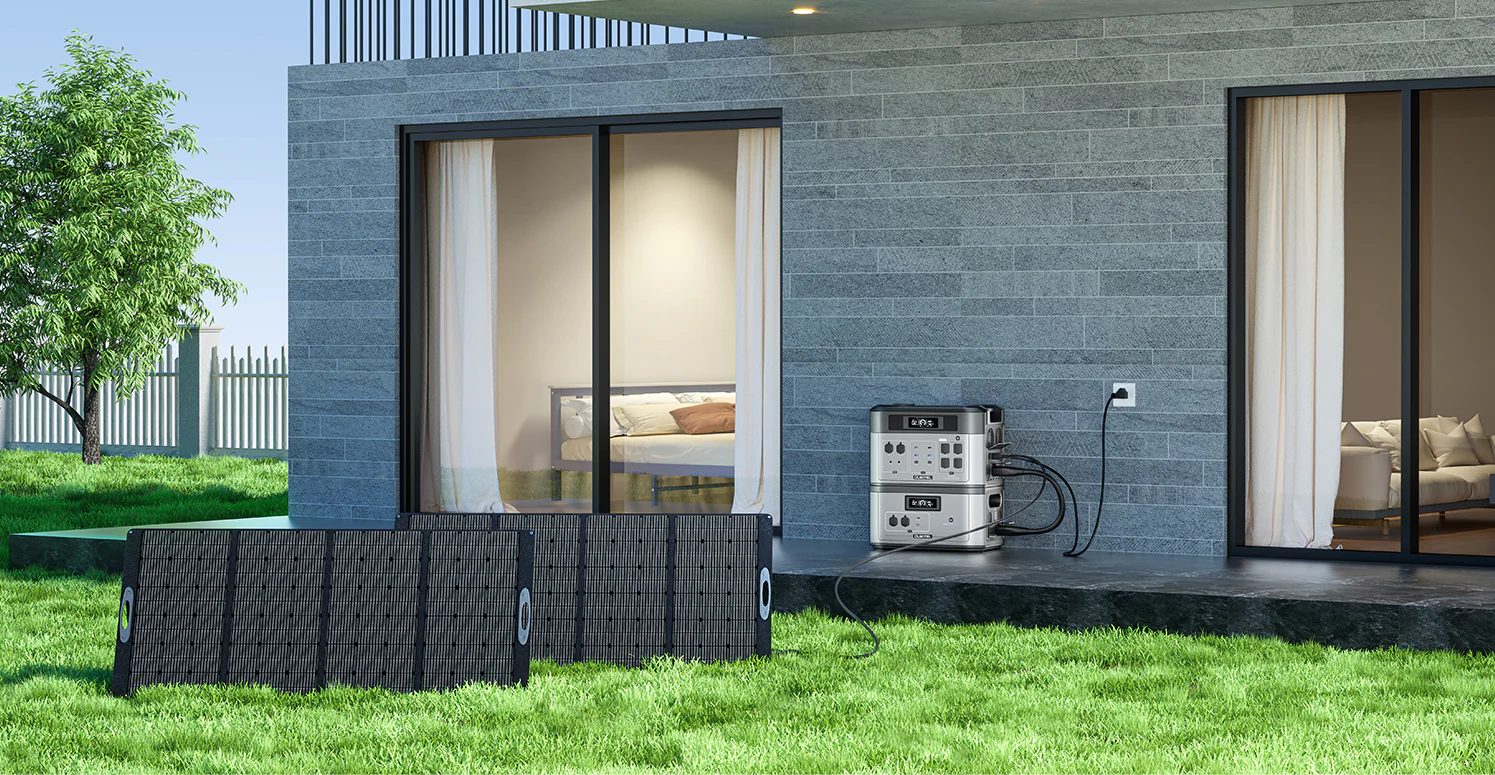
Best Solar Generator for Home Backup: 2026 Buyer's Guide
LEARN MORE
What Size Solar Generator Do You Need? 2026 Sizing Guide by Real Use Case
LEARN MOREYou may also like

OUKITEL BP2000+400W Solar Generator
$1,269.00
$1,799.00

OUKITEL P5000+2*400W Solar Generator
$2,098.00
$3,599.00
OUKITEL P5000 Pro+2*400W Solar Generator
$2,398.00
$3,398.00

OUKITEL BP2000+2*400W Solar Generator
$1,869.00
$2,399.00

OUKITEL BP2000+2*B2000 Home Backup
$2,099.00
$2,799.00
Further reading

OUKITEL BP5000 Pro Max vs EcoFlow DELTA Pro 3 vs Anker SOLIX F3800
Picking between the OUKITEL BP5000 Pro Max vs EcoFlow DELTA Pro 3 vs Anker SOLIX F3800 comes down to one priority. Stored energy, solar recovery, or raw output. The OUKITEL BP5000 Pro Max carries ...

OUKITEL P5000 Pro vs Jackery HomePower 3600 Plus: 3.6kW-Class Home Backup
The OUKITEL P5000 Pro vs Jackery HomePower 3600 Plus choice comes down to one trade: more battery in the box, or less weight with room to grow. Both run 3,600W continuous and 7,200W surge on LiFeP...
OUKITEL BP2000 Pro vs Jackery Explorer 2000 Plus: Expandable Home Backup Compared
BP2000 Pro vs Jackery Explorer 2000 Plus. On the spec sheet, these two look close at first. Each holds roughly 2kWh on LiFePO4 cells and runs at 120V.
The gaps are elsewhere. Output, for one. The ...