








 Flashlight
 Solar
Extension Cable
Solar
Extension Cable


Best Portable Power Stations Under $1,000 in 2026
The best portable power stations under $1,000 in 2026 store 1,024Wh to 2,048Wh in LiFePO4 cells and deliver 1,800W to 3,300W of AC power. In practice that means phones, a WiFi router, a CPAP and a laptop, and on the bigger units, a full size fridge through a night with the grid down.
Prices have fallen hard this year. Some 2,048Wh models launched between $1,199 and $1,599 and now go for under $900 on sale. Same budget, roughly double the battery.
Below are our five picks, a look at how they stack up against Anker, Jackery, BLUETTI, EcoFlow and DJI, runtime numbers, and what we'd check before buying.
Best Portable Power Stations Under $1,000: Quick Picks
All five use LiFePO4 cells and a pure sine wave inverter. The price bands come from OUKITEL sale pricing in October 2026. They change often, so check the full portable power station lineup before you order.
|
Model
|
Capacity
|
AC Output (Surge)
|
Weight
|
Price Band
|
Best For
|
|
P800
|
512Wh
|
800W (1,600W)
|
13.2 lb
|
Under $250
|
Camping, light backup
|
|
P1000 Plus
|
1,024Wh
|
1,800W (3,600W)
|
26.5 lb
|
Under $450
|
Best overall
|
|
BP2000 Pro
|
2,048Wh
|
3,300W
|
Not listed
|
Under $850
|
Expandable backup
|
|
P2001 Pro
|
2,048Wh
|
3,200W (6,400W)
|
47.4 lb
|
Under $860
|
High surge loads
|
|
BP3000
|
2,048Wh
|
3,200W
|
52.9 lb
|
Under $860
|
Long outages
|
Our Top Picks, Reviewed
Best Overall Under $1,000: OUKITEL P1000 Plus
Ask us for one unit that suits most households and we'd point to the OUKITEL P1000 Plus. There's 1,024Wh inside, an 1,800W inverter that will briefly take 3,600W, and the whole thing weighs 26.5 lb, about what a full laundry basket weighs. One hand gets it from the hall closet to the bedroom.
On a wall outlet it gets to 80% in 39 minutes; plug in solar at the same time and you're full in roughly 36. OUKITEL rates the cells for 4,000 cycles before they drop to 80% capacity.
Two things we like at night: the EPS kicks in within 10ms, so the router doesn't reboot when the lights flicker, and under 500W the fan hums along at about 29dB. The catch is capacity. With no expansion port, 1,024Wh is what you live with.
Best Budget Pick: OUKITEL P800

The OUKITEL P800 is the cheap one and the light one, 13.2 lb carrying 512Wh. You get 800W of output (1,600W surge) plus a 100W USB-C port that charges most laptops at full speed.
Don't expect it to start a microwave or a drip coffee maker, since both pull more than 800W. Lanterns, phones, a fan and a 12V cooler at a tent site are no trouble at all. A wall plug refills it in about an hour, and solar maxes out at 200W.
Best Expandable Home Backup: OUKITEL BP2000 Pro
For home backup we lean toward the OUKITEL BP2000 Pro, mostly because of what it can grow into. You buy 2,048Wh today. Later, up to seven B2000 packs bolt on for 16,384Wh in total.
Its 3,300W inverter will run the refrigerator, the microwave and a couple of lamps at once. Plugged into a 2,200W wall input it hits 80% in 55 minutes, and with 1,000W of panels feeding it alongside 1,500W of AC, about an hour.
Best for High Surge Loads: OUKITEL P2001 Pro
Motors are the problem child for most inverters. An air compressor or a circular saw can pull several times its running watts in the first second, and that is where the OUKITEL P2001 Pro earns its place: 3,200W continuous, 6,400W surge, the most headroom of anything here.
You also get 2,048Wh, 12 outputs, 1,000W of solar input and a full wall charge in about an hour and a half. The trade is weight. At 47.4 lb, you'll want both hands.
Best for Long Outages: OUKITEL BP3000
If your area loses power for days rather than hours, look at the OUKITEL BP3000. Out of the box it has 2,048Wh, 3,200W and 14 ports. Add seven B2000L packs and it reaches about 16kWh. Only the B2000L fits, not the plain B2000, which trips people up.
It charges to 80% in 1 hour 5 minutes from 1,800W AC. At 52.9 lb it is not going camping. Most owners leave it on a garage shelf near the fridge.
|
Cost per watt hour: the P1000 Plus at about $429 and the BP2000 Pro at about $849 both come to roughly 42 cents per Wh. Moving up to 2kWh doubles the runtime without raising the price of each watt hour.
|
How Do Anker, Jackery, BLUETTI and EcoFlow Compare Under $1,000?

Every major brand now sells a 1kWh LiFePO4 unit in this price range, and on paper they look close. Anker's SOLIX C1000 Gen 2 offers 2,000W at 24.9 lb. Jackery's Explorer 1000 v2 is the lightest at 23.8 lb but stops at 1,500W. BLUETTI's AC180 holds a little more, 1,152Wh, and weighs 35.6 lb. EcoFlow's DELTA 3 Plus and the DJI Power 1000 V2 both reach 80% in about 40 minutes or less, and the DJI runs 2,600W.
The biggest difference hides in the cycle rating. Jackery quotes 4,000 cycles to 70% capacity, while the P1000 Plus is rated for 4,000 cycles to 80%. Same number. Different promise.
A $1,000 budget also reaches past this group. Any 1kWh unit gives a fridge about 14 hours, and three of our 2,048Wh picks sell for under $900. Our OUKITEL vs EcoFlow comparison and OUKITEL vs Jackery breakdown go further into transfer ratings and warranties.
How Long Will a Portable Power Station Under $1,000 Run Your Devices?

Labels overstate runtime. Some energy is lost turning battery power into AC, so we plan on about 85% of rated capacity and divide by the load in watts. For an appliance's daily use, the U.S. Department of Energy multiplies wattage by hours of use and divides by 1,000.
|
Load (average draw)
|
512Wh
|
1,024Wh
|
2,048Wh
|
|
WiFi router and modem (20W)
|
22 h
|
43 h
|
87 h
|
|
CPAP, no heated humidifier (40W)
|
11 h
|
22 h
|
43 h
|
|
Laptop (50W)
|
9 h
|
17 h
|
35 h
|
|
Full size fridge (about 60W average)
|
7 h
|
14 h
|
29 h
|
|
Box fan (75W)
|
6 h
|
12 h
|
23 h
|
|
Microwave (1,000W)
|
Over 800W limit
|
52 min
|
1.7 h
|
Most people read the fridge row first. FoodSafety.gov says food in a closed fridge stays safe for up to 4 hours after the power cuts out, and a 1kWh station keeps the compressor running for about 14 hours before that 4 hour clock even starts.
Treat these as starting points. A ten year old fridge in a hot kitchen in July will burn through the battery faster than our 60W average suggests.
|
Medical devices: read the label on your CPAP or oxygen concentrator first. A heated humidifier can triple the draw, so a plan that works on paper may fall short at 3 a.m. Work it out with your provider and leave charge in reserve.
|
What Should You Check Before Buying a Portable Power Station Under $1,000?
Most buying decisions come down to two numbers. One is the total wattage of everything running at the same moment, which has to stay under the continuous rating. The other is how many watt hours you need before you get a chance to recharge.
Surge is a narrower question, and it only matters for things with motors or compressors that yank hard on the inverter for a second or two at startup. Cycle ratings deserve a closer read than they usually get, since 4,000 cycles to 80% and 4,000 cycles to 70% are different promises. A few smaller checks:
-
Solar input of 500W or more, if you want a 1kWh unit refilled in an afternoon of decent sun
-
EPS switching under 10ms, so routers and desktops ride through a blackout
-
A weight that matches how you'll use it; under 30 lb gets carried around, while 45 lb and up mostly stays put
Stored sensibly, a LiFePO4 unit should give you 8 to 10 years. We go through the temperature and charging habits that stretch that out in our guide on how long portable power stations last.
|
Measure before you buy: an inexpensive plug in watt meter left on your fridge for a full day will tell you more than the sticker on the back ever does.
|

Portable Power Station or Gas Generator?
A battery station makes almost no noise, burns nothing and puts out no exhaust, so it can sit in the living room. Gas generators win on endurance. They keep going as long as someone keeps filling the tank, and for a week without power with central air or a well pump, that is hard to argue with.
|
Carbon monoxide: the U.S. Consumer Product Safety Commission ties more than 100 deaths each year to portable generators. The CDC is clear that a generator belongs outdoors, more than 20 feet away from windows, doors and vents.
|
Scale is the other thing to keep in mind. According to the U.S. Energy Information Administration, the average American home goes through about 10,500kWh a year, roughly 29kWh a day. Under $1,000, you are backing up the fridge, the internet and the lights, not the house.
Conclusion: Which One Should You Buy?
If you only buy one, make it the P1000 Plus. For most people it is the best portable power station under $1,000: 1,024Wh, 1,800W, 80% in 39 minutes, and it sells for under $450. Need the fridge cold all night, or expect to want more storage down the road? Then spend closer to the top of the budget on a 2,048Wh unit like the BP2000 Pro.
-
Make a list of what has to run at the same time and add up the watts.
-
Use the DOE formula for daily Wh, then divide by 0.85 to cover inverter losses.
-
Pick the smallest unit that clears both numbers, then compare it on OUKITEL Power.
FAQs
What Is the Best Portable Power Station Under $1,000?
For most homes we would go with a 1kWh LiFePO4 unit that has at least 1,800W of output, and the P1000 Plus fits that well. If the fridge needs to run through the night, though, the 2,048Wh BP2000 Pro is the smarter way to spend the money. Light campers can get by with the 512Wh P800.
What Is the Best 1000W Portable Power Station?
Among 1kWh units, output varies more than capacity. The P1000 Plus and BLUETTI AC180 run 1,800W, Anker's C1000 Gen 2 runs 2,000W, the DJI Power 1000 V2 runs 2,600W and the Jackery Explorer 1000 v2 runs 1,500W. A 1,700W kettle works on every one of them except the Jackery.
Which Brand of Portable Power Station Is the Most Reliable?
Reliability tracks the model more than the brand. The parts that decide it are the LiFePO4 cells and their stated cycle threshold, the battery management system, the inverter, and the warranty terms, including any registration step. OUKITEL lists 1 year plus 2 extra years with subscription on the P1000 Plus.
Is Jackery or EcoFlow Better?
Depends what you value. Jackery's Explorer 1000 v2 weighs just 23.8 lb but tops out at 1,500W. EcoFlow puts more into fast charging and extra batteries, like the expandable DELTA 2. Light and simple, or bigger and expandable; that's the real choice.
What Is the Lifespan of a Power Station?
Usually 8 to 10 years for LiFePO4. Cycle ratings of 3,500 to 4,000 describe the cells only; the inverter and electronics age on their own. To get the most out of it:
-
Store it at 40 to 60% charge
-
Keep it near room temperature
-
Top it up every 3 to 6 months
What Are the Disadvantages of a Portable Power Station?
The big one is that the energy runs out. A 1kWh unit keeps a fridge going for about 14 hours, and after that it has to be refilled from the wall, the sun or a car. Heavy loads empty it quickly, the 2kWh models weigh 47 lb and up, and per kWh you pay more upfront than you would for a fuel generator.
Is It Worth Buying a Portable Power Station?
Yes, for most households that deal with short outages, camp, or work remotely.
-
No fuel, oil or exhaust
-
Instant backup for routers and CPAP machines
-
Solar recharging for longer trips
It is a weaker fit for multiday outages with heavy loads and no solar.


Looking for something else?

Battery Backup for Power Outage: Sizing & Real Runtime
LEARN MORE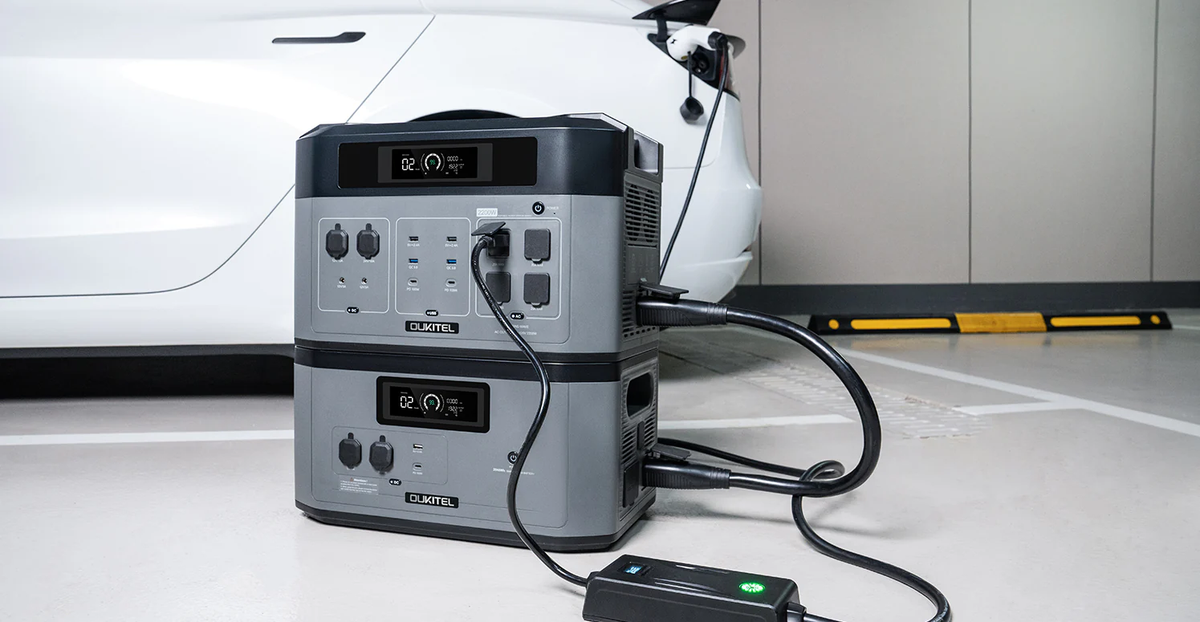
Solar Panels for Charging a Car Battery: An Honest Guide
LEARN MORE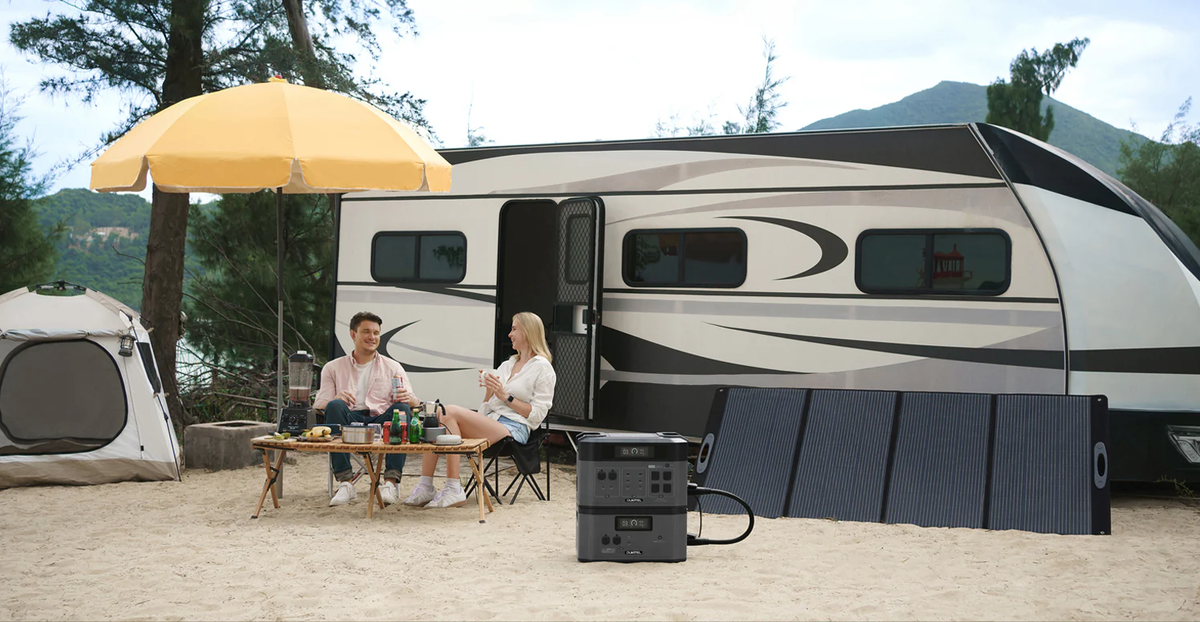
What Is an Anderson Port? How It Works, What It Connects, and When You Need One
LEARN MORE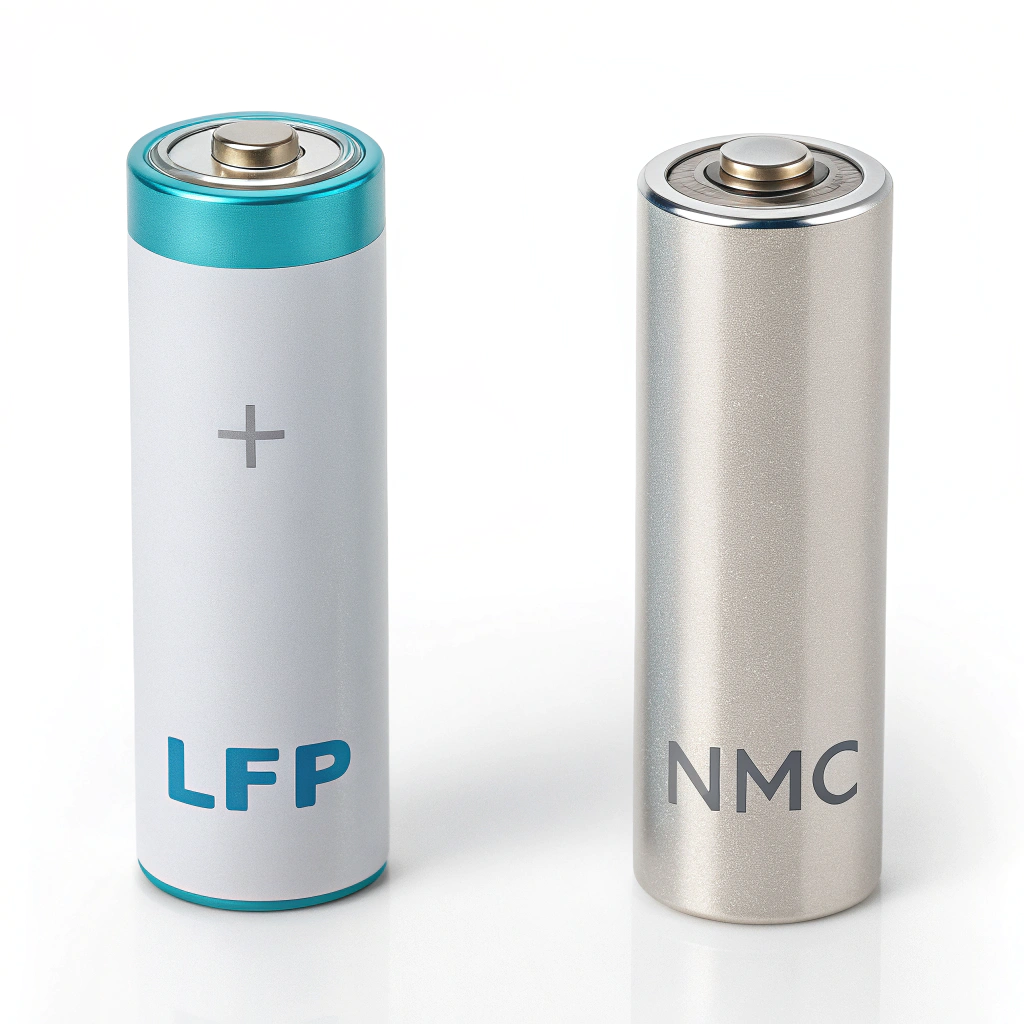
LFP vs Lithium-Ion: Which Battery Chemistry Wins in 2026?
LEARN MORELooking for something else?
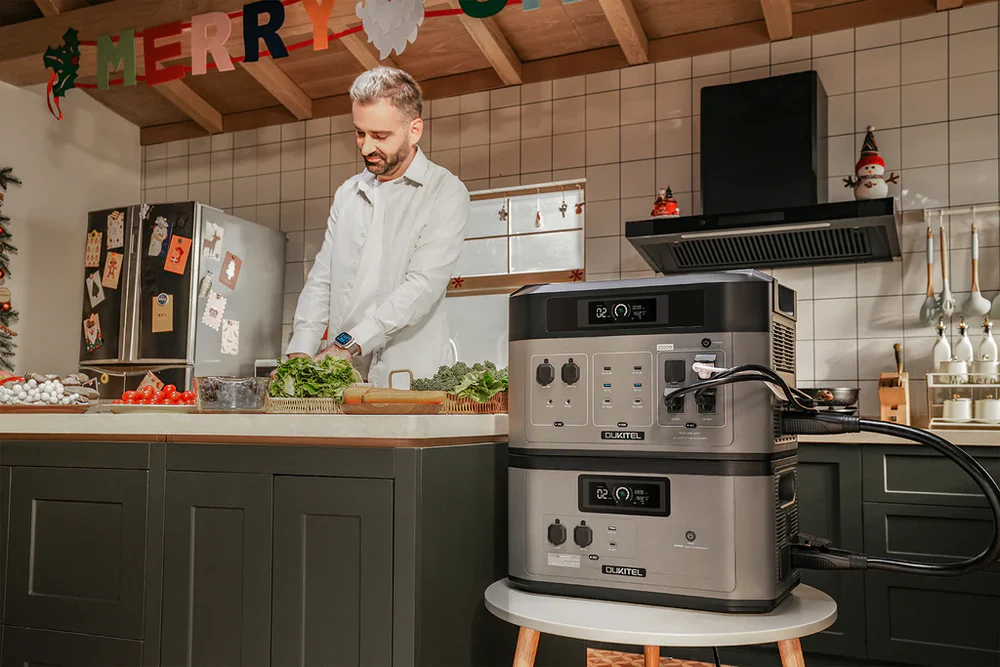
How Long Will a Solar Generator Power a Refrigerator? Runtime by Battery Size
LEARN MORE
What Will a 6000 Watt Generator Run? 2026 Whole-Home Guide
LEARN MORE
What Can 1,000 Watts Power? 2026 Guide to Real Appliances & RuntimeWhat Can 1,000 Watts Power? A 2026 Guide to Real Appliances and Runtime
LEARN MOREYou may also like

OUKITEL P5000 Pro+400W Solar Generator
$2,028.00
$2,798.00

OUKITEL BP2000+400W Solar Generator
$1,269.00
$1,799.00

OUKITEL P5000+2*400W Solar Generator
$2,098.00
$3,599.00

OUKITEL P5000 Pro+2*400W Solar Generator
$2,398.00
$3,398.00

OUKITEL BP2000+2*400W Solar Generator
$1,869.00
$2,399.00

OUKITEL BP2000+2*B2000 Home Backup
$2,099.00
$2,799.00
Further reading

Best Portable Power Stations Under $2,000 in 2026
The best portable power station under $2,000, for most homes we work with, is a 2,048Wh LiFePO4 unit pushing 2,200W or more. Solar input near 1,000W helps, and so does a port for an extra battery ...
Best Portable Power Stations Under $1,000 in 2026
The best portable power stations under $1,000 in 2026 store 1,024Wh to 2,048Wh in LiFePO4 cells and deliver 1,800W to 3,300W of AC power. In practice that means phones, a WiFi router, a CPAP and a...

Best Portable Power Stations for Home Backup in 2026
The best portable power station for home backup is the one that keeps your fridge cold until the power comes back. For most houses we talk to, that's around 2,000 to 3,000Wh of LiFePO4 battery and...