








 Flashlight
 Solar
Extension Cable
Solar
Extension Cable


OUKITEL vs EcoFlow: Which Portable Power Brand Fits Your Needs in 2026?
The OUKITEL vs EcoFlow choice comes down to six checks: continuous output, backup transfer rating, usable energy, recharge speed, expansion path, and warranty eligibility where you live. Run those against your own load list, and the question stops being about brands.
Most comparison pages line up two flagship units and name a winner. That method breaks down quickly. The unit that wins on paper is often the wrong size for what you actually plan to run.
What follows is a framework for building a shortlist, plus where the current OUKITEL lineup lands on each check.
How Should You Compare OUKITEL vs EcoFlow in 2026?
Compare requirements first, brands second. A specification advantage only counts when it changes something you will do with the unit.
The failure mode is comparing across classes. A 5,000Wh home backup station next to a 700Wh camping unit makes either brand look dominant, depending on which spec you lead with. Pick a capacity and output band that matches your loads, then compare inside that band.
Six gates decide almost every purchase. Work through them in order, and most of the shortlist eliminates itself before you reach price.
|
Gate
|
What you are checking
|
Fails when
|
Where to verify
|
|
Continuous output
|
Running watts of everything on at once
|
Total load exceeds the inverter rating
|
Spec sheet, AC output row
|
|
Transfer rating
|
Watts protected during a grid drop
|
Backup path is narrower than the inverter
|
Manual, EPS or UPS section
|
|
Usable energy
|
Watt-hours delivered to the load
|
Rated capacity is treated as usable
|
Your own math, not the listing
|
|
Recharge
|
Energy recovered per charging window
|
Only headline speed was compared
|
Input ratings for each path
|
|
Expansion
|
Room for future loads
|
Unit is capacity-locked at purchase
|
Compatible battery list
|
|
Support
|
Warranty eligibility and service access
|
Seller is outside the coverage chain
|
Warranty document and seller status
|
Fill this in for both brands using current manuals for the exact regional version being sold. Leave a cell blank rather than guessing. A blank is information; an assumption is not.
Verify the Version, Not the Product Line
Product names travel across regions and generations while specifications shift underneath them. The same model designation can carry a different inverter rating, socket configuration, or charging ceiling depending on which market it was built for, and listing titles frequently lag behind the current specification.
Two habits prevent most of that confusion. Read the specification block on the page you are actually buying from rather than a review of an earlier generation. Then confirm socket type, input voltage, and warranty eligibility for your country, since a unit built for another market may be legal to import but awkward to service.
Bundles need the same treatment. A listing that includes panels, cables, or an expansion pack is not comparable to a bare unit at a lower price, and similar titles do not guarantee similar contents.
What Continuous Output Do Your Loads Actually Need?

Add the running watts of every device you expect to run simultaneously, then check startup demand separately. Two different numbers, two different failure modes.
Running Watts Come First
List the loads. Add them. That total has to sit under the inverter’s continuous rating with margin left over, because output ratings assume moderate ambient temperature and a healthy battery.
Motors and compressors complicate this. A refrigerator that runs at 150W may pull several times that for the first second of each compressor cycle. Resistive loads such as kettles and heaters do not surge, but they draw their full rating the entire time they are on.
Surge Is a Separate Check
Peak wattage figures describe a brief window, not a second operating mode. Ask how long the unit sustains that peak and whether special boost modes carry appliance restrictions. Boost modes that only work on resistive loads will not start a compressor.
Where the OUKITEL Tiers Land
Output is the fastest way to sort the OUKITEL range, since capacity and output do not always scale together.
|
Model
|
Capacity
|
Continuous AC
|
Surge
|
Fits
|
|
P1000 Plus
|
1,024Wh
|
1,800W
|
3,600W
|
Camping, routers, laptops, small fridge
|
|
BP2000
|
2,048Wh
|
2,200W
|
Check listing
|
Outage essentials, expandable base
|
|
BP2000 Pro
|
2,048Wh
|
3,300W
|
Check listing
|
Heater plus fridge, tool bursts
|
|
P5000 Pro
|
5,120Wh
|
3,600W
|
7,200W
|
Multi-day outages, heavy tools
|
|
BP5000 Pro Max
|
5,120Wh
|
5,000W
|
9,000W
|
120V/240V split-phase loads
|
One note on that last row. The BP5000 Pro Max is the only unit in the range with split-phase output, which is what 240V equipment such as a well pump or an electric range requires. Nothing below it will start those loads regardless of capacity.
Why the Transfer Rating Matters More Than Transfer Time
Almost every comparison quotes switchover speed in milliseconds. Far fewer mention that the backup path is often rated for fewer watts than the inverter. That gap is where outage plans fail.
A station can hold a 5,000W inverter rating and still protect only a fraction of that when the grid drops, because pass-through backup runs through a different circuit than normal battery output.
Read the Two Numbers Together
Switchover speed decides whether a device notices the interruption. Routers, NAS units, and desktop computers reboot on a long enough pause. Transfer wattage decides whether the device stays powered at all.
The OUKITEL specifications show the gap clearly.
|
Model
|
Inverter continuous
|
Backup path rating
|
Size protected loads against
|
|
BP2000
|
2,200W
|
1,400W EPS, under 10ms
|
1,400W
|
|
BP2000 Pro
|
3,300W
|
2,000W EPS, under 10ms
|
2,000W
|
|
BP5000 Pro Max
|
5,000W
|
1,400W on 120V input, 2,800W on 240V input
|
Depends on input voltage
|

Read that BP5000 Pro Max row carefully. The 5,000W figure applies when you plug appliances directly into the unit. The narrower figures apply to the pass-through backup circuit, and which one you get depends on whether the unit is fed 120V or 240V.
None of this makes a unit worse. It means the number to size your protected circuit against is the transfer rating, not the inverter rating. Run the same check on any brand you are considering. Many spec sheets bury it.
How Much Usable Energy Do You Actually Get?
Rated capacity is stored energy. Usable AC energy is what reaches the outlet after inverter losses, idle draw, and temperature effects. Plan on roughly 85 percent.
The working formula:
Runtime in hours = rated capacity in watt-hours × 0.85 ÷ average load in watts
A 2,048Wh unit running a 120W average load returns about 14.5 hours, not 17. Over a two-day outage, that difference is real.
Cycling Loads Need Averages, Not Nameplates
Refrigerators are the common trap. The nameplate says 150W, but the compressor runs perhaps a third of the time, so the honest planning figure is closer to 50W average. Multiplying nameplate wattage by 24 hours overstates a fridge’s daily demand by a wide margin.
Where possible, measure over a full cycle with a plug-in meter. Failing that, use conservative averages and keep a reserve.
-
Full-size refrigerator: 40 to 80W average across a day
-
Chest freezer, well sealed: 30 to 60W average
-
CPAP without humidifier: 30 to 60W, humidifier roughly doubles it
-
Router plus modem: 10 to 25W continuous
-
LED lighting for a room: 20 to 40W
Our portable power station calculator walks through the same math with adjustable inputs.
How Fast Can You Actually Recharge?

Judge recharging by energy recovered inside the window you actually have, not by the fastest number on the box.
Compare 0 to 80 Percent Against Total Capacity
Partial-charge claims are not comparable across capacities. Reaching 80 percent on a 1,024Wh pack moves roughly 820Wh. The same percentage on a 2,048Wh pack moves twice that. Both may be advertised as 80 percent charging.
Convert to watt-hours per hour, and the comparison becomes honest. Also account for adjustable input settings, thermal throttling, and grid voltage variation, all of which reduce real wall input.
|
Path
|
Typical ceiling
|
Notes
|
|
AC wall
|
1,200W to 2,200W across the OUKITEL range
|
Fastest, needs a healthy circuit
|
|
Solar
|
500W to 1,000W depending on model
|
Nameplate is lab-rated, real output is lower
|
|
AC plus solar
|
Combined, model dependent
|
Best recovery when both are available
|
|
12V vehicle socket
|
Often 100W to 120W
|
Rarely replaces daily draw
|
|
Generator
|
Varies
|
Treat as an AC source, check waveform
|
|
DC-to-DC converter
|
Model and vehicle dependent
|
Needs manufacturer-approved wiring
|
Solar Ratings Describe a Laboratory
Panel nameplates come from standard test conditions. Real output moves with sun angle, temperature, cloud, and shading. A 400W panel commonly delivers a good deal less across an actual day.
Look past maximum solar wattage to the controller’s voltage and current limits. Open-circuit voltage above the input ceiling can damage the unit, and a matching connector proves nothing about electrical compatibility.
Vehicle Charging Is the Common Disappointment
This is the single most frequent complaint in overlanding forums, and the arithmetic explains why. A standard 12V accessory socket delivers roughly 100W to 120W. A 12V fridge plus device charging can exceed that during a normal driving day, which means the battery drains while you drive.
Higher-rate vehicle charging needs a dedicated DC-to-DC converter and correctly sized wiring. Skip spliced or improvised harnesses.
Buy Bigger Now, or Expand Later?
Both brands offer expansion. The question is what the expansion path costs and how far it goes.
Expandable architecture lets you buy for today’s loads and add capacity when circumstances change. Fixed-capacity units mean a full replacement when you outgrow them, and the old unit rarely resells for much.
The BP2000 and BP2000 Pro both accept up to seven B2000 packs at 2,048Wh each, reaching 16,384Wh. That covers a starter setup and a whole-home reserve using the same inverter.
Three things to confirm on any expansion system:
-
Whether expansion packs charge and discharge as one system or in sequence
-
The ceiling: how many packs, and what total capacity
-
Whether adding capacity raises output, or only runtime
That last point trips people up. Expansion adds watt-hours. It does not raise the inverter’s continuous rating, so a unit that cannot start a load today will not start it with more batteries attached.
What Should You Check on Warranty and Support?
Advertised warranty length tells you very little on its own. Coverage terms, seller eligibility, and service location decide what happens when something fails.
Federal rules require that a written warranty be available to read before purchase, online included. Read it before you buy, not after.
Length Is Not Coverage
Check what voids coverage, who handles diagnosis, who pays return shipping, and whether registration is required. A longer term with a narrow exclusion list can be worth less than a shorter term with broad coverage and local service.
Seller Authorization Decides Eligibility
Marketplace listings from unauthorized resellers frequently fall outside manufacturer coverage entirely. Confirm the seller qualifies before the order, and keep the receipt with a saved copy of the warranty document. The receipt establishes purchase date and original ownership.
On reviews: read them for recurring themes rather than verdicts. One resolved replacement or one unresolved complaint tells you nothing about a company’s general reliability. A pattern across many independent reports does.
Do Ports and App Features Change the Decision?
They can, but only after output and energy are settled. A long feature list does not establish compatibility with your equipment.
Port Ratings Beat Port Counts
More outlets let you plug in more things. They do not increase total available power, and on many units a group of ports shares one output limit.
Check the specifics for what you own. USB-C power profiles have to match your laptop’s charger, not just the port shape. DC equipment needs the right voltage, current capacity, and connector polarity. AC sockets have to match your regional plug type and voltage.
-
Shared limits: several USB ports may split a single wattage budget
-
Barrel outputs vary by both voltage and current rating, so check both
-
A 100W USB-C port will charge a 140W laptop slowly, or not at all
-
Car and RV sockets differ in current capacity even when they look identical
App Control Is Worth What You Will Use
Remote monitoring, charge limits, and scheduling are useful features. Decide which ones you will actually open the app for, then confirm they exist for your specific model, region, and firmware version rather than for the product line in general.
One question matters more than the rest for outage buyers. Find out what still works without internet, because a network outage often accompanies a power outage. Local controls and Bluetooth keep working. Cloud-dependent scheduling does not.
Which Setup Fits Your Situation?

Home Backup
Start with the loads you cannot lose. Refrigeration, medical equipment, lighting, connectivity. U.S. electricity customers averaged about 11 hours of interruption in 2024, driven mostly by major storms, so a single-day reserve is a reasonable floor for most households.
Refrigerated food stays safe roughly four hours behind a closed door without power. That window sets your realistic response time.
Plugging appliances directly into a station is not the same as backing up household circuits. Circuit-level backup needs compatible transfer equipment and a licensed electrician. Never feed power into a wall outlet.
Camping and Frequent Carrying
Weight matters more than capacity here. The P1000 Plus is 12kg, about 26.5 pounds, and runs under 29dB at moderate load, which is the difference between sleeping and not.
Check that ports stay reachable without moving the unit, and follow documented exposure limits. Outdoor branding is not an ingress rating.
RV and Overlanding
Confirm the vehicle charging path replaces your daily draw before committing. Secure the unit against movement, keep cooling vents clear, and protect cables from pinching. Anecdotes about rough roads are not a vibration specification.
Job Sites and Tools
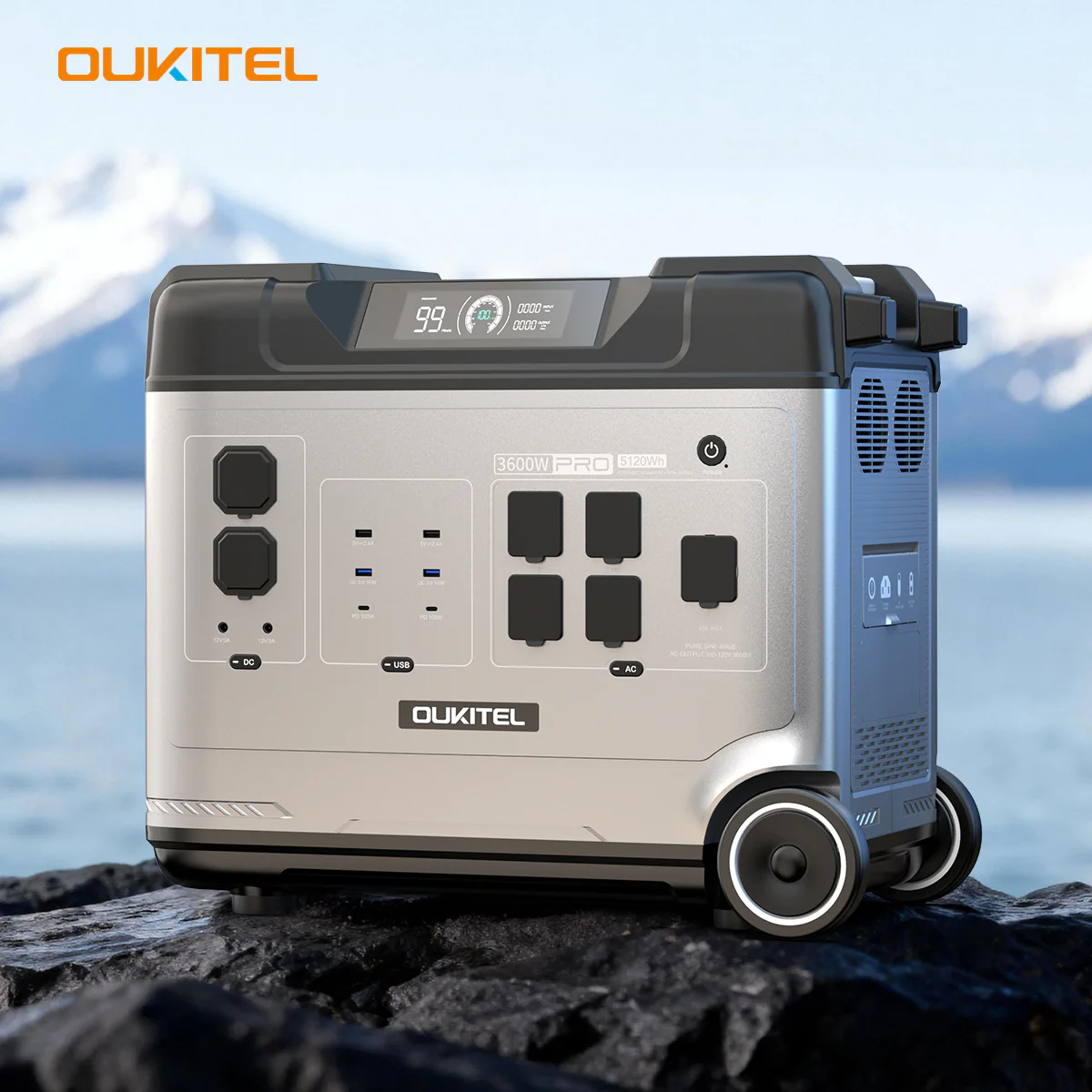
Tool startup surge is the constraint, not runtime. Miter saws and compressors need real surge headroom, which is where the P5000 Pro at 3,600W continuous and 7,200W surge earns its place. Its LiFePO4 pack is rated for 5,000 cycles.
Battery stations also avoid the carbon monoxide risk that makes fuel generators dangerous in enclosed spaces. More than 200 Americans die each year from non-fire carbon monoxide poisoning linked to consumer products, over half of those involving portable generators.
A Five-Step Path to a Decision

-
List loads and hours. Record running watts, startup demand, and daily hours for each device. Mark which must run at the same time.
-
Set capacity and recharge targets. Define usable watt-hours needed between charges, including reserve, then note how much charging time you realistically get.
-
Eliminate on hard requirements. Drop anything that fails output, transfer rating, connector, weight, or temperature requirements. A discount does not fix a compatibility gap.
-
Price the complete setup. Include panels, cables, vehicle chargers, expansion packs, shipping, and installation. Compare working systems, not headline units.
-
Choose on verified fit. Pick the qualifying option that best serves your top priority. If nothing qualifies, widen the shortlist rather than lowering a requirement your equipment depends on.
Ready to Build Your Shortlist?
-
Write your load list. Every device, running watts, startup watts, hours per day. This single document drives every other decision.
-
Check the four numbers on each candidate. Continuous output, transfer rating, usable capacity after derate, and realistic recharge rate in your window.
-
Compare the current OUKITEL lineup. Specifications and current pricing are on each product page.
For outage-specific sizing in more depth, our home backup guide works through the same decisions against real appliance loads.
FAQs
Is OUKITEL a good brand compared to EcoFlow?
Both are established manufacturers, so the useful comparison is unit against unit rather than brand against brand. Check the exact model’s continuous output, transfer rating, and regional warranty terms before deciding. The current OUKITEL range spans 1,024Wh to 5,120Wh, with expansion to 16,384Wh on the BP2000 series.
Which brand is better for home backup?
Whichever verified setup runs your essential loads for the required hours and recharges within your plan. Check startup demand and transfer wattage as separate requirements. Capacity alone does not compensate for an inverter that cannot start a compressor or a backup path rated below your protected load.
How do I calculate how long a power station will run my fridge?
Multiply rated capacity by 0.85 to get usable energy, then divide by the fridge’s average draw rather than its nameplate rating. A 2,048Wh unit against a 50W average returns roughly 34 hours of runtime. Compressors cycle on and off, so nameplate wattage overstates real daily consumption by a wide margin.
Can OUKITEL and EcoFlow stations use third-party solar panels?
Only when the exact panel and station combination has been confirmed compatible. Check permitted input voltage, open-circuit voltage, current limit, and connector polarity against the station’s own manual. A physically matching connector proves nothing on its own, and exceeding the charge controller’s voltage ceiling can damage the unit permanently.
What does EPS or UPS transfer rating actually mean?
It is the maximum wattage the unit can carry on its pass-through backup circuit when grid power drops, which is often lower than the inverter’s continuous rating. The BP2000 pairs a 2,200W inverter with a 1,400W EPS. Size your protected circuit against the smaller number.
Is a bigger battery always the better buy?
No. Output ceiling, transfer rating, and weight fail buyers more often than capacity does. A 5,120Wh unit that cannot start your well pump is less useful than a smaller unit with split-phase output. Match output to your loads first, then size capacity to your runtime.
How long do these batteries actually last?
Read the cycle count together with its retained-capacity threshold, because 3,500 cycles to 80 percent and 3,500 cycles to 70 percent describe meaningfully different products. The OUKITEL P5000 Pro is rated at 5,000 cycles. Inverter stability, cooling fans, and port solder joints matter as much as cell chemistry.
Does expanding capacity increase output too?
No. Expansion packs add stored watt-hours, never inverter watts. Adding seven B2000 packs takes a BP2000 from 2,048Wh to 16,384Wh, but continuous output stays fixed at 2,200W throughout. If a load will not start on the base unit today, additional battery capacity will not change that outcome.
Should I buy from a marketplace seller or direct?
Buy direct or from authorized sellers, unless you have confirmed in advance that the marketplace listing qualifies for manufacturer coverage. Unauthorized resellers frequently fall outside warranty protection entirely. Save the receipt alongside a downloaded copy of the warranty terms, since the receipt establishes both purchase date and original ownership.


Looking for something else?

Do Portable Solar Panels Qualify for the 30% Credit?
LEARN MORE
Are Solar Generators Any Good? Here's the Real Answer
LEARN MORE
How Long Does a Portable Power Station Last? (Real Numbers)
LEARN MORE
Oukitel Power Exhibits at Solar & Storage Live Philippines 2026: Carry the Sun, Power Your Freedom
LEARN MORELooking for something else?
What Size Generator for 400 Amp Service: 2026 Sizing Guide
LEARN MORE
Battery Backup for Power Outage: Sizing & Real Runtime
LEARN MORE
Solar Panels for Charging a Car Battery: An Honest Guide
LEARN MOREYou may also like

OUKITEL P5000 Portable Power Station 5120Wh | 2200W
$1,199.00
$2,399.00

OUKITEL P2001 Solar Generator
$958.00
$1,249.00

OUKITEL P1000 PLUS Portable Power Station 1800W | 1024Wh
$429.00
$699.00


OUKITEL BP2000 Portable Power Station 2200W | 2048Wh
$829.00
$1,199.00

OUKITEL P5000 Pro Portable Power Station 5120Wh | 3600W
$1,599.00
$2,199.00
Further reading

OUKITEL vs Jackery: Home Backup, Camping and Value Compared
OUKITEL vs Jackery is settled by three numbers rather than by brand reputation: the wattage your loads pull, the watt-hours needed to cover the outage or the trip, and the watts you can push back ...

OUKITEL vs BLUETTI: Expandability, Runtime and Price Compared
OUKITEL vs BLUETTI comes down to three numbers that spec sheets tend to bury: how far storage expands after the first purchase, how much of the rated capacity actually reaches your appliances, and...
OUKITEL vs EcoFlow: Which Portable Power Brand Fits Your Needs in 2026?
The OUKITEL vs EcoFlow choice comes down to six checks: continuous output, backup transfer rating, usable energy, recharge speed, expansion path, and warranty eligibility where you live. Run those...