








 Flashlight
 Solar
Extension Cable
Solar
Extension Cable


Best Portable Power Stations Under $2,000 in 2026
The best portable power station under $2,000, for most homes we work with, is a 2,048Wh LiFePO4 unit pushing 2,200W or more. Solar input near 1,000W helps, and so does a port for an extra battery later on. Keep one charged in a closet and it'll carry a fridge, Wi-Fi, a couple of lamps and a CPAP through a typical night without power.
Portable power stations in the under-$2,000 tier typically offer capacities from about 1,000Wh to 2,500Wh, with enough output and storage to run essential loads like a refrigerator, a few lights, a router, and a laptop at the same time. Outages aren't getting any shorter, either. EIA figures show the average U.S. customer sat through 11 hours of them in 2024, nearly double the old normal.
Every OUKITEL spec here was checked against the product pages in October 2026. Runtime figures are back of the envelope math, not lab tests.
What Is the Best Portable Power Station Under $2,000?
For most households it's a 2,048Wh station. That's enough for a day of essentials, it weighs around 50 lb, and it costs a fraction of what a wired home battery does.
Quick picks under $2,000
|
Model
|
Capacity
|
Continuous output
|
Solar input
|
Weight
|
Best for
|
|
2,048Wh, expands to 16,384Wh
|
3,200W
|
1,000W
|
52.9 lb
|
Running big kitchen appliances
|
|
|
2,048Wh, expands to 16,384Wh
|
2,200W (4,000W surge)
|
1,000W
|
52 lb
|
Solar charging and RV trips
|
|
|
2,048Wh, expandable
|
2,400W (4,800W surge)
|
500W
|
48.5 lb
|
Carrying it around
|
|
|
5,120Wh, expands to 19,456Wh
|
5,000W, 120/240V
|
1,000W
|
121.3 lb
|
240V circuits and long outages
|
All four were at or under $2,000 on OUKITEL Power the day we checked, but sale prices move, so check before you order.
OUKITEL BP3000: Most Output in the Bracket
If you want the most output this price range offers, the OUKITEL BP3000 is where we'd start. It puts out 3,200W continuous from its 2,048Wh battery, so running the microwave while the fridge is on isn't a problem. On wall power it gets from 0 to 80% in roughly 65 minutes, or about 45 with solar plugged in too. It grows to 16,384Wh with seven B2000L batteries (the regular B2000 won't fit this one).
OUKITEL BP2000: The Expandable All Rounder
The OUKITEL BP2000 is our pick for solar. It'll take up to 1,000W from panels over a 12 to 120V input, wide enough that most panel strings connect with no fuss. Output is 2,200W, and it can hit 4,000W for a moment when a compressor starts. There's an RV port on the case too. Stack seven B2000 packs on it and you're at 16,384Wh.
OUKITEL P2001 Plus: Lightest 2kWh Pick
Weight is where the OUKITEL P2001 Plus wins. At 48.5 lb it's the lightest unit here, and it still delivers 2,400W with a 4,800W surge. A wall outlet fills it in about an hour. Solar is capped at 500W, so it makes the most sense if you mostly charge from the grid.
OUKITEL BP5000 Pro Max: When You Need 240V

Look at the OUKITEL BP5000 Pro Max if you need 240V. Inside there's 5,120Wh (you can take it to 19,456Wh), and the 5,000W inverter does both 120V and 240V. Have an electrician wire in a transfer switch and it'll handle a well pump. At 121 lb, nobody's carrying it far. It rolls.
How Do I Choose the Best Portable Power Station Under $2,000?
Go through four things in this order: capacity, output, battery chemistry and charging. Most buyers we hear from with regrets went by the biggest number on the box, not what they actually needed to run. Our guide on what size portable power station you need goes appliance by appliance.
Battery Capacity (Wh) Sets Runtime
Capacity, measured in watt hours, decides how long you get. You'll lose roughly 15% of that to the inverter and heat, which is why we plan with this:
Runtime (hours) = capacity (Wh) × 0.85 ÷ load (W)
So 100W running nonstop off a 2,048Wh pack gives you roughly 17 hours.
Continuous Output vs. Surge Wattage
Continuous output is what the unit can hold for hours on end. Surge is the extra kick it can give for a second or two while a motor spins up. Fridges, well pumps and saws all grab two or three times their usual draw at that moment. If the unit can't cover it, it shuts off.
-
Total up what will be running at the same time.
-
Find the startup draw of your biggest motor and compare it with the surge rating.
-
On top of that, we like about 20% spare.
Battery Chemistry and Cycle Life
LiFePO4 is what's inside all four. It carries significantly lower thermal runaway risk than the NMC lithium-ion found in older units, and it ages slowly. OUKITEL lists 3,500 to 5,000+ cycles depending on the model.
Cold weather catch: don't charge LiFePO4 below freezing (most units refuse around 32°F). Using it in the cold is fine. Bring it in and let it warm up first, then recharge.
Charging Speed and Solar Input

Fast wall charging matters the night before a storm. Once the grid is down, solar keeps you going, but don't buy more panel than the unit can take. 800W of panels feeding a 500W input just wastes 300W. OUKITEL's folding solar panels are sold in 100W, 200W and 400W sizes, and mixing a couple of them gets you to either limit.
How Long Will a 2,048Wh Power Station Run Your Appliances?

Of the 2,048Wh on the label, around 1,741Wh actually reaches your devices. The fridge figure uses average draw, not the startup spike.
Estimated runtimes on 2,048Wh
|
Device
|
Typical draw
|
Estimated runtime
|
|
Wi-Fi router and modem
|
20W
|
About 87 hours
|
|
CPAP (no heated humidifier)
|
40W
|
About 43 hours
|
|
Laptop
|
60W
|
About 29 hours
|
|
Full size refrigerator (average)
|
100W
|
About 17 hours
|
|
Microwave
|
1,000W
|
About 1.7 hours
|
|
Space heater
|
1,500W
|
About 1.2 hours
|
That 17 hours of fridge time is well beyond the four hours the FDA says food stays cold in a closed refrigerator. Heat is what drains a battery fast, and EIA data ranks heating among the biggest electricity uses in American homes.
Which Use Case Are You Buying For?
Home Backup During Outages
A battery unit can sit in the kitchen with no exhaust, and that matters, because the CPSC ties more than 100 deaths a year to carbon monoxide from portable generators. Every OUKITEL model here switches to battery in under 10 ms, so your router doesn't drop. Still weighing a fuel generator? Our guide to home backup generators compares the two.
Camping, RV, and Worksites

At a campsite, a 12V fridge on the DC port skips the inverter, and the P2001 Plus is the easiest of the four to haul. For RV trips the BP2000 makes more sense, thanks to its RV port and 1,000W solar input. Job sites are fine too, but look at the surge number twice before plugging in a big compressor.
Common Mistakes When Buying a Portable Power Station Under $2,000
-
Spending on 5kWh when your list is a phone and a laptop.
-
Looking at running watts and forgetting surge. It's the most common reason a unit won't start a fridge.
-
Throwing an old battery in the trash. The EPA wants lithium-ion packs taken to a certified recycler instead.
So Which One Should You Buy?
Our default answer for home backup is the BP3000, mainly because 3,200W lets you run the kitchen without juggling. Lean toward the BP2000 if you'll charge from panels or travel in an RV. Pick the P2001 Plus if you'll be lifting it a lot. The BP5000 Pro Max only earns its price with 240V loads or outages longer than a day.
Ready to Choose Your Portable Power Station?
-
Walk around the house and note what you'd want running in an outage, plus each item's watts.
-
Plug that number into the runtime formula and choose a capacity with around 20% to spare.
-
Compare the models in OUKITEL's portable power station collection and check today's prices.
FAQs
Which brand of portable power station is the most reliable?
It's less about the brand than people assume. Reliability mostly comes from the cells and the protection board, plus whether the company honors its warranty.
What we'd check:
-
LiFePO4 cells with a published cycle count to 80%
-
Switchover time under 20 ms
-
Warranty length, and whether you have to register
Who makes the best 2000 watt power station?
Surge usually decides it, because it has to cover your largest motor. OUKITEL makes three 2,048Wh units in this class.
Here's how they line up:
-
BP2000: 2,200W continuous, 4,000W surge
-
P2001 Plus: 2,400W continuous, 4,800W surge
-
BP3000: 3,200W continuous, 0 to 80% in about 45 minutes on dual charging
What is the best portable power station under $2,000 for the money?
The best portable power station under $2,000 for the money, in our view, is a 2,048Wh LiFePO4 model with expansion ports. One extra battery later is cheaper than replacing the whole station.
Worth comparing:
-
What you pay per usable watt hour
-
How far it expands (16,384Wh on the BP2000 and BP3000)
-
1,000W solar input, if you plan on panels
Is it worth buying a portable power station?
Usually, yes. It pays off fastest for people who lose power for hours at a stretch, camp away from hookups, or can't safely run a generator. A 2kWh unit covers 2024's 11 hour average outage.
It makes the most sense if:
-
You need food, a medical device or Wi-Fi to keep running
-
A gas generator isn't safe to run where you live
-
You have solar panels or plan to buy some
How long does a portable power station last?
How long a portable power station lasts is mostly about cycles, and to a lesser degree storage. We'd expect a 3,500 cycle LiFePO4 pack that gets used every day to still hold around 80% after ten years or so.
A few habits help:
-
Store it between 50% and 80% charge
-
Top it up every three months
-
Don't charge it below freezing
Our lifespan guide goes into storage in more detail.
Can a portable power station under $2,000 run a refrigerator?
It can. A 2,048Wh unit will keep a full size fridge going for around 17 hours at a 100W average draw, provided the surge rating handles the compressor starting up.
Before you count on it:
-
Find the fridge's startup draw, often two to three times its running watts
-
Open the door as little as possible
-
Add solar if you need more than a day
Is a portable power station safe to use indoors?
Generally, yes. Batteries don't produce exhaust, which takes carbon monoxide off the table, and LiFePO4 is much more stable than the lithium chemistries in older units.
Common sense applies:
-
Keep the vents clear
-
Put it somewhere flat and dry
-
Mind the temperature range listed in the manual
How do Jackery, EcoFlow, Anker, and Bluetti compare?
They all sell solid LiFePO4 units. The model matters more than the brand, so we'd line up spec sheets and ignore the logos.
Numbers to compare:
-
Usable Wh, plus continuous and surge output
-
Solar input and AC charge time
-
Expansion ceiling and warranty


Looking for something else?

Battery Backup for Power Outage: Sizing & Real Runtime
LEARN MORE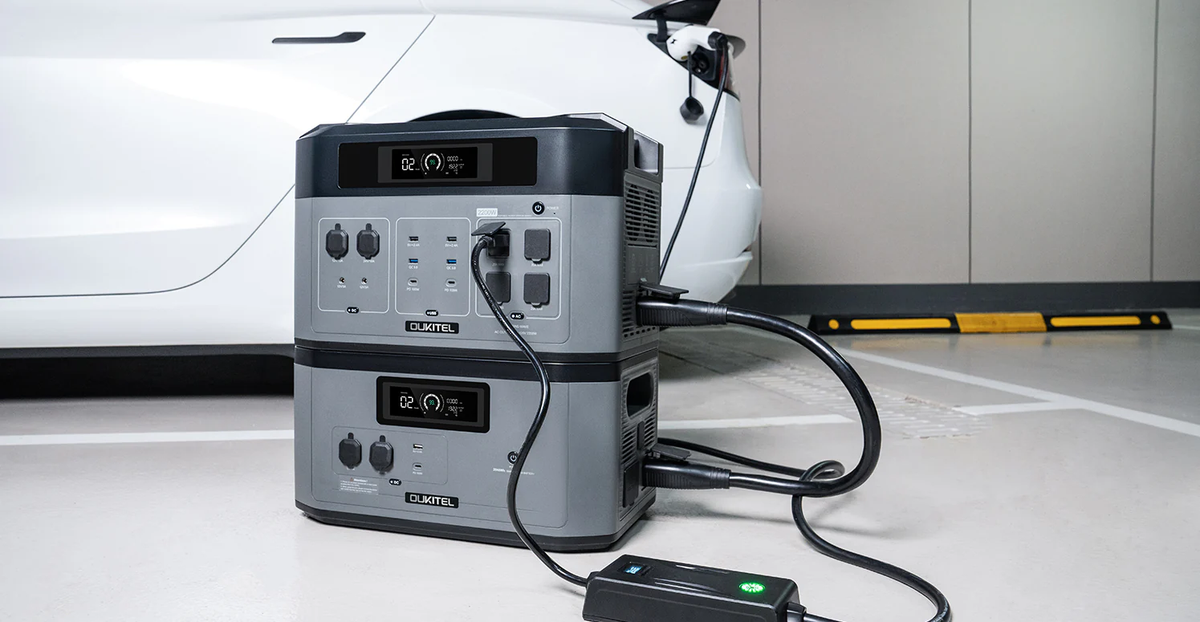
Solar Panels for Charging a Car Battery: An Honest Guide
LEARN MORE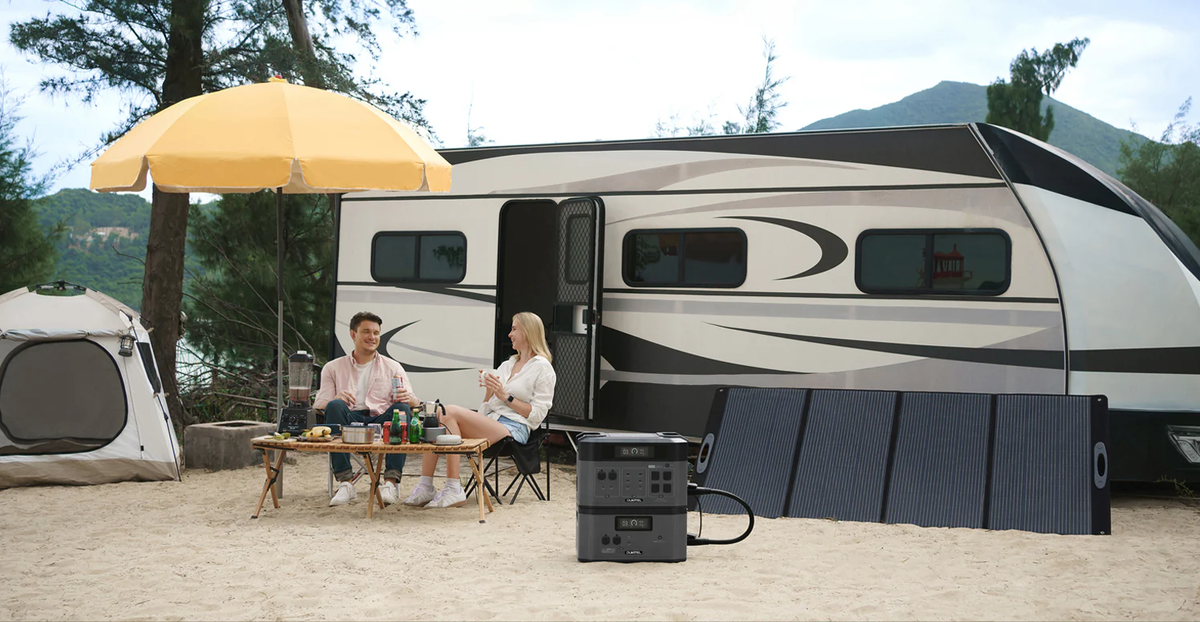
What Is an Anderson Port? How It Works, What It Connects, and When You Need One
LEARN MORE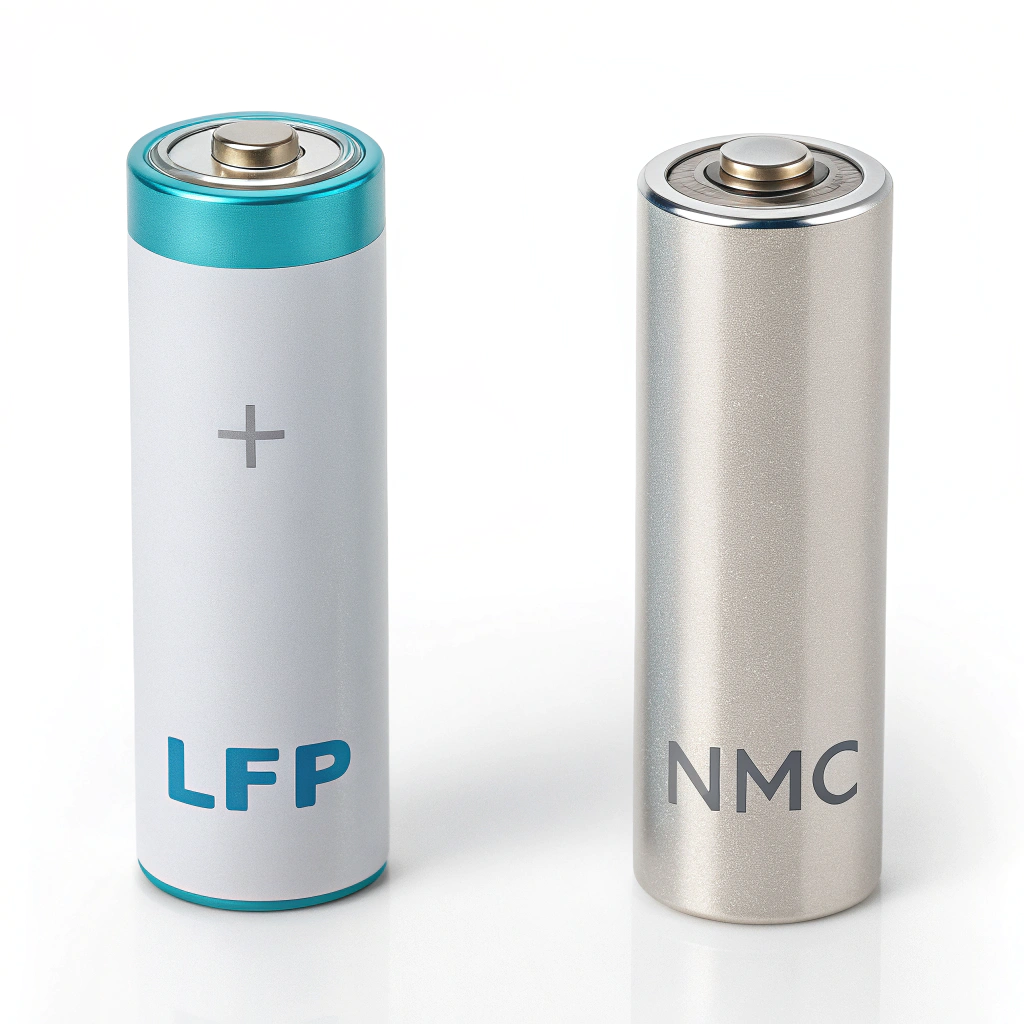
LFP vs Lithium-Ion: Which Battery Chemistry Wins in 2026?
LEARN MORELooking for something else?
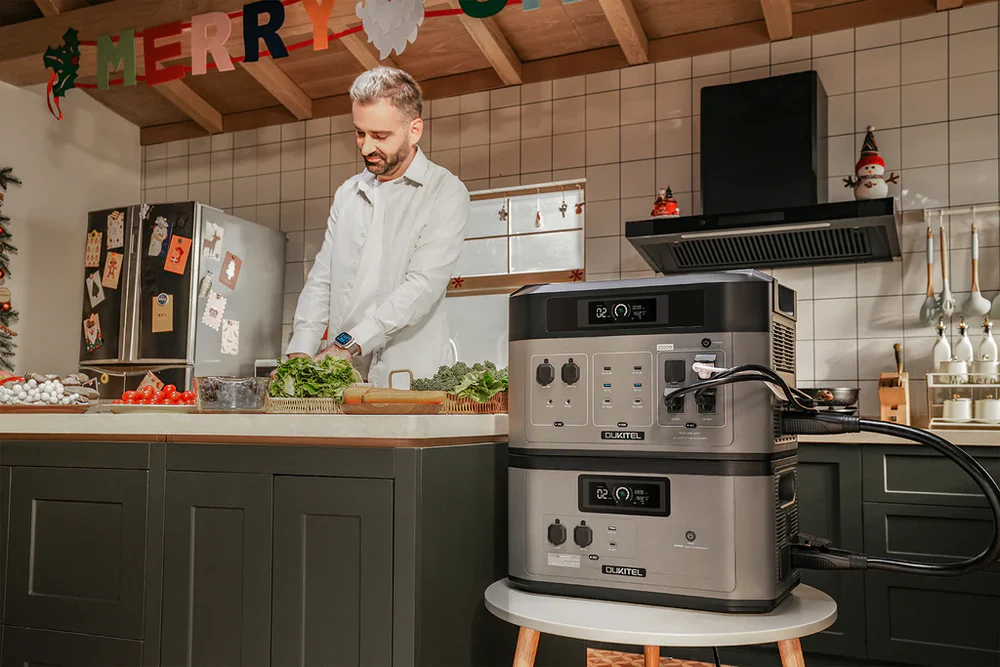
How Long Will a Solar Generator Power a Refrigerator? Runtime by Battery Size
LEARN MORE
What Will a 6000 Watt Generator Run? 2026 Whole-Home Guide
LEARN MORE
What Can 1,000 Watts Power? 2026 Guide to Real Appliances & RuntimeWhat Can 1,000 Watts Power? A 2026 Guide to Real Appliances and Runtime
LEARN MOREYou may also like
OUKITEL P5000 Portable Power Station 5120Wh | 2200W
$1,199.00
$2,399.00

OUKITEL P2001 Solar Generator
$958.00
$1,249.00

OUKITEL P1000 PLUS Portable Power Station 1800W | 1024Wh
$429.00
$699.00


OUKITEL BP2000 Portable Power Station 2200W | 2048Wh
$829.00
$1,199.00
OUKITEL P5000 Pro Portable Power Station 5120Wh | 3600W
$1,599.00
$2,199.00
Further reading
Best Portable Power Stations Under $2,000 in 2026
The best portable power station under $2,000, for most homes we work with, is a 2,048Wh LiFePO4 unit pushing 2,200W or more. Solar input near 1,000W helps, and so does a port for an extra battery ...

Best Portable Power Stations Under $1,000 in 2026
The best portable power stations under $1,000 in 2026 store 1,024Wh to 2,048Wh in LiFePO4 cells and deliver 1,800W to 3,300W of AC power. In practice that means phones, a WiFi router, a CPAP and a...

Best Portable Power Stations for Home Backup in 2026
The best portable power station for home backup is the one that keeps your fridge cold until the power comes back. For most houses we talk to, that's around 2,000 to 3,000Wh of LiFePO4 battery and...