








 Flashlight
 Solar
Extension Cable
Solar
Extension Cable



OUKITEL vs Jackery: Home Backup, Camping and Value Compared
OUKITEL vs Jackery is mostly a question of what you value more, watts or pounds. OUKITEL fits more inverter output and solar input into each capacity class. Jackery units weigh less, and the warranty runs two years longer.
Take the 2,000Wh models. On the OUKITEL P2001 Plus you get 2,400W of continuous AC, while the Jackery Explorer 2000 v2 stops at 2,200W. Lift both and the 9 lb gap is obvious on the first try.
The batteries are nearly the same size. 1,024Wh against 1,070Wh in one class, 2,048Wh against 2,042Wh in the other. Runtime won't decide this. Output, weight, warranty and expansion will, and we start with the spec sheets before moving on to outages, campsites and the long run.
OUKITEL vs Jackery: Which Brand Fits Your Use?
Picture where yours will live. If it's a shelf in the garage between storms, output and expansion count most. If it rides to a trailhead every other Saturday, weight wins.
|
Use case
|
Better fit
|
Deciding spec
|
|
Home backup on a budget
|
OUKITEL
|
More watts and expansion per dollar
|
|
High wattage appliances
|
OUKITEL
|
2,400W vs 2,200W at 2,000Wh
|
|
Weekend camping
|
Jackery
|
39.5 lb vs 48.5 lb at 2,000Wh
|
|
Off grid solar
|
OUKITEL
|
500W solar input vs 400W
|
|
240V home circuits
|
Either, by budget
|
Both sell 120V/240V flagships
|
|
Longest warranty
|
Jackery
|
3+2 years vs 1+2 years
|
Every current OUKITEL model, including the Plus, Pro and BP series, is listed on the OUKITEL Power site.
How Do OUKITEL and Jackery Compare Model for Model?
We lined up capacity class against capacity class. Putting a 300Wh camping box next to a 2kWh home unit would make either brand look silly. All four run LiFePO4 cells and pure sine wave inverters, and all four pair with a phone app. They split on output, solar input and weight.
|
Spec
|
P1000 Plus
|
Explorer 1000 v2
|
P2001 Plus
|
Explorer 2000 v2
|
|
Capacity
|
1,024Wh
|
1,070Wh
|
2,048Wh
|
2,042Wh
|
|
Continuous AC
|
1,800W
|
1,500W
|
2,400W
|
2,200W
|
|
Surge
|
3,600W
|
3,000W
|
4,800W
|
4,400W
|
|
Max solar input
|
500W
|
400W
|
500W
|
400W
|
|
Backup switchover
|
Under 10ms
|
20ms
|
Under 10ms
|
20ms or less
|
|
Weight
|
26.5 lb
|
23.8 lb
|
48.5 lb
|
39.5 lb
|
The 1,000Wh Class
The OUKITEL P1000 Plus has 300W more continuous output than the Explorer 1000 v2. That gap is bigger than it looks. A 1,500W kettle or microwave sits right at the Jackery's ceiling, while the P1000 Plus still has room for a phone charger and a lamp on top. The Jackery weighs 2.7 lb less.
The 2,000Wh Class

The closest match on the market. The OUKITEL P2001 Plus adds 200W of output, a 4,800W surge rating and an 1,800W AC input that gets it to 80% in about an hour.
Jackery's answer is weight. The Explorer 2000 v2 is also OutdoorGearLab's 2026 pick for off grid camping, and the easier lift is a big part of that.
Which Is Better for Home Backup, OUKITEL or Jackery?

For home backup, OUKITEL usually gets you more hardware per dollar. Jackery has the more finished route to wiring a station into home circuits.
Neither one burns fuel. With no exhaust, a battery station is generally considered safe to run in a living room or bedroom, and for many households that is the whole reason to buy one. Fuel generators are different. The CPSC says to keep them outside and at least 20 feet from the house.
Set expectations early. The EIA puts the average U.S. home at about 10,500kWh a year. Divide it out and you get close to 29kWh a day, against 2kWh in the box. Roughly 7%. Enough for a fridge, the router, a few lights, phones and a CPAP, and not much else.
You don't have to run the fridge nonstop either. Kept shut, a refrigerator holds food safely for about 4 hours, per FoodSafety.gov. An hour on and a couple of hours off stretches one charge across a long night.
|
Look at the EPS rating before you plug anything in. While the P1000 Plus or P2001 Plus is still connected to the wall as a backup, it supports 1,400W, not its full inverter rating. Anything that has to switch over on its own should stay below that number.
|
Large Systems: BP5000 Pro Max vs Explorer 5000 Plus
The OUKITEL BP5000 Pro Max starts at 5,120Wh with 5,000W output, a 10,000W surge rating and split phase 120V/240V. Add up to seven B2000 batteries and it reaches 19,456Wh.
On the Jackery side, the Explorer 5000 Plus has 5,040Wh, 7,200W output, 4,000W of solar input and expansion to 60kWh. It also carries a 5 year warranty.
-
Lower entry cost and 240V for a well pump: BP5000 Pro Max.
-
Very large solar arrays and longer coverage favor the 5000 Plus.
-
121.25 lb against 134.5 lb. Neither one is meant to be carried.
Our home battery backup collection lists the BP and P5000 systems. For adding batteries later, see our expandable power station guide.
How Long Will Each One Actually Run?
Within a class, both brands run about as long as each other. The watt hours are nearly identical.
What surprises most buyers is how far below the label they land. OutdoorGearLab measured usable AC energy at roughly 75

% to 93% of rated capacity across the units it tested, and its Explorer 2000 v2 delivered 1,710Wh out of 2,042Wh. We used 85% for both brands below.
|
Load
|
1,000Wh class
|
2,000Wh class
|
5,120Wh class
|
|
WiFi router (15W)
|
58 h
|
116 h
|
290 h
|
|
Fridge averaging 60W
|
14.5 h
|
29 h
|
72 h
|
|
CPAP, no humidifier (40W)
|
22 h
|
43 h
|
109 h
|
|
Space heater (1,500W)
|
35 min
|
70 min
|
2.9 h
|
|
The math is battery Wh times 0.85, divided by the load. Fridges rarely pull their label wattage all hour because the compressor cycles. Put a plug in watt meter on yours for a day before you pick a size.
|
Is Jackery or OUKITEL Better for Camping and RV Trips?

For hand carrying, Jackery wins outright. At 39.5 lb the Explorer 2000 v2 is a two handed lift, but a manageable one. The P2001 Plus weighs 48.5 lb and is better off staying in the vehicle.
Once a car or RV does the carrying, OUKITEL makes more sense. The P1000 Plus and P2001 Plus both accept 500W of solar, against 400W on the Jackery v2 models. Over a cloudy three day trip, that extra 100W adds up.
-
The P1000 Plus is rated at 29dB under a 500W load, quiet enough for a van at night.
-
Solar voltage range is 12 to 60V on the P2001 Plus and 12 to 50V on the P1000 Plus. Check open circuit voltage before wiring panels in series.
-
Sizing for an RV is covered in our RV solar generator guide.
|
How often will you lift it? Every weekend means 9 lb matters more than 200W. Once it lives in an RV bay or a truck bed, weight stops mattering and the extra output wins.
|
Warranty, Battery Life and Real Value
One detail hides in the cycle ratings. Jackery's v2 models and the OUKITEL P1000 Plus both say 4,000 cycles, yet Jackery counts until the pack is down to 70% of new and OUKITEL stops at 80%. The P2001 Plus is rated 3,500+ cycles, also to 80%. The headline number matches. The end point does not.
Jackery is ahead on warranty, with 3 years plus 2 more after registration. OUKITEL's base term is 1 year, stretched to 3 with a subscription, plus a 30 day money back window. Both extensions need you to sign up, and people forget. Do it the day the box arrives.
OUKITEL list prices rarely tell the story because the store runs frequent sales. Work out cost per watt hour and per watt on the day you buy. On engineering, TechRadar's review of the earlier P2001 measured about 90% inverter efficiency and singled out its UPS function.
The Bottom Line
Short version. OUKITEL gives you more watts, more solar input and more room to grow for the same budget, while Jackery charges extra for a lighter box and a longer warranty. Whether that premium is worth paying depends on how often the unit leaves the house. Before you order:
-
Check the nameplate on your biggest appliance (a 1,100W microwave, a 700W sump pump) and look up its startup watts. Anything that must switch over on its own during an outage stays under 1,400W on the Plus models.
-
Add up a day of use in watt hours and divide by 0.85. That is the smallest capacity class worth looking at.
-
At 2,000Wh, pull up the P2001 Plus and the Explorer 2000 v2 on the same afternoon. Sale prices on both move, and a week apart the comparison means little.
FAQs
Is There a Better Brand Than Jackery?
For some buyers, yes. OutdoorGearLab tested 14 stations this year and spread its awards across three brands: Jackery for off grid camping, Anker for value, EcoFlow for home backup.
OUKITEL wasn't in that test. On paper it beats Jackery on output in both matching classes (2,400W vs 2,200W, 1,800W vs 1,500W) and takes 500W of solar instead of 400W.
Is OUKITEL a Good Brand?
For value buyers, yes. The current range runs on LiFePO4 cells with a battery management system, and the Plus models switch to backup in under 10ms. Three things to know before you order:
-
the 1 year plus 2 warranty, which needs a subscription
-
the 1,400W EPS limit on the Plus models
-
the weight, which runs higher than Jackery's
Is Jackery a Chinese Company?
It depends what you mean by Chinese. Jackery says it was founded in California in 2012, and its U.S. sales and support run under the Jackery name. Manufacturing is another matter; like OUKITEL and most of this industry, much of it happens in China. When you're choosing, the warranty, who services it and the certifications on the model in front of you deserve more weight than the founding story.
Is There a Cheaper Alternative to Jackery?
Yes, and OUKITEL is the closest like for like swap. Sale prices change often enough that last month's screenshot means little. Do the math at checkout:
-
price divided by watt hours
-
price divided by continuous watts
-
plus the cost of any panels or extra batteries you will need
What Is the Most Reliable Portable Power Station Brand?
Hard to say, and anyone who names one brand is guessing. We haven't seen independent failure data that covers every size class. What we look at instead: LiFePO4 cells with a published cycle figure, how long the warranty runs and who honors it, and whether a lab like OutdoorGearLab has tested that exact model.
Which Lasts Longer, OUKITEL or Jackery?
On paper, it is close. The OUKITEL vs Jackery cycle ratings use different end points, 80% for OUKITEL and 70% for Jackery, so they cannot be compared directly.
-
P1000 Plus: 4,000 cycles to 80%
-
P2001 Plus: 3,500+ cycles to 80%
-
Explorer 1000 v2 and 2000 v2: 4,000 cycles to 70%
Is Buying a Jackery Worth It?
It is when you need light weight and long coverage. The Explorer 2000 v2 took OutdoorGearLab's 2026 off grid camping award largely for that reason. If your loads run past 2,200W, or the unit will spend most of its life in a closet, the money goes further elsewhere. Same if solar input is your top spec.
What Is the Best Portable Power Station in 2026?
Depends what you're powering. OutdoorGearLab tested 14 units this year and still gave its awards to three different brands. Rough sizing by job:
-
Phones, laptops and lights: 1,000Wh
-
A fridge, a CPAP and short kitchen use: 2,000Wh
-
240V loads or outages lasting days: 5,000Wh and up


Looking for something else?

Portable Power Station for Freezer Backup: Runtime by Size and Temperature
LEARN MORE
Portable Power Station for a Sump Pump: Starting Watts, Runtime and Setup
LEARN MORE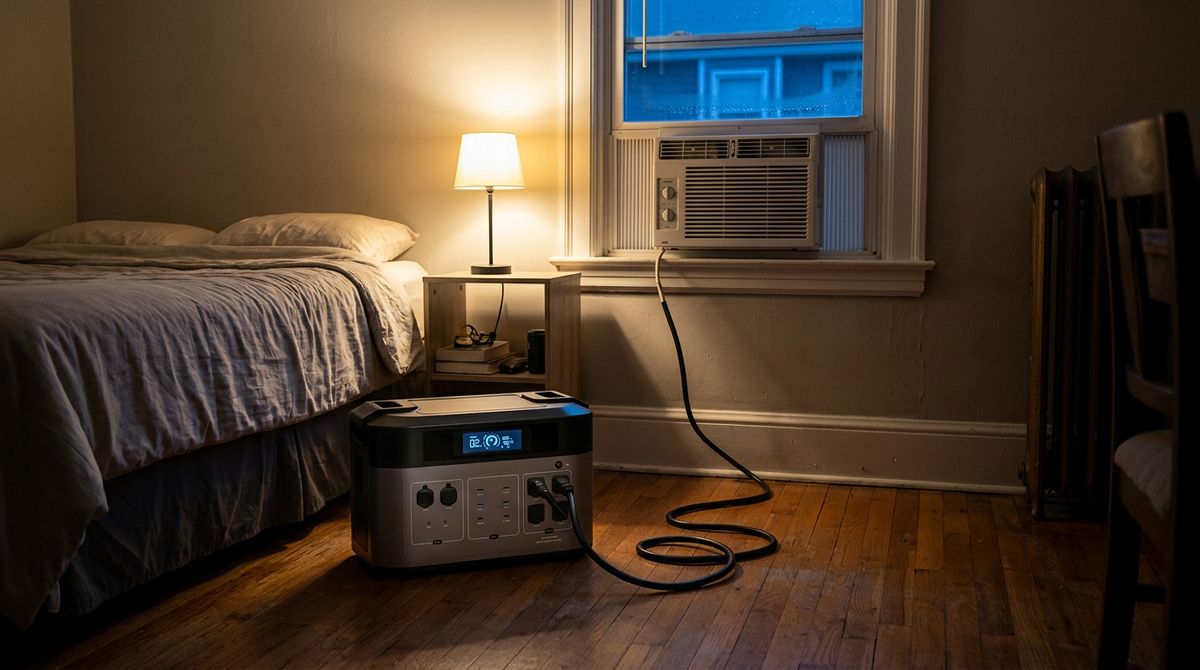
Can a Solar Generator Run a Window Air Conditioner? Size and Runtime Guide
LEARN MORE
Hurricane, Wildfire and Winter Outage Power Checklist
LEARN MORELooking for something else?

OUKITEL Showcases Energy Storage Solutions at Intersolar South America 2026, Accelerating Expansion into Latin America
LEARN MORE
Portable Power Station for Starlink: Runtime, Solar and Off-Grid Setup
LEARN MORE
Portable Power Stations for Power Tools and Job Sites: Surge, Runtime and Safety
LEARN MOREYou may also like
OUKITEL P2001 Plus+2*200W Solar Generator
$749.00
$999.00
OUKITEL P2001 Plus+200W Solar Generator
$958.00
$1,298.00

OUKITEL P5000 Pro+400W Solar Generator
$1,998.00
$2,798.00

OUKITEL BP2000+400W Solar Generator
$1,269.00
$1,799.00

OUKITEL P5000+2*400W Solar Generator
$2,098.00
$3,599.00

OUKITEL P5000 Pro+2*400W Solar Generator
$2,398.00
$3,398.00
Further reading

OUKITEL P2001 Plus vs BLUETTI AC200L: Which 2kWh Station Is Better for You?
Put the OUKITEL P2001 Plus vs BLUETTI AC200L spec sheets next to each other and the first thing you see is how much they share. Same 2,048Wh LiFePO4 battery. Same 2,400W inverter rating.
So the re...

OUKITEL P2001 Plus vs EcoFlow DELTA 2 Max: 2048Wh Power Station Comparison
We went through the P2001 Plus vs EcoFlow DELTA 2 Max spec sheets line by line for this guide, and they match on the numbers most shoppers read first: 2,048Wh of LiFePO4 and a 2,400W inverter with...

OUKITEL vs BLUETTI: Expandability, Runtime and Price Compared
Put OUKITEL vs BLUETTI side by side and the spec sheets look almost the same. Both run on LiFePO4 cells. Each brand has a 2,048Wh station that takes extra batteries, and both print big inverter nu...