

 Oukitel Flashlight
 Oukitel Solar
Extension Cable
Oukitel Solar
Extension Cable


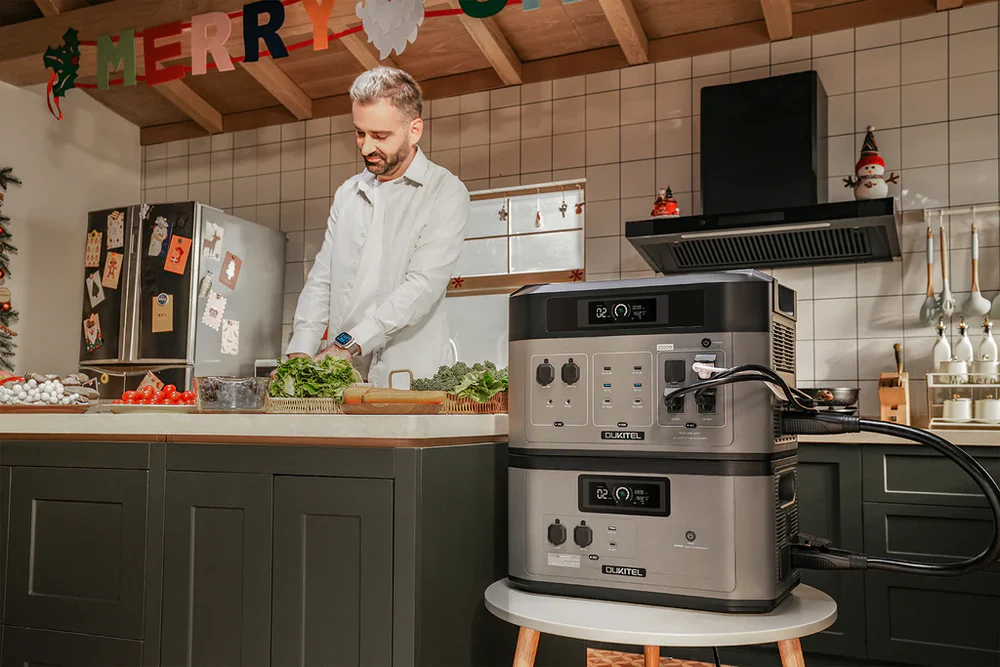
How Long Will a Solar Generator Power a Refrigerator? Runtime by Battery Size
 Alt text: long solar generator power refrigerator diagram for how long will a solar generator
Here's the table buyers actually want. Formula's blunt: battery watt-hours × 0.85 inverter efficiency ÷ average draw = runtime hours. The 0.85 multiplier accounts for DC-to-AC conversion loss any LiFePO4 unit shows under normal use.
|
Battery Capacity |
50W Mini Fridge |
100W Full-Size |
200W French Door |
|
500 Wh |
~8 hr / 24 hr cooling |
~4 hr / 12 hr cooling |
~2 hr / 6 hr cooling |
|
1,024 Wh (P1000 class) |
~17 hr / 50 hr cooling |
~9 hr / 26 hr cooling |
~4 hr / 13 hr cooling |
|
2,048 Wh (BP2000 class) |
~35 hr / 100 hr cooling |
~17 hr / 50 hr cooling |
~9 hr / 26 hr cooling |
|
5,120 Wh (P5000 class) |
~87 hr / 250 hr cooling |
~43 hr / 125 hr cooling |
~22 hr / 65 hr cooling |
First number per cell is pure compressor-on time. Second one (cooling) accounts for that 30-40% duty cycle. The cooling figure is what matters during an outage. Two days of full-size fridge backup on a 2,048Wh unit, no sun needed, is what we see across hurricane prep logs. Add a 200W panel during daylight and that same battery extends indefinitely as long as the sun keeps showing.
Real Customer Logs (1,000Wh and 2,000Wh Class)
Numbers pulled from real storm-prep deployments on our 1,000Wh and 2,000Wh customer base:
- 100W full-size fridge alone: 1,024Wh battery → 24 hours
- 100W full-size fridge + phone charging: 1,024Wh battery → 18 hours
- 150W French door + CPAP overnight: 2,048Wh battery → 28 hours
- 100W fridge + lights + WiFi router 24/7: 2,048Wh battery → 32 hours
- 100W fridge + 200W panel in good sun: 2,048Wh battery → indefinite (4+ day test)
Pattern's clear. 1kWh class handles a single overnight outage. The 2kWh class handles one to two days on battery alone. Pair either with even a small panel and grid-down weeks become survivable. Customers in hurricane country usually keep one tier above their expected worst-case duration. The U.S. Energy Information Administration (EIA) reports hurricanes drove the most U.S. outage hours in a decade during 2024 [2], which lines up with what we hear from buyers along the Gulf and Southeast. We endorse this approach. Margin pays for itself the first time the lights stay out two nights instead of one, which happens way more often than weather forecasts suggest.
How Many Solar Panels Does It Actually Take to Keep a Fridge Running?
Marketing photos make it look like one folded panel solves it. Field reality runs harsher.
A 100W panel under clear midday sun delivers roughly 60-75W of usable charge after derate for angle, dust, and temperature. A 200W panel rides 120-150W during the 4-hour midday peak before tapering. The U.S. Department of Energy publishes a Homeowner's Guide to Solar that walks through system sizing and the real-world factors affecting panel output [3].
Battery capacity carries fridge backup hours through the night. Panel wattage decides how long solar generator runtime holds past that first charge. Both matter, and for indefinite grid-down operation, panel size is usually the constraint buyers under-spec. To net-zero a typical 100W full-size fridge running 24/7, you need 200-300W of panel facing south in average conditions. Net-zero a French door plus a few small loads? Plan on 400W minimum.
- 100W of panel: tops off phones and lights, won't keep up with a fridge
- 200W of panel: holds a mini fridge plus CPAP overnight
- 400W of panel: covers a full-size fridge plus router and lights with margin
- 600W of panel: covers a French door plus medical equipment indefinitely
For storm-prone climates, the NOAA National Weather Service flags solar-charged battery backup as essential outdoor preparedness gear [4]. Solar matters most when the grid stays out for days, not hours.
What 1,000-2,000Wh Solar Generators Can Realistically Power Beyond the Fridge?
Real outage scenarios? Nobody runs a fridge alone. The mix on a kilowatt-hour class unit looks like this:
|
Appliance |
Avg Draw |
Daily Wh on a 1kWh Battery |
|
Full-size fridge (cycling) |
30-40W avg |
720-960Wh |
|
WiFi router + modem |
10-20W |
240-480Wh |
|
LED lights (4-6 bulbs evening) |
30-60W avg |
150-300Wh |
|
Phone charging (3 devices) |
5-15W avg |
60-180Wh |
|
CPAP overnight |
30-50W |
240-400Wh |
A 1,024Wh battery handles fridge + router + lights + phones through a one-day outage. Add CPAP and you're at the edge by morning. A 2,048Wh battery covers all of the above plus a TV in the evening and a small fan, with margin to spare. Step up to 5,120Wh and you're running a partial-home backup that bridges multi-day outages with a little solar topup.
Sequencing matters too. Run the fridge constantly. Charge phones in the morning. Run lights only after sundown. Skip the TV. This pattern stretches the same battery 30-40% further than running everything continuously. Customers who plan their daily load budget around outage hours, not just nameplate watts, consistently get more days out of the same pack.
Which OUKITEL Solar Generators Work Best for Refrigerator Backup?
Three units span the realistic refrigerator-backup tier. Same chemistry across the lineup (LiFePO4, 3,000+ cycles to 80% capacity). Different strengths.
OUKITEL P1000 PLUS: Entry Tier for Overnight Fridge Backup
Entry-tier nod goes to the OUKITEL P1000 PLUS portable power station. 1,024Wh on tap. Pure sine wave at 1,800W AC, so the old 1,000W limit stops being a worry once motor surge gets factored in. Tops off to 80% on AC in under 40 minutes flat. Whisper-quiet under 500W loads (29dB), tent or apartment, doesn't matter. Check current pricing.

Alt: OUKITEL P1000 PLUS Portable Power Station 1800W/1024Wh
OUKITEL BP2000: Workhorse Pick for 1-2 Day Outages
The workhorse spot belongs to the OUKITEL BP2000 Portable Power Station. Base capacity 2,048Wh. Stack B2000 expansion batteries on top, you can grow it to 16kWh. AC continuous output 2,200W. Surge ceiling 4,000W, which swallows any residential fridge startup spike whole. Refills 0-80% in 90 minutes off the wall. Check current pricing. The unit we steer most multi-day outage planners toward by default.
OUKITEL P5000: Extended Multi-Day Grid-Down Backup
Extended-outage badge: the OUKITEL P5000 Portable Power Station. 5,120Wh of capacity. 2,200W AC. 1,800W lightning-fast AC input. Engineered for partial-home backup, EPS switchover under 10ms. Check current pricing.
|
Spec |
P1000 PLUS |
BP2000 |
P5000 |
|
Capacity |
1,024 Wh |
2,048 Wh |
5,120 Wh |
|
AC continuous |
1,800 W |
2,200 W |
2,200 W |
|
AC surge |
3,600 W |
4,000 W |
4,000 W |
|
Fridge runtime (100W cycling) |
~26 hr |
~52 hr |
~125 hr |
|
AC charge (0-80%) |
39 min |
1.5 hr |
~2 hr |
|
Price |
Check current pricing |
Check current pricing |
Check current pricing |
The U.S. Environmental Protection Agency tracks lithium-ion safety and recycling guidance [5], and LFP's track record in residential backup has stayed clean across the brands we've tested.
Our blog on portable power station sizing for a fridge covers the matching math more deeply if you want to sanity-check the picks against your specific kitchen

Alt text: OUKITEL portable power station - which oukitel solar generators work.
Match Your Fridge to the Right Solar Generator
Three-step shortcut we walk every new buyer through:
- Find your fridge's running watts. Nameplate inside the fridge door. Or clamp meter on the cord for thirty seconds. Multiply by 0.35 for average cycling draw.
- Pick capacity by worst-case outage. 24-hour on a 100W fridge needs 1,024Wh minimum. 48-hour needs 2,048Wh. 72-hour needs 5,120Wh or panel charging.
- Pair a panel sized to your sunlight. 200W panel = mini fridge holds. 400W panel = full-size fridge runs indefinitely. 600W panel = French door plus medical gear.
For most US households running a typical full-size fridge through a 1-2 day outage, the OUKITEL BP2000 is the default. For multi-day grid-down scenarios, step up to the OUKITEL P5000.
FAQs
How long will a solar generator power a refrigerator on battery alone?
Depends on capacity and fridge size. A 1,024Wh unit carries a typical 100W full-size fridge through 24-26 hours of net cooling. A 2,048Wh unit hits 50-52 hours. A 5,120Wh unit pushes past 5 full days of grid-down food preservation.
Quick reference by battery size on a typical full-size fridge under normal compressor cycling:
- 500Wh: 10-12 hours, overnight only
- 1,024Wh: 24-26 hours, one full day
- 2,048Wh: 48-52 hours, two days
- 5,120Wh: 125 hours, five days
That 30-40% duty cycle? Single biggest variable buyers underestimate when sizing for outages.
Will a 2000 watt solar generator run a refrigerator?
Yes. Easily. A 2,000W rated inverter handles any residential fridge with about 10x headroom for startup surge. Continuous draw on most fridges sits at 50-200W. So the inverter rating is rarely the bottleneck on this tier.
Number that matters more is battery capacity, full stop. Stick a 2,000W inverter around 1,000Wh and your fridge runs roughly a day. Around 2,000Wh, two days. Pipe vs tank. Same story every time.
- 2,000W inverter + 1,000Wh battery: ~24 hours fridge runtime
- 2,000W inverter + 2,000Wh battery: ~48 hours fridge runtime
- 2,000W inverter + 5,000Wh battery: ~5 days fridge runtime
What size solar generator is needed to power a refrigerator?
For a typical full-size residential fridge, plan on 1,000Wh of battery minimum and 1,500W of inverter capacity. That covers a one-day outage with margin for side loads. Multi-day? 2,000Wh floor. Week-long with no sun? 5,000Wh, or pair smaller with daily solar input.
Inverter eats the surge spike. Battery owns how long you actually go.
- Overnight or 24-hour outage: shoot for 1,000-1,500Wh and a 1,500W+ inverter
- Two to three day outage: 2,000-3,000Wh paired with 2,000W+ inverter spec
- Week-long grid-down: 5,000Wh minimum, plus a 400W panel for daily topup
- Hurricane prep margin: always bump one tier above your worst expected case
How long will a 3000 watt solar generator run a refrigerator?
Now this one trips buyers all the time. That 3,000W figure is the inverter rating, not the battery. Pipe vs tank, basically. Stick a 3,000W inverter on a 2,000Wh battery and a typical fridge cruises about 50 hours. Same inverter sitting on 5,000Wh? Past 5 days grid-down. The wattage figure sets your surge ceiling only. Runtime comes from how much you stored.
Most 3,000W class units pair with 2,000-5,000Wh batteries. Check both specs before pulling the trigger:
- 3,000W / 2,000Wh: roughly 2 days fridge backup
- 3,000W / 3,000Wh: roughly 3 days fridge backup
- 3,000W / 5,000Wh: 5+ days fridge backup
- Tack on a 400W panel for indefinite runtime in good sun
Can a solar generator power a refrigerator overnight without sun?
Yes. Even the small ones. Overnight outage spans about 12 hours. A 500Wh battery covers a mini fridge through the night. A 1,000Wh battery covers full-size with margin. A 2,000Wh battery covers French door plus a few side loads easily.
Real overnight scenarios we've logged in customer support:
- Mini fridge (50W avg): 500Wh covers 24 hours overnight
- Full-size fridge (100W avg): 1,024Wh covers 24 hours overnight
- French door (200W avg): 2,048Wh covers 24 hours overnight
- Add CPAP overnight: bump one tier for margin
Recharge in the morning via AC or solar, ready for the next night.
How long will a 1,000Wh solar generator run a full-size refrigerator?
Roughly 24-26 hours of net cooling on a typical 100W full-size fridge. Pure compressor-on time runs about 9 hours. But the 30-40% duty cycle stretches that into a full day of actual food preservation. Energy Star units stretch further still.
What we see in customer logs on 1,000Wh class units during real outages:
- 100W full-size fridge only: 24 hours
- 100W fridge + occasional phone charging: 22 hours
- 100W fridge + WiFi router + LED lights: 18 hours
- 100W fridge + all the above + CPAP: 14 hours, one tight overnight
Pair with a 200W panel and any multi-day outage with sun becomes survivable.
How big of a battery do I need to run a 3000W inverter for a fridge?
Inverter rating doesn't dictate battery size. Fridge load and runtime goal do. A typical 100W fridge running 24 hours needs at least 1,500Wh of stored capacity. 48 hours needs 2,500Wh. Week-long backup needs 5,000Wh plus 400W of solar input every day.
The 3,000W inverter just means you have surge headroom for bigger appliances on the side. Battery dictates how long you actually run.
- 24-hour fridge backup: 1,500-2,000Wh battery
- 48-hour fridge backup: 2,500-3,000Wh battery
- Week-long with sun: 5,000Wh battery + 400W panel
- Week-long without sun: 8,000Wh+ battery
- Hurricane week prep: stack expansion batteries for 10,000Wh+
Will a refrigerator surge trip a 1,500W solar generator?
Rarely on modern pure sine wave units. Fridge model matters though. A typical 100W full-size fridge surges to 600-800W for half a second on compressor startup. A 1,500W rated inverter handles that with double the headroom. French door units surging to 1,000W stay safely under the 1,500W cap too.
Trips we field on phone support happen in specific scenarios:
- Modified sine wave inverter (older or cheaper units) chokes on motor startup
- Two compressor cycles overlap with another large load running at the same time
- Older 1990s fridges with original compressors pull double-digit surge multiples
Pure sine wave at 1,500W or higher handles every residential fridge we've tested.
Sources
- U.S. Department of Energy (DOE), Estimating Appliance and Home Electronic Energy Use (2024)
- U.S. Energy Information Administration (EIA), Hurricanes in 2024 Led to the Most Hours Without Power in the United States in 10 Years (2025)
- U.S. Department of Energy (DOE),Homeowner's Guide to Solar (2024)
- National Weather Service (NWS), Weather Safety (2025)
- U.S. Environmental Protection Agency (EPA), Used Lithium-Ion Batteries (2026)


Looking for something else?
Best Buy Portable Power Station Guide: Models, Return Policy, and Protection Plans
LEARN MORE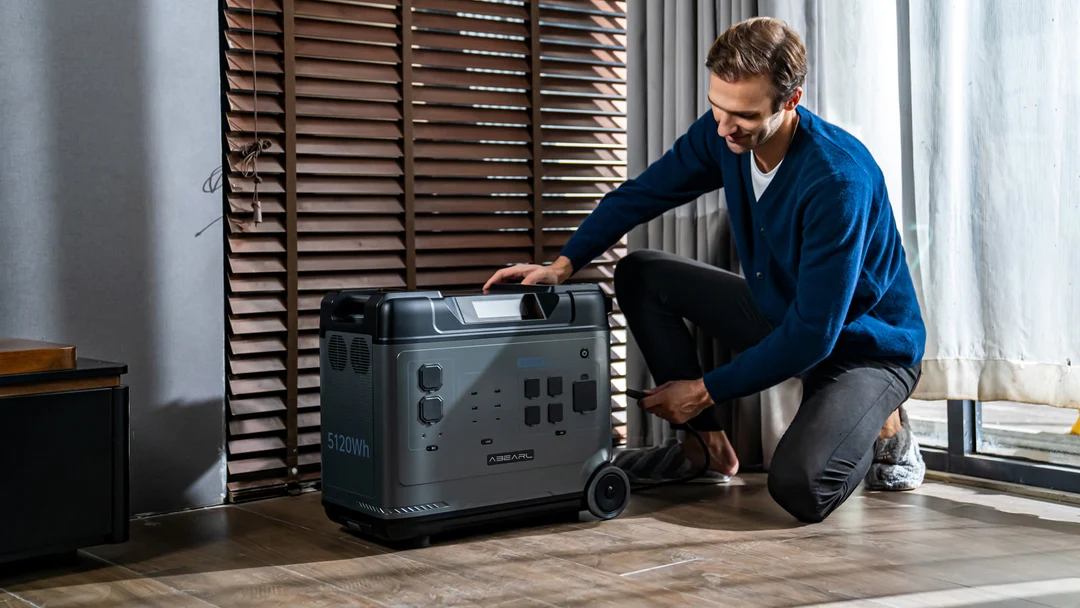
LiFePO4 Portable Power Station: Why It’s Safer and Lasts Longer
LEARN MORE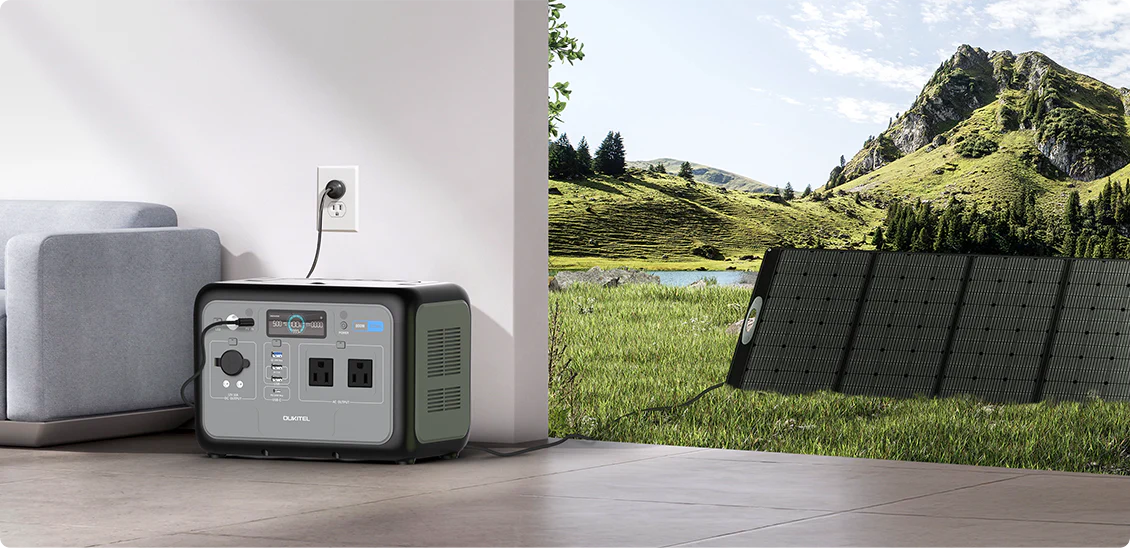
Best Portable Power Stations of 2025: Real-World Tests for Power, Portability & Safety
LEARN MORE
How Easy Is a Portable Power Station to Use? A Beginner’s Guide
LEARN MORELooking for something else?
Cold-Weather Power: Best Portable Power Stations for Winter Camping
LEARN MORE
What is a Portable Power Station & How It’s Used
LEARN MORE
5 Must-Have Portable Power Solutions for a Stress-Free Christmas
LEARN MOREYou may also like

OUKITEL P2001 Portable Power Station 2000W/2000Wh

OUKITEL P2001 Plus Portable Power Station 2400W/2048Wh

OUKITEL P5000 Portable Power Station 5120Wh/2200W

OUKITEL P2001 Solar Generator

OUKITEL P1000 PLUS Portable Power Station 1800W/1024Wh

Further reading
Best Portable Power Station for Camping: A No-Nonsense 2026 Buyer's Guide
What Can 1,000 Watts Power? 2026 Guide to Real Appliances & RuntimeWhat Can 1,000 Watts Power? A 2026 Guide to Real Appliances and Runtime