








 Flashlight
 Solar
Extension Cable
Solar
Extension Cable


Best Portable Power Stations of 2026_ 8 Models Ranked by Use Case
Ask us which one to buy and the answer is usually the same: the best portable power station for most people in 2026 is a 2kWh LiFePO4 model with at least 2,000W of output. We say that because a unit that size will keep the fridge cold, the router on and a few lamps lit through a long evening blackout, and one person can still lift it into a car.
Plenty of buyers need something different, though. Campers care about weight. A house on a well needs 240V for the pump. If you only want the WiFi to survive a storm, a small unit costs a fraction of the price.
The eight picks below are grouped by the job they do best. We leaned on independent lab results where we could, because the number on the box is not what comes out of the outlet. When OutdoorGearLab tested a batch of them this year, the AC outlets gave back anywhere from 60% to 93% of the rated capacity.
Best Portable Power Stations Compared
|
#
|
Model
|
Best for
|
Capacity
|
AC output (surge)
|
Solar input
|
|
1
|
OUKITEL P2001 Plus
|
Best overall
|
2,048Wh
|
2,400W (4,800W)
|
500W
|
|
2
|
Anker SOLIX C1000 Gen 2
|
Best value
|
1,024Wh
|
2,000W (3,000W)
|
600W
|
|
3
|
Jackery Explorer 2000 v2
|
Camping
|
2,042Wh
|
2,200W (4,400W)
|
400W
|
|
4
|
Bluetti Elite 100 V2
|
Solar charging
|
1,024Wh
|
1,800W
|
1,000W
|
|
5
|
OUKITEL BP2000 Pro
|
Expandable backup
|
2,048 to 16,384Wh
|
3,300W
|
1,000W
|
|
6
|
EcoFlow DELTA Pro 3
|
Whole home ecosystem
|
4,096Wh to 48kWh
|
4,000W
|
2,600W
|
|
7
|
OUKITEL BP5000 Pro Max
|
240V and heavy loads
|
5,120 to 19,456Wh
|
5,000W (10,000W)
|
1,000W
|
|
8
|
OUKITEL P800
|
Compact and budget
|
512Wh
|
800W (1,600W)
|
200W
|
How We Picked Them
We looked at usable energy first and surge second. A fridge compressor pulls several times its normal draw for a second when it kicks on. If the inverter can't cover that, it shuts off, and the size of the battery won't help. Recharge speed and weight came after that.
In our experience, recharge speed is the spec people forget to check. When the power goes out twice in one week, a slow charger leaves you starting the second outage half empty.
Best Portable Power Stations for Everyday Use
1. OUKITEL P2001 Plus: Best Overall
We would point most households to the OUKITEL P2001 Plus. Its 2,048Wh battery and 2,400W inverter handle a fridge plus everyday electronics without strain, and the LiFePO4 cells are rated for over 3,500 cycles.
What we like most is how fast it refills. On wall power it gets back to 80% in about an hour, so it is ready again before the next outage. It also switches over in under 10ms if the grid drops while it is plugged in. The downside is weight. At 48.5 lb, it is something you move from the garage to the kitchen, not something you carry far.
2. Anker SOLIX C1000 Gen 2: Best Value for Most People
OutdoorGearLab named the C1000 Gen 2 its best value pick for 2026. The battery is only 1,024Wh. The 2,000W inverter is strong for that size, though, and the lab measured 890Wh at the outlets.
If noise bothers you, look at the OUKITEL P1000 Plus. It is the same size at 1,024Wh and is listed at 29 dB under light loads, which is about as loud as a whisper.
Best for Camping and Off Grid Trips
3. Jackery Explorer 2000 v2: Best for Camping

Campers should look here first. The Explorer 2000 v2 stores 2,042Wh yet weighs about 39.5 lb, about 9 lb less than the P2001 Plus, and it was OutdoorGearLab's Editors' Choice for camping. The lab got 1,710Wh of usable power out of it.
The tradeoffs are slow solar charging at 400W, no expansion option, and a backup switchover rated at up to 20ms.
4. Bluetti Elite 100 V2: Best for Solar Charging

If your power will mostly come from panels, the Elite 100 V2 is the one to get. It accepts up to 1,000W of solar, a lot more than most 1kWh stations.
In other respects it is an ordinary 1kWh unit. It weighs about 25 lb and delivered the same 890Wh as the Anker in testing.
Best for Home Backup
For a house, weight matters less. Runtime, 240V support and room to add batteries matter more.
5. OUKITEL BP2000 Pro: Best Expandable Backup

The OUKITEL BP2000 Pro suits people who are not sure yet how much backup they need. You start with 2,048Wh, and if that proves too little after a winter, you can add up to seven B2000 expansion batteries for 16,384Wh in total.
It also charges quickly, reaching 80% in 55 minutes on wall power, and its 3,300W inverter covers most kitchen appliances one at a time.
6. EcoFlow DELTA Pro 3: Best Whole Home Ecosystem

EcoFlow designed the DELTA Pro 3 to plug into a home's wiring through an inlet box, a transfer switch or its own Smart Home Panel 2. It has 4,096Wh, 120/240V output and expansion up to 48kWh.
OutdoorGearLab picked it for home backup, and it was the most efficient unit they tested. It is also heavy, at 114.1 lb on their scale.
7. OUKITEL BP5000 Pro Max: Best for 240V and Heavy Loads
A standard 120V station cannot start a 240V well pump. The OUKITEL BP5000 Pro Max can, because it puts out both 120V and 240V. It is also the most powerful unit on this list, with a 5,000W inverter and a 10,000W surge rating.
Seven B2000 batteries take it from 5,120Wh to 19,456Wh. At 121.25 lb it stays in one place on its wheels, and any 240V circuit should be wired through a transfer switch by a licensed electrician.
Best Small and Budget Option
8. OUKITEL P800: Best Compact Pick
Not everyone needs to run a fridge. For a modem, router, laptop and a lamp, the OUKITEL P800 is enough, and at 13.23 lb you can carry it with one hand.
It makes a good router backup. When the power cuts out it takes over in under 10ms, so the WiFi doesn't drop. Plugged into the wall, the 512Wh battery is full again in about an hour.
Sizing a Power Station to Your Home

Start with your devices rather than a battery size. A fridge, a router and a couple of lights might average around 150W together. Over a 10 hour night that comes to about 1,500Wh, and you should allow another 20 to 30 percent on top, because the inverter loses some energy and motors draw extra at startup. That puts you in the 2kWh class.
That margin is not just about comfort. According to the FDA, a closed fridge keeps food safe for only about 4 hours once the power is off, so a battery that dies at midnight may not save your groceries.
|
Capacity class
|
Typical loads
|
Picks from this list
|
|
250 to 750Wh
|
Phones, laptops, router, LED lights
|
OUKITEL P800
|
|
1,000 to 1,500Wh
|
Weekend camping, CPAP, short fridge backup
|
Anker C1000 Gen 2, Bluetti Elite 100 V2
|
|
2,000 to 4,000Wh
|
Overnight fridge and freezer, RV trips
|
OUKITEL P2001 Plus, Jackery 2000 v2, OUKITEL BP2000 Pro
|
|
4,000Wh and up
|
Multi day outages, 240V loads
|
EcoFlow DELTA Pro 3, OUKITEL BP5000 Pro Max
|
|
Tip: Before you buy, plug your fridge into a cheap energy meter and leave it for a day. The daily Wh reading tells you far more than the wattage on its label.
|
|
Safety note: Battery power stations give off no exhaust and are generally considered safe for indoor use. The CPSC is clear that a gas generator should never run inside a home or garage. If someone at home relies on powered medical equipment, FEMA suggests planning for outages with their doctor ahead of time.
|
Which One Should You Buy?
For most homes, the OUKITEL P2001 Plus. Campers will be happier with the lighter Jackery. Real home backup is a choice between the BP2000 Pro, DELTA Pro 3 and BP5000 Pro Max. Start from how much capacity you want on day one, and check whether anything in the house runs on 240V.
-
Write down what you must keep running and how many Wh each thing uses in a day.
-
Pick the size class that fits, and check the surge rating against the biggest motor you own.
-
Then compare current models in the OUKITEL portable power station collection, or go to OUKITEL Power for solar bundles and expansion batteries.
FAQs
What Is the Best Portable Power Station for the Money?
The best portable power station for the money is whichever one gives you the most usable watt hours per dollar while still starting your largest appliance. Sale prices skew things a lot. A discounted 2kWh unit can cost less per Wh than a 1kWh unit at full price, so divide price by capacity before you compare. After that, look at surge, and when you compare cycle ratings, make sure both are quoted to 80%.
What Are the Best Power Stations in 2026?
No single model wins every category. OutdoorGearLab gave its 2026 camping award to the Jackery Explorer 2000 v2, its value award to the Anker C1000 Gen 2 and its home backup award to the EcoFlow DELTA Pro 3. TechRadar tested more than 50 units and went with the EcoFlow Delta 3 Plus. Neither list includes a 240V option, which is where the OUKITEL BP5000 Pro Max comes in.
What Is the Best Brand of Portable Power Stations?
There isn't one. EcoFlow is strongest on home integration, Jackery on weight, and Anker and Bluetti compete closely at 1kWh. OUKITEL focuses on high output and expandable capacity. Our OUKITEL vs EcoFlow comparison goes deeper, but the fairest test is to compare models in the same capacity class on usable Wh, surge and the cost of expansion.
Which Brand Is Better, Jackery or EcoFlow?
It comes down to whether you will carry it or wire it in. Jackery is the better pick for carrying, since the Explorer 2000 v2 weighs about 39.5 lb. The DELTA Pro 3 holds twice the energy and supports 120/240V, but weighed 114.1 lb in testing. For sensitive electronics, check that Jackery's switchover of up to 20ms is quick enough.
Is There a Better Brand Than Jackery?
For some uses, yes. The OUKITEL P2001 Plus delivers 200W more continuous output than the Explorer 2000 v2 at about the same capacity, and the BP2000 Pro can expand to 16,384Wh, which the Explorer cannot do at all. Our OUKITEL vs Jackery guide covers the details.
What Is Better, Bluetti or Anker?
The Anker has more inverter, 2,000W against 1,800W. The Bluetti wins on solar. It will take up to 1,000W from panels, where the Anker tops out at 600W. Battery size is the same on both, 1,024Wh, and OutdoorGearLab measured 890Wh from each one. If you run heavier appliances, go with the Anker. If the unit will spend its life charging off panels at a campsite, the Bluetti is the better buy.
How Long Does a Portable Power Station Last?
How long a portable power station lasts is mostly a question of battery chemistry. Nearly every unit in this guide uses LiFePO4, and OUKITEL rates the P2001 Plus at more than 3,500 cycles and the BP5000 Pro Max at more than 5,000. Drain and refill one every single day and you would still be looking at close to ten years. Heat is the bigger enemy, along with leaving the battery empty in storage, so keep it out of a hot car. When it finally does wear out, the EPA asks that lithium ion batteries go to a certified recycler instead of the garbage.


Looking for something else?

Battery Backup for Power Outage: Sizing & Real Runtime
LEARN MORE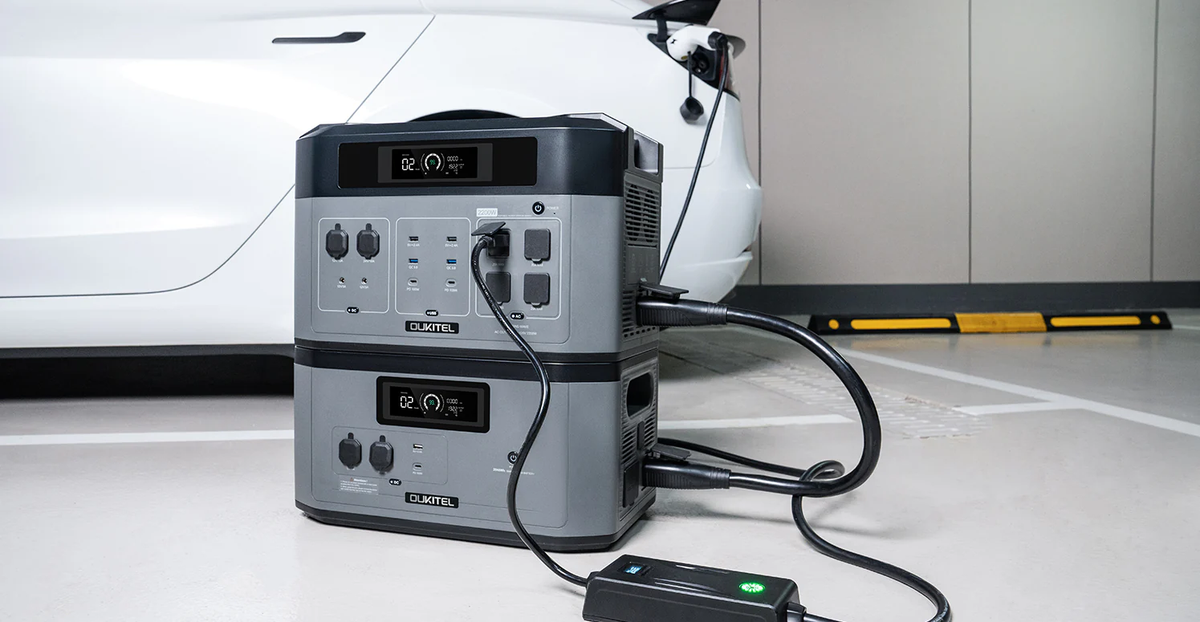
Solar Panels for Charging a Car Battery: An Honest Guide
LEARN MORE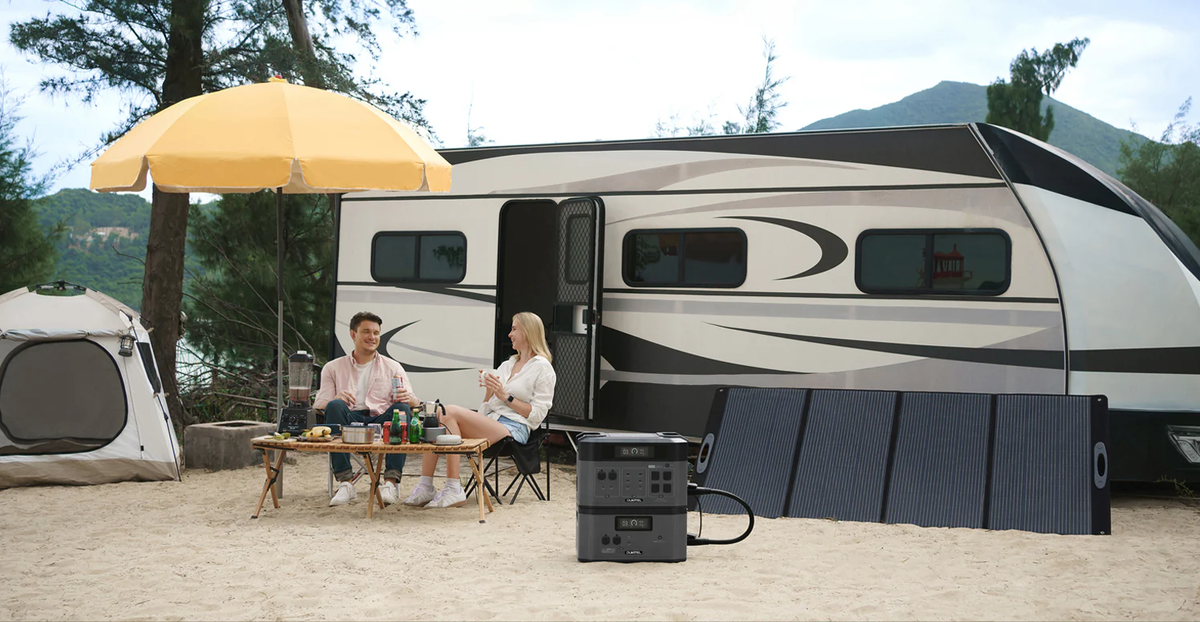
What Is an Anderson Port? How It Works, What It Connects, and When You Need One
LEARN MORE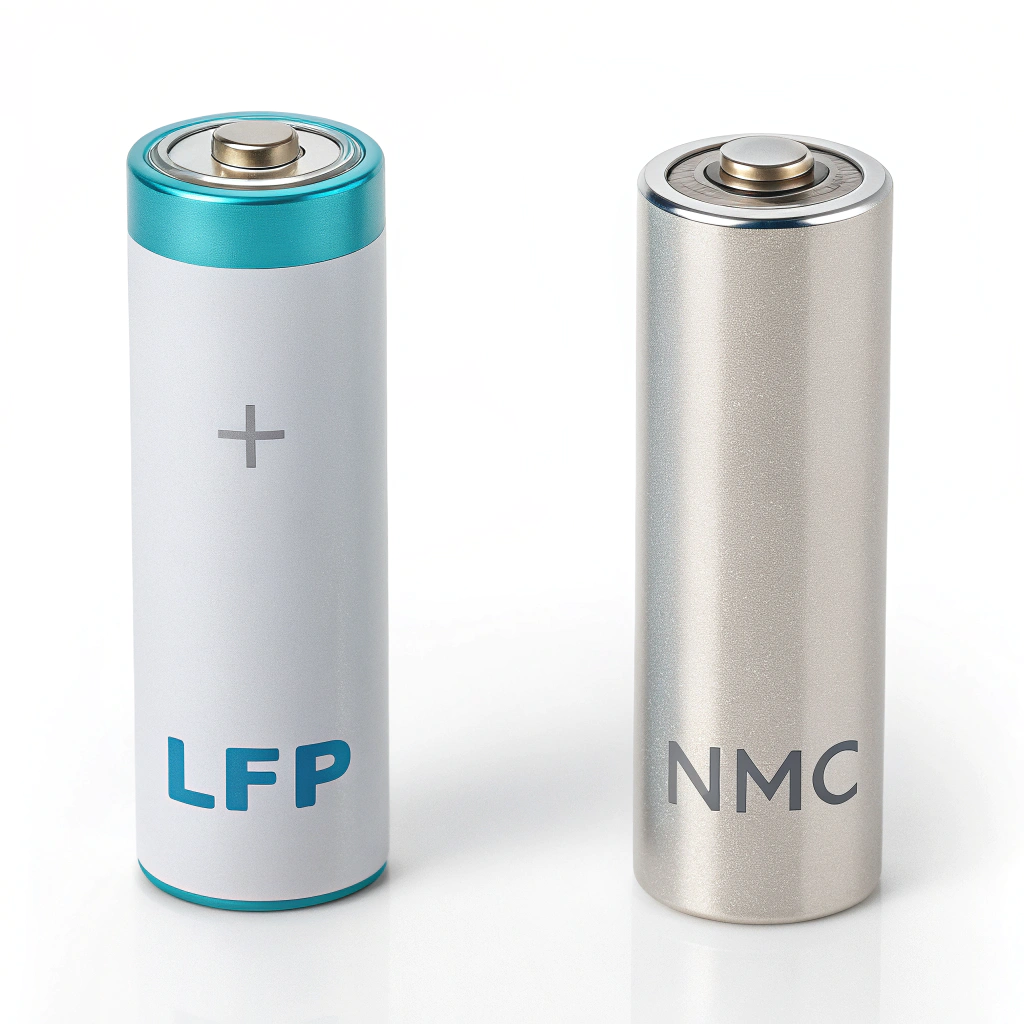
LFP vs Lithium-Ion: Which Battery Chemistry Wins in 2026?
LEARN MORELooking for something else?
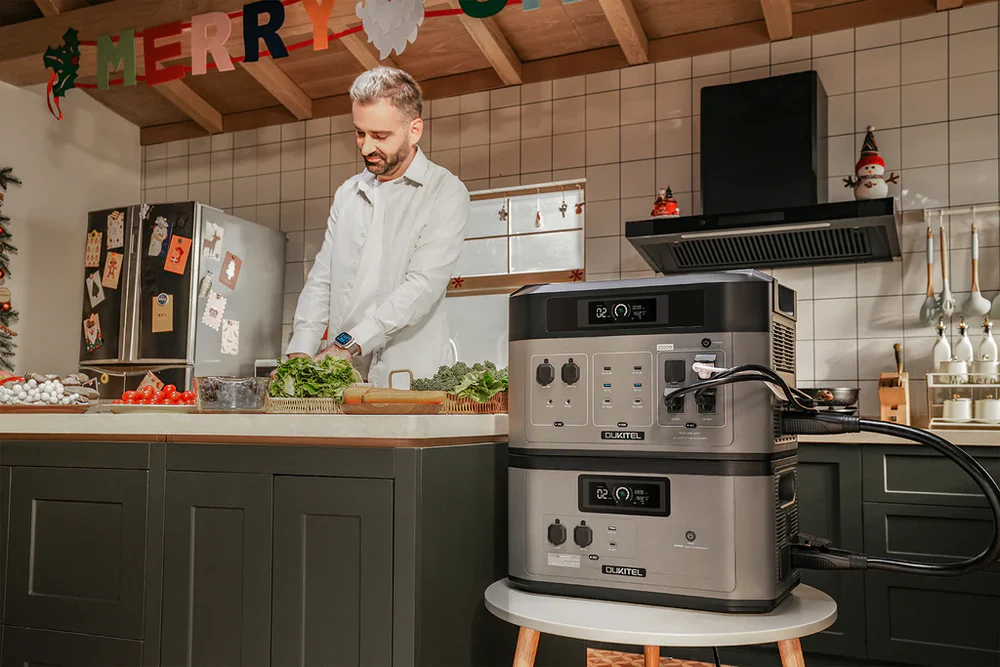
How Long Will a Solar Generator Power a Refrigerator? Runtime by Battery Size
LEARN MORE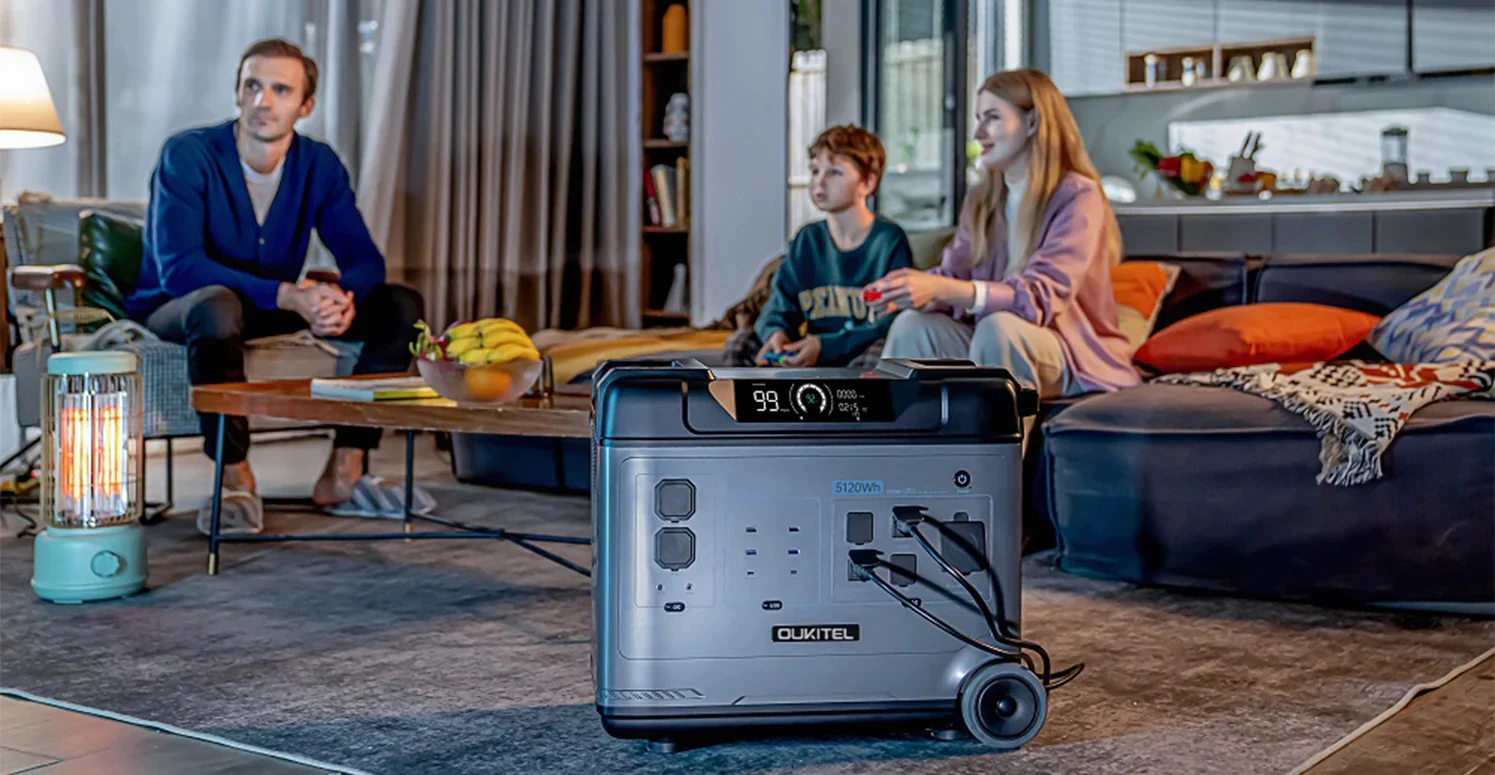
What Will a 6000 Watt Generator Run? 2026 Whole-Home Guide
LEARN MORE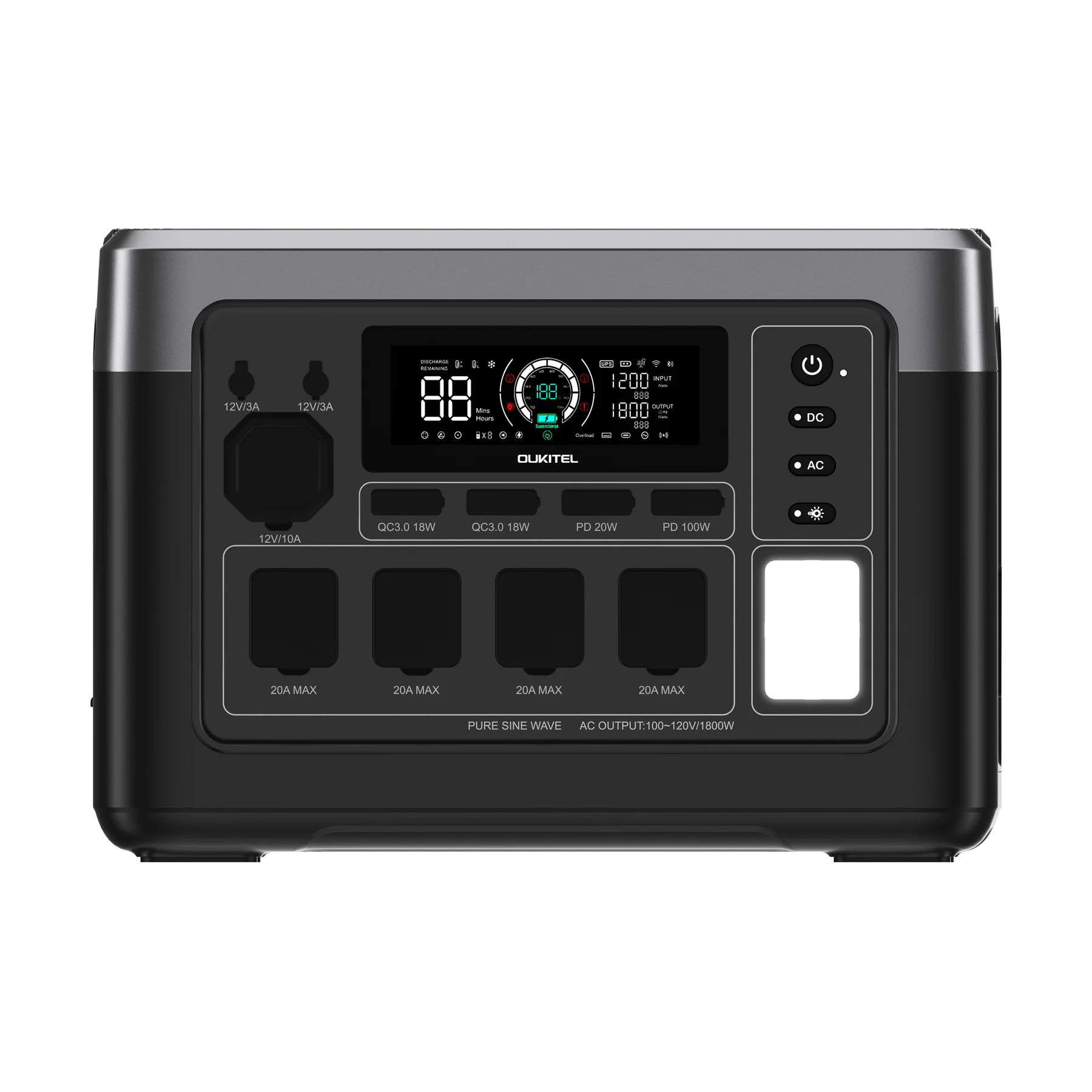
What Can 1,000 Watts Power? 2026 Guide to Real Appliances & RuntimeWhat Can 1,000 Watts Power? A 2026 Guide to Real Appliances and Runtime
LEARN MOREYou may also like

OUKITEL BP5000 PRO MAX Portable Power Station 5000W | 5120Wh
$1,999.00
$2,999.00

OUKITEL BP2000 PRO Portable Power Station 3300W
$849.00
$1,599.00

OUKITEL C01 Car Jump Starter 1350A | 80Wh | PD60W
$139.00
$299.00

OUKITEL BP3000 Portable Power Station 3200W | 2048Wh
$859.00
$1,599.00

OUKITEL P2001 Plus+400W Solar Generator
$1,178.00
$1,598.00

OUKITEL P2001 Plus+2*200W Solar Generator
$729.00
$999.00
Further reading

Best Portable Power Stations Under $2,000 in 2026
The best portable power station under $2,000, for most homes we work with, is a 2,048Wh LiFePO4 unit pushing 2,200W or more. Solar input near 1,000W helps, and so does a port for an extra battery ...

Best Portable Power Stations Under $1,000 in 2026
The best portable power stations under $1,000 in 2026 store 1,024Wh to 2,048Wh in LiFePO4 cells and deliver 1,800W to 3,300W of AC power. In practice that means phones, a WiFi router, a CPAP and a...

Best Portable Power Stations for Home Backup in 2026
The best portable power station for home backup is the one that keeps your fridge cold until the power comes back. For most houses we talk to, that's around 2,000 to 3,000Wh of LiFePO4 battery and...