








 Flashlight
 Solar
Extension Cable
Solar
Extension Cable


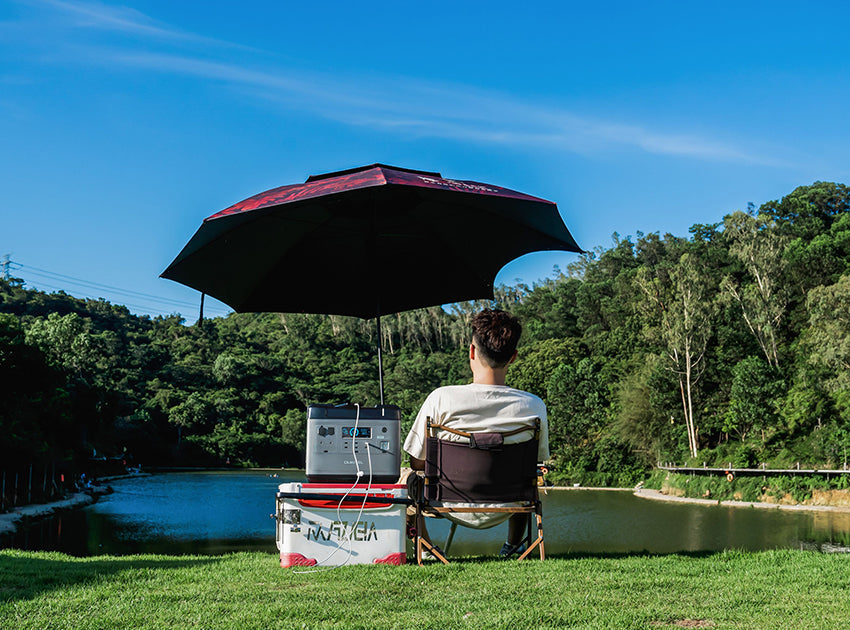
Power Up Your Salmon Fishing Adventure With a Portable Power Station
There’s nothing like the pull of a big salmon on a quiet river at sunrise. But anyone who’s fished all day—or all week—knows that comfort and safety depend on one thing: reliable power.
Whether you’re navigating a dark dock, charging a GPS, or keeping your bait fresh, a portable power station is the modern angler’s secret weapon. These compact battery units deliver quiet, emission-free electricity anywhere — from the Alaska coast to inland lakes in Oregon and Washington.
This guide explains why a portable power station is essential for salmon fishing, how it powers every part of your trip, and what features matter most when choosing one for 2025 and beyond.
Why Portable Power Matters for Salmon Fishing
Salmon seasons run long hours and often extend into remote waters where there’s no plug-in convenience. Portable power stations change that by letting anglers:
-
Charge phones, tablets, radios, and fish finders.
-
Run electric motors or aerators quietly on boats.
-
Light the dock or shoreline for predawn casts.
-
Keep food and bait cold through multi-day trips.
-
Stay safe and connected when the unexpected happens.
Because they’re rechargeable from AC, car DC, or solar panels, you can go farther off-grid without losing access to power.
Critical Benefits of a Portable Power Station for Fishing
Keep Electronics Charged
From chart plotters to action cameras, today’s anglers depend on tech. Multiple USB-A, USB-C, and AC outlets let you power:
-
GPS navigators & marine radios.
-
Smartphones for mapping & safety.
-
GoPros or digital cameras for those brag-worthy catches.
-
Rechargeable headlamps and lanterns.
No more juggling dying batteries mid-day.
Light Up Your Fishing Spot
Salmon bite best at first light and dusk. A portable power station keeps your workspace bright by running:
-
LED floodlights on boats or shorelines.
-
Lanterns around camp for late-night rigging.
-
Strip lights under awning or deck.
Safe, steady illumination improves visibility and helps spot subtle line taps in low-light conditions.
Run Electric Motors and Accessories
Electric trolling motors, fish finders, and aerators all draw steady power. A good station (1–2 kWh class) handles them easily, letting you:
-
Troll quietly without scaring fish.
-
Operate live-well pumps or bait aerators.
-
Power a portable fish finder all day long.
The result? More precision control and more fish in the boat.
Keep Food and Drinks Cold
Nothing kills a multi-day trip like spoiled bait or warm beer.
Plug an electric cooler or mini-fridge into your power station to maintain temperature for days—no ice runs, no melting mess.
Some stations even feature DC ports optimized for fridges, reducing power loss and improving efficiency in the sun.
Emergency Backup and Safety
A charged portable power station can literally save lives:
-
Jump-start your boat battery in a pinch.
-
Power SOS lights or beacons if stranded.
-
Keep a satellite phone or radio on air.
-
Recharge navigation tools to find your way back.
When storms move in or you’re anchored far from harbor, you’ll be glad for quiet, instant electricity.
Choosing the Right Portable Power Station

Pure Sine Wave AC Output
Delivers clean, stable current for sensitive electronics like fish finders and CPAP machines — no risk of flicker or damage.
LiFePO₄ Battery Chemistry
Safer, cooler, and long-lasting than standard lithium-ion. Expect 3,000–5,000 cycles (≈ 10 years of use).
Minimum Capacity of 500 Wh
Smaller models handle phones and lights; go 1000–2000 Wh for motors or fridges.
Multiple Charging Options
AC wall, 12V car, and solar panel input provide maximum flexibility off-grid.
Fast Recharge (< 1 Hour to 80%)
Essential for short turnaround between fishing days.
LCD Screen or App Control
Lets you monitor input/output, remaining runtime, and temperature.
Integrated LED Flashlight
Doubles as camp or boat light during night landings.
Durable Build & Carry Handles
Marine-grade casings, non-slip feet, and sealed ports resist salt and spray. Handles or wheels make transport easy from truck to dock.
How It Transforms Your Fishing Experience
Here’s how a portable power station elevates every moment on the water.
|
Situation |
Traditional Setup |
With Portable Power |
|
Pre-Dawn Launch |
Flashlight batteries die fast |
Plug in LED floods & charge headlamps |
|
Trolling All Morning |
Fuel motor noise spooks fish |
Run quiet electric trolling motor |
|
Midday Break |
Warm drinks & melted ice |
Electric cooler keeps food cold |
|
Evening Catch |
Dim light for cleaning fish |
Power fillet knife & spotlight |
|
Emergency |
No way to call for help |
Charge phone & signal light instantly |
It’s a complete game changer for comfort, safety, and efficiency.
Real-World Ways Anglers Use Their Power Stations

-
Run LED spotlights at dawn and dusk when salmon feed actively.
-
Inflate rafts or pontoons for reaching remote holes.
-
Power electric fillet knives to clean fish on the spot.
-
Brew coffee or grill fresh salmon with an electric skillet.
-
Play music through a Bluetooth speaker for long drifts.
-
Vacuum vehicle or boat interior after a muddy day.
These everyday conveniences make long outings feel effortless and fun.
Cold-Weather and Coastal Durability
Fishing doesn’t stop when temperatures drop. The best units operate from –10 °C to 40 °C and feature:
-
Low-temperature protection for safe charging.
-
Moisture-sealed ports against fog and spray.
-
Ventilation fans to prevent condensation.
A LiFePO₄-based station keeps capacity strong even in cold Alaskan mornings or wet Pacific mist.
Solar Power for Extended Trips
Adding folding solar panels (200–400 W) lets you recharge anywhere. Simply:
-
Unfold panels on shore or boat deck.
-
Angle toward the sun for peak input.
-
Store charge for night operations.
Solar input is a game-changer for multi-day expeditions and eco-friendly anglers who prefer silent, fuel-free energy.
Safety First: Using Power Stations on Water

-
Place the unit on a dry, flat surface away from spray.
-
Keep vent grilles clear for cooling.
-
Avoid charging while actively moving through rough water.
-
Always carry dry bags or cases for extra protection.
With these simple steps, your unit will run safely through years of fishing seasons.
Budget vs High-Capacity Options
|
Category |
Capacity |
Ideal For |
Typical Price |
|
Compact (500–800 Wh) |
Small devices, lights |
Short trips / shore fishing |
<$400 |
|
Mid-Range (1–2 kWh) |
Motors, fridges, CPAP |
Boat / camp use |
$600–900 |
|
Large (4–5 kWh +) |
Multi-day expeditions |
RV or base camp |
$1,500 + |
Even the best budget portable power station for camping or salmon fishing offers features like fast AC charging and solar support today.
How to Estimate Runtime
Runtime (hrs) = Battery Wh × 0.85 / Device Watts
Example:
A 2000 Wh station running a 100 W cooler ≈ 17 hours of continuous operation.
Add solar recharging during the day to extend use indefinitely.
Maintenance & Longevity Tips
-
Recharge every 3 months if stored.
-
Keep charge between 20–80 % for long-term health.
-
Wipe ports clean after each trip.
-
Avoid prolonged sun exposure while idle.
-
Update firmware (if smart model) for best battery management.
Proper care means one unit can power a decade of fishing seasons.
Eco-Friendly Fishing and Quiet Waters
Portable power stations fit perfectly with sustainable angling values:
-
Zero emissions. No fuel spills or exhaust.
-
Low noise. Preserve natural soundscape for fish and wildlife.
-
Recharge from renewables. Solar equals limitless clean energy.
Using battery power lets you fish responsibly and leave your favorite waters untouched for the next generation.
Practical Packing Checklist
Before your next salmon run, add these to your gear list:
Portable power station (≥ 1 kWh)
200 W folding solar panel
LED lights / flood lamp
12 V cooler or mini fridge
Extension cords & dry bag
Chargers for phone, radio, camera
Everything fits in one boat bin or truck bed — no fuel or noise needed.
Seasonal Use Beyond Fishing
Off-season, your power station keeps delivering value:
-
Backup power during home outages.
-
Camping and road trips.
-
Tailgates and BBQs.
-
Emergency storm kits.
One purchase, year-round returns.
Future Tech in 2025 Fishing Power
The next wave of portable stations will offer:
-
AI-driven runtime predictions.
-
Water-resistant IP65 housings.
-
Dual MPPT solar inputs (> 1000 W).
-
App-based diagnostics and battery health reports.
These innovations mean faster charging and even greater durability for marine adventures.
Frequently Asked Questions
What is the best portable power station for salmon fishing?
Choose a LiFePO₄ model with at least 1000 Wh capacity, multiple ports, and solar support for extended trips.
Can it run a trolling motor or fish finder?
Yes, mid-size 2000 W models easily power trolling motors, finders, and aerators simultaneously.
How long will it run my cooler?
A 2000 Wh station runs a 100 W electric cooler for roughly 17 hours.
Are portable power stations waterproof?
Most are splash-resistant, not submersible. Always use dry storage on deck.
Can I recharge it using solar while fishing?
Absolutely. 200–400 W folding panels can recharge most units in 3–6 hours of sunlight.
Conclusion
Salmon fishing is a test of patience and preparation. A portable power station gives you the confidence to fish longer, safer, and smarter — no matter how far off-grid you go.
It keeps your lights bright, coolers cold, devices charged, and motors running silently beneath the mountain sky. More importantly, it keeps you connected when conditions turn.
So the next time you pack your rods and waders, add a portable power station to your boat or truck. With quiet power by your side, you can focus on the fight — and the catch of a lifetime.


Looking for something else?

Difference Between Amps and Volts: What You Actually Need to Know
LEARN MORE
50 Amps in Watts: The Honest 2026 Conversion Guide for RV, Home, EV, and Solar
LEARN MORE
Can You Put Solar Panels on a Mobile Home? (Real-World Guide for 2026)
LEARN MORE
Do Portable Solar Panels Qualify for the 30% Credit?
LEARN MORELooking for something else?

Are Solar Generators Any Good? Here's the Real Answer
LEARN MORE
How Long Does a Portable Power Station Last? (Real Numbers)
LEARN MORE
Oukitel Power Exhibits at Solar & Storage Live Philippines 2026: Carry the Sun, Power Your Freedom
LEARN MOREYou may also like

OUKITEL P2001 Plus+400W Solar Generator

OUKITEL P2001 Plus+2*200W Solar Generator

OUKITEL P2001 Plus+200W Solar Generator

OUKITEL BP3000 Portable Power Station 3200W | 2048Wh

OUKITEL P5000 Pro+400W Solar Generator

OUKITEL BP2000+400W Solar Generator
Further reading

OUKITEL Power Brings Full-Scenario Energy Storage Solutions to Intersolar Middle East 2026 in Dubai

Portable Power Stations for Power Tools and Job Sites: Surge, Runtime and Safety
