








 Flashlight
 Solar
Extension Cable
Solar
Extension Cable


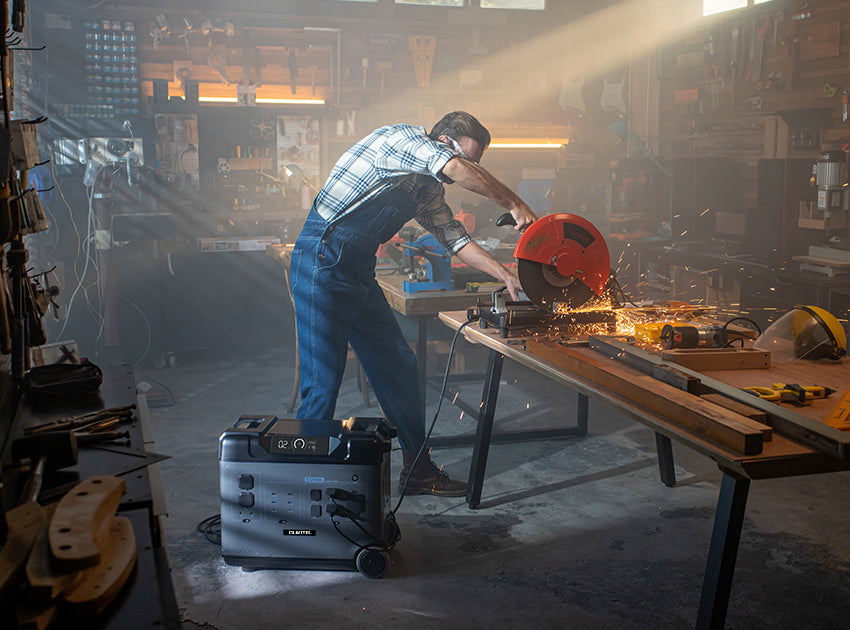
Portable Power Station for DIY Studios: Enhance Reliability & Flexibility!
Navigation
- Introduction
- Benefits of a Portable Power Station for a DIY Studio
- Types of Portable Power Stations
- Choosing the Right Portable Power Station for a DIY Studio
- Examples of Successful DIY Studios Using Portable Power Stations
- Conclusion
Introduction

A reliable source of power is essential for any DIY studio, from photography and videography to audio production and creative work. However, reliance on wall outlets and public utilities leaves business owners vulnerable to interruptions from power fluctuations, surges, and outages. A portable power station provides a mobile backup power solution that greatly enhances a DIY studio's professionalism, reliability, and reputation.
Benefits of a Portable Power Station for a DIY Studio
- Increased portability and flexibility: A portable power station allows you to power devices anywhere in or outside your studio. You can relocate easily and take your power source, reducing dependency on wall outlets.
- Ability to power a wider range of equipment: Portable power stations come with multiple AC outlets, USB ports, and DC ports, allowing you to power a greater variety of devices simultaneously. This includes lights, cameras, audio equipment, phones, laptops, and more.
- Maintaining a consistent workflow and preventing interruptions: Having a reliable backup power means your equipment will stay running during power outages or brownouts, minimizing downtime and interruptions to your projects and workflow.
- Increased professionalism and reliability for clients: Relying on a portable power station lets you assure clients that their projects will stay on schedule and that you have a solution to potential power issues. This helps build trust and enhances your studio's credibility.
Types of Portable Power Stations
There are several main types of portable power stations based on their power capacity, battery type, and features:
Lithium Battery Power Stations: Higher capacity units with LFP battery options. Have around 500-5000 watts of power. Provide longer runtimes and more power for higher-wattage devices.
Solar Power Stations: Similar to lithium battery stations, but can be recharged using solar panels. Used for off-grid applications where AC power is not available.
Generator Power Stations: Combine a portable power station with a small gas or diesel generator. Provide the highest capacities from 2000-15000 watts. Used for uninterrupted power for days.
Within each type, pros and cons include factors like price, weight, runtime, convenience, noise levels, and recharging options. Larger capacity stations tend to be heavier, pricier, and more suited for commercial or industrial use.
Choosing the Right Portable Power Station for a DIY Studio
- Assessing power needs based on equipment and usage: Make a list of all the devices you need to power, along with their wattage ratings. Add a buffer for future growth. This will determine the minimum capacity you require.
- Considering budget and other factors: Portable power stations can range in price from a few hundred dollars to several thousand. Balance cost with the features and capacity you need.
- Researching and comparing different brands and models: Research top brands and the specifications of different models within your budget. Compare features like outputs, battery type, capacity, charging speeds, and durability.
- Testing units: If possible, try out units in person. Test outlets by plugging in your equipment to ensure compatibility and performance.
Examples of Successful DIY Studios Using Portable Power Stations

A photographer's studio upgraded from a 1,000-watt to a 3,000-watt unit to reliably power additional lighting and camera equipment. This allowed the photographer to take on larger commercial shoots.
A filmmaker's DIY studio uses a 5,000-watt solar power station to keep equipment running away from grid power during outdoor shoots. The station provides enough power for multiple cameras, lighting, and audio equipment.
Conclusion
In summary, a portable power station can enhance almost every aspect of operating a DIY studio.
It allows businesses to scale and take on more clients confidently, knowing their power needs are covered anywhere, anytime. Combined with effective marketing, a reliable power source can help propel a DIY studio to the next level of success.
Read More
- Power Surges Home Protection: Why You Need a UPS System?
- Quiet and Efficient: Harnessing Solar Power with Indoor Generators
- Tent Weddings: Tips for Power Needs!


Looking for something else?

Difference Between Amps and Volts: What You Actually Need to Know
LEARN MORE
50 Amps in Watts: The Honest 2026 Conversion Guide for RV, Home, EV, and Solar
LEARN MORE
Can You Put Solar Panels on a Mobile Home? (Real-World Guide for 2026)
LEARN MORE
Do Portable Solar Panels Qualify for the 30% Credit?
LEARN MORELooking for something else?

Are Solar Generators Any Good? Here's the Real Answer
LEARN MORE
How Long Does a Portable Power Station Last? (Real Numbers)
LEARN MORE
Oukitel Power Exhibits at Solar & Storage Live Philippines 2026: Carry the Sun, Power Your Freedom
LEARN MOREYou may also like


OUKITEL BP2000 Portable Power Station 2200W | 2048Wh

OUKITEL P5000 Pro Portable Power Station 5120Wh | 3600W

OUKITEL P5000 Solar Generator for Home with 400W Solar Panel

OUKITEL P800 Portable Power Station 800W | 512Wh

OUKITEL B2000 Expansion Battery | 2048Wh
Further reading

OUKITEL Power Brings Full-Scenario Energy Storage Solutions to Intersolar Middle East 2026 in Dubai

Portable Power Stations for Power Tools and Job Sites: Surge, Runtime and Safety
