








 Flashlight
 Solar
Extension Cable
Solar
Extension Cable


OUKITEL vs EcoFlow: Which Portable Power Brand Fits Your Needs in 2026?
OUKITEL vs EcoFlow is mostly a question of where your money goes. With OUKITEL, more of it lands in the battery and the inverter. With EcoFlow, a good share pays for what surrounds the battery: extra packs, high wattage solar inputs, the app, the home panel. Both use LiFePO4 cells in their current stations, so chemistry isn't the deciding factor anymore.
Which one is right depends on what you plug in. Someone who wants 5,120Wh sitting in the garage this winter shops differently from someone planning a roof array and a transfer panel over the next few years.
We'll go class by class, then get into two specs most comparison pages skip (backup rating and real runtime), and finish with a pick list and FAQs.
OUKITEL vs EcoFlow at a Glance
OUKITEL wins on the hardware numbers. Its biggest single units, the P5000 Pro and the BP5000 Pro Max, hold 5,120Wh; the largest EcoFlow, the DELTA Pro 3, holds 4,096Wh. The BP5000 Pro Max also has the bigger inverter (5,000W against 4,000W), and OUKITEL rates its top packs for 5,000 cycles where EcoFlow quotes 4,000.
EcoFlow takes most of what's left. Solar input on the DELTA Pro 3 goes up to 2,600W, more than double the 1,000W ceiling on any OUKITEL. Many DELTA models carry five years of warranty out of the box, and EcoFlow sells alternator chargers, Smart Generators and home panels that OUKITEL doesn't offer.
240V is a draw. You get it on the DELTA Pro 3, and on the BP5000 Pro Max and P5000 Plus from OUKITEL Power. Everything here comes from current U.S. listings.
How Do OUKITEL and EcoFlow Models Compare by Capacity Class?
Putting a 5kWh home unit next to a 1kWh camping box tells you nothing useful. So we lined them up by size.
|
Class
|
OUKITEL
|
EcoFlow
|
|
1kWh
|
P1000 Plus: 1,024Wh, 1,800W (3,600W surge), 12kg, 4,000 cycles
|
DELTA 3 Plus: 1,024Wh, 1,800W (3,600W surge), 12.5kg, 4,000 cycles
|
|
2kWh
|
BP2000 Pro: 2,048Wh, 3,300W, 1,000W solar, 3,500+ cycles
|
DELTA 2 Max: 2,048Wh, 2,400W (4,800W surge), 1,000W solar, 3,000 cycles
|
|
4 to 5kWh
|
P5000 Pro: 5,120Wh, 3,600W (7,200W surge), 53kg, 5,000 cycles
|
DELTA Pro 3: 4,096Wh, 4,000W (8,000W surge), 51.5kg, 4,000 cycles
|
|
240V backup
|
BP5000 Pro Max: 5,120Wh, 5,000W (10,000W surge), 120V/240V
|
DELTA Pro 3: 4,096Wh, 4,000W, 120V/240V
|
1kWh: Close to a Tie
Honestly, this one is close. The OUKITEL P1000 Plus and DELTA 3 Plus have the same capacity, the same 1,800W inverter and the same cycle rating. Ours weighs about half a kilo less and stays under 29dB when you pull less than 500W, which you'll notice at 2 a.m. in a tent. EcoFlow's edge is expansion, to roughly 5kWh. If you'll never add a battery, buy whichever is cheaper that week.
2kWh: OUKITEL Carries More Output
Same 2,048Wh in both. But the OUKITEL BP2000 Pro has a 3,300W inverter and the DELTA 2 Max has 2,400W, and that 900W gap decides whether a space heater and a fridge can run together. The BP2000 Pro also takes up to seven B2000 packs. The DELTA 2 Max stops at 6,144Wh with two extra batteries. In its favor: six AC outlets and a 60 month warranty.
5kWh and 240V: Two Different Approaches
Here the brands split. The OUKITEL P5000 Pro keeps 1,024Wh more on board than a DELTA Pro 3 and is rated for 5,000 cycles, though every outlet on it is 120V. The DELTA Pro 3 gives you 240V, 2,600W of solar input and a path into EcoFlow's home panel. Need 240V and want to stay with OUKITEL? That's the BP5000 Pro Max, with a 5,000W inverter and a 120V/240V outlet.
Which Brand Gives You More Power for the Money?
Per dollar of hardware, OUKITEL is usually cheaper. Big batteries and big inverters are the whole pitch. EcoFlow's price includes software, charging accessories and the longer warranty. Worth it if you'll use them.
We'd run three quick numbers before buying:
-
Price per watt hour. Divide the checkout price by rated Wh: $1,000 for 2,000Wh is $0.50/Wh, while $900 for 1,000Wh works out to $0.90/Wh.
-
Watts per dollar matters if you run tools, pumps or cooking gear.
-
Full system cost. Add every pack, panel, cable and transfer switch you'll need. That total is the real price.
Editor's note: Prices on both sites move almost weekly. Check the product page on the day you buy, and price the system you expect to own in two years.
Why the Backup Rating Matters More Than Switch Speed

Spec sheets like to brag about switchover time. Under 10ms is common on both brands now, quick enough that a router or desktop won't notice. What gets buried is the backup (EPS) rating: how many watts actually pass through when the grid drops. It's often lower than the inverter.
|
OUKITEL model
|
Inverter output
|
Backup (EPS) rating
|
|
P1000 Plus
|
1,800W
|
1,800W, under 10ms
|
|
P2001 Plus
|
2,400W
|
1,400W, under 10ms
|
|
BP2000 Pro
|
3,300W
|
2,000W, under 10ms
|
One more. On the BP5000 Pro Max, the 120V/240V outlet gives you 5,000W at 240V. Use it at 120V only and you get 2,500W.
Watch out: Whatever stays plugged in on UPS mode has to fit under the backup rating. On EcoFlow units, look for this number in the manual, since listings rarely show it.
How Long Will Each Station Run Your Essentials?

Not all of the battery reaches the outlet. The inverter takes a cut, so we plan with 85%: rated Wh × 0.85 ÷ average watts = hours.
Fridges are where the math usually goes wrong. A 150W nameplate doesn't mean 150W all day, because the compressor cycles. The U.S. Department of Energy suggests dividing the hours it's plugged in by three. Below we assumed a fridge averaging 60W, and an essentials load of 115W (fridge plus router plus CPAP).
|
Station
|
Usable energy
|
Fridge only
|
Fridge, router, CPAP
|
|
P1000 Plus or DELTA 3 Plus
|
about 870Wh
|
about 14.5 hrs
|
about 7.5 hrs
|
|
BP2000 Pro or DELTA 2 Max
|
about 1,740Wh
|
about 29 hrs
|
about 15 hrs
|
|
DELTA Pro 3
|
about 3,480Wh
|
about 58 hrs
|
about 30 hrs
|
|
P5000 Pro or BP5000 Pro Max
|
about 4,350Wh
|
about 72 hrs
|
about 38 hrs
|
For reference, the FDA says a closed fridge keeps food cold for about 4 hours with no power. Even a 1kWh unit gets you well past that. In the outage plans we look at, what runs out first is usually charging time, not battery.
Charging, Solar and Expansion: Where EcoFlow Pulls Ahead
EcoFlow is ahead here, and at the top end it isn't close. A DELTA Pro 3 takes 2,600W of solar over two inputs. A DELTA 3 Plus refills from empty in 56 minutes on 1,500W AC. Alternator chargers and Smart Generators are there too, if you want them.
Within the same size class OUKITEL holds up. On AC the P1000 Plus fills in 0.85 hours, or about 36 minutes with solar helping. A BP2000 Pro gets to 80% in 55 minutes at 2,200W.
Expansion Ceilings

-
BP2000 Pro: seven B2000 packs max, 16,384Wh
-
The OUKITEL BP5000 Pro Max goes further, to 19,456Wh with seven B2000s
-
Note that the BP3000 only takes B2000L packs, not the older B2000
-
DELTA 2 Max: two Smart Extra Batteries, 6,144Wh in total
-
About 5kWh is the ceiling on a DELTA 3 Plus
-
Tip: More batteries means longer runtime. It doesn't mean more output. If a unit can't start your well pump today, seven packs won't change that. Our expandable power station guide goes into it.
How Do Warranty and U.S. Support Compare?
On paper EcoFlow is ahead: 60 months on many DELTA models, the DELTA 2 Max included. OUKITEL gives one year, plus two more if you register, and its own store has a 30 day money back window.
Under FTC rules the written warranty has to be available before you buy, online too. So read it. Look at what voids it, and make sure the seller is authorized, because marketplace resellers often aren't. Buy the U.S. version of either brand; units built for other regions can have different sockets and input voltage, and may not be covered here.
OUKITEL or EcoFlow: Which Should You Buy?
|
If you need
|
Lean toward
|
Start with
|
|
Camping or short outages
|
Either, compare price
|
P1000 Plus vs DELTA 3 Plus
|
|
Several heavy loads at once
|
OUKITEL
|
BP2000 Pro
|
|
Most stored energy in one box
|
OUKITEL
|
P5000 Pro
|
|
240V well pump or range
|
Either
|
BP5000 Pro Max vs DELTA Pro 3
|
|
Large solar array off the grid
|
EcoFlow
|
DELTA Pro 3
|
|
Van life with alternator charging
|
EcoFlow
|
DELTA series plus alternator charger
|
|
Longest standard warranty
|
EcoFlow
|
DELTA 2 Max
|
Whichever you pick, you avoid the carbon monoxide problem that comes with gas generators near the house. The CPSC ties more than 100 deaths a year to portable generators. EIA figures put the average U.S. customer at 11 hours without power in 2024, mostly from hurricanes, so a full day of reserve is a sensible minimum. Our outage power checklist walks through it.
Final Verdict
If you want the most battery and inverter for the money and don't need the extras, go OUKITEL. For home backup we'd look first at the P5000 Pro, or the BP5000 Pro Max if you need 240V.
If you're building a system over time (big solar, alternator charging, a home panel, a longer warranty), go EcoFlow. Either way, settle the numbers first: usable capacity, continuous output, backup rating, recharge rate, total cost. The logo comes last.
Ready to Build Your Shortlist?

-
Make a load list with running watts, startup watts and hours per day.
-
For each candidate, note continuous output, backup rating, usable capacity and how fast it recharges.
-
Then compare specs and current prices across the OUKITEL portable power station lineup.
-
FAQs
Is OUKITEL a good brand?
Yes, it's an established one. The brand was registered in 2013 under Shenzhen Yunji Intelligent Technology and sells in over 150 countries. Its power stations use LiFePO4 cells rated between 3,500 and 5,000 cycles. In our experience, people who buy from a load list are happy with the result; people who buy from the box headline sometimes aren't. Check three things first:
-
Continuous output, against everything you'll run at once
-
The backup (EPS) rating if anything stays on UPS
-
Register the unit, or you lose the extra two warranty years
OUKITEL vs EcoFlow: which is better?
Depends on the job. In OUKITEL vs EcoFlow, OUKITEL gives more capacity and output for the money, and EcoFlow gives more solar input, more accessories and a longer warranty. Pick the size class first.
-
Best hardware value: BP2000 Pro or P5000 Pro
-
Building a whole home system? DELTA Pro 3 with home panels
-
For camping it's P1000 Plus vs DELTA 3 Plus, and price decides
What is comparable to EcoFlow?
OUKITEL, model for model. Match by capacity and output rather than brand tier, since a 1kWh camping unit and a 4kWh home system aren't really competitors. The close pairs:
-
1,024Wh: DELTA 3 Plus and P1000 Plus
-
DELTA 2 Max against BP2000 Pro, both 2,048Wh
-
For 240V, DELTA Pro 3 and BP5000 Pro Max
What are the disadvantages of OUKITEL?
Two main ones: fewer accessories and a shorter warranty. OUKITEL covers one year plus two after registration; many EcoFlow DELTA models get five. Also worth knowing:
-
Solar tops out at 1,000W, vs 2,600W on the DELTA Pro 3
-
There's no alternator charger or smart home panel
-
The big units are heavy, 53kg to 55kg
Can I use OUKITEL in the USA?
Yes, if it's the U.S. version. OUKITEL's U.S. store sells 120V units, and the BP5000 Pro Max and P5000 Plus also have 120V/240V output. Versions for other regions can be wired differently. Before ordering, confirm:
-
Outlet type and output voltage
-
Whether you actually need 120V/240V split phase
-
That the seller is inside the U.S. warranty
Is EcoFlow a Chinese company?
Yes. EcoFlow started in China in 2017 and today sells power stations, solar and home energy gear around the world, with U.S. specific models and support. Where a company is from tells you little about a particular unit. Look at:
-
Specs and certifications of the U.S. model
-
Its U.S. warranty terms
-
Whether you're buying through an authorized channel
Who manufactures OUKITEL?
Shenzhen Yunji Intelligent Technology, part of Yunji Group, which was founded in China in 2000. According to its company profile, it does its own R&D and production and also takes OEM and ODM work. Products include:
-
Rugged phones and tablets
-
Smart wearables
-
Portable power stations and expansion batteries
Is OUKITEL a good power station for home backup?
Yes, especially if you want a lot of capacity in one box. The P5000 Pro holds 5,120Wh with 7,200W surge. The BP5000 Pro Max adds 240V and can expand to 19,456Wh. Before you buy, think about:
-
The backup rating for anything on UPS
-
240V loads like a well pump
-
Where a 53kg to 55kg unit will sit


Looking for something else?

Portable Power Station for Freezer Backup: Runtime by Size and Temperature
LEARN MORE
Portable Power Station for a Sump Pump: Starting Watts, Runtime and Setup
LEARN MORE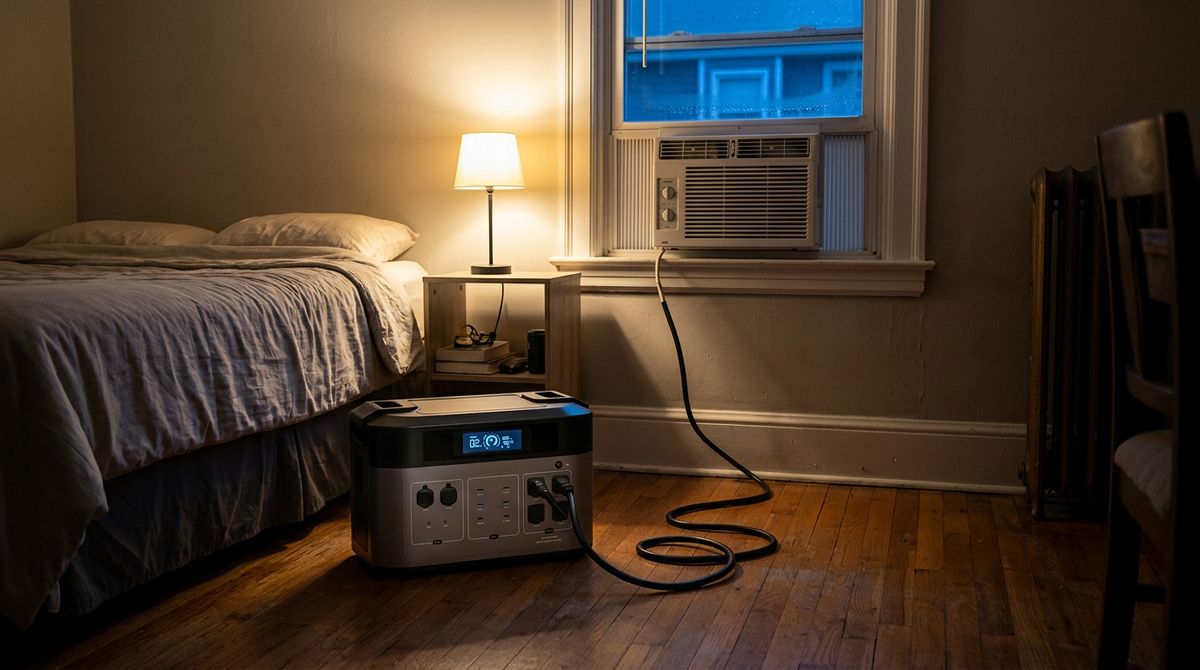
Can a Solar Generator Run a Window Air Conditioner? Size and Runtime Guide
LEARN MORE
Hurricane, Wildfire and Winter Outage Power Checklist
LEARN MORELooking for something else?
OUKITEL Showcases Energy Storage Solutions at Intersolar South America 2026, Accelerating Expansion into Latin America
LEARN MORE
Portable Power Station for Starlink: Runtime, Solar and Off-Grid Setup
LEARN MORE
Portable Power Stations for Power Tools and Job Sites: Surge, Runtime and Safety
LEARN MOREYou may also like

OUKITEL BP2000 Portable Power Station 2200W | 2048Wh
$859.00
$1,199.00

OUKITEL P5000 Pro Portable Power Station 5120Wh | 3600W
$1,629.00
$2,199.00
OUKITEL P5000 Solar Generator for Home with 400W Solar Panel
$1,499.00
$2,999.00
OUKITEL P800 Portable Power Station 800W | 512Wh
$259.00
$399.00

OUKITEL B2000 Expansion Battery | 2048Wh
$699.00
$999.00

OUKITEL BP5000 PRO MAX Portable Power Station 5000W | 5120Wh
$1,999.00
$2,999.00
Further reading

OUKITEL P2001 Plus vs BLUETTI AC200L: Which 2kWh Station Is Better for You?
Put the OUKITEL P2001 Plus vs BLUETTI AC200L spec sheets next to each other and the first thing you see is how much they share. Same 2,048Wh LiFePO4 battery. Same 2,400W inverter rating.
So the re...

OUKITEL P2001 Plus vs EcoFlow DELTA 2 Max: 2048Wh Power Station Comparison
We went through the P2001 Plus vs EcoFlow DELTA 2 Max spec sheets line by line for this guide, and they match on the numbers most shoppers read first: 2,048Wh of LiFePO4 and a 2,400W inverter with...

OUKITEL vs BLUETTI: Expandability, Runtime and Price Compared
Put OUKITEL vs BLUETTI side by side and the spec sheets look almost the same. Both run on LiFePO4 cells. Each brand has a 2,048Wh station that takes extra batteries, and both print big inverter nu...