








 Flashlight
 Solar
Extension Cable


NYC Apartment Snowstorm Outage: What a Portable Power Station Can Safely Run (and What It Can't)
Most backup-power advice a New York apartment dweller finds online was written for somebody else: a homeowner with a roof, a garage, a utility room, and permission to drill. This guide is for the other reader — a renter or co-op shareholder in a prewar walk-up or a mid-rise, one or two people, no roof access, no generator allowance, and no authority to touch the electrical panel — who wants to know what a plug-in battery can realistically carry through a multi-day snowstorm outage.
A terminology correction first, because it changes the shopping list. The category that fits an apartment is a portable power station: a sealed battery appliance with AC outlets that you charge from a wall socket and carry to where it is needed. It is not a home battery in the sense solar marketing uses the term — a fixed, wired unit paired with an inverter and a critical-loads panel — and it is not a generator, despite the "solar generator" label. Without panels attached it generates nothing. The solar-plus-battery-storage payback math, dynamic-tariff arbitrage, and self-consumption planning that dominate European storage writing get one dedicated section near the end of this article, for one reason: they do not transfer to a Manhattan co-op, and readers who arrive with those assumptions need to be redirected rather than sold to.
Everything else here is load-first. Which loads are worth carrying, which will trip a station that looks big enough on paper, how to size for 24, 48, and 72 hours, and the October test that tells you whether the plan works before the first nor'easter.

Before You Buy: What an NYC Co-op or Rental Actually Lets You Store and Run
Three constraints shape every purchase decision, and none of them appear on a spec sheet.
- No combustion. Gasoline, propane cylinders, and kerosene heaters are effectively off the table in an apartment building, both by house rule and because an unvented combustion appliance in a sealed 500 sq ft unit produces carbon monoxide. That single constraint eliminates the entire "portable generator" category.
- No wiring. You are not installing a transfer switch, a subpanel, or a wall-mounted battery. Anything that requires an electrician, a permit, or a hole in a wall is a co-op board conversation, not a purchase.
- No storage. A 5 kWh-class unit is a floor-standing appliance. In a prewar one-bedroom, it competes with the coat closet, the bike, and the stroller.
On charging specifically, FDNY's lithium-ion guidance is unusually concrete and worth reading before the unit arrives: never charge a lithium-ion battery with an extension cord or a power strip, do not charge near apartment doors, bedroom doors, windows, or fire escapes, and use a safe charging location outside the apartment where one is available[1]. That rules out the two habits most people default to — the cord under the rug and the unit parked by the front door.
Three questions to ask your managing agent before you spend anything
Co-op house rules on battery storage are inconsistent. Some proprietary leases are silent, which is not the same as permission. Send one short email and keep the reply:
- Is there any written policy on storing a lithium-ion battery appliance (roughly the size of a carry-on suitcase) in a residential unit?
- Is my apartment's electricity submetered, or is it included in maintenance? This determines whether you can even identify the circuit you are loading.
- Is there a building emergency plan or designated charging area, and does the building have a backup generator for common areas?
Suppose a shareholder in a prewar co-op bought a dual-fuel generator and two 20 lb propane cylinders and stored them in a closet. The house rules barred fuel storage and unvented combustion appliances; the equipment had to leave the building, and the resident absorbed the full cost of a purchase that could never legally have been used. The expensive mistake was not the generator itself — it was buying before asking a question that takes one email to answer.
The Honest Load List: What Runs Well, What Struggles, and What You Should Never Plug In
The numbers below are typical ranges, not guarantees. Your fridge, your CPAP, and your router will differ by 20–40%. Treat the table as a planning filter and confirm the three loads you actually care about with a plug-in energy meter before winter.
| Load | Typical draw | Energy for the use described | Verdict |
|---|---|---|---|
| Two phones | ~10 Wh per full charge | 30 Wh/day | Runs well — use USB-C PD ports, not AC adapters |
| LED lamps, two, 5 h | 9 W each | 90 Wh/day | Runs well; headlamps are cheaper per lumen |
| Laptop, 3 h | 45–65 W | 180 Wh/day | Runs well; charge in bursts, not continuously |
| CPAP, no humidifier, 8 h | 30–60 W | 240–480 Wh/night | Runs well — the humidifier is the problem |
| CPAP with heated humidifier | Adds 50–100 W | Up to 1,200 Wh/night | Struggles — often doubles or triples the load |
| Wi-Fi router, 24 h | 8–15 W | 240–360 Wh/day | Runs well but may be pointless — see note below |
| Small medication cooler | 40–60 W, 30–50% duty | 300–500 Wh/day | Runs well; cheaper than replacing insulin |
| 10–12 cu ft fridge, continuous | 100–150 W run, 600–1,200 W start | 1,000–1,500 Wh/day | Struggles on capacity, not on power |
| Same fridge, blocked schedule | 4 h on / 8 h off | ~350 Wh/day | Runs well — the single best efficiency trick |
| Microwave, 3-minute bursts | 700–1,000 W | ~50 Wh per burst | Runs well as a burst load |
| Electric kettle, 0.5 L | 1,500 W for ~5 min | ~125 Wh per boil | Runs well; hot water is a morale multiplier |
| Space heater, 10 h | 750–1,500 W | 7,500–15,000 Wh | Do not plan on this — see the heating section |
One insight that catches almost everyone: powering the router does not restore internet. In many NYC buildings the fibre termination or the cable node sits on building power or in a basement closet. If the building is dark, your router broadcasts a dead network. Budget for phone-as-hotspot instead, which costs about 10 Wh per charge rather than 240 Wh per day.
The rules table: right way versus the common wrong way
| Right way | Common wrong way | Why it matters |
|---|---|---|
| Charge on a dedicated wall outlet at a reduced rate | Charge through a power strip or an extension cord | FDNY links cord and strip charging to lithium-ion fires; sustained high current overheats the weakest connection |
| Place the unit on a hard, non-flammable surface in an open room | Park it in the coat closet or beside the entry door | Clear egress and ventilation; a closet full of coats is fuel next to a heat source |
| Measure your three key loads with a watt meter | Trust the label on the back of the appliance | Nameplate values show maximum draw, not duty cycle — a fridge label overstates daily energy by 3–4× |
| Run the fridge in scheduled blocks | Leave the fridge plugged in 24/7 and hope | The compressor is the largest single load; blocking it extends runtime two to three times |
| Keep the station where you can see and hear it | Bury it behind furniture so it looks tidy | Fan behaviour and case temperature are your only warning signs before a shutdown |
| Charge phones and CPAP from DC ports where adapters exist | Run everything through AC adapters | Every AC conversion loses energy; DC-to-DC is measurably more efficient per watt-hour |
| Register the serial number and check recall notices each autumn | Assume a certification means permanent safety | In 2026 the Consumer Product Safety Commission recalled two large portable power stations over circuit-board overheating and fire hazards — certification does not prevent later recalls |
Surge Beats Capacity: Why an Apartment Fridge Trips a Station That "Should" Handle It
A 10 cubic foot refrigerator draws roughly 100–150 W while the compressor runs. It needs 600–1,200 W for a fraction of a second when the compressor starts. A station rated for thousands of watts can still shut down on that start if the inverter is already loaded, because the surge arrives while other loads are drawing and the protection circuit cannot tell a compressor from a fault.
Two practical rules follow. First, start the compressor first: plug the fridge in while the station is otherwise idle, let it settle, then add lamps and chargers. Second, never let a burst load and a compressor start overlap. A microwave and a fridge cycling on the same circuit is the most common way a plan that tested fine in October fails in February at 2 a.m.
There is a second, apartment-specific limit that has nothing to do with the battery. A standard 15 A branch circuit at 120 V delivers 1,800 W at 100% load, and continuous loads are conventionally derated to 80% — about 1,440 W. So the wall behind your station is a bottleneck in a way the station itself is not. Plan a charge rate around 1,000–1,200 W, especially in a prewar building where the living-room circuit may share a kitchen wall outlet and a 30-year-old breaker.
And one more: 5,000 W of output sounds enormous until you divide it by 120 V, which is roughly 41 A. Nothing in your apartment is wired for that. All of it must leave through the outlets on the front of the unit, one appliance at a time.
Heat and Water Are the Real Emergency: Why a Battery Is Not a Heating Appliance
Here is the arithmetic that decides the whole category. A 1,500 W space heater run for ten hours consumes 15,000 Wh. A 5,120 Wh station holds a little over a third of that. You can physically plug the heater in and it will run — for roughly three hours, once, on a full charge, while draining everything else you needed.
For a one- or two-person apartment the realistic cold-weather answer is layers, a sleeping bag rated well below the indoor temperature, and low-wattage personal heat: an electric throw or heated mattress pad draws on the order of 60–100 W, so eight hours costs about 800 Wh — meaningful, but survivable on a 5 kWh unit in a way a space heater never is.
What happens to heat and water when the building goes dark
In many prewar walk-ups, cold water reaches upper floors on street pressure alone, so taps may keep working even with the power out. Heat and hot water are a different story: they depend on a boiler with electric controls and, in taller buildings, a booster pump for upper floors. Neither is something a tenant can power, and neither is something a portable station is designed to power.
That leaves a boring but decisive habit: at the first serious storm forecast, fill the bathtub and two large containers. Stored water covers flushing and basic hygiene for a multi-day outage and costs nothing. Relying on the building's hot water is a plan built on an assumption you cannot verify from your apartment.
Where the gear hits its limits, and how to recognise it
Portable power stations are not rated for every condition an unheated apartment can produce. The headline specifications for the units discussed here do not list an operating or charging temperature range, so check the manual for the numbers that apply to your specific model rather than assuming.
- Charging in the cold. LiFePO4 cells should not be charged below freezing. In an apartment that has lost heat during a nor'easter, the room may sit near or below 32°F. Move the unit to the warmest room before charging, and treat a cold unit as a discharge-only resource until it warms up.
- Sustained high draw. Running near rated output for hours heats the inverter. Warning signs are a fan that never drops off, a case that is uncomfortable to hold, and output that cuts out and restarts. Back off the load before the unit does it for you.
- Blocked ventilation. A unit pushed against a radiator, a curtain, or a pile of bedding will derate or shut down. Leave hand-width clearance on every vented face.
- Long outages with no recharge path. A 5,120 Wh battery is a fixed budget. Once you have consumed roughly 80% of it, the plan changes from "ride it out" to "find power" — a friend's apartment, a workplace, a library, or an official city warming location.
Sizing for 24, 48, and 72 Hours: A Two-Person Apartment Worksheet
Build the plan in tiers. Each tier is a decision about what you are willing to give up, and the totals below already assume you add about 10% for inverter and conversion losses. Figures are estimates for a typical one- or two-person unit.
| Tier | What it includes | Per day | 24 h | 48 h | 72 h | 72 h + 10% |
|---|---|---|---|---|---|---|
| Tier 1 — communications, light, sleep | 2 phones, 2 LED lamps, laptop 3 h, CPAP without humidifier | 660 Wh | 660 Wh | 1,320 Wh | 1,980 Wh | 2,180 Wh |
| Tier 2 — Tier 1 plus food and network | Adds router 24 h and fridge in blocks | 1,250 Wh | 1,250 Wh | 2,500 Wh | 3,750 Wh | 4,125 Wh |
| Tier 3 — Tier 2 plus hot food | Adds microwave bursts, kettle boils, one small extra | 1,750 Wh | 1,750 Wh | 3,500 Wh | 5,250 Wh | 5,775 Wh |
Read the last column as your purchase target. Tier 1 for three days fits comfortably in a 2,500 Wh-class unit. Tier 2 for three days needs the 5,120 Wh class. Tier 3 for a full 72 hours lands around 5,775 Wh — roughly 650 Wh more than a single 5,120 Wh unit holds — so the realistic rule is two days of Tier 3, then a third day on Tier 1, which totals about 4,600 Wh and leaves modest headroom.
Before and after: the same apartment, two Octobers
Suppose a two-person household in a 500 sq ft walk-up bought a 1,000 Wh station on sale and never tested it. During a three-day outage the CPAP ran out during the first night, the fridge was opened a dozen times and had to be emptied, and the unit was flat by hour 30 — the household ended up in a hotel anyway, having spent money on hardware and still paying for the room. That is the before picture, and the failure was entirely predictable: the plan assumed a 1,000 Wh battery could carry a load that runs about 660 Wh per day before the fridge is even considered.
The after picture, one year later, is unglamorous and effective. The same household spent $25 on a plug-in energy meter, logged the CPAP, the fridge, and the router for a week, and discovered the fridge was the only load that mattered. They moved to a 5,120 Wh-class unit, wrote a one-page load card taped to the lid, and started running the fridge in four-hour blocks. In the next outage they covered CPAP, lighting, phones, and a blocked-schedule fridge for three days, plus one microwave dinner on the second night, and never left the apartment. The hardware changed; the discipline is what made it work.
Matching the worksheet to actual hardware
Two units in the current portable power station range sit in the 5,120 Wh class that Tier 2 sizing points to, and the difference between them matters more for wiring ambitions than for a rental apartment.
The OUKITEL BP5000 PRO MAX pairs a 5,000 W AC output with a 5,120 Wh LiFePO4 battery rated for 4,000 cycles. For an apartment reader, the 5,000 W figure is mostly relevant as headroom for compressor starts and simultaneous burst loads rather than as a number you will ever approach — remember the 15 A wall circuit feeding it. The LiFePO4 chemistry and 4,000-cycle rating are the parts that matter across a decade of storm seasons.
The OUKITEL P5000 Plus carries the same 5,120 Wh LiFePO4 capacity and 4,000-cycle rating, with a 3,600 W AC output, a 7,200 W surge rating for 0.1 seconds, a listed backup switchover under 10 ms, and AC charging up to 1,800 W at 120 V or 3,000 W at 240 V. Two honest caveats. The sub-10 ms switchover only delivers value when the unit is tied into a proper transfer arrangement, which is an electrician-and-board project in a co-op, not a plug-in feature. And the 1,800 W charge rate exceeds what a shared 15 A apartment circuit will carry continuously; dial the input down to roughly 1,000–1,200 W for overnight charging in a prewar building.
Charging, Noise, Storage, and Stairs: The Part Nobody Plans For
A 5,120 Wh battery in a 500 sq ft apartment raises four practical questions that the spec sheet does not answer.
Charging. Recharging from a wall outlet at 1,000 W puts roughly 1,000 Wh per hour back into the battery, so a full replenishment from empty is an overnight job once conversion losses are counted. That is fine in a normal week and impossible during an outage, which is why the unit should live at a high state of charge entering storm season. Solar is the obvious-sounding answer and a poor one in a snowstorm: a panel on a fire escape is a code problem and an overcast, snow-covered sky produces very little. If you want a small panel for a balcony in a spring outage, the solar panel range is the place to look, but do not size your winter plan around it.
Noise. The published specifications for the units above do not list a decibel figure, so test it yourself on arrival. In a studio or a one-bedroom with a light sleeper, the fan cycling on and off all night is a real quality-of-life factor, and the fix is placement — a hallway or entry area rather than the foot of the bed.
Storage and stairs. Shipping weight is not in the specification block reviewed here; check the product page before ordering for a fifth-floor walk-up. A 5 kWh LiFePO4 unit is a two-person lift for most adults, and carrying it up four flights once is fine — carrying it up four flights twice a week is why people stop using them.
Gear checklist: what you need beyond the box
- Plug-in energy meter ($20–30). The single highest-value purchase in this entire plan.
- One heavy-gauge cord, 25 ft or shorter, rated for 15 A. For output only — never for charging the station, per FDNY guidance.
- CPAP DC adapter. Many CPAPs run natively on 12 V; the DC cable avoids an inverter conversion and can cut overnight consumption noticeably.
- USB-C PD chargers and cables for phones, headlamps, and a battery radio.
- Four headlamps. Better than area lighting: less draw, no glare, hands free.
- A battery-powered carbon monoxide alarm as a spare, plus spare batteries for smoke alarms.
- Water storage: a bathtub bladder or two 5-gallon containers.
- A cooler and two ice packs to offload fridge contents and reduce compressor cycling.
- A small 12 V medication cooler if anyone in the household depends on refrigerated medicine.
- A labelled storage bin for every cable, adapter, and the printed load card.
- A written load card taped to the unit listing what goes on in what order, with the fridge start first.
Why European Solar-Plus-Storage Payback Math Doesn't Transfer to a Manhattan Co-op
Anyone researching "solar plus battery storage" quickly lands in European residential economics: subsidy programs, dynamic hourly tariffs, self-consumption rates, and payback calculators. It is genuinely useful material — for a different reader. Here is why it does not describe what you are buying.
Poland runs a national grant program for prosumer home storage under its Modernization Fund and environmental fund structure. The official conditions require photovoltaic prosumer status, a grid connection, an energy management system, and island-mode capability so the battery can back up the home during a local outage. Official pages describe support as a share of eligible costs with a per-kWh cap, and the headline figures differ between the published pages — check the current terms on the official gov.pl program pages before relying on any number. The decisive point is not the subsidy rate; it is that eligibility begins with being a grid-connected PV prosumer, a status a Manhattan renter cannot hold.
Germany has a well-developed market for dynamic electricity tariffs paired with home batteries, where the value comes from buying cheap hours and discharging during expensive ones. No current official German figure for household savings or payback was verifiable from the sources reviewed here, and the model would not transfer anyway: tariff arbitrage requires an hourly-price supply contract you control and the ability to shift load, neither of which a co-op shareholder with electricity bundled into maintenance can arrange.
France is the clearest illustration of why ownership of the generation asset is the whole game. Under the current self-consumption framework, surplus electricity exported from eligible small systems is bought at a fixed low rate — 4 euro cents per kWh — and an investment premium of €80 per kWp applies to connection applications lodged after 27 March 2025. The economics work because the household owns the roof, the array, and the export contract. A renter owns none of the three.
Spain's PVPC regulated tariff is another hourly, market-linked structure designed around a supply contract and, increasingly, self-consumption with storage. Again: contract, roof, and permission.
Now the NYC apartment reality. A co-op shareholder owns shares and a proprietary lease, not the roof; rooftop access is board-controlled, and a solar installation is a building project, not an appliance. Fixed storage requires a wired critical-loads panel, an electrician, and permits — official stationary storage rules apply to fixed systems, not to a plug-in unit on your kitchen floor. And with electricity bundled into maintenance in many buildings, there is no bill to arbitrage.
The decision rule that follows is blunt: do not evaluate an apartment power station as an investment with a payback period. Evaluate it as an insurance premium. Compare its cost to the realistic alternative — two nights in a hotel, a replaced week of refrigerated food, a spoiled medication shipment, a night in an emergency department — and decide whether the premium is worth the coverage. For most one- and two-person households in this city, it is; for someone who travels nine months a year, it is not.
Five Failure Modes to Test Before the First Nor'easter
Run these in October, on a weekday evening, with the unit at full charge. Each one takes minutes and each one has caught somebody.
- The cold-start surge. Plug the fridge into the station while nothing else is running. If it trips, try again with the fridge already running before you connect it. Record which order works and write it on the load card.
- The simultaneous load. With the fridge running, start the microwave. If the station shuts down, you have found your incompatibility in October instead of during a storm.
- The wall-circuit trip. Charge at your planned rate for thirty minutes and check whether the breaker holds — and whether the lights on the same circuit dim. If they do, move to another outlet or lower the rate.
- The cable inventory. Connect every device you intend to use with the exact cable you intend to use. Missing barrel adapters and short USB runs are the most common last-minute failure.
- The overnight noise and light test. Sleep one night with the unit where you plan to keep it. Fan cycling and charge LEDs matter more than people expect in a studio.
Maintenance habits that actually extend service life
- October: charge to 100%, run the five tests above, check the manufacturer's recall page, and confirm the serial number is registered.
- Monthly: top the unit back up if it has drifted below about 50%. Long-term storage is easier on LiFePO4 between roughly 50% and 80% than at 100% or at 0%.
- Once a year: run a measured discharge with a known load — a 500 W lamp bank for two hours — and compare delivered watt-hours against the previous year. A meaningful drop tells you the battery is aging before an outage does.
- Every season: vacuum the intake vents, wipe the terminals dry, and move the unit out of any humid space. Bathrooms and basements are the two worst storage locations in a prewar building.
- Never: store it at 0% for months, charge it in a freezing room, or leave it on a power strip "just for trickle."
The October Checklist: What to Actually Do
Strip the article down to a single sequence, and it looks like this:
- Email the managing agent about battery storage policy and submetering before buying anything.
- Buy a plug-in energy meter before you buy a battery, and measure the CPAP, the fridge, and the router for a week.
- Size to Tier 2 for 72 hours — about 4,125 Wh including losses — if you want food and communications covered, and accept that Tier 3 for a full three days exceeds a single 5,120 Wh unit.
- Cross space heating off the plan permanently, and fill the bathtub at the first serious forecast instead.
- Charge at 1,000–1,200 W on a dedicated outlet, never through a cord or a power strip.
- Run all five failure-mode tests in October, and tape the resulting load card to the lid.
- Evaluate the purchase as insurance with a coverage limit, not as an investment with a payback period.
If a household can complete steps 1 through 4, almost any well-sized 5,120 Wh-class unit will carry them through a three-day snowstorm outage. If they skip step 2, the most common outcome is buying twice — once on a guess, and once after the first outage teaches them what they actually run.
FAQs
Can a portable power station run a space heater in a New York apartment during an outage?
It can start one, but it cannot sustain one. A 1,500 W heater running for ten hours needs about 15,000 Wh, which is nearly three times a 5,120 Wh battery. The workable substitute is low-wattage personal heat — an electric throw or heated mattress pad at roughly 60–100 W — plus layers and a properly rated sleeping bag.
Will my building's boiler, hot water, and water pressure keep working when the power goes out?
Cold water often does, because many prewar walk-ups reach upper floors on street pressure alone. Heat and hot water usually do not, since they depend on a boiler with electric controls and, in taller buildings, a booster pump. Neither is something a plug-in station is designed to power, so store water early and plan for the apartment to get cold.
How long can a 1,000Wh station actually run a small apartment refrigerator?
Run continuously, a 10–12 cubic foot fridge consumes roughly 1,000–1,500 Wh per day, so a 1,000 Wh unit lasts well under a day once conversion losses are counted. Run in blocks — four hours on, eight hours off — the same fridge averages about 350 Wh per day, which stretches a 1,000 Wh unit to roughly two and a half days of fridge-only use.
Can I recharge a power station from my car in an NYC garage, or do I need a second battery?
A car's 12 V socket is fused for a small load, so a full recharge of a multi-kilowatt-hour battery would take days, not hours, and idling in an enclosed garage is a carbon monoxide hazard as well as a building-rule problem. A second battery, or a pre-arranged recharge at a workplace or a friend's apartment, is the more reliable plan.
Do I need an electrician or a transfer switch to use a portable power station in a co-op unit?
Not for plug-in use — you plug appliances directly into the unit's outlets. You do need one if you want circuit-level backup or a fast automatic switchover, since the sub-10 ms changeover figure only applies once the unit is tied into a proper transfer arrangement. In a co-op that means board approval, a licensed electrician, and likely a filing.
References
- FDNY — Lithium-Ion Battery Safety guidance, https://www.nyc.gov/assets/fdny/downloads/pdf/codes/lithium-ion-batteries-safety.pdf
Information in this article was fact-checked against current sources in November 2026. Policies, incentive programs, and regulations change frequently — always confirm current terms with official sources before making financial or legal decisions.


Looking for something else?

Hurricane, Wildfire and Winter Outage Power Checklist
LEARN MORE
OUKITEL Showcases Energy Storage Solutions at Intersolar South America 2026, Accelerating Expansion into Latin America
LEARN MORE
Portable Power Station for Starlink: Runtime, Solar and Off-Grid Setup
LEARN MORE
Portable Power Stations for Power Tools and Job Sites: Surge, Runtime and Safety
LEARN MORELooking for something else?
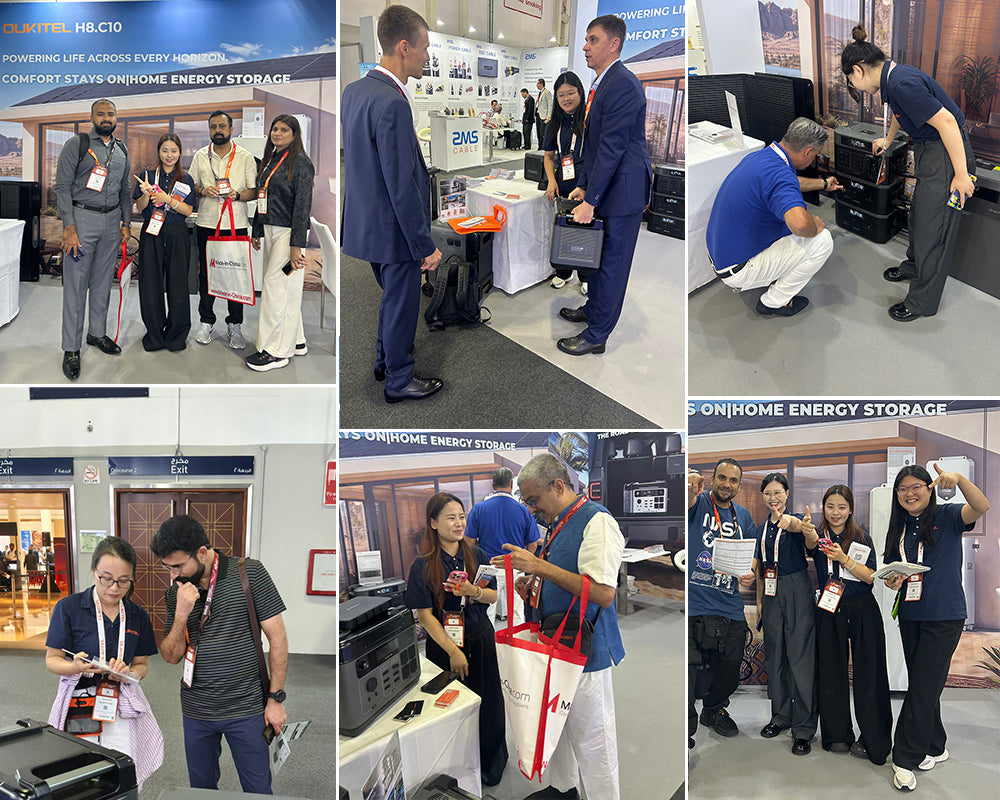
OUKITEL Power Brings Full-Scenario Energy Storage Solutions to Intersolar Middle East 2026 in Dubai
LEARN MORE
OUKITEL vs EcoFlow: Which Portable Power Brand Fits Your Needs in 2026?
LEARN MORE
OUKITEL vs BLUETTI: Expandability, Runtime and Price Compared
LEARN MOREYou may also like

OUKITEL P5000 Solar Generator for Home with 400W Solar Panel

OUKITEL P5000 Pro+400W Solar Generator

OUKITEL P5000 Pro Portable Power Station 5120Wh | 3600W

OUKITEL P5000 Portable Power Station 5120Wh | 2200W

OUKITEL P2001 Plus+400W Solar Generator — ( Pre-Order · Est. Ships Dec 15 )

OUKITEL BP2000+400W Solar Generator
Further reading
NYC Apartment Snowstorm Outage: What a Portable Power Station Can Safely Run (and What It Can't)

Storm-Season Timing: When to Buy a Portable Power Station in the Pacific Northwest Before the Next Windstorm Sells Them Out
