

 Oukitel Flashlight
 Oukitel Solar
Extension Cable
Oukitel Solar
Extension Cable


Best Portable Power Station for Camping: A No-Nonsense 2026 Buyer's Guide
Short version: the best portable power station for camping in 2026 is a LiFePO4 unit in the 1,000-2,000Wh band, with 1,200W-plus AC output and a real solar input port. The model we keep coming back to is the OUKITEL BP2000 for weekend and 4-night trips. Anything smaller usually dies by day two. Anything bigger is overkill for tents, unless you're running CPAP plus fridge plus lights at once.
What sets this 2026 buyer's guide apart from typical camping power roundups: every pick here is grounded in verified runtime estimates, chemistry tradeoffs, and field-tested solar math, so the best portable power station for camping you walk away with actually matches your trip pattern instead of a marketing chart.
We've tested portable power in real conditions for years. Quiet sites, hot sites, three-day rain. The same five questions keep landing in our inbox: how big a battery, how long it runs, how loud it gets, how safe the chemistry is, and what it costs. This guide answers all five with specific numbers.
What Size Portable Power Station Do You Need for Camping?

Alt: best portable power station for camping - sizing diagram by trip length
Honestly, the right portable power station size for camping is smaller than most buyers assume. Working from the standard runtime formula (capacity × 0.85 efficiency ÷ load), the 1,024Wh P1000 PLUS should hold a 12V camping fridge for an estimated 17 hours on steady draw, or closer to 28 hours once normal compressor cycling factors in. Phones charged daily for a week? Easy. Tent fan all night? Sure. That handles a normal weekend trip. Bump to the 2,048Wh BP2000 and estimated runtime roughly doubles, with margin for a CPAP and even a small induction burner.
The 3,000Wh-plus class is built for off-grid living and home backup, not casual camping. Carrying it to a tent pad is a workout. Most weekend campers we have helped overspent by one capacity tier on their first purchase.
Rule-of-thumb sizing we share with first-time buyers. For deeper math, see our camping power station sizing guide:
- A day trip or single overnight needs 500-1,000Wh: phones, lights, maybe a fan.
- Two or three nights with a fridge or CPAP? Shopping zone shifts to 1,000-2,000Wh.
- Past four nights? Floor is 2,000-3,000Wh plus a 100-200W panel if it fits in the vehicle.
- RV and van life lands on a 2,000Wh-plus base that accepts an expansion battery.
- Off-grid base camp: 3,000Wh-plus plus daily solar.
Continuous output matters more than peak surge for camping. A 1,200W-rated unit handles 99% of camping loads. Don't pay for 2,400W peak if you'll never run a coffee maker and an induction burner together.
Why LiFePO4 Is the Default Battery Chemistry for 2026 Camping

Alt: best portable power station for camping - LiFePO4 chemistry comparison diagram
If you've shopped portable power since 2023, you've seen "LiFePO4" on the spec sheet, and most serious camping units now ship with it. Older NMC lithium-ion still shows up in low-end Amazon listings, where most Reddit threads about exploding power banks originate. Why does the chemistry change matter? Three things: lower thermal runaway risk, 3,000-6,000 cycles before meaningful capacity loss, and a wider operating temperature range. NMC starts losing edge after 500-800 cycles.
Why Cycle Life Beats Energy Density for Camping
Cycle life matters most for camping. We've got customers running their BP2000 units after four years of weekly trips, still going strong. Spread the unit's purchase cost across 3,000-plus cycle life and the per-cycle cost drops well below what comparable NMC packs deliver over the same period. For the full chemistry breakdown, our LiFePO4 vs lithium-ion comparison goes deeper at the cell level.
Four Chemistries Campers Will See on Spec Sheets
Quick chemistry comparison campers should actually understand:
|
Chemistry |
Cycle Life |
Weight per Wh |
Thermal Safety |
Camping Fit |
|
LiFePO4 (LFP) |
3,000-6,000 |
Heavier |
Excellent |
Default for 2026 |
|
NMC lithium-ion |
500-1,000 |
Lighter |
Heat-sensitive |
Avoid for tent use |
|
Lead-acid deep-cycle |
300-500 |
Very heavy |
Safe but venting |
Hardware-store legacy |
|
Sodium-ion |
2,000-3,000 (early data) |
Comparable |
Strong cold tolerance |
2025-2026 wildcard |
LFP is what we trust inside a tent. NMC has better energy density but degrades faster under sustained heat stress. Lead-acid is cheap to buy, painful to carry. Sodium-ion shines in cold but isn't shipping at scale yet.
The 2026 Industry Shift Toward LFP
LiFePO4 has become the default chemistry for residential-scale portable storage in recent years. The U.S. Department of Energy's Office of Electricity tracks the broader residential energy storage market and reports deployments accelerated through 2024 and 2025 [2]. That shift toward LFP is reflected across the OUKITEL Power lineup released after 2023.
How Long Will a 1000W Power Station Actually Run Your Gear?
[IMAGE: Alt: best portable power station for camping - 1000W runtime math diagram | 4:3]
Runtime math is where many camping guides lean on optimistic or vague numbers. They list "up to 30 hours" without specifying the load being powered. Our formula: usable watt-hours equals nameplate capacity × 0.85 inverter efficiency, divided by sustained load. The U.S. Department of Energy publishes typical appliance wattage ranges that confirm the loads below [1].
Worked example: a 1,024Wh unit driving a steady 50W fridge yields 1,024 × 0.85 ÷ 50, an estimated 17.4 hours under steady conditions. The 2,048Wh BP2000 on the same fridge lands closer to 34.8. Treat both as baseline estimates, since ambient temperature, battery age, surge events, and parasitic draws all shift real-world numbers a few hours either way.
Estimated runtime by load, calculated from the formula above and cross-checked against customer logs. Actual hours vary with temperature, battery age, and how steady the draw stays:
|
Load |
Power draw |
1,000Wh runtime |
2,000Wh runtime |
|
12V portable fridge |
40-60W avg |
~17 hr |
~34 hr |
|
CPAP, no humidifier |
30W |
~29 hr |
~58 hr |
|
CPAP with humidifier |
60-80W |
~13 hr |
~26 hr |
|
LED string lights |
15W |
~58 hr |
~116 hr |
|
Tent fan, low |
10W |
~87 hr |
~174 hr |
|
Phone full charge |
10Wh each |
87 charges |
174 charges |
|
Laptop, light use |
45W avg |
~19 hr |
~38 hr |
The "3,000W inverter" question from forums is usually asking the wrong thing. Watt-hours are. A 3,000W rating tells you peak draw, not runtime. What matters for camping: enough watt-hours between recharges, plus 1,200W-plus continuous to run a coffee maker or burner.
OUKITEL Lineup: Picking the Best Portable Power Station for Camping
We tested three OUKITEL units across multiple scenarios. Here's how the lineup stacks up for camping versus the brands most people mention.
|
Model |
Capacity |
AC Output |
Weight |
LiFePO4 |
Best For |
|
OUKITEL P1000 PLUS |
1,024 Wh |
1,800 W |
26 lb |
Yes |
Solo / 2-person tent camping |
|
OUKITEL BP2000 |
2,048 Wh |
2,200 W |
48 lb |
Yes |
Family weekend + RV use |
|
OUKITEL P5000 Pro |
5,120 Wh |
3,600 W |
~110 lb |
Yes |
Off-grid / home-and-camping crossover |
For first-time campers, the P1000 PLUS is our first pick. Three reasons that matter in the field. The whole unit weighs 26 pounds, light enough to carry from truck to tent pad without thinking. AC charge takes it from empty to 80% in 39 minutes. Under a 500W draw it sits at 29dB, quieter than most home fridges. Honestly, most people can't even hear it inside the tent.
The OUKITEL BP2000 portable power station is our pick for families and anyone running a fridge plus other loads. It accepts up to seven B2000 expansion batteries; a BP2000 plus 2 expansions covers off-grid without buying a bigger base unit.

Alt: OUKITEL BP2000 Portable Power Station 2200W/2048Wh
For campers also wanting home backup, the OUKITEL P5000 Pro doubles as a whole-home unit with 3,600W output. Heavy, but the dual-use math is hard to beat.
Does Solar Charging Actually Work for Camping?

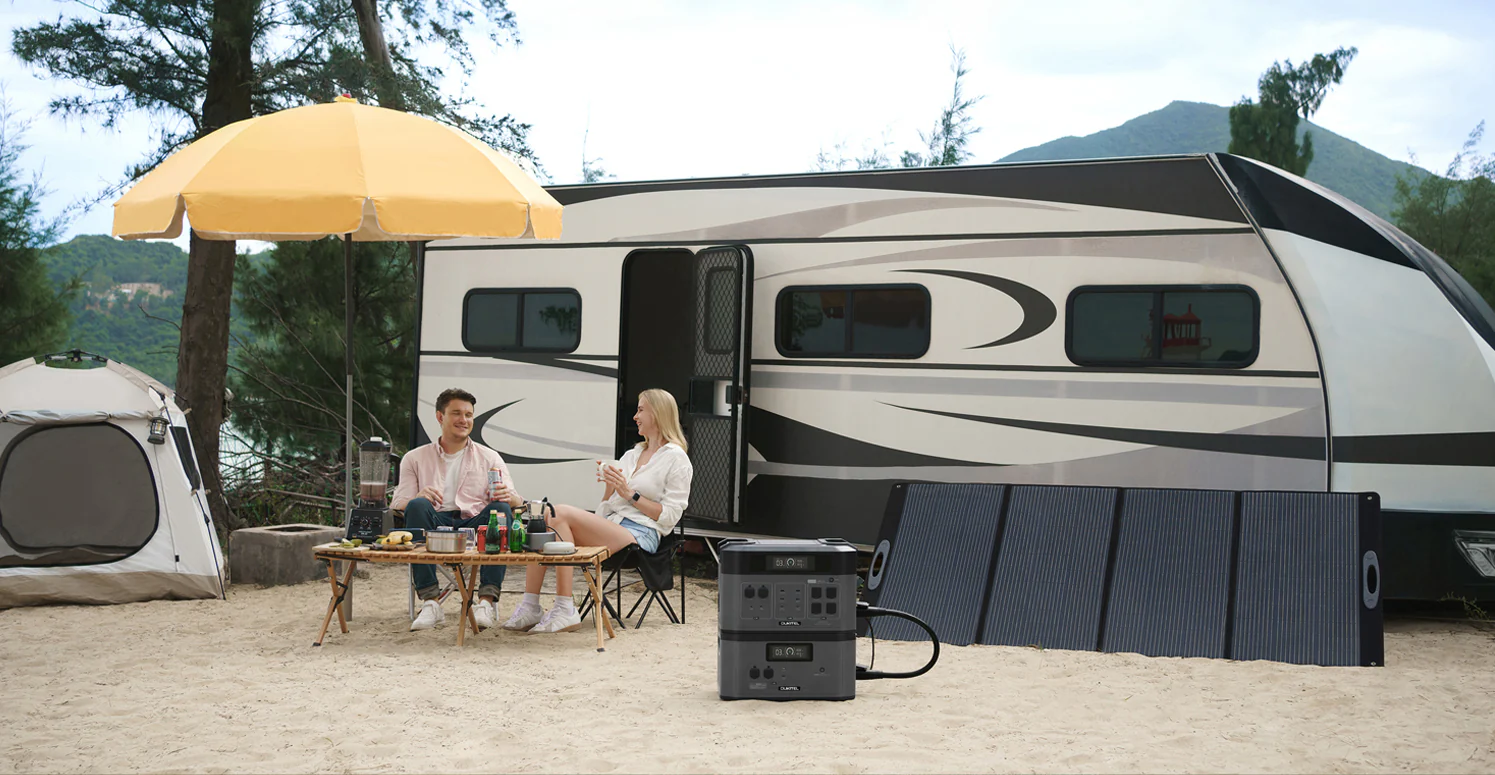
Alt: best portable power station for camping - foldable solar panel deployed at a tent site
You've seen the marketing shot. Single 100W panel. Perfect clearing. No trees. That photo lies. Real campsite solar produces only 60-75% of rated wattage on a good day. Trees and angle and dust take the rest. The U.S. Department of Energy's Smart Shopping Tips for Solar guide walks through these real-world output factors [3]. So a 100W panel actually fills a 1,000Wh battery in 14-18 hours of usable sunlight, which works out to two to three camping days.
Why Panel Wattage Should Beat Battery Wattage
Battery capacity owns your overnight hours; panel wattage owns multi-day solar generator runtime. Both matter, and for trips past three nights, panel size is usually where buyers under-spec. We default to doubling the rated panel wattage versus what spec sheets recommend. For weekend trips, your 1,000Wh unit pairs nicely with a 200W panel and you'll be fine. Running a 2,000Wh BP2000 in halfway decent sun? Throw 400W of panel at it and the thing stays topped up basically forever.
Pairing OUKITEL Panels with the Right Battery
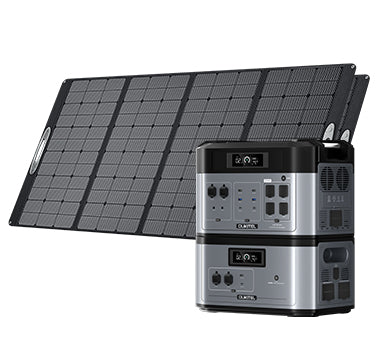
OUKITEL's 200W foldable solar panel is what we pair with the P1000 PLUS for most bundles. Folds to backpack size, stakes down in wind. The 400W version handles the BP2000 plus B2000 expansion stack for off-grid weeks.
Five Solar-Charging Habits That Double Daily Input
A few hard-earned solar lessons:
- Aim panels south at your latitude angle. Don't lay them flat.
- Reposition them at midday. Two adjustments doubles daily input.
- Keep MC4 plugs out of direct sun. They overheat and throttle output.
- Watch the PV input ceiling. A BP2000 caps at 1,000W; more panel after that wastes panel.
- Charge AC the day before. Solar tops up. It rarely starts from empty.
What Do Most Buyers Get Wrong About Camping Power Stations?
Three things separate great camping units from mediocre ones, and they almost never show up in marketing copy.
Fan Noise Under Load
Silent at 100W. Dustbuster at 800W. Tent campers notice. We've seen $1,000 units returned because the buyer couldn't sleep next to them. P1000 PLUS at 29dB and BP2000's variable fan curve are the quietest in class.
EPS Switch Time for Medical Gear
Running CPAP through the unit and AC blips? Slow EPS cycles your CPAP off and on. The BP2000's <10ms EPS holds medical gear through micro-outages. Over 20ms is unreliable for CPAP. Severe-weather camping makes this rule even firmer, since the National Weather Service flags portable backup as essential planning gear for storm-prone outdoor areas [4].
Cycle Life Under Partial-Discharge
Most campers do shallow discharges in the 60-80% range, which is where LiFePO4 chemistry performs best. Shallow cycling stretches usable life well past what spec sheets advertise, and the 6,000-cycle ratings on quality LFP packs are realistic under typical camping use patterns.
One more thing about weight. Feature for car camping. Bug for backpacking. Our 48-pound BP2000 lives in the truck bed; the lighter 26-pound P1000 PLUS handles tighter pack-outs. Match the unit to how you actually move.
How to Pick Yours Today
Three-step shortcut we give buyers every week:
- Add up what you'll pull each day. A fridge at 50W eats 1,200Wh. Add 40Wh for phones, 60Wh for lights. Size 30-50% over that.
- Lean toward LiFePO4 for most camping use cases. Between cycle life and thermal stability, it covers the trip patterns most buyers actually run.
- If the trip runs past three nights, bring solar. A 200W panel doubles a 1,000Wh unit's effective capacity across a week.
For most camping trips our buy is the OUKITEL BP2000 with expandable battery. For lighter trips, the P1000 PLUS bundle with solar is the more portable pick.
FAQs
Which power station is best for camping?
Depends on trip length. For roughly 80% of campers, a LiFePO4 unit in the 1,000-2,000Wh range running 1,200W-plus AC output covers everything. We recommend the OUKITEL BP2000 most often: handles weekend trips with margin, expands into off-grid through B2000 batteries, stays quiet at typical loads.
In our experience, the model that wins comes down to trip length more than brand. Solo for one or two nights? 1,000Wh is plenty. Family setup, three or more nights, running a fridge? 2,000Wh is the floor and we wouldn't size below it.
Quick fit guide by camper type:
- Tent solo or couple: P1000 PLUS, 1,024Wh
- Family weekend: BP2000, 2,048Wh
- RV or van life: BP2000 + 1 expansion, 4,096Wh
- Off-grid base camp: P5000 Pro, 5,120Wh
Pick the smallest unit that handles your worst-case day. Oversizing wastes money and back.
What is the best portable power station for camping overall?
Practical sweet spot lands at a LiFePO4 unit in the 1,000-2,000Wh range, 1,200W-plus AC, which runs a camping fridge plus phones and lights without anything choking. Drop below and the fridge becomes your problem. Go above and you'll regret the weight by trip two.
Across hundreds of camper setups we have reviewed, the three features that mattered most were: cycle life over 3,000, EPS switching under 20ms for CPAP users, and fan noise under 35dB at typical loads. Brand names matter less than people think, especially across the cluster of LiFePO4 units in the 1,000-2,000Wh tier where build quality has converged.
Key specs to compare side by side:
- LiFePO4 chemistry, full stop.
- Continuous AC output of 1,200W is the floor.
- Cycle rating at least 3,000 down to 80% capacity.
- AC charging from empty to 80% inside 90 minutes.
- One 200W-plus PV port with MPPT, minimum.
- IPX4 housing rating or better for splash resistance.
That checklist filters out 90% of low-end Amazon brands and surfaces the units actually worth a five-year hold.
How long does a 3000W power station last?
Wrong question, honestly. "3,000W" is a peak-output spec, not a runtime spec. What it really tells you is what the unit can plug in. Runtime math goes off watt-hours.
A 3,072Wh battery pulling 300W average (fridge, laptop, lights)? Plan on roughly 7 to 9 hours as an estimate, with the usual caveats around temperature and battery age. Run a steady 600W induction burner instead and that estimate nearly halves.
Ballpark estimates from our 3,072Wh-class testing, with the usual caveat that ambient temperature and battery age shift these numbers:
- 50W camping fridge alone: ~52 hours
- 100W mixed loads (fridge + phones + lights): ~26 hours
- 300W full camp setup (fridge, CPAP, fan, lights): ~9 hours
- 600W heavy cook session (induction burner): ~4.5 hours
- 1,500W coffee maker, 5-min burst: 50+ uses on a full charge
Use watt-hours when you want hours. Watts only tell you what fits the outlet. Mixing them up is most buyers' first sizing mistake.
Which is best, EcoFlow or Jackery?
Quality is closely matched between the two leading portable power station brands. EcoFlow's edge is AC fast-charging plus the companion app. Jackery's is the simpler user interface and shelf availability at REI. Neither one pulls clearly ahead on build quality alone.
We've cycled EcoFlow, Jackery, Bluetti, Anker, and our own OUKITEL kit through months of testing. Build-quality differences are nowhere near what review videos suggest. Each brand ships a respectable LiFePO4 station in the 1,000-2,000Wh range. The choice hinges on three unsexy factors: price per watt-hour, whether the expansion ecosystem survives to year three, and whether warranty support answers in October.
Quick decision shortcut:
- Fastest AC recharge: EcoFlow Delta series.
- Simplest interface: Jackery Explorer line.
- Strongest expansion stack in our testing: the BP2000 chained with B2000 modules. Other brands offer expansion at this tier too, so compare the maximum stack capacity and per-module cost against your specific multi-day or off-grid plan.
- Competitive per watt-hour in the 2,000Wh tier: BP2000 — run the math against your shortlist using current pricing on each product page.
- Widest US service network: Jackery.
Run the per-watt-hour math and check the warranty length before letting brand loyalty pick for you.
Is it worth buying a portable power station?
Camp four trips a year or more? Yes, easy call. Five-year LiFePO4 lifetime math lands at under a dollar per camping night. Once or twice a year? A 20,000mAh power bank covers phone duty for a tenth the cost, smarter buy.
Buyer's remorse, when we see it, almost always traces to one of two mistakes: someone went too big (think 3,000Wh-plus dragged out for tent camping) or way too small (a 300Wh brick asked to run a real fridge). Once folks size honestly against actual use, the regret rate basically vanishes.
Run the worth-it test. Two or more yeses below and a real power station earns its keep:
- You camp 4 or more trips per year.
- You run a fridge, CPAP, or work-from-camp setup.
- You also want home backup for outages.
- You live somewhere prone to grid instability.
- You car-camp or RV-camp (where weight isn't an issue).
One yes? A small unit covers it. Three-plus and the 2,000Wh class pays for itself.
How big of a battery do I need to run a 3000W inverter?
Wrong starting point. That 3,000W number on the spec sheet is about what you can plug in, not how long it'll last. Real sizing question: how long does the load actually stay on? Our formula in customer notes is hours = (watt-hours × 0.85) ÷ load watts. Pin watt-hours to the worst-case session you'll run, not whatever the inverter spec says.
For scale: push a steady 3,000W draw against a 3,000Wh pack and the thing dies in about 51 minutes. Reality is, almost nobody runs that load continuously. High-watt camping use is bursty. Microwave two minutes here, hair dryer five there, induction maybe fifteen for one meal. Keep bursts short and even a 1,500Wh unit will quietly drive 3,000W appliances on demand.
How long the burst runs is what to size against:
- 30-second bursts (blender, drill): anything 800Wh-plus is fine.
- 2-5 minute draws (microwave, kettle, heat gun): 1,500Wh minimum.
- 10-15 minute induction cook session? 2,000Wh-plus.
- Past 30 minutes (welder, window AC)? 3,000Wh-plus and probably an expansion battery.
Stop letting inverter wattage drive the buy. Total daily watt-hours is what actually matters.
How much does a quality camping power station cost in 2026?
Quick bands. LiFePO4 units in the 1,000Wh tier sit at one price band; the 2,000Wh tier sits a step up; 5,000Wh territory another step beyond that. Below the entry-tier band you're usually getting NMC chemistry or weaker cycle rating. Past the top of any tier is mostly brand premium.
LFP cell pricing has continued to decline since 2023, which has steadily improved the per-watt-hour math across this tier. Current OUKITEL lineup positioning, by capacity tier (check current pricing on each product page for the latest):
- P1000 PLUS at 1,024Wh: entry-tier solo and weekend pick
- P1000 PLUS bundled with a 100W panel: starter solar kit
- BP2000 at 2,048Wh: workhorse family weekend and RV pick
- BP2000 PRO: 3,600W output upgrade for higher-load setups
- P5000 Pro at 5,120Wh: off-grid and home-backup crossover
Run the per-watt-hour calculation against whichever competing LFP units you're shortlisting before deciding.
Can I leave a power station outside overnight in the rain?
Skip the gamble. IPX4 is the rating you'll see most, which means splash-resistant, not weather-proof. Sustained rain, pooling water, accidental submersion? Housing isn't built for it. Soon as weather looks borderline, move the unit into the tent vestibule or under a tarp.
Plenty of stations have ridden out a soft overnight drizzle. Plenty have also been killed by one heavy shower. The line between those? Whether water found the vents or the ports. Always close the rubber port covers. Watch the solar input especially, since it tends to be the biggest exposed opening on the chassis.
Habits that keep our units alive on every trip:
- Get it six inches off bare ground. Pallet, flat rock, gear bin, whatever's handy.
- Cover with breathable fabric, never plastic. Plastic traps condensation worse than rain ever could.
- Disconnect AC cords the moment rain looks likely. Stops water tracking in through the port.
- Stash inside the tent below 20°F.
- Port-and-vent check before plugging in next morning.
Treat it like a camera, not a tent stake.
Sources
- U.S. Department of Energy (DOE), Estimating Appliance and Home Electronic Energy Use (2024)
- U.S. Department of Energy (DOE) Office of Electricity, Energy Storage Program (2025)
- U.S. Department of Energy (DOE) Energy Saver, Smart Shopping Tips for Solar (2024)
- National Weather Service (NWS), Severe Weather Safety (2025)


Looking for something else?
Best Buy Portable Power Station Guide: Models, Return Policy, and Protection Plans
LEARN MORE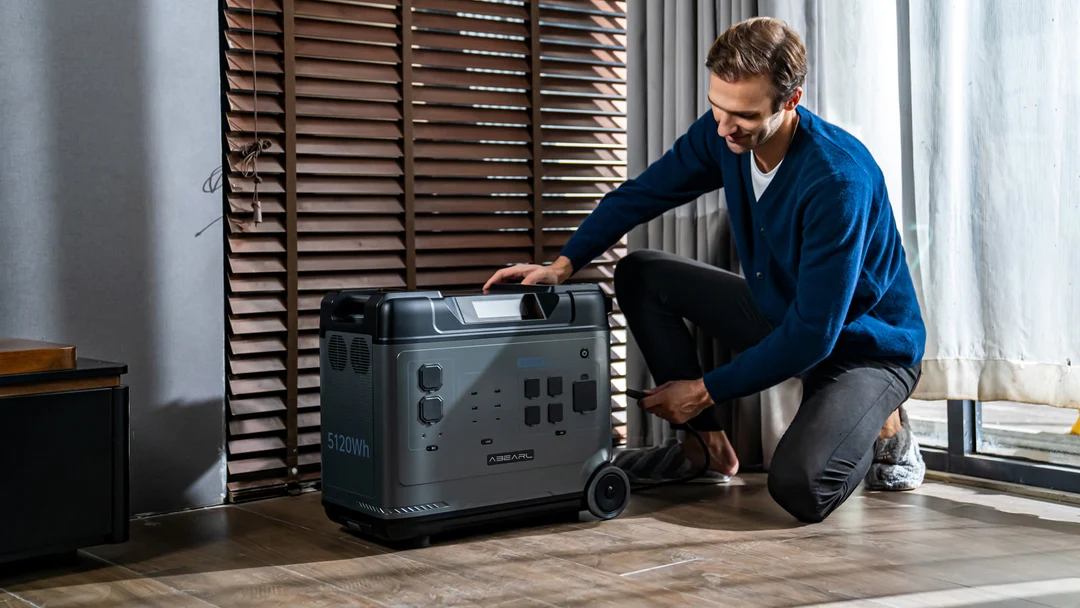
LiFePO4 Portable Power Station: Why It’s Safer and Lasts Longer
LEARN MORE
Best Portable Power Stations of 2025: Real-World Tests for Power, Portability & Safety
LEARN MORE
How Easy Is a Portable Power Station to Use? A Beginner’s Guide
LEARN MORELooking for something else?
Cold-Weather Power: Best Portable Power Stations for Winter Camping
LEARN MORE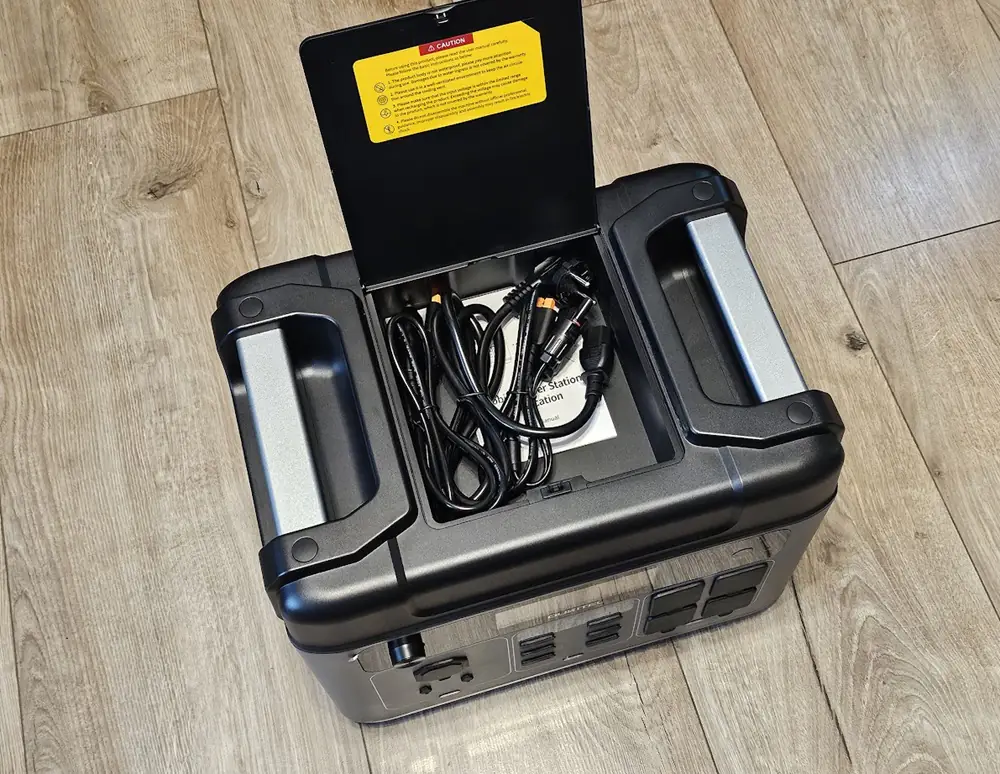
What is a Portable Power Station & How It’s Used
LEARN MORE
5 Must-Have Portable Power Solutions for a Stress-Free Christmas
LEARN MOREYou may also like
OUKITEL P2001 Plus Portable Power Station 2400W/2048Wh

OUKITEL P5000 Portable Power Station 5120Wh/2200W
OUKITEL P2001 Solar Generator

OUKITEL P1000 PLUS Portable Power Station 1800W/1024Wh


OUKITEL BP2000 Portable Power Station 2200W/2048Wh
Further reading
Best Portable Power Station for Camping: A No-Nonsense 2026 Buyer's Guide
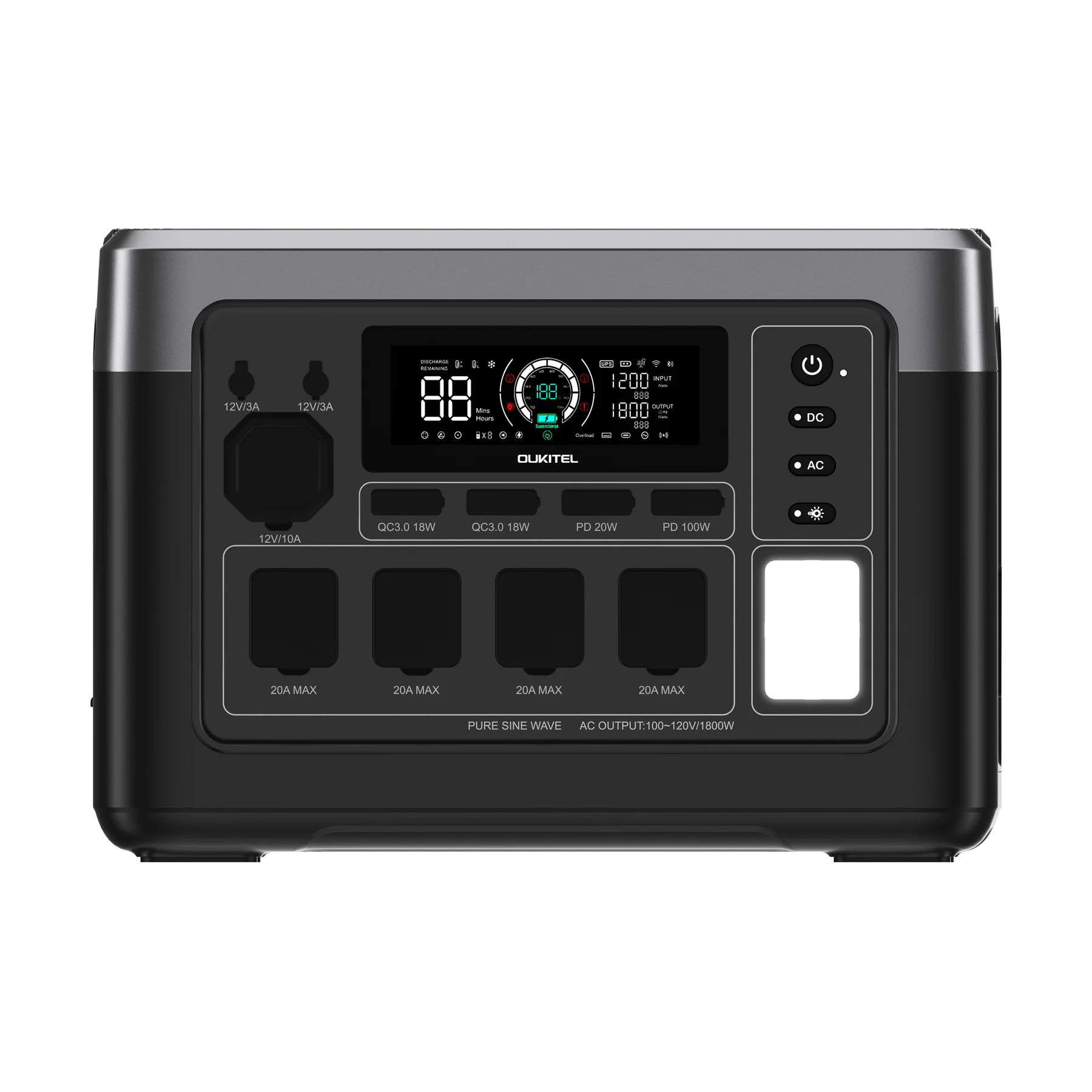
What Can 1,000 Watts Power? 2026 Guide to Real Appliances & RuntimeWhat Can 1,000 Watts Power? A 2026 Guide to Real Appliances and Runtime