

 Flashlight
 Solar
Extension Cable
Solar
Extension Cable


RV Living Cost: How Much Does It Really Cost?
The dream is universal: waking up to the sound of the Pacific surf one week and the rustling pines of the Blue Ridge Mountains the next. For many, the appeal of full-time RV living isn't just about the travel it’s about escaping the "rat race" and the crushing weight of a traditional mortgage.
But as any veteran "full-timer" will tell you, the road isn't free. While you might trade property taxes for park fees, you are essentially driving a small house through an earthquake every time you hit the highway. Understanding the RV living cost is the difference between a sustainable lifestyle and a short-lived experiment that ends in a "For Sale" sign.
The Monthly Breakdown: What Does RV Living Really Cost?
On average, most full-time RVers spend between $2,000 and $5,000 per month. However, if you are stationary or "boondock" (camp for free on public land), you can get that number down to $1,200 to $1,500.
Campsite and Parking Fees
This is your "rent."
- Nightly: $40–$100 (Best for short trips).
- Monthly: $500–$1,200.
- Pro Tip: Look for "Workamping" opportunities where you trade a few hours of light labor for a free site and utilities.
Fuel and Propane
If you move every three days, fuel will be your biggest expense. In 2026, with fluctuating gas prices, an active traveler might spend $500–$800 per month. Propane is also essential for heating and cooking, typically costing $50–$100 depending on the season.
Maintenance and the "Emergency Fund"
RVs break. It’s not a matter of if, but when. Between oil changes, roof resealing, and tire replacements, you should set aside at least $200–$400 per month for a rainy-day fund.
Powering Your Freedom: The Electricity Factor

One of the most overlooked "hidden costs" is electricity. While some parks include electric in the rent, many long-term "stationary" spots meter your usage. With the rise of remote work, RVers are using more power than ever for laptops, Starlink internet, and climate control.
The Rise of Solar Independence
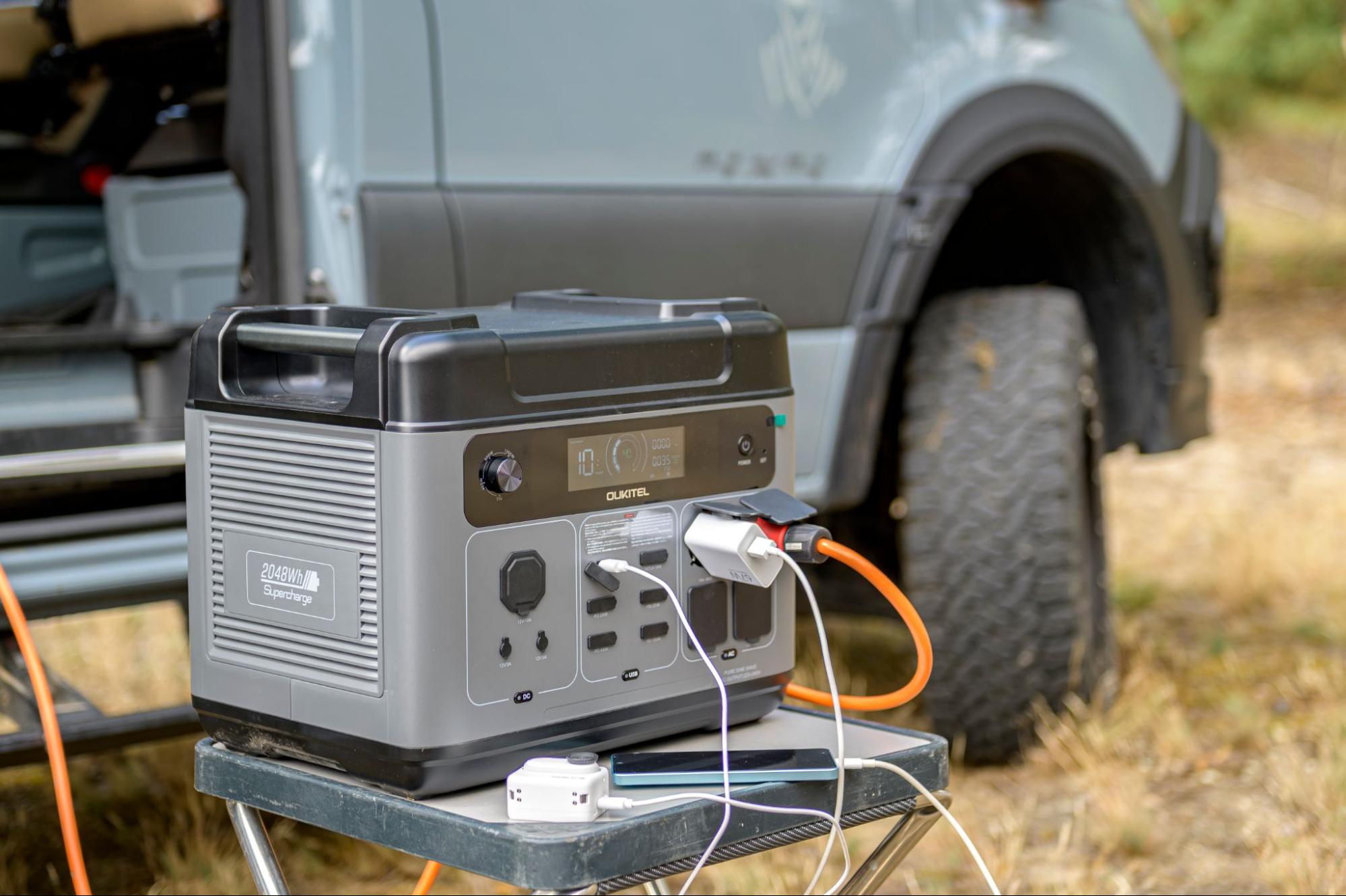
To truly lower your rv living cost, you have to look at energy independence. Relying solely on shore power or noisy gas generators is expensive and limiting. This is where high-capacity power solutions come into play.
Modern travelers are increasingly turning to brands like Oukitel to bridge the gap between "living on the grid" and "total freedom." By integrating a portable power station into your setup, you can:
- Eliminate Electric Bills: Charge your station via solar panels during the day and run your appliances at night.
- Boondock Longer: Stay on free BLM (Bureau of Land Management) land without needing a hookup.
- Protect Electronics: High-quality power stations provide "pure sine wave" energy, which is safer for expensive laptops and gaming rigs than the "dirty" power often found in old RV parks.2
Comparison: RV Living Cost by State (2026 Estimates)
Location matters. Parking your rig in the heart of the Florida Keys in January will cost three times as much as a quiet plot in East Texas.
|
State |
Avg. Monthly Site Fee |
Fuel Price (Est.) |
Utility Cost |
|
Texas |
$550 - $750 |
$2.75 / gal |
Low |
|
California |
$900 - $1,400 |
$4.50 / gal |
High |
|
Florida |
$600 - $950 |
$3.10 / gal |
Moderate |
|
Arizona |
$500 - $800 |
$3.25 / gal |
Low (Great for Solar) |
Stationary vs. Mobile: Which is Cheaper?
If you are a software engineer or a remote creator (like the user AnonymousLad666 mentioned in recent forums), stationary RV living is the ultimate "cheat code" for saving money.
When you stay in one spot:
- Fuel costs drop to near zero.
- Insurance rates are lower (since you aren't a high-risk highway traveler).
- Wear and tear is minimized.
Stationary living often costs around $1,500 per month total, allowing you to save for that permanent plot of land much faster than renting an apartment in a tech hub.
Smart Strategies to Lower Your RV Cost of Living
Invest in Efficiency
If you’re living in an RV, your "appliances" should be your best friends. Switch all lights to LED and use a portable power station to manage your heavy hitters like coffee makers or CPAP machines. This prevents you from draining your house batteries and needing expensive replacements.
Slow Down
The "3-3-3 Rule" is a favorite among budget RVers: Drive no more than 300 miles, arrive by 3:00 PM, and stay for at least 3 days.3 Staying longer at one location often unlocks weekly or monthly discounts that can slash your nightly rate by 40%.4
Cook Inside
It’s tempting to try the local BBQ in every new town, but a family of two can easily spend $1,000/month eating out. Use your RV kitchen. Modern portable power banks can easily run an induction cooktop or an air fryer, making "home cooking" easy even when you’re off-grid.5
The Verdict: Is It Worth It?
Living in an RV isn't always "cheaper" than a tiny apartment, but it offers a level of equity in experience that a stationary home cannot match. By managing your energy usage with Oukitel’s power solutions and choosing your locations wisely, you can live a high-quality life for a fraction of the cost of suburban living.
Whether you are looking to save for a down payment on land or simply want to see the Grand Canyon from your "front porch," understanding your budget is the first step toward the horizon.
Frequently Asked Questions
Is it cheaper to live in an RV than an apartment?
In most cases, yes. While an apartment has a fixed rent, RV costs are modular. You can choose to stay in a $500/month park or boondock for free. However, when you factor in maintenance and fuel, the costs can be comparable to low-income housing if you travel frequently.
How much does a "stationary" RV lifestyle cost?
Generally between $1,200 and $2,000 per month. This includes lot rent (usually $500-$800), insurance, groceries, and utilities. It is significantly cheaper than mobile RVing because it eliminates the high cost of fuel.
Can I run my RV AC on solar power or a power station?
Yes, but it requires a high-capacity unit. Most standard RV air conditioners require a lot of "startup" wattage.6 Using a heavy-duty portable power station with a high surge rating can help you run your AC for several hours without being plugged into a pedestal.
What is the biggest hidden cost of RV living?
Depreciation and Maintenance. Unlike a house, an RV loses value over time.7 Additionally, small leaks or mechanical issues can quickly turn into $2,000 repairs if not caught early.
How much should I budget for RV insurance?
For full-time "Full-Timer's Liability" insurance, expect to pay between $800 and $1,500 per year. This is different from standard auto insurance as it covers you similarly to a homeowner's policy while you are parked.


Looking for something else?

How Long Do Solar Panels Last: Residential and Commercial Insights
LEARN MORE
What Are Solar Panels Made Of: Materials Behind Solar Power
LEARN MORE
How to Install Solar Panels: Costs and Step-by-Step Guide
LEARN MORE
How to Get a Perfect Christmas: Last-Minute Deals 2025
LEARN MORELooking for something else?
Do Solar Panels Work on Cloudy Days? Efficiency and Insights
LEARN MORE
Do Solar Panels Work at Night? How Solar Energy Functions After Dark
LEARN MORE
Winter Emergency Power: Last-Chance Deals for Portable Power Station
LEARN MOREYou may also like

OUKITEL C01 Car Jump Starter 1350A | 80Wh | PD60W

OUKITEL BP5000 PRO MAX Portable Power Station 5000W | 5120Wh
OUKITEL P2001 Plus+400W Solar Generator
OUKITEL P2001 Plus+2*200W Solar Generator
OUKITEL P2001 Plus+200W Solar Generator

OUKITEL P5000 Pro+400W Solar Generator
Further reading

Can a Solar Generator Power a House? 2026 Whole-Home Backup Guide

How Do Portable Power Stations Work? 2026 Technical Explainer